


What Is the Recommended System Configuration for This Kumasi Layer Project?
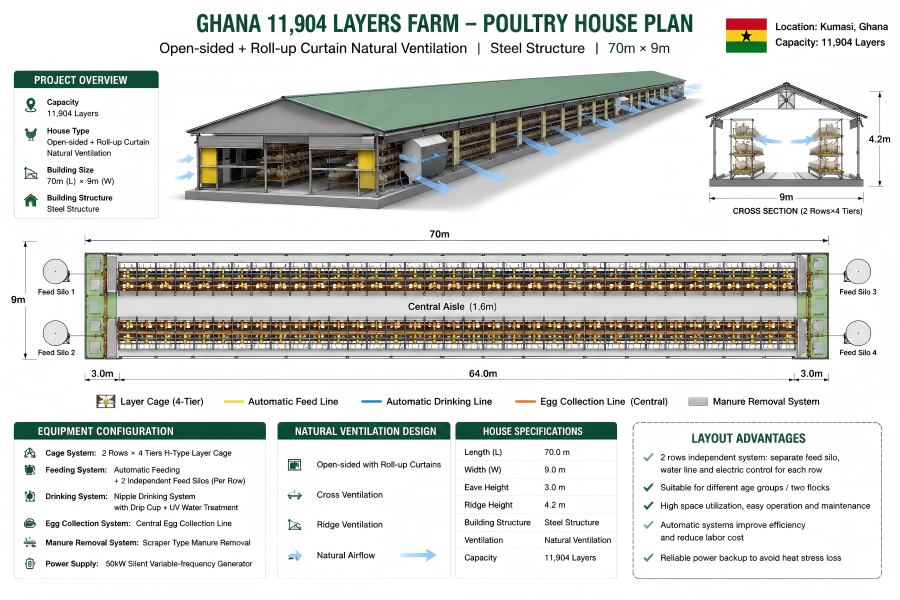
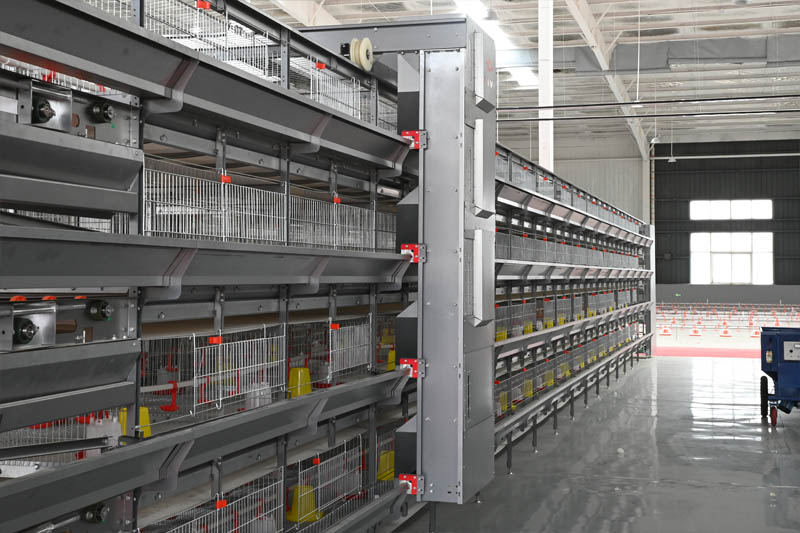
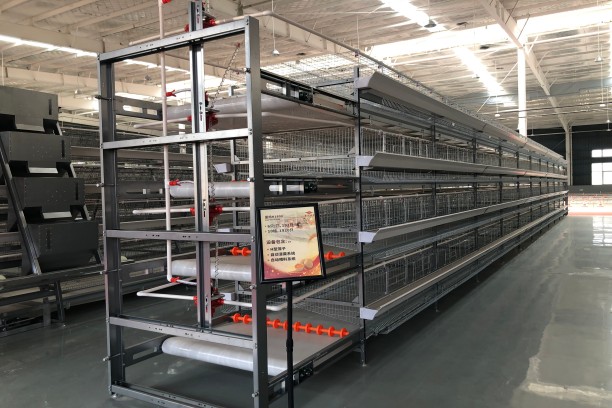
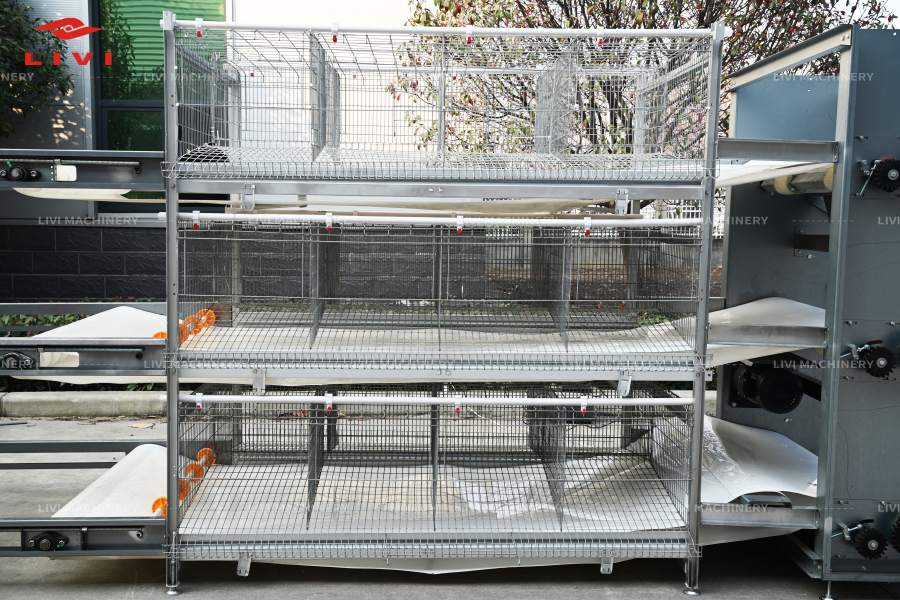
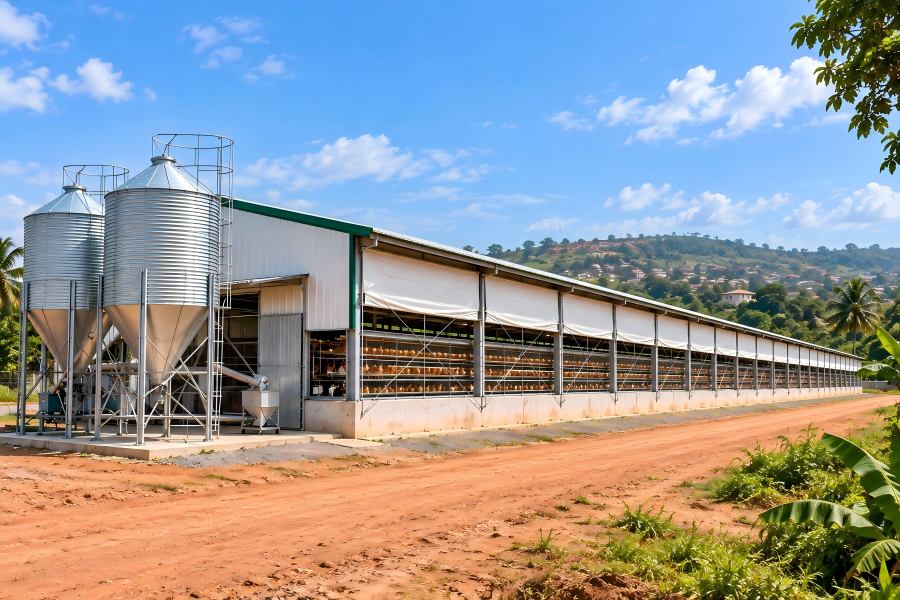
The Ghana 11,904 layer farm solution is built around one 70 × 9 m steel-structure poultry house with open sides, roll-up curtains and natural ventilation. Inside the house, two rows of four-tier H-type layer cages are integrated with automatic feeding, automatic nipple drinking with drip cups, UV water treatment, central egg collection, automatic scraper manure removal and a 50 kW silent variable-frequency backup generator.
The key design principle is not to treat each machine as an independent purchase. Cage rows, feed routes, water supply, egg transfer, manure discharge, ventilation and backup power must be coordinated as one operating system.
Project Design Basis: Start with the House, Capacity and Operating Conditions
A commercial layer project should begin with three confirmed inputs: bird capacity, available poultry-house space and required operating level. In this Kumasi project, these inputs were already clear: 11,904 laying hens, one 70 × 9 m steel poultry house and a requirement for a highly automated cage system.
This makes the project different from a generic search for 10000 layer farm equipment Ghana. A buyer does not only need to know how many cages are required. The practical question is whether the entire production system can fit, operate and be maintained correctly inside the available building envelope.
| Project Item | Confirmed Configuration | Design Implication |
|---|---|---|
| Location | Kumasi, Ghana | Climate, logistics and utility conditions must be considered locally. |
| Capacity | 11,904 laying hens | Cage capacity and supporting systems must be matched to the flock size. |
| Poultry House | 70 × 9 m steel structure | All equipment must be coordinated within a fixed 630 m² gross footprint. |
| House Type | Open-sided with roll-up curtains | Natural airflow must be evaluated together with cage density and local weather. |
| Cage Layout | 2 rows × 4 tiers | Central and side operating space must remain accessible. |
| Feeding | Automatic feeding + two independent silos | Feed storage, conveying and cage-row supply routes must be coordinated. |
| Drinking | Nipple drinking + drip cups + UV water treatment | Water quality, pressure and distribution reliability must be planned together. |
| Egg Handling | Central egg collection line | Egg movement from cage rows to the collection point must remain unobstructed. |
| Manure Handling | Automatic scraper manure removal | Scraper route and discharge area need dedicated clearance. |
| Backup Power | 50 kW silent variable-frequency generator | Critical loads and equipment starting current must be checked before commissioning. |
Why Use a 2-Row, 4-Tier H-Type Cage Layout?
Buyers searching for H type layer cage Ghana are usually trying to solve more than a cage-selection problem. They are comparing land use, building utilization, automation level and daily operating requirements.
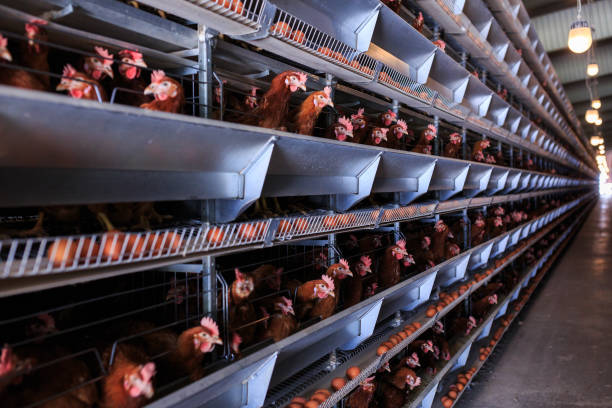
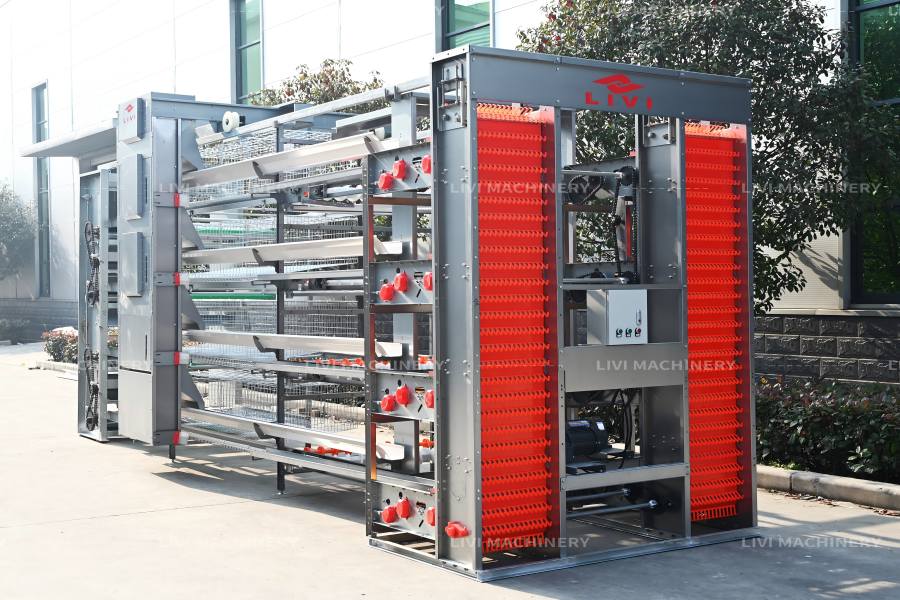
For this Kumasi 11,904-layer project, the selected arrangement is two rows of four-tier H-type layer cages. The vertical structure uses the poultry-house height more intensively than a lower-density floor system while leaving defined routes for feeding, drinking, egg collection, manure removal and inspection.
This is also why an automatic layer cage Ghana project should not be designed from cage capacity alone. The row spacing, end-of-row equipment and service access must be checked before the cage layout is finalized.
Buyers comparing cage systems can review the LIVI H-Type Layer Cage System for the basic structural and automation logic used in commercial layer projects.
Buyer Decision: A-Type or H-Type?
The Ghana keyword data shows strong buyer interest in A type vs H type layer cage Ghana. The correct answer depends on capacity, house dimensions, automation level, available land, power conditions and long-term management strategy.
This project uses an H-type system because that is the confirmed solution for this farm. It should not be interpreted as a universal recommendation for every Ghanaian layer farm.
Should an Open-Sided Poultry House Be Used in Ghana?
“Should I use an open-sided poultry house in Ghana?” is one of the higher-frequency housing questions from Ghanaian poultry investors.
An open-sided house can make use of natural air movement, but the answer is not simply “yes” or “no.” Local wind direction, house orientation, building width, cage density, curtain opening, roof design and seasonal weather all influence whether natural ventilation can maintain suitable conditions around the birds.
In this project, the confirmed house is 9 m wide and uses roll-up curtains. That width deserves specific engineering attention.
Therefore, the 70 × 9 m house should not be described as “adequately ventilated” merely because its sides are open. Final commissioning should confirm actual air movement at cage level under local operating conditions.
Roll-up curtains provide management flexibility because the effective side opening can be adjusted according to rain, wind and weather conditions. However, they do not replace the need to verify airflow.
This distinction is important for anyone researching open sided poultry house Ghana or poultry farm ventilation Ghana.
How Does the Dual-Silo Automatic Feeding System Work in the Farm Layout?
Feed movement should be planned as a complete route:
The project uses two independent feed silos together with automatic feeding. This allows the feed-storage and delivery paths to be organized separately rather than relying on one shared storage point for the complete house.
From a system-design perspective, the important questions include:
- Where should each silo be positioned relative to the poultry house?
- How will feed move from the silo to the cage feeding equipment?
- Can trucks access the silos without interfering with egg or manure routes?
- Can motors, augers and feeding components be inspected safely?
- What happens if one feed route needs maintenance?
These interfaces are often overlooked when buyers compare only poultry equipment price in Ghana.
A lower equipment quotation does not necessarily represent a lower project cost if the building later requires structural changes, additional conveying equipment or rework.
How Should the Drinking and UV Water System Be Planned?
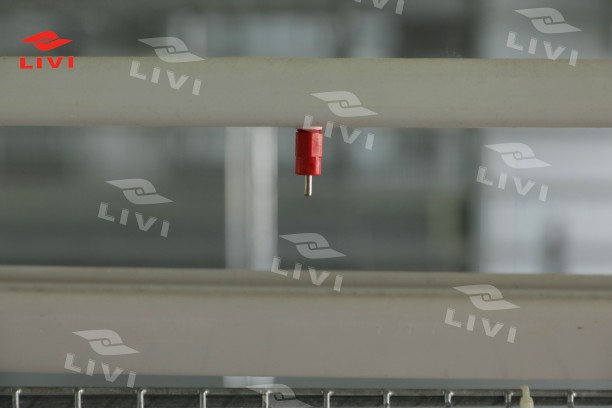
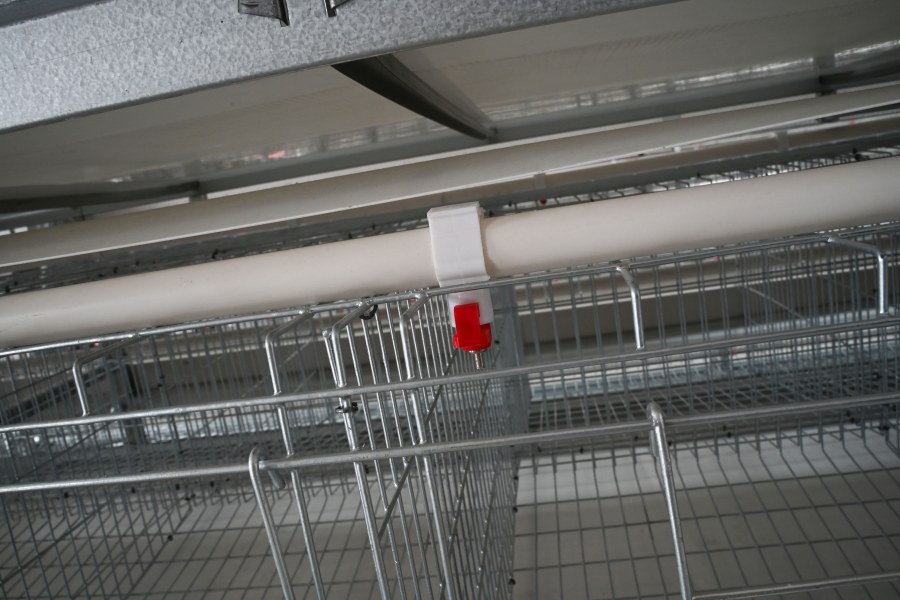
Each cage row uses an automatic nipple drinking system with drip cups. The project also includes a UV water-treatment and filtration package before water reaches the drinking system.
The drinking design should be treated as a chain:
The purpose of this approach is to manage water before it reaches the birds rather than considering nipple drinkers as an isolated product.
Buyers can review LIVI’s automatic poultry drinking system when evaluating water-delivery components for a commercial cage house.
Why Coordinate Water Management with Biosecurity?
Water, equipment access, farm traffic and waste handling are all part of the broader biosecurity environment of a commercial poultry farm.
For the farm operator, this means water treatment should sit within a broader management program that also addresses cleaning, staff access, equipment hygiene, waste handling and health monitoring.
How Does Central Egg Collection Change the House Layout?
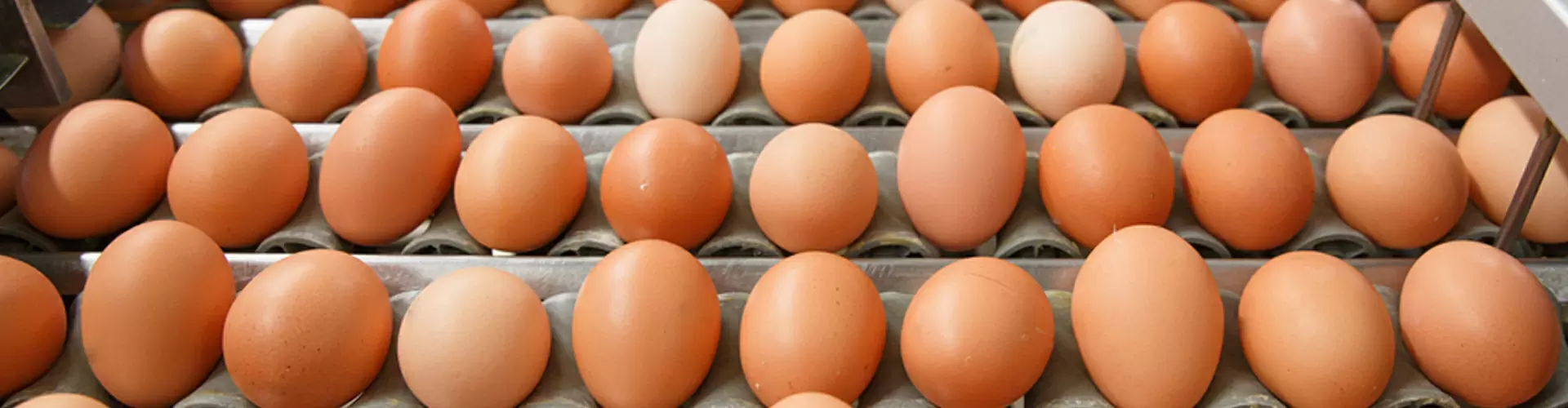
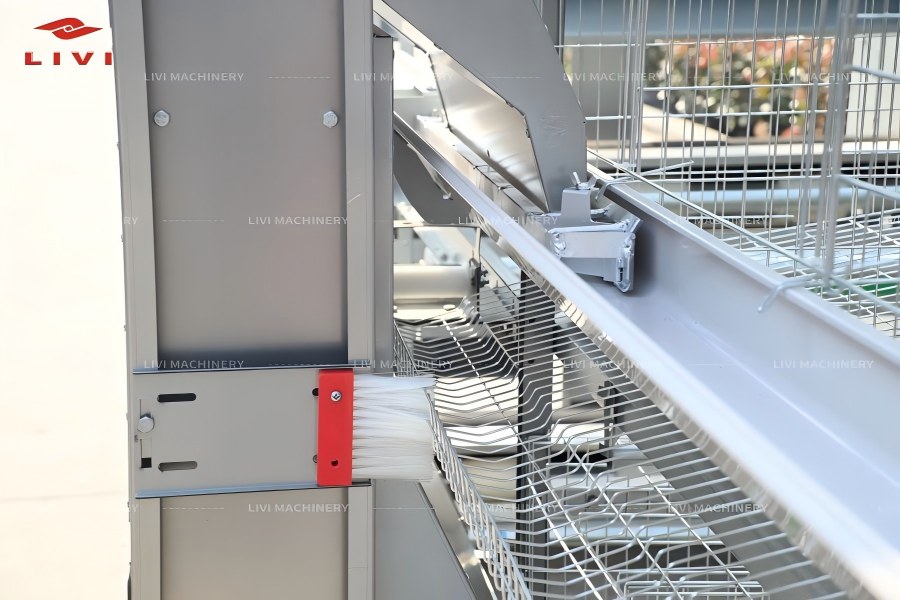
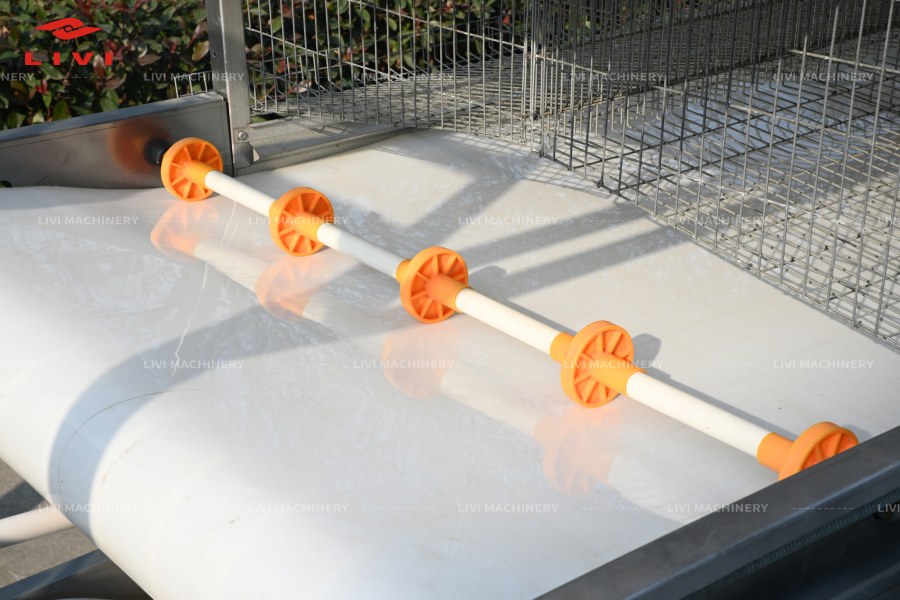
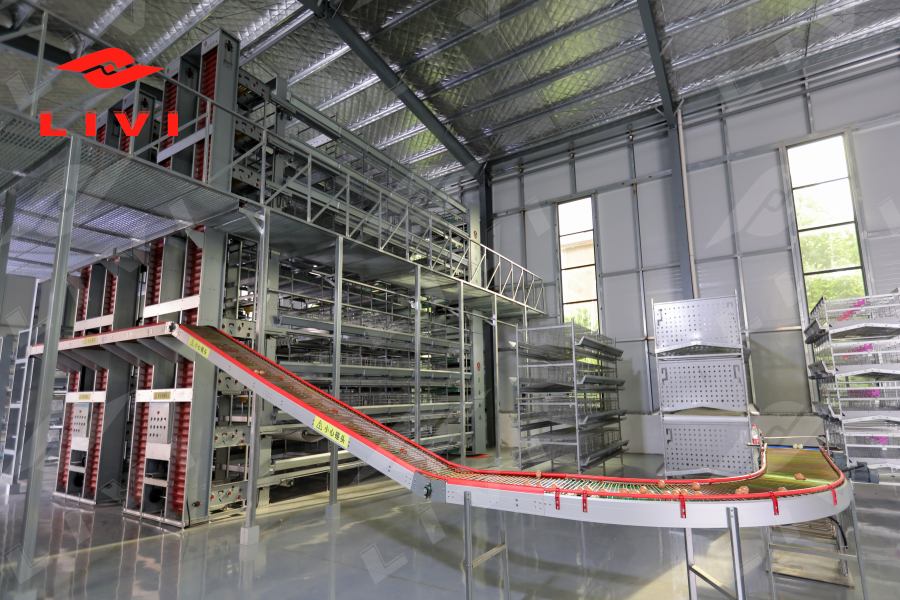
Central egg collection is not simply an accessory added after the cage rows are installed. Egg movement has to be designed from the cage front to the collection destination.
The central collection route should avoid conflicts with staff access, feeding drives, electrical cabinets and manure-discharge areas.
In a commercial layer farm in Ghana, this becomes increasingly important as the farm moves from manual collection toward automated daily operations.
The practical benefit is workflow organization: eggs have a defined transport direction instead of being manually carried through multiple operating areas.
How Should Automatic Scraper Manure Removal Be Integrated?
Manure removal affects both cage-house hygiene and physical layout. This project specifies an automatic scraper manure removal system.
The system therefore requires a clear manure route beneath or alongside the cage arrangement, sufficient scraper travel space and a defined discharge point outside the main operating area.
Manure discharge should not obstruct feed delivery, egg transfer or staff access.
Buyers comparing manure-handling options can also review LIVI’s automatic manure removal system to understand the role of manure-removal equipment within an integrated cage farm.
Confirm cage-row position, scraper path, drive location, manure exit, maintenance access and the final manure collection area before construction is closed out.
Does an Automatic Poultry Farm in Ghana Need Backup Power?
This is one of the strongest practical questions in the Ghana keyword set: “Do I need backup power for an automatic poultry farm in Ghana?”
For an automated cage house, a power failure can affect feeding drives, egg collection, manure equipment, pumps, controls and other electrical loads depending on the final configuration.
This project therefore includes a 50 kW silent variable-frequency generator as backup power equipment.
However, one important engineering boundary must be kept clear:
Before commissioning, the electrical design should verify:
- connected load of each motor and control system;
- equipment that must continue operating during an outage;
- motor starting current;
- load sequencing;
- generator reserve margin;
- changeover procedure;
- fuel storage and generator maintenance.
That is the difference between simply “buying a generator” and designing power resilience for an automatic poultry farm Ghana project.
What Should Be Included in a Complete Poultry Equipment Quotation for Ghana?
This is one of the most commercially important questions in the Ghana keyword library:
What should be included in a complete poultry equipment quotation for Ghana?
A useful quotation should allow the buyer to understand the complete supply boundary, not only the cage price.
| Quotation Section | What the Buyer Should Confirm |
|---|---|
| Cage System | Model, tiers, rows, bird capacity, materials and quantity. |
| Feeding | Silos, conveying equipment, feeding machine, motors and control scope. |
| Drinking | Nipples, drip cups, pipes, regulators and treatment equipment. |
| Egg Collection | Row collection and central transfer scope. |
| Manure Removal | Scraper equipment, drives and discharge interface. |
| Electrical | Motors, controls, voltage requirements and backup-power interface. |
| House Integration | Required dimensions, equipment clearances and structural reservations. |
| Shipping | Incoterm, packing, freight scope, destination and excluded local charges. |
| Installation | Installation guidance, local labor responsibility and commissioning boundary. |
| After-Sales | Technical support, spare parts and operating guidance. |
This is particularly important when comparing a poultry equipment supplier Ghana. Two quotations that appear to have different prices may actually contain very different supply scopes.
How Much Does This Type of Layer Farm Cost in Ghana?
Buyers often search for battery cage price in Ghana, layer cage price Ghana or ask: “How much does an automatic layer cage system cost in Ghana?”
A fixed number cannot be responsibly published for this project because no verified total project price has been supplied.
Total investment can be affected by:
Therefore, a buyer comparing poultry equipment price in Ghana should normalize the quotation scope before deciding which proposal is cheaper.
Need a Project-Specific Equipment Quotation for Ghana?
Send your target bird capacity, available land or house dimensions, preferred cage type, automation requirements, farm location and available power supply.
Request a Ghana Layer Farm ProposalHow Should the Complete System Be Verified Before Installation?
The Ghana 11,904 layer farm solution should move from equipment selection to installation only after the main interfaces have been checked together.
For the 11,904-layer poultry project in Kumasi, this means checking more than whether individual equipment fits inside the building.
The project team should verify:
- usable internal length and width;
- steel-column locations;
- two H-type cage-row positions;
- inspection and maintenance aisles;
- feed-silo positions and conveying routes;
- water-treatment location and pipe routing;
- central egg collection direction;
- scraper manure discharge route;
- curtain opening and airflow paths;
- electrical cabinets and emergency access;
- generator connection and critical-load priority.
LIVI Machinery can use these inputs to coordinate the cage house and auxiliary systems before final equipment installation.
What Happens If One System Stops?
A professional poultry-farm design should also consider abnormal operating conditions.
| Possible Issue | Operational Check |
|---|---|
| Grid Power Failure | Confirm generator start/changeover and priority loads. |
| Feed Conveying Failure | Confirm access to motors, augers and feeding equipment. |
| Water Interruption | Check storage, pressure, waterline isolation and treatment equipment. |
| Egg Collection Fault | Maintain access to drives, belts and transfer points. |
| Manure Scraper Fault | Maintain access to the drive, scraper route and discharge point. |
| Low Natural Airflow | Evaluate curtain position and actual bird-level conditions; review supplemental measures if required. |
This failure-mode approach is especially important for an automated H-type layer cage project in Ghana, because multiple systems operate around the same flock and poultry house.
Frequently Asked Questions About Commercial Layer Farming in Ghana
1. Should I use an open-sided poultry house in Ghana?
An open-sided house can be suitable where natural airflow and local conditions support it, but it should not be selected only because the climate is warm. House width, orientation, cage density, prevailing wind, curtain management and seasonal weather all need to be considered. The 70 × 9 m Kumasi house therefore requires actual airflow verification.
2. What ventilation is suitable for Ghana’s hot and humid climate?
The correct ventilation strategy depends on house geometry, local weather, bird density and cage layout. Natural ventilation can use side openings and roll-up curtains, but airflow at bird level should be checked rather than assumed. Supplemental mechanical ventilation should be evaluated if natural airflow cannot maintain suitable conditions.
3. A-type vs H-type layer cages—which is better for a commercial farm in Ghana?
H-type cages generally use vertical space more intensively and integrate well with automated feeding, egg and manure systems. A-type systems can suit different investment levels and house structures. The final choice should be based on capacity, land, poultry-house dimensions, labor, power supply and required automation.
4. Do I need backup power for an automatic poultry farm in Ghana?
Backup power is worth evaluating whenever critical feeding, egg, manure, pumping or control functions depend on electricity. This Kumasi project includes a 50 kW generator, but generator size for another farm should be calculated from its actual electrical loads and starting currents.
5. How much does an automatic layer cage system cost in Ghana?
Cost depends on cage model, bird capacity, automation level, feeding and drinking scope, egg collection, manure handling, shipping and installation. A cage-only price should not be compared directly with a complete poultry-farm equipment quotation.
6. What should be included in a complete poultry equipment quotation for Ghana?
The quotation should clearly identify cage quantities and specifications, feeding, drinking, egg collection, manure removal, electrical scope, export packing, freight boundary, installation responsibility, commissioning and after-sales support.
7. Does the supplier provide installation and after-sales service in Ghana?
Buyers should verify the exact service scope before ordering. For a LIVI Machinery proposal, project-specific responsibilities such as installation guidance, local labor, commissioning, training, spare parts and technical support should be confirmed in the final commercial documents rather than assumed.
Final Design Logic: Treat the Layer Farm as One Connected System
The central lesson from this commercial layer farm in Ghana is that poultry-house structure, cages, feeding, drinking, egg handling, manure removal, ventilation and power supply should be designed as one connected system.
The 70 × 9 m open-sided steel house provides the physical envelope. Two rows of four-tier H-type cages define the production layout. Dual silos support automatic feed delivery. Nipple drinking and UV treatment define the water route. Central egg collection and scraper manure removal establish two additional operating routes. Finally, the 50 kW backup generator addresses the need for power continuity.
None of these systems should be finalized independently.
This integrated planning approach is what turns a collection of poultry equipment into a workable commercial layer farm in Ghana.
Planning a Layer Farm in Ghana?
Send LIVI your target capacity, poultry-house dimensions, farm location, required automation level and available power conditions. The project team can use these inputs to prepare a cage layout and equipment configuration for technical review.
Start Your Ghana Poultry Farm Plan