



Automatic Poultry Brooding Equipment for Commercial Chick Rearing
Time : 2026-08-19 Author : LIVI Poultry Farming Expert
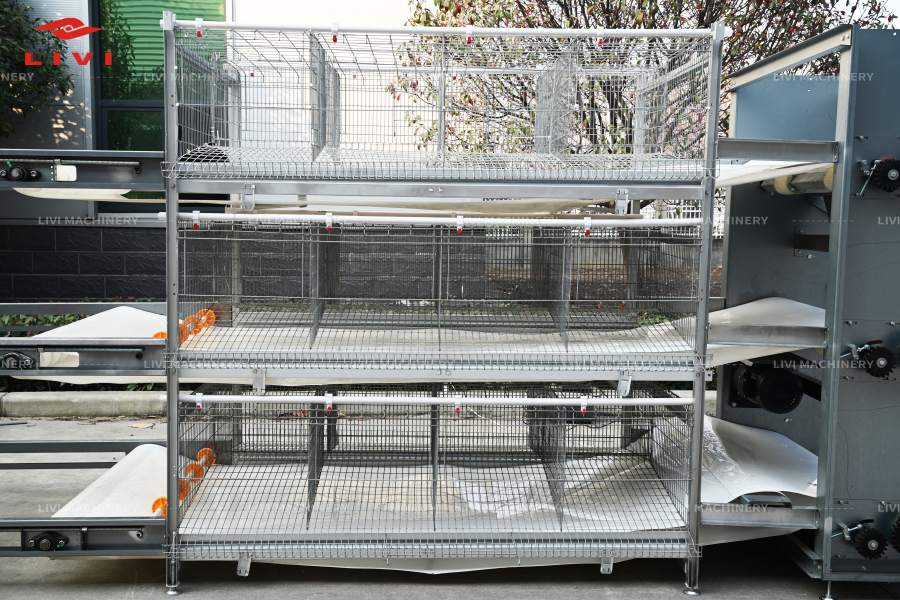
LIVI automatic poultry brooding equipment offers A-type and H-type chick cages for commercial farms, with capacities from 96 to 240 chicks per set.

Quick Answer
LIVI Automatic Poultry Brooding Equipment is designed for commercial chick and pullet rearing, with A-Type, H-Type and Simple Vertical Brooding Cage options. Cage capacity ranges from 96 to 240 chicks per set, with 3-tier and 4-tier configurations available. For a 20,000-chick project, approximately 84–134 cage sets are required depending on the selected model, before any spare-capacity allowance.
What Is Automatic Poultry Brooding Equipment?
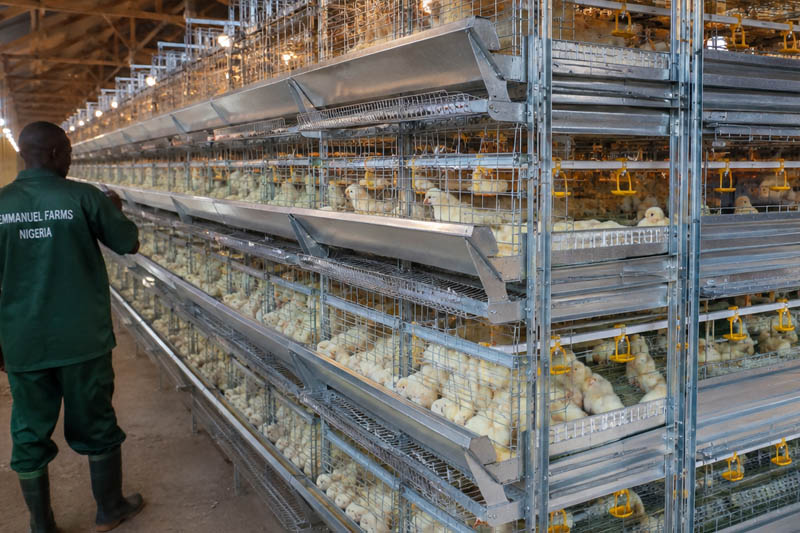
Automatic poultry brooding equipment provides an organized cage-based environment for raising chicks during the brooding and rearing stages.
For commercial poultry farms, buyers usually need to consider more than cage price. The key questions are:
- How many chicks can each cage set hold?
- Which cage structure matches the poultry house?
- Should I choose A-Type or H-Type brooding cages?
- How many cage sets are required for 20,000 chicks?
- Can the brooding cages integrate with automatic poultry equipment?
- Can the system support future farm expansion?
LIVI machinery provides several chick brooding cage systems for different capacities, poultry-house layouts and investment requirements.
LIVI Brooding Cage Specifications
The cage mesh is manufactured from Q235 Chinese national-standard steel wire, with wire diameters ranging from 2.3 mm to 3.6 mm.
| Model | Structure | Chicks / Door | Capacity / Set | Cage Dimensions |
|---|---|---|---|---|
| A-Type | 3-Tier, 3-Door | 10 | 180 chicks | 1950 × 500 × 350 mm |
| A-Type | 4-Tier, 3-Door | 10 | 240 chicks | 1950 × 500 × 350 mm |
| H-Type | 3-Tier, 1-Door | 25 | 150 chicks | 1200 × 625 × 430 mm |
| H-Type | 4-Tier, 1-Door | 25 | 200 chicks | 1200 × 625 × 430 mm |
| Simple Vertical Brooding Cage | 4-Tier, 2-Door | 12 | 96 chicks | 1620 × 570 × 330 mm |
These different capacities allow farmers to select a poultry brooding cage system according to flock size, available house space and desired automation level.
Which LIVI Brooding Cage Should You Choose?
There is no single cage configuration suitable for every chick farm. The better choice depends on capacity, poultry-house dimensions and management requirements.
🐥A-Type Brooding Cage
The A-Type system is available in:
3-Tier: 180 chicks/set
4-Tier: 240 chicks/set
The 4-tier A-Type brooding cage provides the highest stated capacity per set among these models, making it worth considering when buyers want to accommodate more chicks with fewer cage sets.
Best suited for:
- Commercial chick rearing
- Farms prioritizing higher capacity per cage set
- Projects requiring 3-tier or 4-tier flexibility
🐥H-Type Brooding Cage
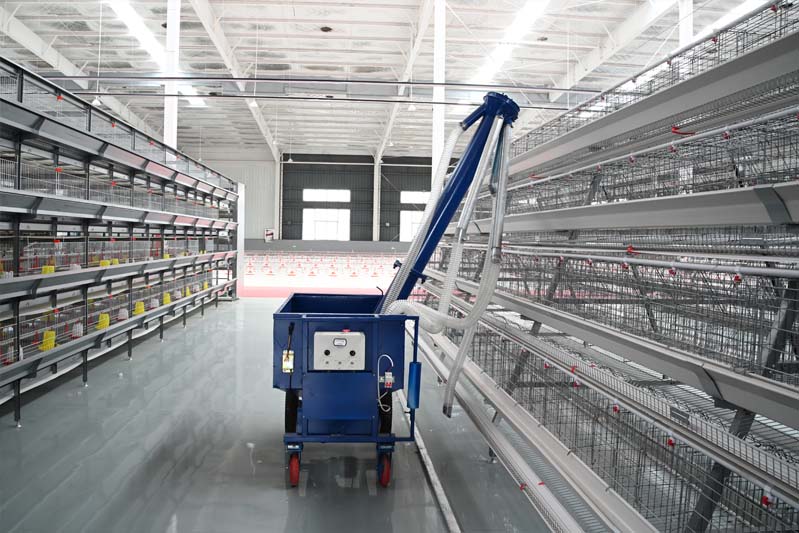
LIVI’s H-Type model is available in:
3-Tier: 150 chicks/set
4-Tier: 200 chicks/set
The cage dimensions are 1200 × 625 × 430 mm, with 25 chicks per door.
Best suited for:
- Commercial pullet and chick projects
- Farms planning an H-frame cage layout
- Projects requiring integration with automated poultry equipment
- Medium and large-scale brooding operations
🐥Simple Vertical Brooding Cage
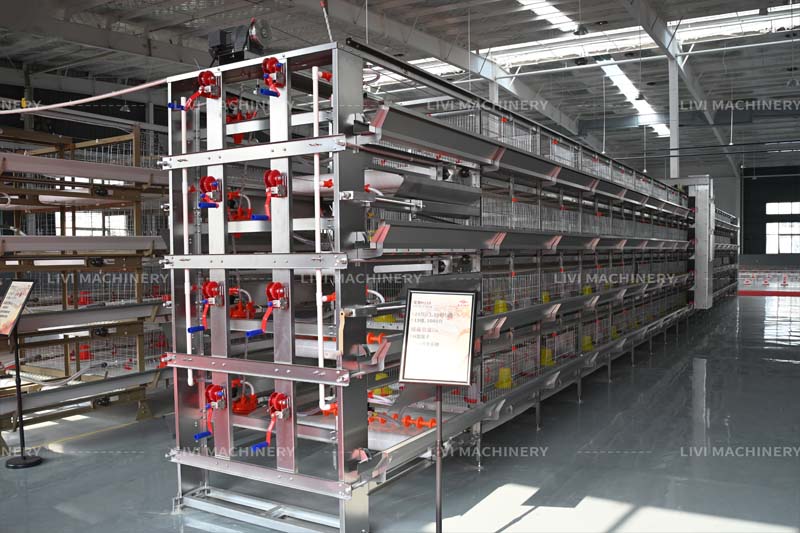
The Simple Vertical Brooding Cage has:
- 4 tiers
- 2 doors
- 12 chicks per door
- 96 chicks/set
- Dimensions of 1620 × 570 × 330 mm
It provides another configuration for projects where buyers need a simpler brooding cage arrangement.
A-Type vs H-Type vs Simple Vertical Brooding Cage
For buyers comparing different chick rearing equipment, the key differences are:
| Factor | A-Type | H-Type | Simple Vertical |
|---|---|---|---|
| Available tiers | 3 / 4 | 3 / 4 | 4 |
| Maximum stated capacity/set | 240 | 200 | 96 |
| Birds/door | 10 | 25 | 12 |
| Commercial scalability | High | High | More basic |
| Automation potential | Available | Strong | Depends on project configuration |
| Recommended decision basis | Capacity + house design | Automation + house design | Simpler project requirements |
Which Has the Highest Capacity per Set?
Based on the provided specifications, the ranking is:
1. A-Type 4-Tier — 240 chicks/set
2. H-Type 4-Tier — 200 chicks/set
3. A-Type 3-Tier — 180 chicks/set
4. H-Type 3-Tier — 150 chicks/set
5. Simple Vertical 4-Tier — 96 chicks/set
This ranking refers only to stated chick capacity per cage set, not overall system performance.
How Many Brooding Cages Are Needed for 20,000 Chicks?
For a 20,000-chick brooding project, cage quantity can be estimated using:
Required Cage Sets = Total Chicks ÷ Capacity per Set
Because partial cage sets cannot be installed, quantities are rounded upward.
| Cage Model | Capacity / Set | Calculation | Minimum Sets for 20,000 Chicks | Installed Capacity |
|---|---|---|---|---|
| A-Type 3-Tier | 180 | 20,000 ÷ 180 | 112 sets | 20,160 |
| A-Type 4-Tier | 240 | 20,000 ÷ 240 | 84 sets | 20,160 |
| H-Type 3-Tier | 150 | 20,000 ÷ 150 | 134 sets | 20,100 |
| H-Type 4-Tier | 200 | 20,000 ÷ 200 | 100 sets | 20,000 |
| Simple Vertical 4-Tier | 96 | 20,000 ÷ 96 | 209 sets | 20,064 |
Note: These are theoretical minimum cage quantities calculated from the stated capacity. Final project quantities should also consider actual stocking plans, house dimensions, aisle layout and any reserve capacity required by the farm.
Recommended 20,000-Chick Brooding Solution
For a commercial farm planning to rear approximately 20,000 chicks, the 4-Tier H-Type Brooding Cage provides a particularly straightforward capacity calculation:
Project Capacity: 20,000 chicks
Cage Model: H-Type 4-Tier, 1-Door
Cage Specification: 1200 × 625 × 430 mm
Capacity: 200 chicks/set
Required Quantity: 100 sets
Total Designed Capacity: 100 sets × 200 chicks = 20,000 chicks
This configuration gives the project a clear capacity relationship and can serve as the starting point for poultry-house layout and supporting-system design.
Need a 20,000-Chick Farm Plan?
Share your poultry house dimensions and target capacity. LIVI can recommend a suitable brooding cage configuration.
What Equipment Should a Complete Automatic Brooding System Include?
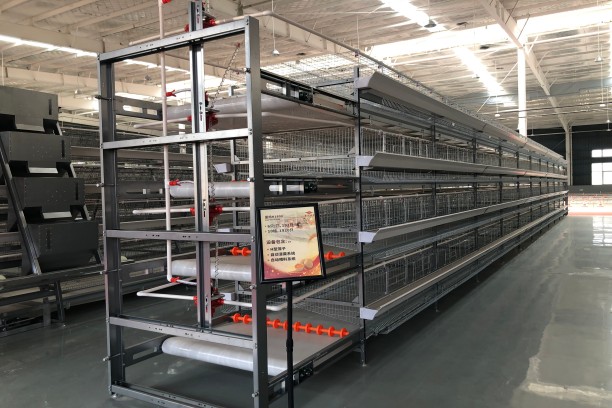
For commercial chick rearing, cage quantity is only one part of the project. Depending on the required automation level, a complete automatic poultry brooding system can be planned around:
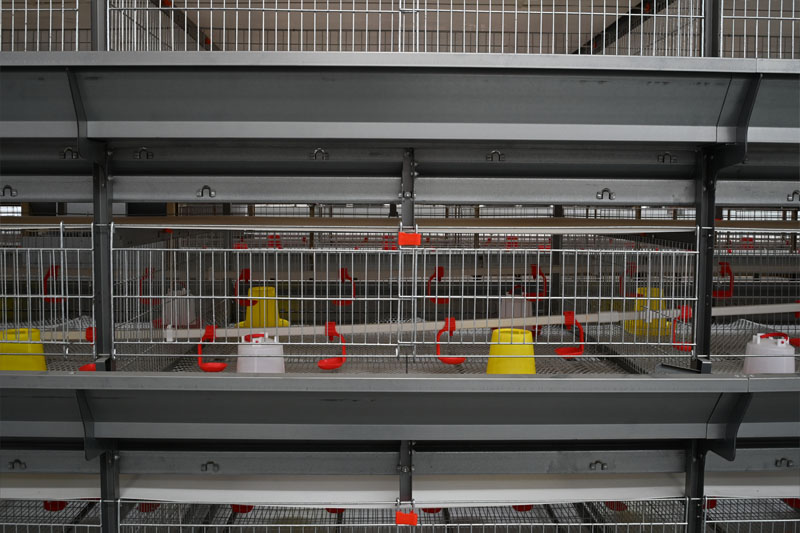
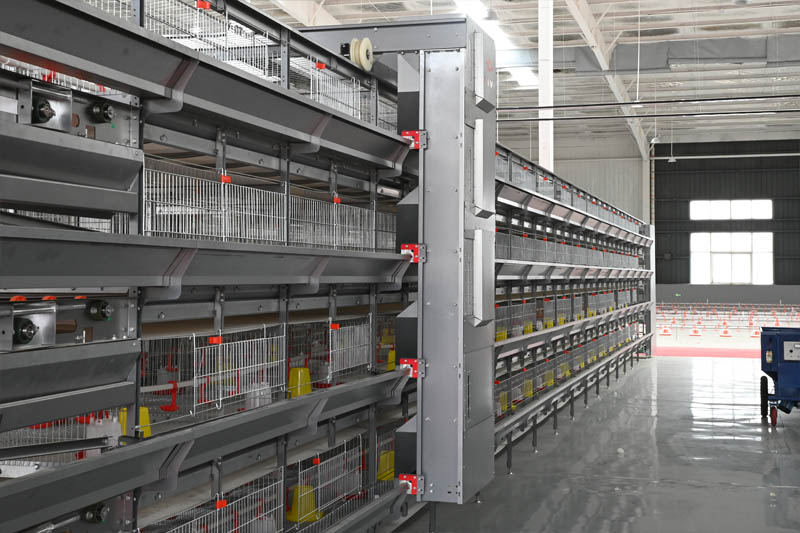
1. Brooding Cage System
Provides the main housing structure for chicks.
2. Feeding System
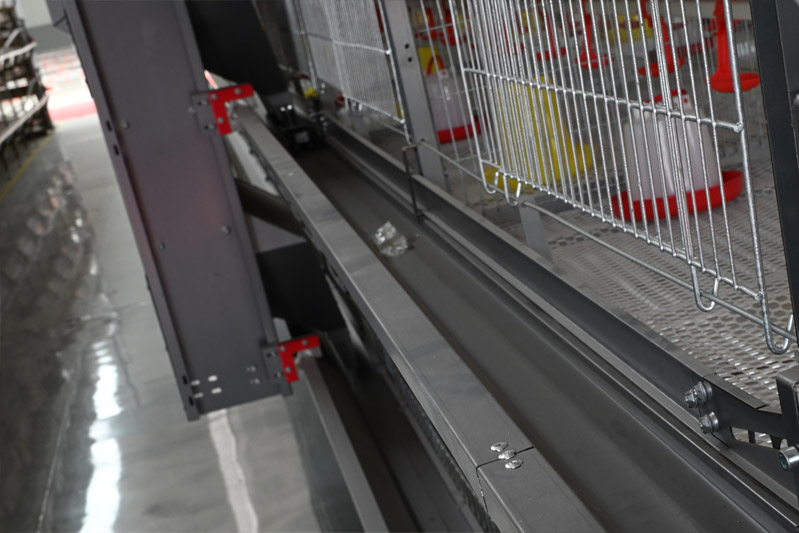
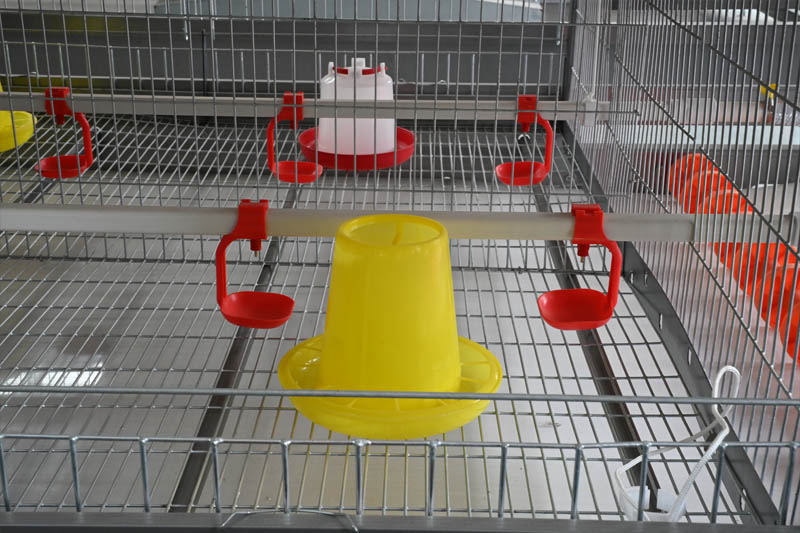
Designed to improve feed distribution and reduce repetitive manual feeding.
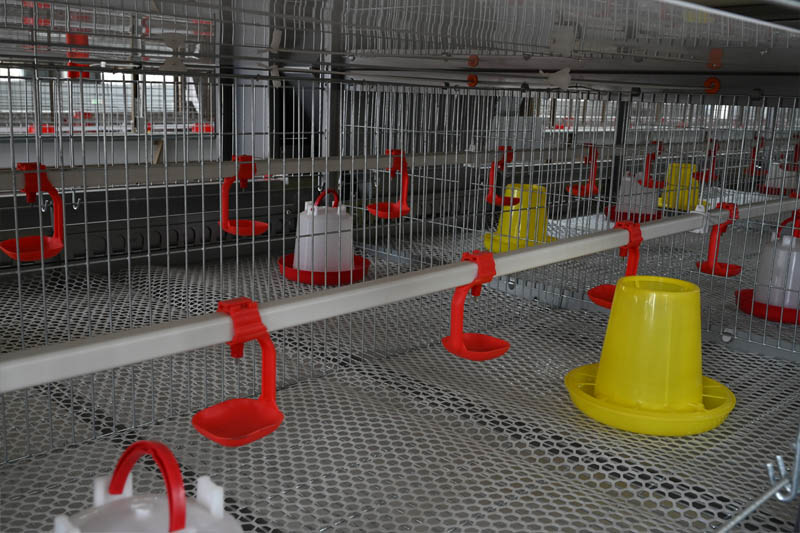
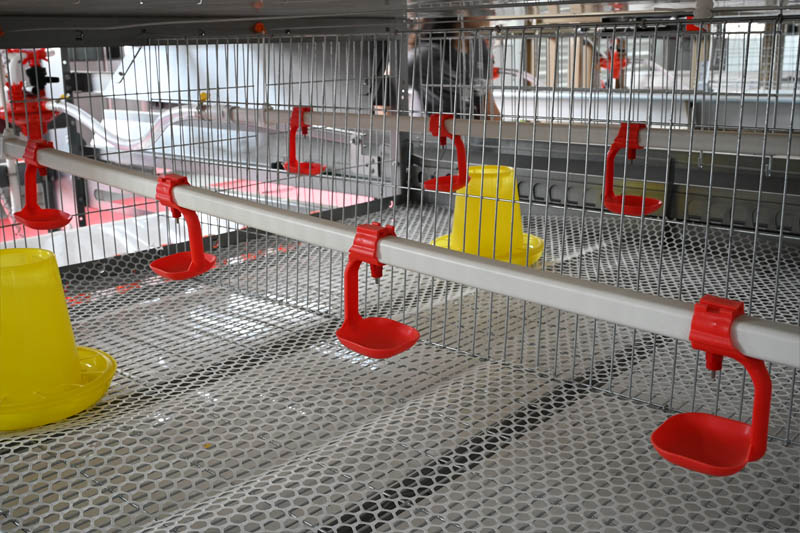
3. Drinking System
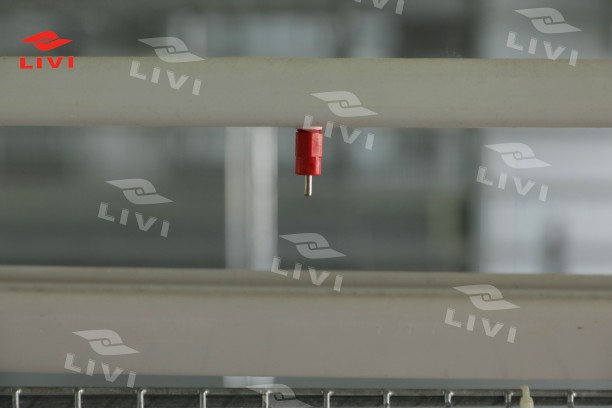
Provides drinking water through a controlled poultry drinking system.
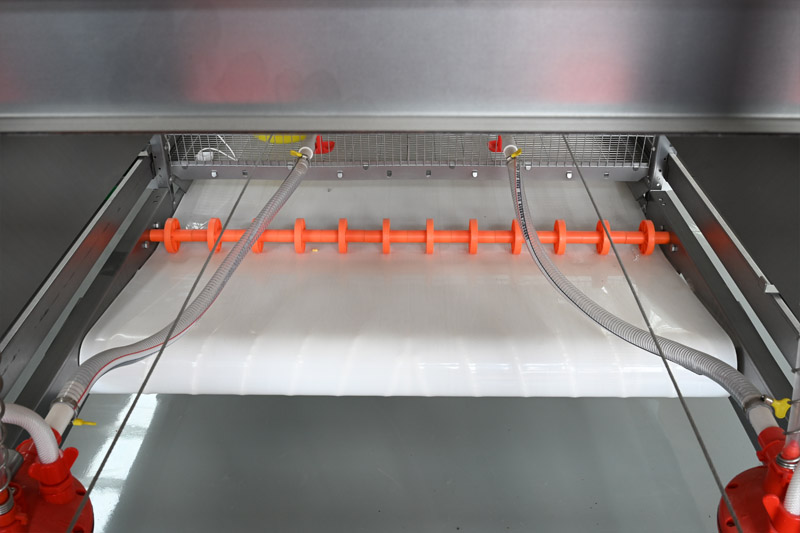
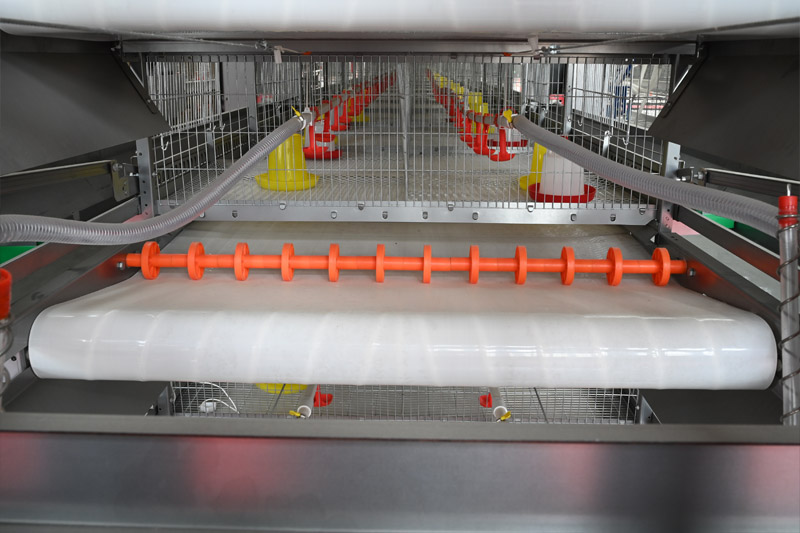
4. Manure Removal System
Helps manage manure generated during the rearing period and maintain cleaner operating conditions.
5. Environmental Control
Ventilation, temperature and other environmental equipment should be planned according to the poultry-house conditions and local climate.
The exact supporting equipment should be determined during project design rather than assumed solely from bird capacity.
Why Environmental Control Matters During Chick Brooding
For buyers planning a new chick farm, selecting the cage is only the first step.
Young birds are more dependent on a properly managed rearing environment. Therefore, poultry-house planning should consider:
- temperature management
- ventilation
- drinking-water availability
- feeding access
- stocking density
- manure management
- daily inspection access
This is why a professional commercial chick brooding system should be designed as an integrated production system rather than simply purchasing a certain number of cages.
Top 5 Factors When Choosing Poultry Brooding Equipment
1. Chick Capacity
Start with the number of chicks to be raised per batch. This determines the basic cage quantity.
2. Poultry House Dimensions
Length, width and usable height affect cage rows, tiers and aisle arrangement.
3. Cage Capacity per Set
Higher capacity per set can reduce the number of cage units required, but the final layout still needs to match the poultry house.
4. Automation Level
Consider whether feeding, drinking, manure removal and environmental control need to be integrated.
5. Future Expansion
If the farm plans to increase flock capacity later, equipment and house layout should allow practical expansion.
These five factors are more useful for procurement decisions than comparing cage prices alone.
How to Select Brooding Equipment by Farm Size
| Farm Requirement | What Buyers Should Prioritize |
|---|---|
| Smaller brooding project | Simple operation and suitable cage capacity |
| Medium commercial farm | Capacity + labor efficiency |
| 20,000-chick project | Cage quantity + house layout + supporting systems |
| Large commercial pullet farm | Automation + environmental control + scalability |
| Future expansion project | Modular layout and equipment compatibility |
The final model should therefore be selected based on the whole project, not only on the number of chicks each cage holds.
Planning an Automatic Brooding Farm?
LIVI machinery can combine brooding cages, feeding, drinking and supporting systems according to your farm requirements.
Why Choose LIVI Automatic Poultry Brooding Equipment?
A brooding equipment supplier should be able to answer more than:
“How much does one cage cost?”
For a commercial project, buyers also need to know:
- Which model matches the flock size?
- How many sets are required?
- How should cages be arranged inside the house?
- Which supporting equipment is necessary?
- What automation level fits the project?
LIVI machinery provides different A-Type and H-Type brooding cage configurations, allowing equipment selection to begin with the actual bird capacity and poultry-house conditions.
FAQ About Poultry Brooding Equipment
1. What is automatic poultry brooding equipment?
Automatic poultry brooding equipment is a cage-based rearing solution that can integrate chick housing with feeding, drinking, manure management and environmental-control equipment for commercial chick and pullet production.
2. How many chicks can one LIVI brooding cage hold?
Depending on the model, the provided capacities range from 96 to 240 chicks per set. The A-Type 4-tier model has the highest stated capacity at 240 chicks per set.
3. How many H-Type brooding cages are needed for 20,000 chicks?
Using the H-Type 4-tier model at 200 chicks per set, exactly 100 sets provide a theoretical capacity of 20,000 chicks.
For the H-Type 3-tier model at 150 chicks/set, at least 134 sets are required, providing 20,100 places.
4. How many A-Type brooding cages are needed for 20,000 chicks?
The 4-tier A-Type model requires at least 84 sets, providing 20,160 places. The 3-tier model requires at least 112 sets, also providing 20,160 places.
5. What is the difference between A-Type and H-Type brooding cages?
The supplied models differ in cage structure, doors, capacity and dimensions. A-Type models provide 180 or 240 chicks per set, while H-Type models provide 150 or 200 chicks per set. Selection should also consider house layout and automation requirements.
6. What material is used for LIVI brooding cage mesh?
The cage mesh uses Q235 Chinese national-standard steel wire, with wire diameters from 2.3 mm to 3.6 mm.
7. Which brooding cage has the highest capacity per set?
Among the supplied models, the A-Type 4-Tier 3-Door cage has the highest stated capacity at 240 chicks per set.
8. What supporting equipment is needed for an automatic chick farm?
Depending on the project requirements, supporting systems can include feeding, drinking, manure removal and environmental-control equipment. Final configuration should be determined according to farm capacity and poultry-house conditions.
9. What information is needed to design a commercial brooding farm?
Prepare at least: farm location + chick capacity + poultry house length/width/height + desired automation level. These details allow a more accurate cage layout and equipment configuration.
Need a Customized Brooding Cage Solution?
Tell us your chick capacity and house size. LIVI will recommend a suitable cage model and equipment configuration.