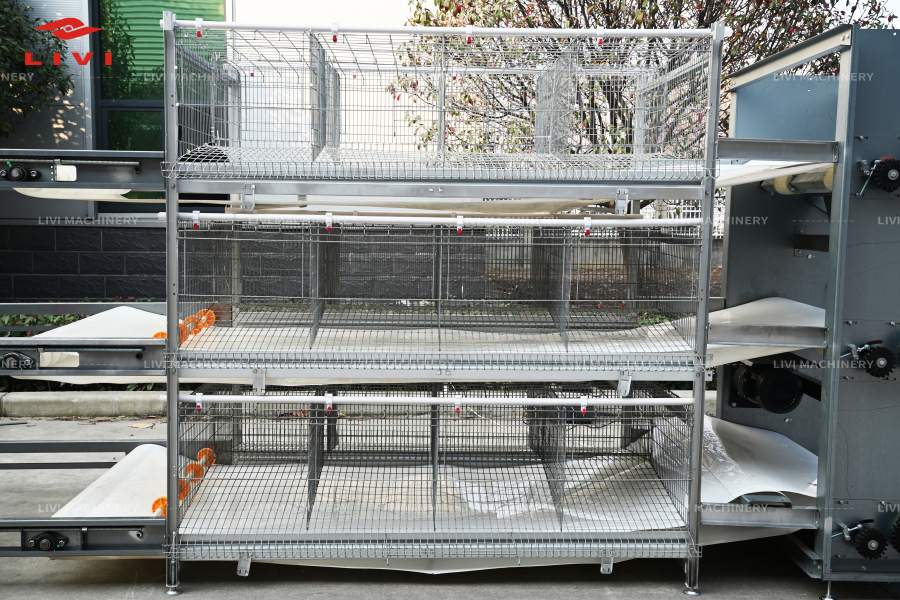




A Type Layer Cage System for Small and Medium Commercial Egg Farms
Time : 2024-06-13 Author : admin
Looking for an A Type Layer Cage System? Explore LIVI’s durable galvanized cages with automatic feeding and drinking for efficient egg farming and complete poultry solutions.

Quick Answer
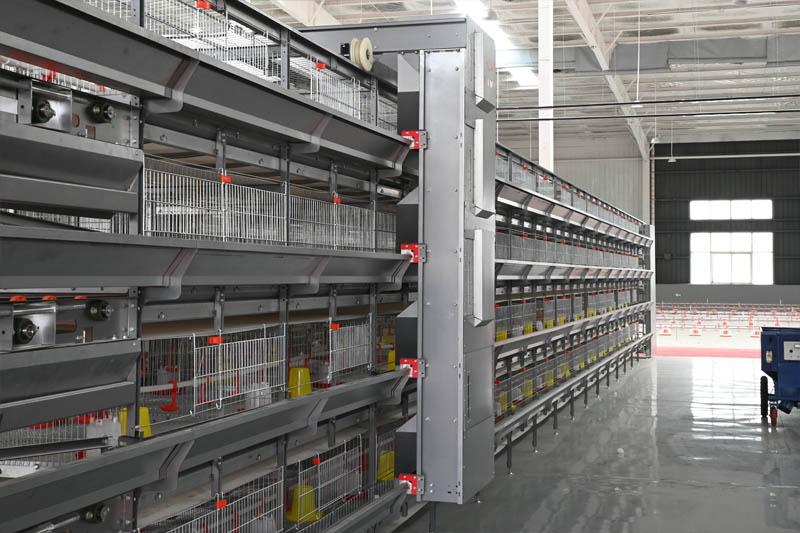
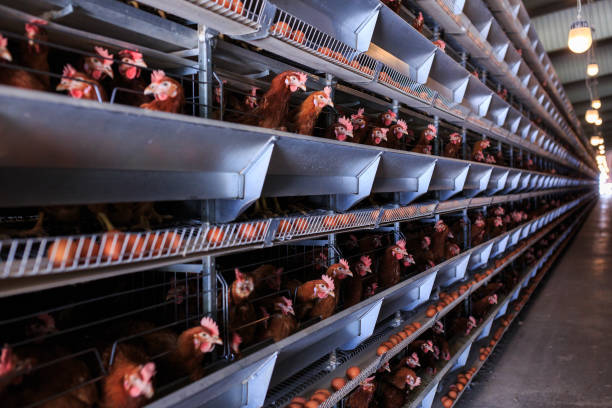
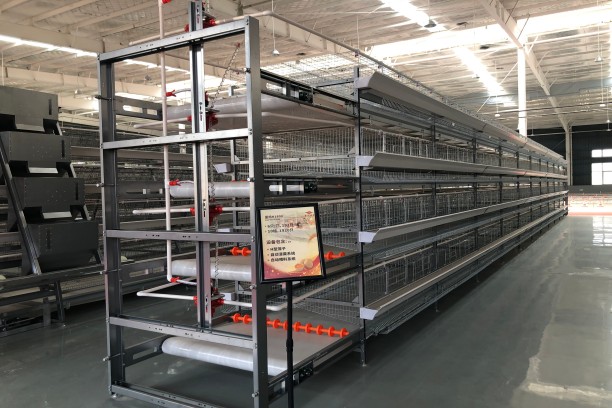
Livi’s A Type Layer Cage System is a practical poultry housing solution designed for small and medium commercial egg farms. The system provides efficient cage arrangement, durable galvanized steel structure and compatibility with automatic feeding and drinking systems, helping farmers improve egg production efficiency while controlling investment costs.
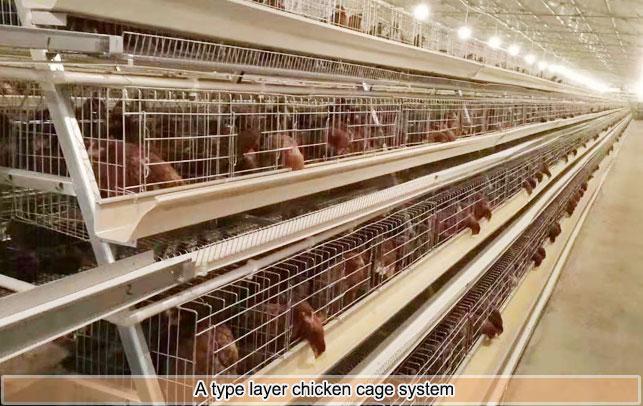
A Type Layer Cage System Specifications
| Parameter | Specification |
|---|---|
| Product | A Type Layer Cage System |
| Application | Commercial Egg Production |
| Structure | A Frame Design |
| Material | Q235 Steel Wire |
| Surface Treatment | Hot-dip Galvanized |
| Bird Type | Layer Chicken |
| Tier Options | 3-4 tiers |
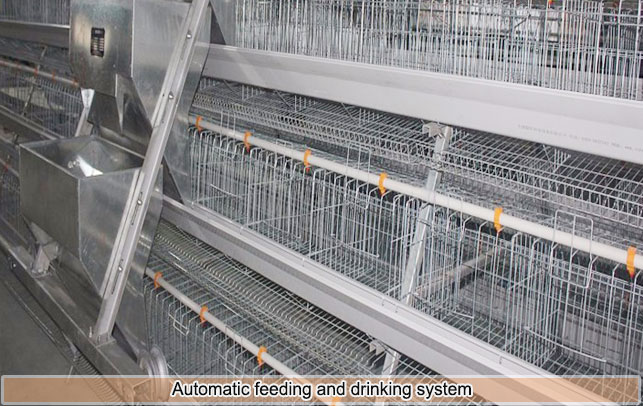
| Feeding | Manual / Automatic Feeding Compatible |
| Drinking | Nipple Drinking System Compatible |
| Service Life | 15+ Years |
| A type layer chicken battery cage specification | ||||
| type | Model | Birds Qty / Door | Birds Qty / Set | Specification |
| A-Type | 3-Tier 4-Door | 4pcs | 96pcs | 1950mm*350mm*380mm |
| 3-Tier 5-Door | 3pcs | 90pcs | 1950mm*350mm*380mm | |
| 4-Tier 4-Door | 4pcs | 128pcs | 1950mm*350mm*380mm | |
| 4-Tier 5-Door | 3pcs | 120pcs | 1950mm*350mm*380mm | |
| 4-Tier 5-Door | 4pcs | 160pcs | 1950mm*450mm*410mm | |
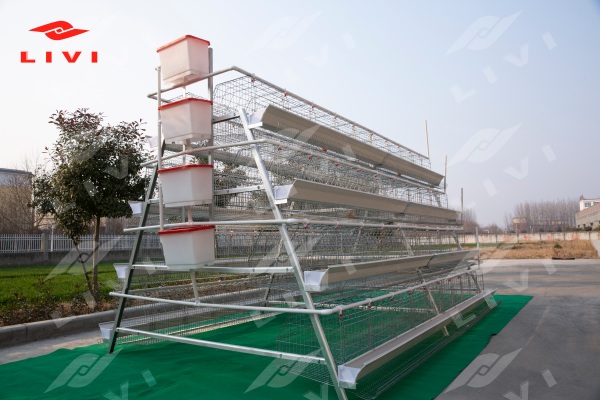
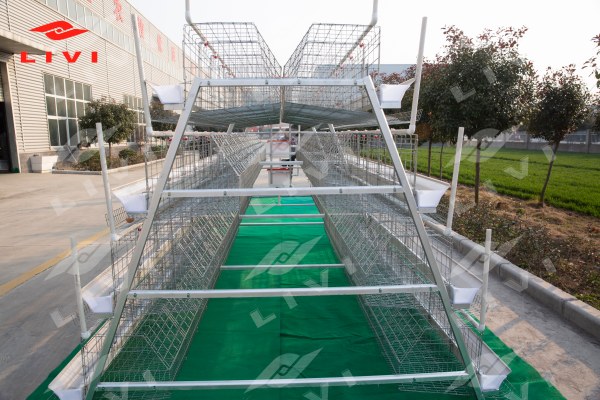
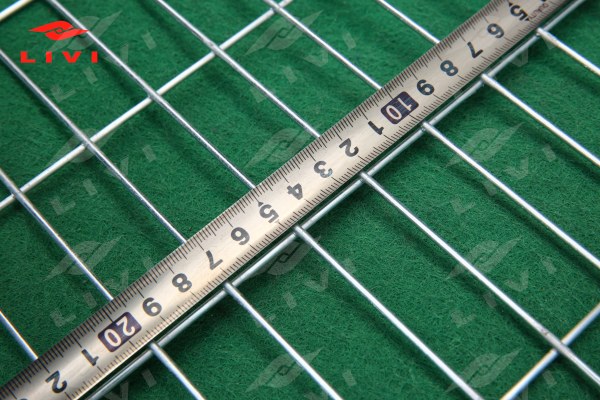
Equipment list of the layer cage system:
Basic Component:
Chicken layer cage mesh, Chicken layer cage frame, Feeding trough, Water Pipe, Water Pressure Adjuster, Drinking Nipple.
Optional automatic equipment:
- Automatic feeding system: The feeding process all the use of automated control, it can adjust the amount of materials. It prevents the waste of feed.
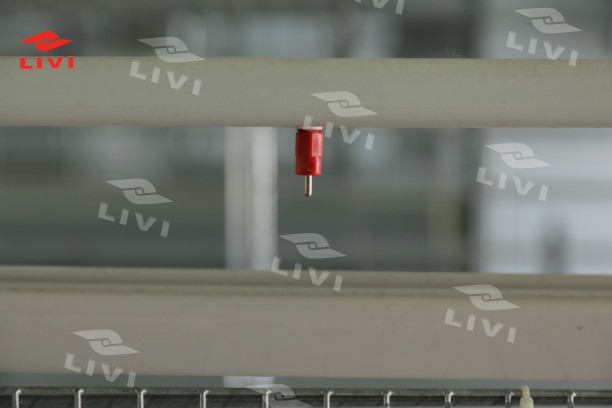
- Automatic drinking system: High-quality water drinking cups, pressure valves and 360-degree drinking nipples can effectively prevent the water leakage and drinking system adopt the closed piping system, which can minimize the water pollution.
- Automatic egg collecting system: Perfect roll out angle of the bottom mesh minimize the breakage. It has a powerful ability to collect eggs, collecting up to 20000 eggs per hour, collecting and conveying eggs between different chicken sheds.
- Automatic manure removing system: The conveyor belt type is suitable for both A-type cages and H-type cages, which can reduce the labor intensity and labor cost, keep the chicken shed dry and clean.
- Central integrated control system: This system is a modular system which manages all aspects of a poultry house, such as climate, temperature, feeding, drinking, weighing and ventilation system. The management computer is the core of the poultry farm for you to monitor the whole poultry farm easily.
Features:
A type layer chicken battery cage system has the feature of simple structure, easy operation and maintenance, high option of the automatic equipment, lower input costs and reap fast, customer could choose the chicken cage only, cage with semi or high-automatic equipment according to your different requirement.
H type layer chicken battery cage system has the feature of high-automation, high-density, effectively save the land and labor cost, the separation of the chicken shed and people living zone avoids the disease spread, fully automatic manure removing system effectively decrease the environmental pollution, adding the intelligent environmental controling system, which is the best choice of the intensive & large scale poultry farm.
Need the Right Cage Solution for Your Farm?
Tell us your flock size and house dimensions. Livi engineers will recommend the suitable A Type Layer Cage System.
A Type Layer Cage System vs H Type Layer Cage System
A Type and H Type layer cages are both used for commercial egg production, but they differ in cage structure, space utilization, automation integration, manure handling, initial investment and poultry house planning.
The right choice depends on your flock size, available house space, automation requirements, labor conditions and investment plan—not bird capacity alone.
| Comparison | A Type Layer Cage System | H Type Layer Cage System |
|---|---|---|
| Cage Structure | Stepped A-frame | Vertically stacked H-frame |
| Space Utilization | Moderate | Higher vertical utilization |
| Typical Tiers | Commonly 3–4 tiers | Multiple tiers; LIVI 1200 mm model supports 3–8 tiers |
| Farm Application | Small to medium commercial farms | Medium to large intensive farms |
| Initial Investment | Generally lower | Generally higher |
| Feeding | Manual, semi-automatic or automatic | Well suited to automatic feeding |
| Drinking | Nipple drinking available | Nipple drinking available |
| Egg Collection | Manual or automatic options | Well suited to automatic egg collection |
| Manure Removal | Scraper or compatible automatic system | Belt manure removal commonly integrated |
| Automation Integration | Flexible | Strong integration with full automation |
| House Space Requirement | Requires more horizontal floor space for comparable capacity | Uses more vertical house space |
| System Complexity | Simpler | Higher |
| Expansion Planning | Flexible for phased investment | Strong option for intensive expansion |
| Best Decision Basis | Investment control + simpler operation | Space utilization + integrated automation |
LIVI’s current H-type 1200 × 625 × 480 mm system, for example, is available from 3 to 8 tiers, with documented capacities from 108 to 288 birds per cage set depending on tier configuration. This illustrates why H-type systems can place more cage capacity vertically within the poultry house.
When Should You Choose an A Type Layer Cage?
An A Type system is worth considering when:
- initial equipment investment needs to be controlled;
- the farm has sufficient poultry-house floor area;
- simple operation and maintenance are priorities;
- manual, semi-automatic or automatic equipment needs to be selected progressively;
- the project may add automation as production expands.
A Type does not necessarily mean a manual farm. LIVI A Type cages can also integrate nipple drinking, automatic feeding, manure removal and egg collection according to the project configuration.
When Should You Choose an H Type Layer Cage?
An H Type system becomes more relevant when:
- higher bird capacity must be planned within limited house space;
- vertical space utilization is important;
- automatic feeding, drinking, egg collection and manure removal need to operate as an integrated system;
- the project is designed for intensive commercial production;
- future large-scale expansion is part of the farm plan.
LIVI’s H-type systems are designed around multi-tier cage arrangements and can integrate feeding, nipple drinking, egg collection and manure removal equipment.
A Type Layer Cage Farm Design Solution
Example: 10,000 Layers Farm Solution
Recommended: A Type Layer Cage System
Configuration:
- 4-tier A type cage
- Automatic feeding
- Nipple drinking
Chicken House:
Example:
Length: 80m
Width: 12m
Capacity: 10,000 layers
Starting a Small or Medium Commercial Egg Farm?
Get a customized equipment proposal from Livi poultry engineers.
Why Choose LIVI A Type Layer Cage System?
LIVI provides more than individual layer cages. The A Type system can be planned together with the poultry house, feeding, drinking, manure handling and egg collection equipment to create a practical solution for commercial layer farms.
1. Project-Based Cage Layout
Every farm has different bird capacity, house dimensions and operating conditions. LIVI plans the cage rows, equipment arrangement and supporting systems according to the actual project instead of applying the same layout to every farm.
2. Flexible Automation Options
The A Type system can be configured from a relatively simple setup to a more automated commercial farm. Feeding, drinking, manure removal and egg collection can be selected according to farm scale, labor availability, power conditions and investment plan.
3. Integrated Poultry Farm Equipment
Cages should not be planned separately from other farm systems. LIVI can coordinate the A Type cages with feeding, drinking, manure removal, egg collection and other supporting equipment, helping ensure that the systems fit the same poultry house layout.
4. Support from Planning to Installation
For new poultry projects, equipment selection often begins before the poultry house is finalized. LIVI can support customers with farm planning, equipment layout, production, installation guidance and technical support, providing a clearer path from initial farm concept to equipment implementation.
5. Experience in Commercial Layer Projects
LIVI A Type cage systems have been supplied for commercial layer projects in different markets. This project experience helps the team evaluate practical factors such as house layout, automation requirements, equipment interfaces and future expansion when preparing a new solution.
6. One Project, One Suitable Solution
The value of working with LIVI is not simply choosing an A Type cage model. It is matching the cage system, poultry house and automation level to the actual farm.
Tell us your layer capacity, poultry house size, farm location and automation requirements, and LIVI will prepare a project-specific equipment proposal.
FAQ About A Type Layer Cage Systems
1. How much does an A Type layer cage system cost?
The price of an A Type layer cage system depends on farm capacity, cage specification, number of tiers, automation level, poultry house layout, shipping destination and installation scope.
A cage-only quotation will cost less than a complete system with automatic feeding, nipple drinking, manure removal and egg collection. For an accurate quotation, provide the number of layers, poultry house dimensions, farm country and required automation level.
2. How many chickens can an A Type layer cage hold?
Capacity depends on the cage model, number of tiers, doors and birds per door. LIVI currently provides several configurations:
| A-Type Configuration | Cage Size | Birds / Set |
|---|---|---|
| 3-Tier 4-Door | 1950 × 350 × 380 mm | 96 |
| 3-Tier 5-Door | 1950 × 350 × 380 mm | 90 |
| 4-Tier 4-Door | 1950 × 350 × 380 mm | 128 |
| 4-Tier 5-Door | 1950 × 350 × 380 mm | 120 |
| 4-Tier 5-Door | 1950 × 450 × 410 mm | 160 |
For example, a 10,000-layer farm using the 160-bird model requires a theoretical minimum of 63 cage sets (10,000 ÷ 160 = 62.5). Final quantity and row arrangement should be confirmed from the poultry house layout rather than capacity calculation alone.
3. What is the difference between A Type and H Type layer cages?
The main differences are structure, stocking layout, automation requirements, land use and investment level.
| Factor | A Type Layer Cage | H Type Layer Cage |
|---|---|---|
| Structure | A-frame / stepped | Stacked |
| Typical Farm | Small–medium commercial farms | Larger intensive farms |
| Space Utilization | Moderate | Higher |
| Automation | Manual, semi-auto or automatic | Usually higher automation |
| Initial Investment | Generally lower | Generally higher |
| Management | Relatively simple | More integrated |
| Expansion Decision | Flexible for smaller projects | Better suited to high-density planning |
A Type is often considered when investment control and simpler operation are priorities. H Type becomes more relevant when land efficiency, larger capacity and integrated automation are major requirements. The final choice should be based on the farm layout rather than bird number alone.
4. Is an A Type layer cage suitable for 10,000 or 20,000 layers?
Yes. An A Type system can be configured for commercial farms in this capacity range, but the number of cage sets and poultry house arrangement must be calculated for each project.
For example:
Required Cage Sets = Target Layer Capacity ÷ Birds per Cage Set
With a 160-bird/set configuration:
| Farm Capacity | Theoretical Minimum |
|---|---|
| 5,000 layers | 32 sets |
| 10,000 layers | 63 sets |
| 20,000 layers | 125 sets |
These are capacity calculations only, not final engineering quantities. Row length, aisles, feeding equipment, manure removal, ventilation and service areas must be checked before confirming the house design.
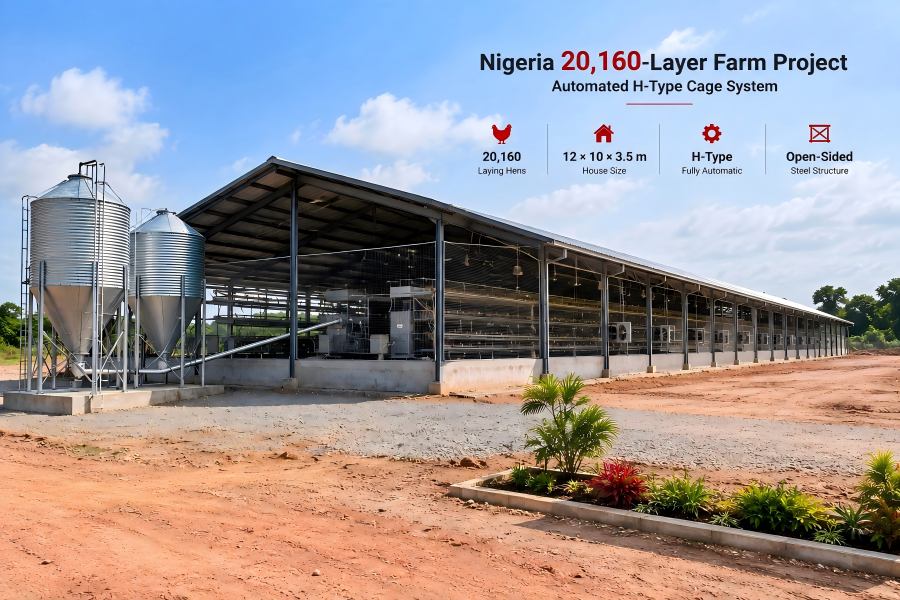
LIVI has also published a recent 20,000-layer Nigeria project using A-type cages divided between two houses, illustrating why house-level planning matters rather than simply dividing total birds by cage capacity.
5. Can A Type layer cages use automatic feeding, drinking, manure removal and egg collection?
Yes. A Type cages can be configured at different automation levels according to farm scale, labor conditions, power supply and investment budget.
| System | Manual / Basic | Semi-Automatic | Higher Automation |
|---|---|---|---|
| Cage System | ✓ | ✓ | ✓ |
| Nipple Drinking | ✓ | ✓ | ✓ |
| Feeding | Manual | Mechanized / Semi-auto | Automatic |
| Manure Removal | Manual / Scraper | Scraper | Automatic system |
| Egg Collection | Manual | Manual / Mechanized | Automatic |
| Central Control | — | Optional | Project-dependent |
The best automation level is not necessarily the highest one. A commercial farm should consider labor availability, electricity reliability, house layout, maintenance capability and investment cost before selecting equipment.
6. What poultry house size do I need for an A Type layer cage farm?
There is no single poultry house size for every A Type cage project.
House dimensions depend on:
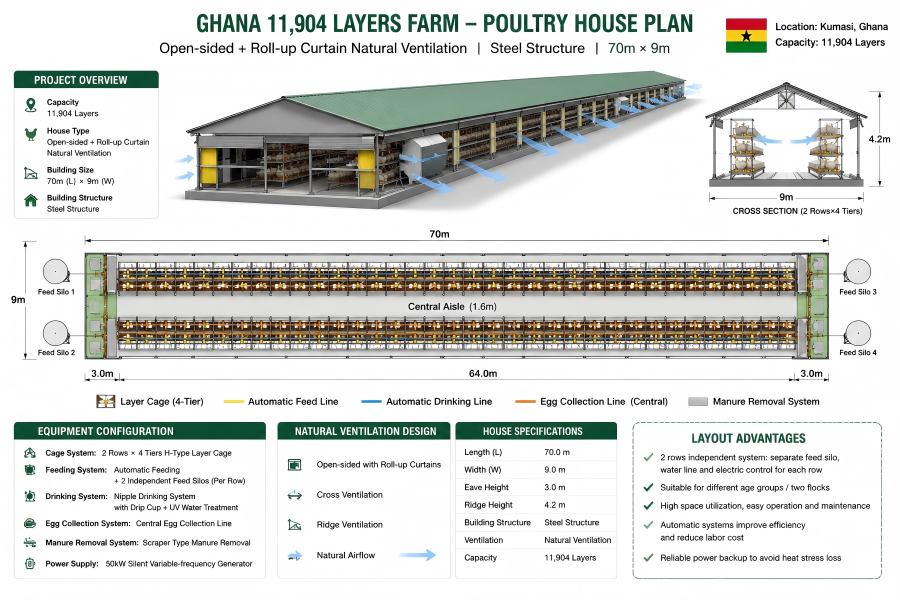
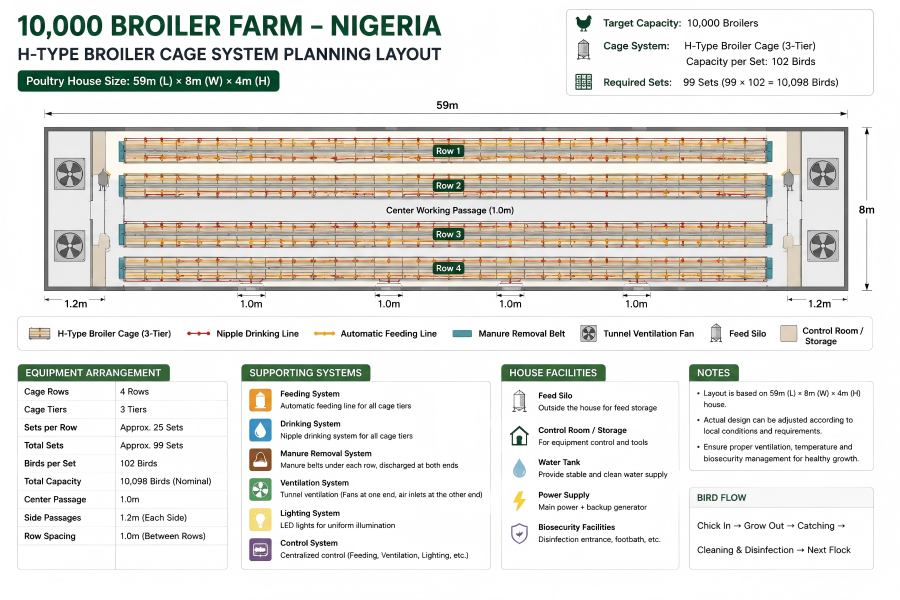
Bird Capacity → Cage Model → Cage Sets → Number of Rows → Row Length → Aisles → Feeding/Manure Equipment → Ventilation
For example, LIVI’s A-Type models include cage units with a nominal length of 1950 mm, but this dimension alone cannot determine the final poultry house length or width.
Before construction, the supplier should calculate the cage arrangement together with access aisles, equipment interfaces, ventilation and management space. Buyers planning a new farm should therefore confirm the cage layout before finalizing the poultry house dimensions.
7. What information should I provide to get an A Type layer cage quotation?
For an accurate equipment proposal, send the supplier the following project information:
| Required Information | Example |
|---|---|
| Bird Type | Commercial layers |
| Capacity | 10,000 / 20,000 layers |
| Poultry House | Length × Width × Height |
| Existing or New House | New / Existing |
| Cage Preference | A Type |
| Automation | Manual / Semi-auto / Automatic |
| Farm Location | Country + project location |
| Electricity | Voltage / Frequency / Phase |
| Expansion Plan | Current + future capacity |
If the poultry house has not yet been built, provide the land dimensions and target capacity first. LIVI Machinery can then use these inputs to prepare a preliminary cage layout, equipment configuration and quotation before construction.
Build Your Egg Production Farm with LIVI
Reliable poultry equipment solutions for farmers worldwide.