



Broiler Pan Feeding System for Efficient Commercial Broiler Farming
Time : 2026-08-13 Author : LIVI Poultry Farming Expert
LIVI broiler pan feeding system provides adjustable, easy-clean feeding for commercial broiler farms with durable pans, sensors and automatic feed delivery.

Quick Answer
LIVI machinery’s Broiler Pan Feeding System is an automatic feeding solution for commercial broiler farms. It uses 360 mm plastic feed pans with 14-grid or 16-grid configurations, adjustable feed levels, a 90–120 kg vice hopper, a 0.75–1.1 kW drive motor, and an imported German feed sensor. The system is designed to provide controlled feed delivery, reduce feeding labor and simplify daily pan cleaning.
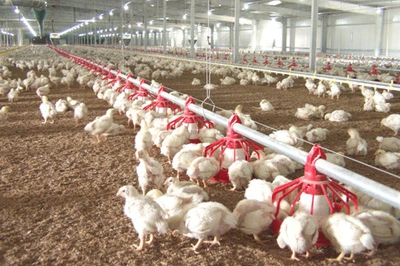
What Is an Automatic Broiler Feeding System for Floor Rearing?
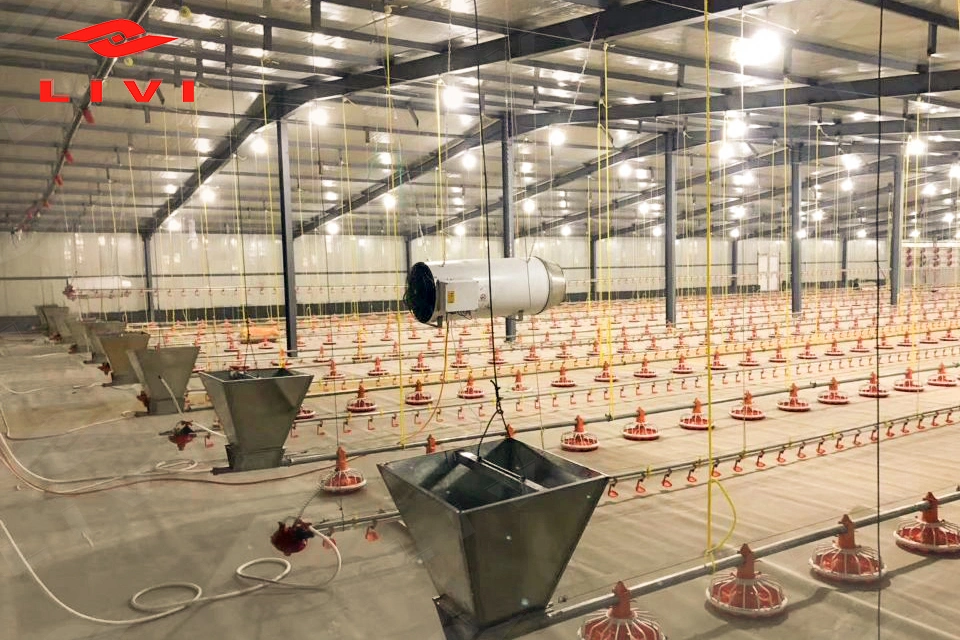
An automatic broiler feeding system is a mechanized feeding solution that automatically conveys feed from a feed silo or hopper to multiple feeding pans throughout the broiler house.
Instead of manually carrying and distributing feed, the system creates an automated feeding process:
Feed Storage → Feed Conveying → Feed-Level Detection → Pan Feeding → Broiler Feeding
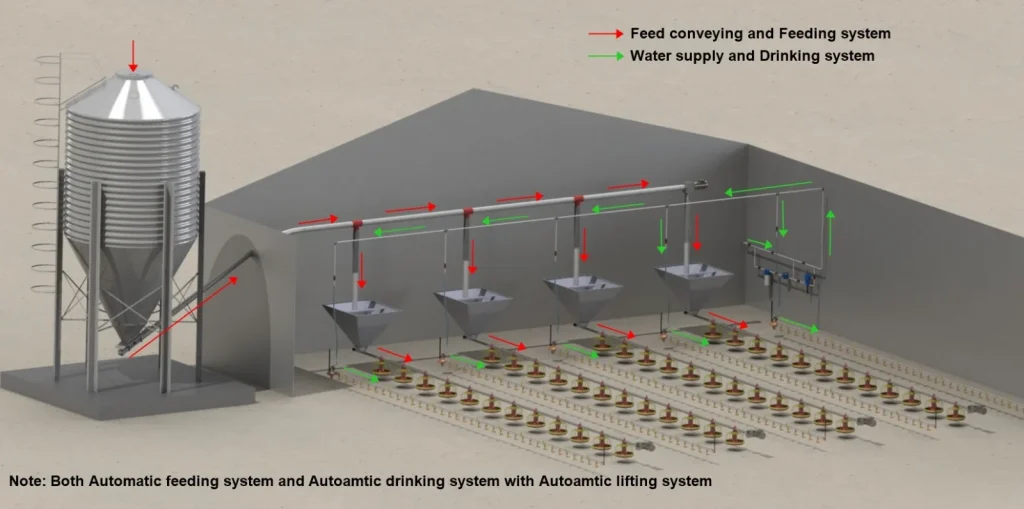
A typical broiler floor feeding system includes:
- Feed hopper or vice hopper
- Main feed line
- Secondary feed line
- Feeding pans
- Drive motor
- Feed-level sensor
- Drop pipes and connecting components
The vice hopper has a capacity of 90–120 kg and is made from 1.00 mm hot-dip galvanized steel sheet. The drive motor is specified at 380 V, 50 Hz, three-phase, with a rated power range of 0.75–1.1 kW.
The feed-level sensor can be installed under the main feed line, secondary feed line, or vice hopper to help monitor feed availability.
Send us your broiler capacity, house length, house width, number of houses, and local power specifications. LIVI machinery can recommend a suitable feeding system configuration for your project.
Key Parameters of the LIVI Broiler Pan Feeding System
For buyers evaluating automatic broiler feeding equipment, general descriptions such as “automatic feeding” are not enough. Actual equipment parameters are essential for project planning.
| Item | Parameter |
|---|---|
| Feeding Pan Type | 14-grid / 16-grid |
| Feeding Pan Diameter | 360 mm |
| Feeding Pan Material | Plastic |
| Secondary Feed Line Pipe | Galvanized steel pipe |
| Secondary Pipe Diameter | 45 mm |
| Vice Hopper Capacity | 90–120 kg |
| Vice Hopper Material | Hot-dip galvanized steel sheet |
| Vice Hopper Sheet Thickness | 1.00 mm |
| Drive Motor Voltage | 380 V |
| Frequency | 50 Hz |
| Motor Phase | 3 Phase |
| Motor Rated Power | 0.75–1.1 kW |
| Feed-Level Sensor | Available |
| Feed Adjustment | Multi-position adjustment |
| Application | Broiler floor rearing / broiler farming |
Why Is Pan Feeding Suitable for Broiler Floor Rearing?
3.1 From Manual Feed Handling to Automatic Feed Conveying
As flock size increases, manually carrying and distributing feed creates a significant amount of repetitive work.
An automatic feeding system conveys feed through the feed lines to different areas of the poultry house, reducing the need for workers to repeatedly carry feed inside the house.
For commercial broiler floor rearing, the main benefit is not simply replacing workers with machines. It allows farm workers to spend less time on repetitive feeding and more time on flock observation, equipment inspection, and farm management.
3.2 Adjustable Feed Quantity
Feed requirements change as broilers grow.
LIVI’s feeding pans support multi-position feed adjustment. According to the product information, a typical 5-grid pan provides 5 feed-level adjustment positions, while other pan configurations can provide 10 adjustment positions. A sliding shut-off mechanism can also adjust the feed outlet from fully open to fully closed.
This makes feed adjustment more flexible throughout different broiler growth stages.
For a commercial automatic broiler feeding system, buyers should therefore evaluate not only motor specifications but also the feed adjustment mechanism of the pan.
14-Grid vs. 16-Grid Broiler Feeding Pan: Which One Should You Choose?
LIVI’s broiler pan feeding system provides both 14-grid and 16-grid feeding pans, with a pan diameter of 360 mm.
| Comparison | 14-Grid Pan | 16-Grid Pan |
| Pan Diameter | 360 mm | 360 mm |
| Number of Grid Positions | 14 | 16 |
| Application | Standard feeding configuration | Higher grid-count configuration |
| Main Difference | Fewer feeding positions | More feeding positions |
| Selection Basis | House layout and flock size | House layout and flock size |
It is important not to assume that a 16-grid pan is automatically better than a 14-grid pan. The correct choice should be based on:
- Broiler population
- House floor area
- House length and width
- Feeding-line length
- Number of feeding lines
- Bird age
- House layout
- Project budget
The right question is not “Which pan is better?” but “Which pan configuration is better for my house design?”
How Can an Automatic Broiler Feeding System Help Reduce Feed Waste?
Feed waste is rarely caused by a single factor. It can be related to pan design, feed quantity, feed level, bird behavior, and daily management.
LIVI’s pan feeding system uses a V-shaped corrugated pan bottom designed to help prevent excessive feed accumulation while maintaining feed freshness. The inclined pan edge also helps reduce feed spillage.
Therefore, a well-designed broiler floor feeding system should address three questions:
Is enough feed supplied? + Is feed distributed evenly? + Is unnecessary feed waste minimized?
The goal should not simply be maximum feed conveying speed.
How Does a Broiler Automatic Feeding System Work?
A typical automatic broiler feeding equipment configuration works through the following process.
Step 1: Feed Storage
Feed is stored in a feed silo or storage hopper.
Step 2: Main Feed Conveying
The drive system starts and conveys feed through the main feed line.
Step 3: Secondary Feed Conveying
Feed enters secondary feed lines according to the poultry-house layout.
Step 4: Feeding Pan Distribution
Feed is delivered through drop pipes into individual feeding pans.
Step 5: Feed-Level Detection
Feed-level sensors monitor feed availability and help control the feeding process.
Step 6: Broiler Feeding
Broilers access feed directly from the feeding pans.
This structure is particularly suitable for commercial broiler floor rearing systems that require continuous feed supply and reduced manual feeding.
Automatic Broiler Feeding System vs. Manual Feeding
| Item | Manual Feeding | Automatic Pan Feeding |
| Feeding Method | Manual carrying and distribution | Automatic feed conveying |
| Labor Requirement | High | Lower |
| House Coverage | Depends on workers | Designed through feed-line layout |
| Feed Adjustment | Manual experience | Multi-position adjustment |
| Feed-Level Management | Manual observation | Feed-level sensor available |
| Commercial Farm Suitability | Limited | High |
| Daily Management | More repetitive work | Higher automation |
| Scalability | Limited | Can be designed for different house layouts |
Bottom Line
For small-scale broiler farms, manual feeding may still offer advantages in terms of low initial investment and simple operation.
For medium- and large-scale broiler floor rearing, however, an automatic pan feeding system can provide significant advantages in labor efficiency, feed distribution, and automation.
8 Parameters to Confirm Before Purchasing an Automatic Broiler Feeding System
Do not purchase a feeding system based only on flock size. Before requesting a quotation, prepare at least these eight parameters:
- Broiler capacity
- Number of poultry houses
- House length
- House width
- House layout
- Required automation level
- Local voltage and frequency
- Required number of feeding lines
For example, LIVI’s drive motor specification is 380 V, 50 Hz, three-phase, 0.75–1.1 kW. Export projects should therefore confirm local electrical conditions before finalizing the equipment configuration.
How Should Automatic Feeding Be Planned for Different Farm Sizes?
1. Small Broiler Farms
Key considerations include:
- Simple system structure
- Initial investment
- Cleaning and maintenance
- Feed adjustment
- Future upgrade potential
A highly sophisticated automation system may not always be necessary.
2. Medium-Sized Broiler Farms
More attention should be given to:
- Feeding-line layout
- Feed distribution uniformity
- Automatic control
- Feed-level sensors
- Motor configuration
- House zoning
At this stage, the value of an automatic broiler feeding system becomes increasingly significant.
3. Large Commercial Broiler Farms
Large projects should consider:
- Multiple-house planning
- Main and secondary feed-line layout
- Automatic control
- Feed silo and storage capacity
- Equipment integration
- Maintenance access
- Future expansion
For large projects, it is generally better to design the complete feeding system together with the poultry-house layout rather than purchasing individual components and connecting them later.
Which Farms Are Suitable for the LIVI Broiler Pan Feeding System?
LIVI’s Broiler Pan Feeding System is designed for automated feeding applications in broiler floor-rearing operations.
It is particularly suitable for:
- Broiler floor-rearing farms
- Broiler litter-floor systems
- Medium and large commercial broiler farms
- Farms looking to reduce manual feeding
- Poultry houses requiring automatic feed conveying
- Farms requiring zoned feed distribution
- New modern broiler farms
- Existing farms upgrading their feeding automation
However, the final equipment configuration should not be standardized across every farm.
House dimensions, flock size, electrical conditions, and feeding-line layout all influence the final system design.
5 Common Mistakes When Buying Automatic Broiler Feeding Equipment
Mistake 1: Choosing Only by Price
The lowest equipment price does not necessarily mean the lowest total operating cost.
Consider equipment durability, maintenance, labor requirements, feed management, and spare-parts availability.
Mistake 2: Looking Only at Motor Power
The 0.75–1.1 kW figure represents the published drive-motor power range for LIVI’s system. It should not be interpreted as the total feeding capacity of the complete system.
Mistake 3: Choosing Only by Number of Feeding Pans
The number of pans must be calculated according to house layout and feeding-line design rather than simply maximizing pan quantity.
Mistake 4: Ignoring Local Electrical Conditions
International buyers should confirm:
Voltage + Frequency + Phase
For example, LIVI’s published configuration is 380 V / 50 Hz / 3 Phase.
Mistake 5: Requesting a Quote Without a House Layout
Without house dimensions or a floor plan, it is difficult for a manufacturer to accurately design a complete automatic broiler feeding system.
Key Advantages of the LIVI Broiler Pan Feeding System
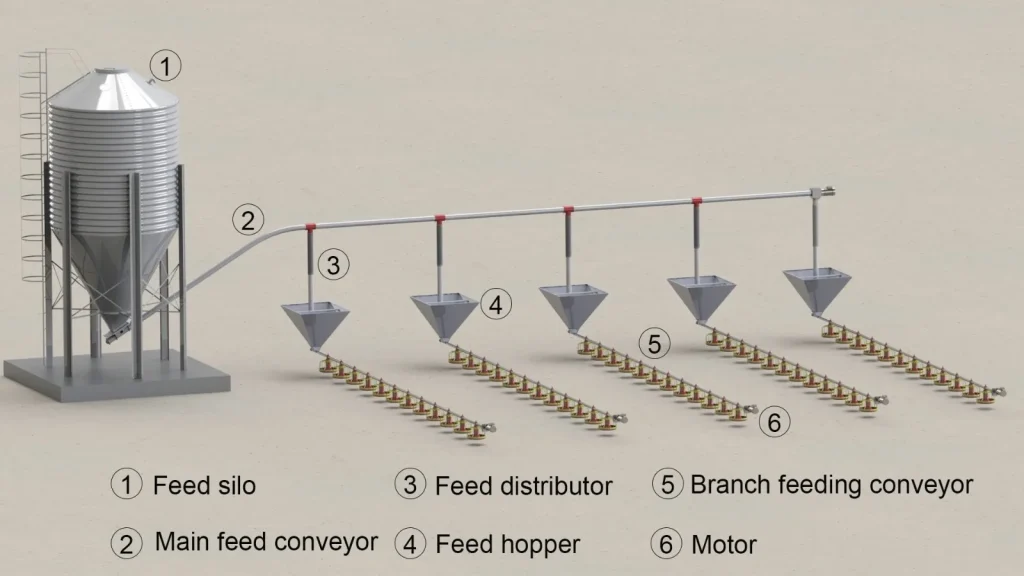
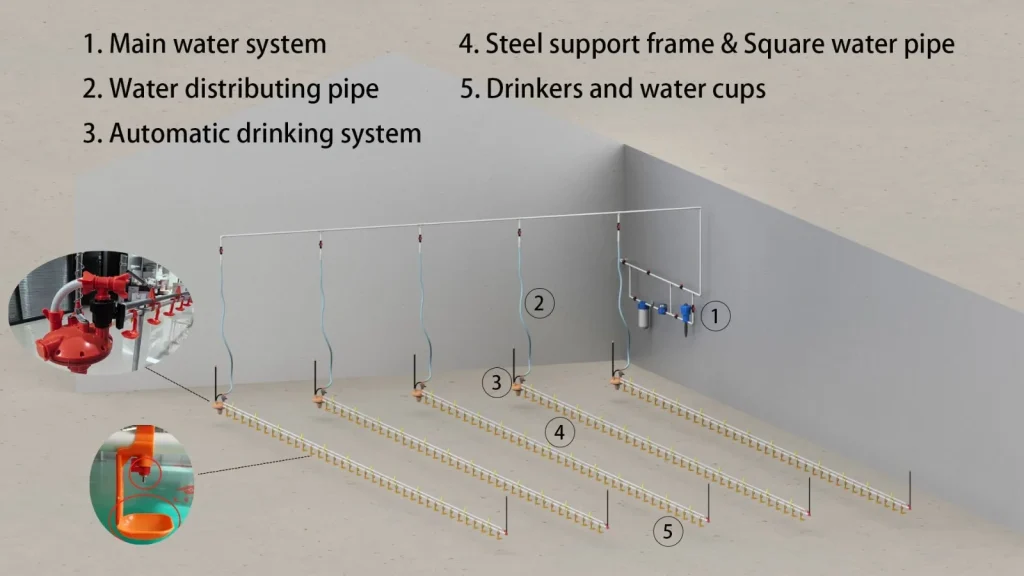
The LIVI system should not be viewed simply as a “feeding pan.” It is an integrated automated feed conveying and distribution solution designed around the requirements of broiler floor rearing.
Key specifications include:
360 mm feeding pan + 14/16-grid configuration + multi-position feed adjustment + 45 mm galvanized secondary feed pipe + 90–120 kg vice hopper + 0.75–1.1 kW drive motor + feed-level sensor.
For buyers, the important question is not whether each component has a competitive specification individually.
The real question is whether these components work together with the actual poultry-house design.
Planning a new broiler farm?
FAQ About Broiler Automatic Feeding Systems
1. What is an automatic broiler feeding system?
An automatic broiler feeding system is an automated feed-delivery solution for broiler farms. It uses feed hoppers, feed lines, drive motors, and feeding pans to deliver feed throughout the poultry house while reducing manual feed handling.
2. Why should broiler farms use automatic feeding?
As flock size increases, manual feeding requires considerable repetitive labor and can result in differences in feeding time and feed quantity. Automatic feeding improves feeding consistency and reduces routine manual work.
3. What is the diameter of the LIVI broiler feeding pan?
LIVI’s published product information specifies a 360 mm feeding pan diameter, with both 14-grid and 16-grid configurations available.
4. Can the LIVI feeding pan adjust feed quantity?
Yes. According to the published product information, a typical 5-grid feeding pan provides 5 feed-level adjustment positions, while other pan configurations can provide 10 adjustment positions. A sliding shut-off mechanism can also regulate the feed outlet.
5. What is the capacity of the LIVI vice hopper?
The vice hopper has a capacity of 90–120 kg and is made from 1.00 mm hot-dip galvanized steel sheet.
6. What motor is used in the LIVI automatic feeding system?
LIVI’s published specifications indicate a drive motor of 380 V, 50 Hz, three-phase, with a rated power range of 0.75–1.1 kW.
7. Does the system have a feed-level sensor?
Yes. The feed-level sensor can be installed under the main feed line, secondary feed line, or vice hopper to support feed-level monitoring and automatic control.
8. Which is better: a 14-grid or 16-grid feeding pan?
Neither is universally better.
Both use a 360 mm diameter pan, but the number of grid positions differs. The final selection should consider flock size, house dimensions, feeding-line layout, and overall farm design.
9. Can the automatic feeding system be used for different broiler ages?
Yes. The feeding pan supports multiple feed-level adjustments, making the system adaptable to changing feed requirements during different growth stages. Actual feed settings should be determined according to bird age, feed type, and farm management practices.
10. What information is required to design a broiler automatic feeding system?
At minimum, provide: Broiler capacity, number of houses, house length, house width, house layout, local voltage/frequency/phase, and required automation level.
A CAD drawing or poultry-house floor plan can further improve the accuracy of system design.
11. Can LIVI provide a complete broiler farming equipment solution?
LIVI provides automated poultry equipment for broiler farming, including the Broiler Pan Feeding System. For a complete project, the final equipment package should be determined according to the farming method, poultry-house structure, flock capacity, and desired automation level.
Conclusion: A Good Broiler Feeding System Starts With the House Design
For modern broiler floor rearing, automatic feeding is more than simply replacing manual feed distribution with a machine.
A well-designed system integrates: Feed Storage + Main Feed Line + Secondary Feed Line + Drive System + Feeding Pans + Feed-Level Control to create a more organized feeding process throughout the poultry house.
Send LIVI your broiler capacity, house dimensions, number of houses, and local electrical specifications to discuss a project-specific feeding system and quotation.