



Quick Answer: How Should You Budget a 26,000-Broiler Cage Farm in Tanzania?
The 26,000 broiler chicken farm cost in Tanzania cannot be calculated from an H-Type Broiler Cage price alone. A decision-ready budget separates site and poultry-house works, cage equipment, Poultry Automation Equipment, water and electrical infrastructure, delivery, installation, working capital, and continuing operating costs. Tanzania-specific investment amounts, freight, local construction costs, and the final technical design require project-specific confirmation.
Plan Your 26,000-Bird Tanzania Investment Scope
Share your poultry-house or site dimensions, planned flock stages, water and electrical conditions, automation priorities, delivery location, and budget boundary for a project-specific scope review.
The first decision is whether the farm should launch in phases or commission all 26,000-bird capacity at once. Phasing can limit initial capital commitment but may create later civil-work, utility-upgrade, integration, and installation activities. A full-capacity build can coordinate interfaces earlier, but it requires the poultry house, utilities, workforce, biosecurity workflow, and funding boundary to be ready from the beginning.
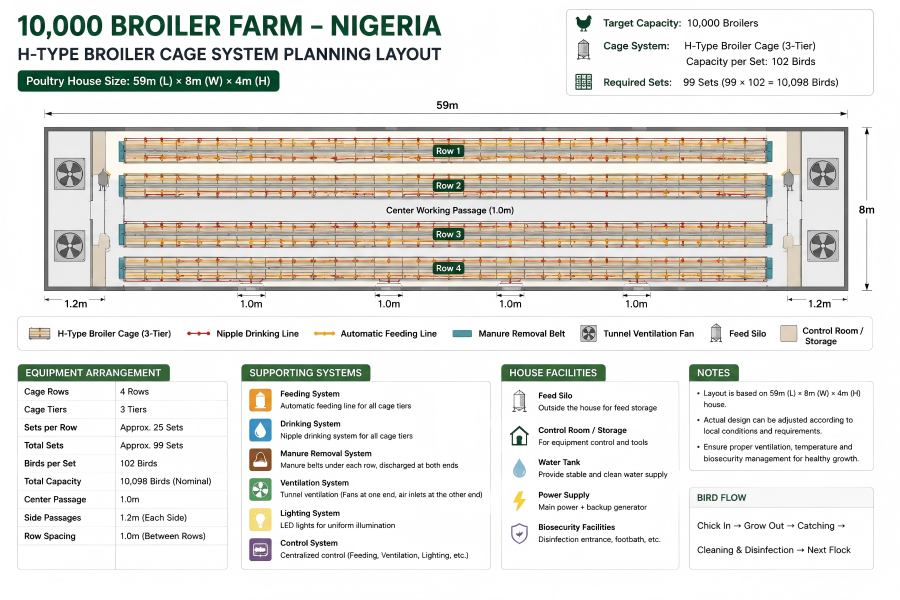
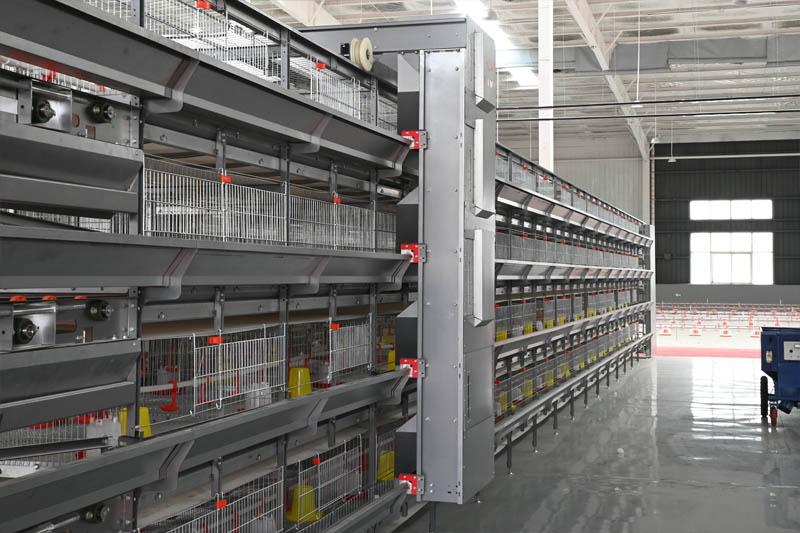
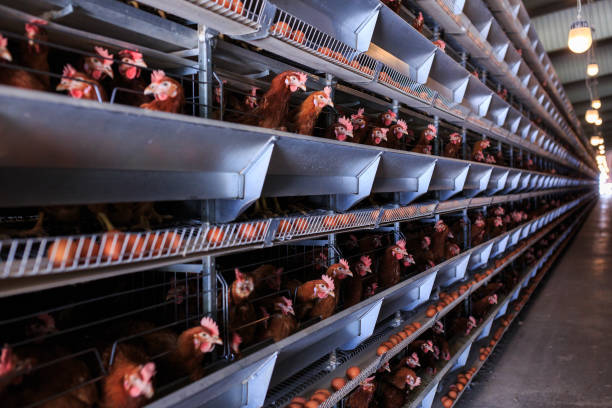
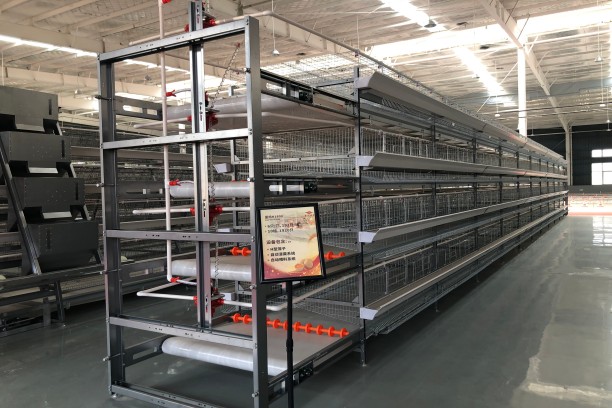
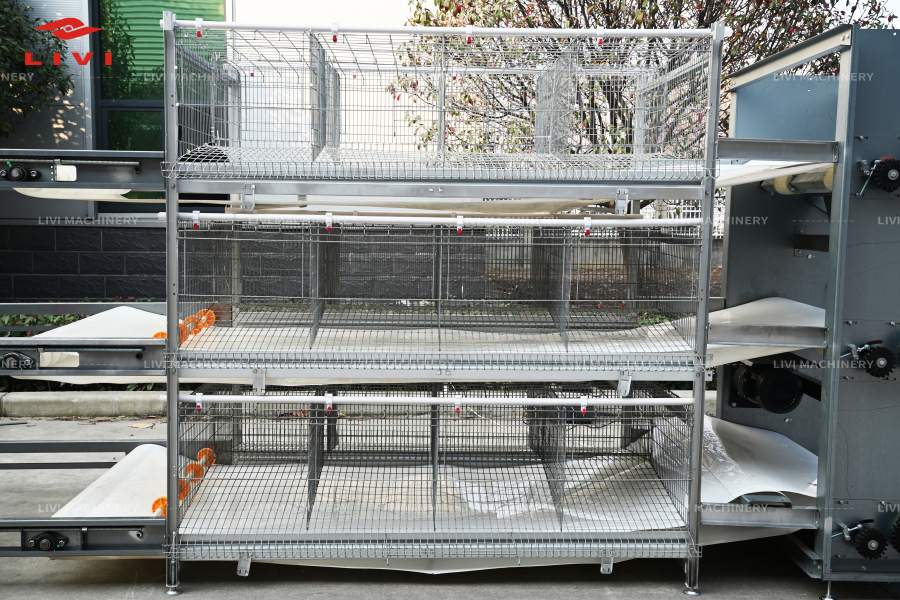
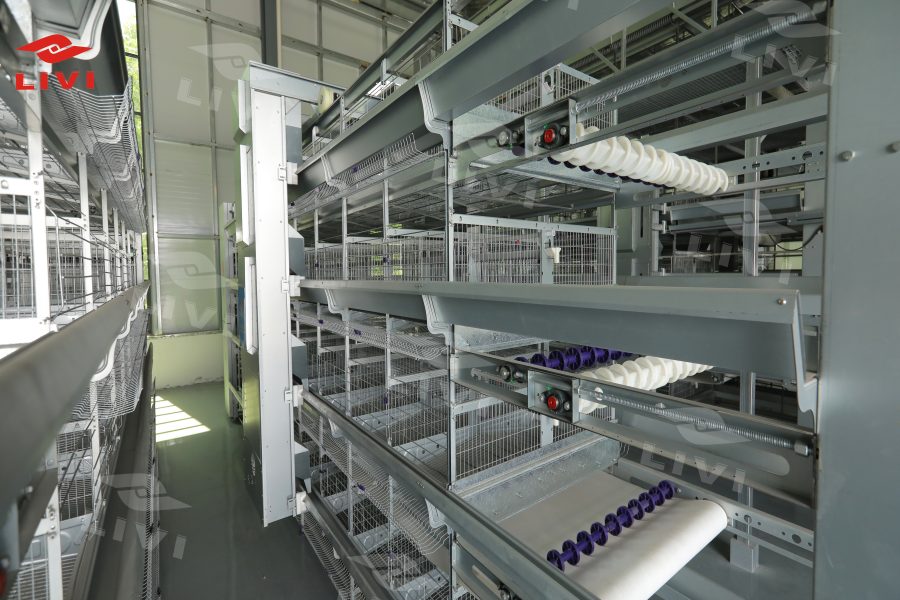
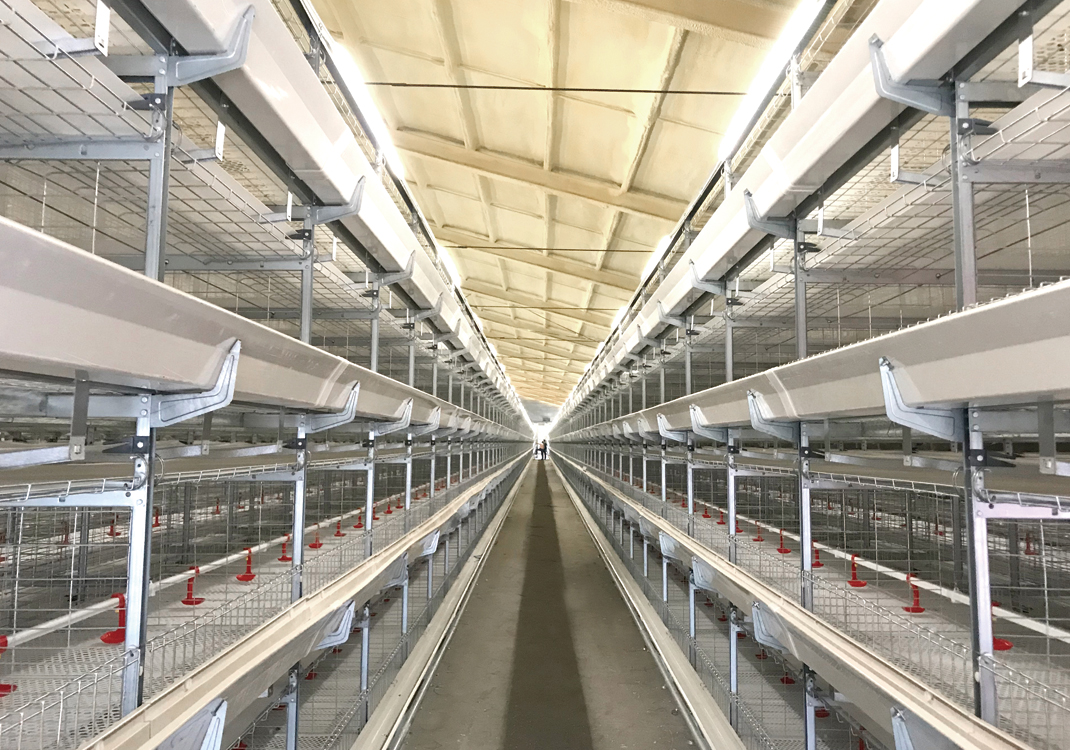
The documented LIVI H105-80 is an H-Type Broiler Cage model for broilers, recommended for farms above 10,000 birds. The supplied reference lists 3–4 tiers, 102–136 broilers per stated unit, Automatic Feeding by traveling feeder, Automatic Drinking, and flat-belt manure removal with transverse and inclined manure removal. These are equipment references, not a final 26,000-bird layout, cage quantity, or Tanzania project price.
A 26,000-Bird Tanzania Planning Scenario, Not a Verified Customer Case
This article concerns a proposed 26,000-broiler investment in Tanzania. It is not evidence of a named customer, completed farm, shipment, contract, installed layout, production result, or financial outcome. No verified Tanzania customer case for this exact project has been supplied.
A 26,000-bird target is above the documented scale recommendation for H105-80. That makes an H Type Broiler Cage System appropriate for technical evaluation, not automatically approved for every site. The final configuration depends on poultry-house dimensions, bird placement plan, house structure, ventilation approach, water source, electrical conditions, manure route, labor workflow, biosecurity design, and budget boundary.
Equipment capacity and farm capacity are not identical. Only an approved layout can establish the number of units, aisle arrangement, service access, utility interfaces, and operating flow. WOAH broiler production recommendations identify housing, management capability, ambient conditions, ventilation, biosecurity, feed and water access as relevant considerations for broiler systems.
26,000-Bird Tanzania Broiler Project: Cost Scope and H-Type System Verification Table
| Budget or System Area | Documented Reference or Decision Item | Status Before Quotation |
|---|---|---|
| Land, access, and site preparation | Access, drainage, work areas, and poultry-house location affect delivery and installation. | Local scope and cost confirmation required. |
| Poultry-house construction | Final house dimensions and structure are not supplied. | Technical design and local quotation required. |
| H-Type Broiler Cage equipment | H105-80 is for broilers and recommended for farms above 10,000 birds. | Layout, unit quantity, and equipment scope required. |
| Cage reference | Q235 steel, hot-dip galvanizing, 3–4 tiers, and 102–136 broilers per stated unit. | Confirm in the equipment schedule; do not extrapolate unit quantity. |
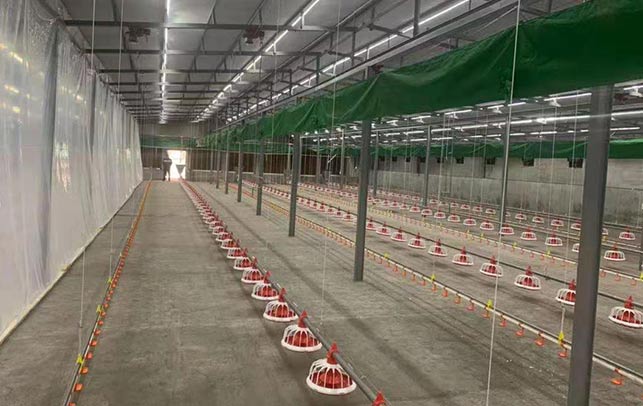
| Automatic Feeding | Traveling feeder is listed for the documented configuration. | Confirm components, electrical interfaces, and control scope. |
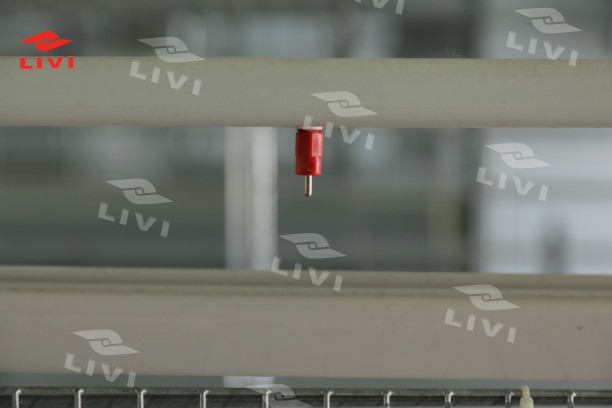
| Automatic Drinking | High-configuration Automatic Drinking is listed. | Confirm water-system interfaces and responsibility boundaries. |
| Manure Removal System | Flat-belt manure removal with transverse and inclined removal is listed. | Confirm discharge route, workflow, and maintenance scope. |
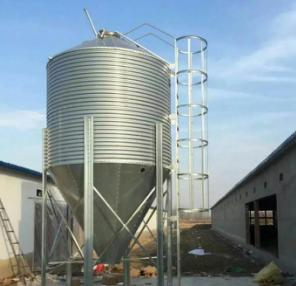
| Feed silo, lighting, alarms, ventilation | Configurable rather than confirmed standard inclusions. | State as included, optional, or excluded. |
| Electrical supply and backup power | Electrical load, voltage, and backup configuration are not supplied. | Site engineering confirmation required. |
| Delivery and commissioning | LIVI lists FOB and CIF quotation methods. | Define responsibility and cost boundaries in writing. |
| Operating and maintenance costs | Chicks, feed, labor, utilities, health inputs, spares, and manure handling. | Local-market and operating-plan confirmation required. |
A useful cost plan has three separate layers: initial capital expenditure, recurring operating expenditure, and lifecycle maintenance or replacement funding. Combining them into one cage-price comparison can hide major differences between offers.
Phase One or Full Capacity: What Decision Should Come Before Equipment Pricing?
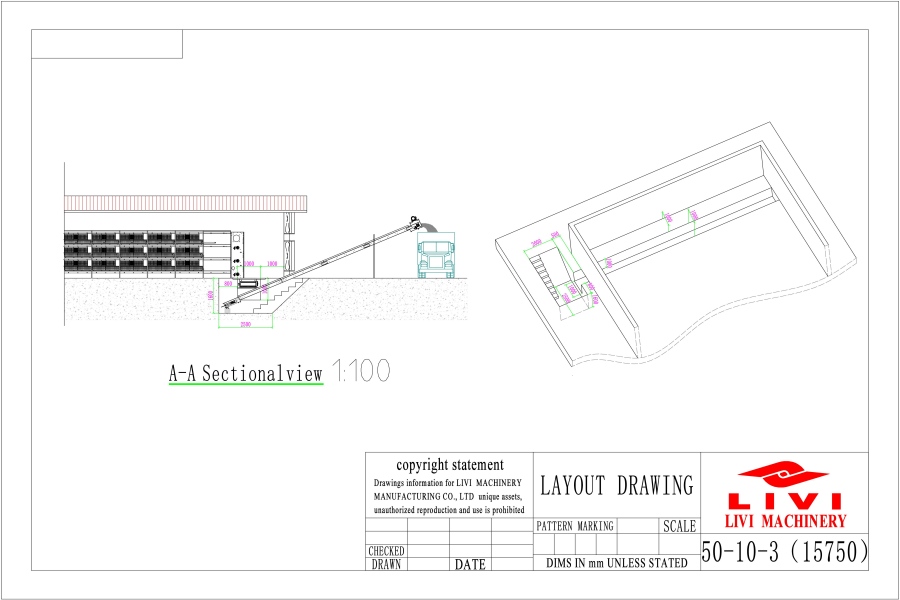
A phased plan should define what must operate reliably during the first broiler cycle and what infrastructure must already support the eventual 26,000-bird target. The layout should show future cage rows, access routes, water and electrical connection points, ventilation provisions, manure discharge routes, and working space before the first equipment release.
Phasing may be appropriate when funding, house construction, utilities, or operating preparation will be available in stages. However, it can create duplicated mobilization, later connection work, added installation coordination, and compatibility questions between equipment packages. The initial phase should not restrict water delivery, ventilation, manure handling, bird observation, or biosecurity workflow.
Full-capacity construction should be assessed when the buyer can complete the poultry house and essential interfaces before commissioning. It supports coordinated layout and integration from the start, but funding, water, electrical infrastructure, ventilation design, labor organization, manure handling, storage, installation supervision, and operating procedures must be prepared together.
Neither route is universally lower-risk. The better decision follows the site and operating plan. FAO management and housing guidance notes that mechanization and automation become more common as commercial operations expand, while clean water, suitable feed, disease-risk reduction, and the physical environment remain core management requirements.
Compare scope, not equipment line items
Ask every supplier to show the same scope categories: cages, Feeding System, Drinking System, Manure Removal System, feed storage, ventilation, Climate Control System, electrical works, backup-power interfaces, freight, customs handling, installation, commissioning, training, recommended spare parts, and maintenance support. It should also identify exclusions.
Compare Phased and Full-Capacity Equipment Plans
Provide your target launch capacity, future expansion goal, house status, manure route, ventilation approach, and required delivery terms to prepare a comparable H-Type Broiler Cage configuration.
This prevents an apparently lower Automatic Broiler Cage System offer from being compared with a more complete proposal. The goal is to understand what can safely be deferred, what must be installed initially, and which interfaces must be preserved for expansion.
How Do Delivery, Utilities, and Site Readiness Affect the Tanzania Investment Decision?
Delivery terms are part of investment scope. LIVI lists FOB and CIF quotation methods for the documented product. These trade terms do not represent the same buyer responsibilities, so the quotation should define packaging, container loading, sea freight, insurance where applicable, port procedures, customs clearance, inland transport, unloading, storage, and local installation resources.
Before shipment release, verify that the poultry-house structure is ready for the approved arrangement and that access, drainage, water, electrical conditions, ventilation provisions, secure storage, installation labor, and commissioning sequence have been checked. Without house design and electrical data, it is not appropriate to calculate generator size, energy consumption, container quantity, freight charges, or delivery timing.
For a phased project, preserve future utility routes, control interfaces, service access, manure discharge paths, and structural provisions in the first stage. Retrofitting these items after the initial flock can disrupt operations and change project scope.
LIVI states that it can organize production, inspection, packaging, container loading, export transportation, installation guidance, and technical support. Buyers should convert those capabilities into contract-specific responsibilities by requesting installation drawings, component lists, operating instructions, recommended spares, inspection milestones, and a commissioning and training plan.
What Should You Verify Before Selecting a Supplier?
A supplier comparison should go beyond purchase price. Confirm that the technical team has used your flock target, house dimensions, climate conditions, and budget boundary to prepare the proposal. Request a Tanzania-specific layout showing the phase or full-capacity boundary, cage arrangement, utility interfaces, access routes, ventilation concept, and manure route.
For H105-80, request a schedule identifying the traveling feeder, Automatic Drinking components, flat-belt manure removal, transverse and inclined removal, and associated controls. Feed silos, lighting, alarms, ventilation, and temperature systems are configurable, so none should be assumed to be included without written confirmation.
LIVI states that it has welding, equipment-component, and complete-machine assembly production systems. Its stated quality process covers raw-material, pre-production, post-production, third-party, trial-operation, outbound, and loading inspections. Ask how these checks apply to the order and which documents or inspection opportunities will be available.
LIVI also states that it provides remote guidance and can arrange experienced engineers on site when required, with an after-sales response time within 48 hours. Confirm the support route, spare-parts supply, site-service terms, installation responsibility, and operator-training arrangements before final supplier selection.
A Practical Pre-Order and Commissioning Sequence
- Confirm whether the launch is a first phase toward 26,000 birds or an immediate full-capacity operation, then record the capacity boundary and future interfaces.
- Provide site or poultry-house dimensions, bird number, house status, water source, electrical conditions, ventilation concept, manure route, automation priorities, delivery location, schedule, and budget boundary.
- Review the poultry-house layout, H-Type Broiler Cage arrangement, component list, configurable items, utility interfaces, and exclusions before approving a quotation.
- Define production inspection, packaging, shipment, unloading, storage, installation, commissioning, training, and spare-parts handover responsibilities in writing.
- Commission according to approved drawings and operating instructions, documenting testing, operator training, maintenance responsibilities, and required adjustments before the first flock.
After start-up, record flock placement, mortality, feed and water use, electricity use, labor hours, equipment downtime, manure handling, maintenance actions, and system modifications. These records help evaluate the operating plan over time; they are not results available for this proposed Tanzania project.
FAQ
How much does a 26,000 broiler chicken farm cost in Tanzania?
A verified total cost cannot be provided because no Tanzania-specific prices, poultry-house dimensions, site conditions, shipping terms, or final equipment scope are supplied. Separate site works, housing, cage equipment, automation, utilities, delivery, installation, and contingency from continuing costs for chicks, feed, labor, water, electricity, health inputs, maintenance, and spare parts. Request a scope-based quotation rather than treating the H-Type Broiler Cage price as total farm investment.
Is it better to phase a 26,000-bird broiler cage project or build full capacity at once?
The better route depends on funding, site readiness, utility capacity, operating preparation, and whether future interfaces can be reserved during the first phase. Phasing may reduce the first capital commitment but can add later coordination, installation, and upgrade work. Full-capacity construction may simplify integrated design, but it requires major infrastructure and operating resources to be ready from the beginning.
Is the LIVI H105-80 H-Type Broiler Cage suitable for a 26,000-bird Tanzania project?
The documented H105-80 is a broiler H-Type Broiler Cage model recommended for farms above 10,000 birds, so it can be evaluated for a 26,000-bird project. Final suitability cannot be confirmed from bird number alone. House dimensions, cage layout, ventilation, water, electrical conditions, manure route, labor workflow, and local operating requirements must be reviewed. Final cage quantity requires an approved technical layout.
What automation should be included in a 26,000-bird H-Type Broiler Cage budget?
The documented configuration includes Automatic Feeding by traveling feeder, Automatic Drinking, and flat-belt manure removal with transverse and inclined manure removal. Feed silos, lighting, alarms, and ventilation or temperature systems are configurable, so they must be identified as included, optional, or excluded. Compare automation by workflow, operating responsibility, electrical readiness, maintenance requirements, and spare-parts planning rather than a single equipment price.
What should a supplier quotation include for a Tanzania broiler cage project?
A comparable quotation should state the layout basis, cage model, equipment list, automation scope, optional items, exclusions, Incoterm, delivery boundary, installation and commissioning responsibilities, recommended spare parts, and support terms. LIVI lists FOB and CIF quotation methods for the documented product, but the selected trade term and local responsibilities must be confirmed in writing. Ask separately about poultry-house, electrical, water, ventilation, backup-power, customs, and inland-delivery scope where excluded.
Plan Your 26,000-Bird Tanzania Investment Scope
Compare Phased and Full-Capacity Equipment Plans
TAGs: 26,000 broiler chicken farm cost in Tanzania, H-Type Broiler Cage System in Tanzania, broiler cage farm investment, Automatic Feeding and Drinking, Manure Removal System, phased poultry farm expansion