


How Should a 20,000-Layer Farm Be Planned If 50,000 Layers Is the Future Target?
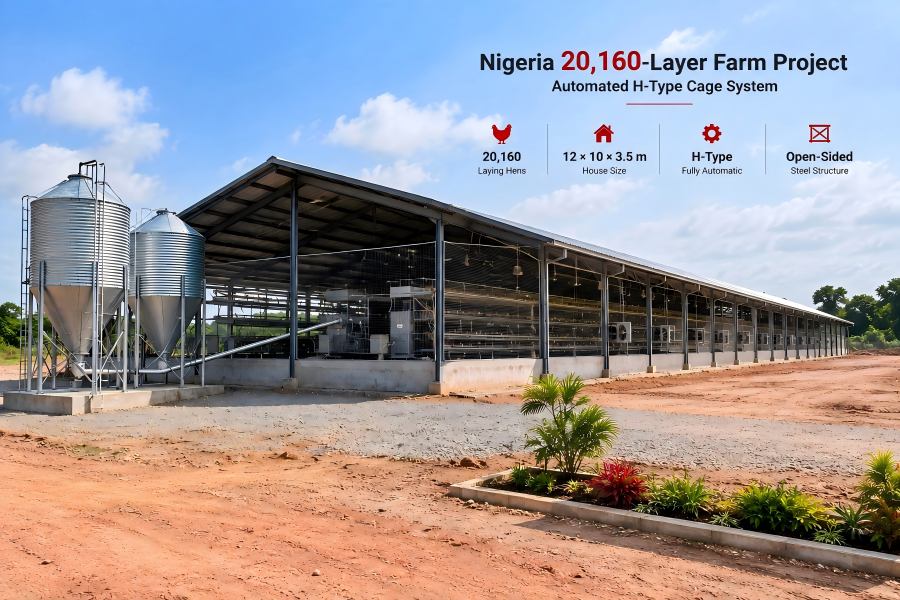
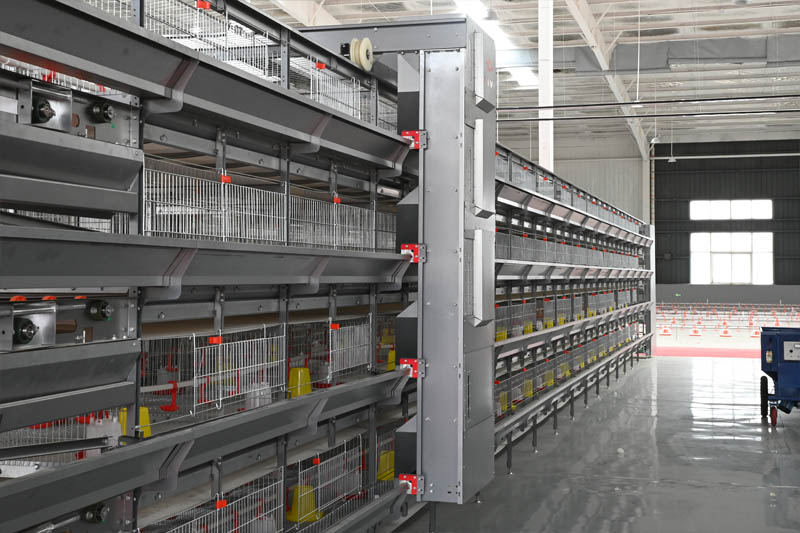
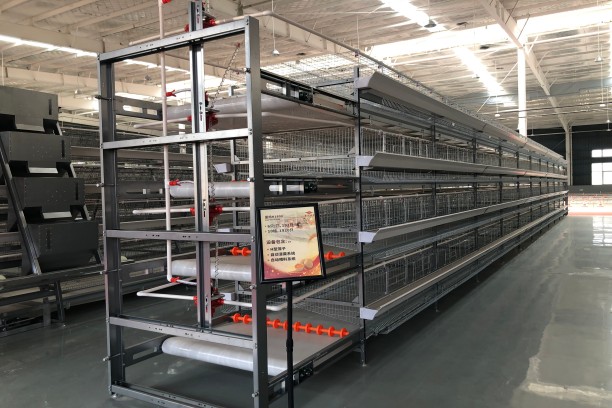
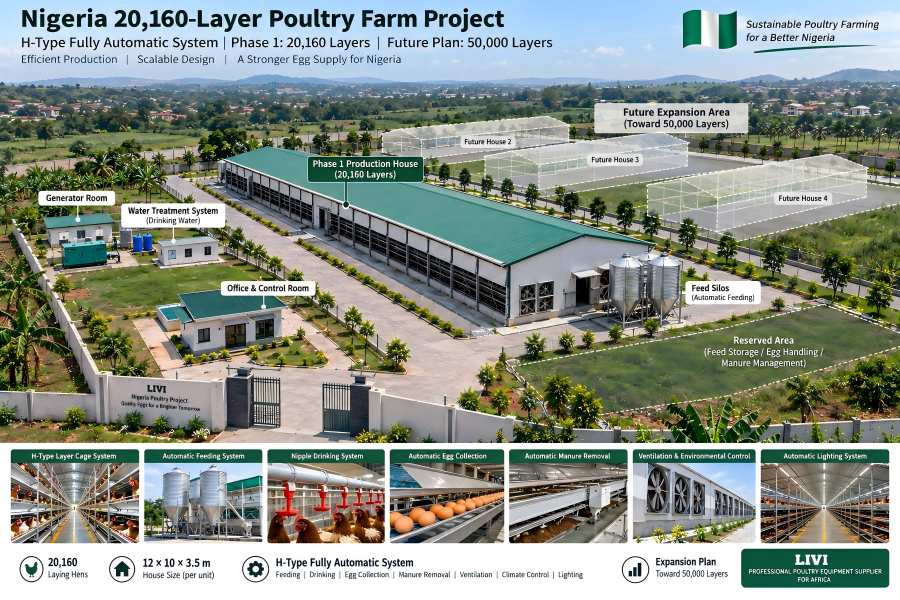
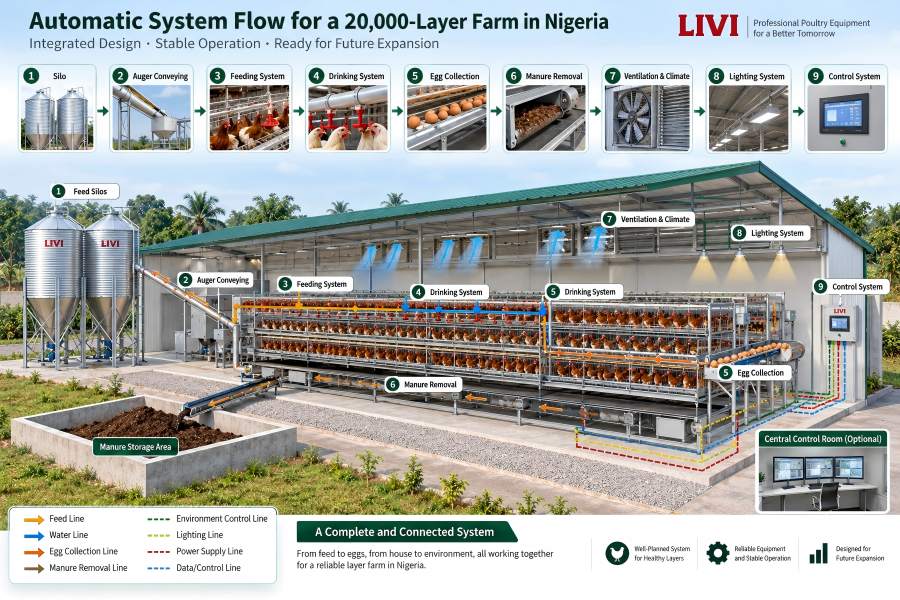
A 20,000 layer farm in Nigeria should be planned as a complete first-stage production system while identifying which infrastructure decisions may affect future expansion. For this project, the current capacity is approximately 20,160 laying hens in an open-sided steel-structure poultry house measuring 12 × 10 × 3.5 m. The selected H-type system integrates automatic feeding, drinking, manure removal, egg collection, ventilation, environmental control and lighting.
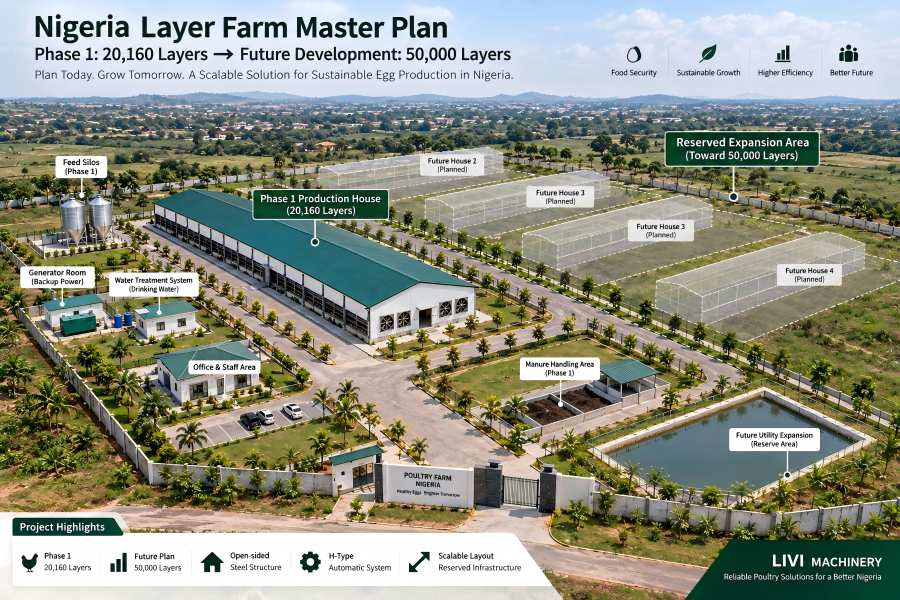
The longer-term direction is approximately 50,000 layers. This does not mean the existing house can hold 50,000 birds or that every Phase 1 component should be oversized. The practical objective is to identify land, utility, logistics and equipment interfaces that would be difficult or expensive to change when the next production stage is added.
Start with Two Capacities: What Must Work Now and What May Be Needed Later?
A farm owner planning only for today’s flock asks: “What equipment do I need for 20,000 layers?”
An investor planning phased growth needs to ask a second question: “Which decisions made for the first 20,000 birds could restrict a future 50,000-layer farm?”
That changes the planning process.
The first stage still needs to be technically appropriate for approximately 20,160 hens. Expansion planning should not become an excuse to purchase unnecessary equipment today. Instead, the design team should identify infrastructure that is costly to relocate or reconstruct later.
These items can include farm access, future poultry-house locations, electrical routes, water infrastructure, feed logistics, manure discharge areas and egg movement between production houses.
Confirmed Design Basis for the Nigeria Layer Project
| Planning Item | Confirmed Project Information |
|---|---|
| Country | Nigeria |
| Bird Type | Laying hens |
| Current Capacity | Approximately 20,160 layers |
| House Size | 12 × 10 × 3.5 m |
| House Type | Open-sided steel structure |
| Cage System | H-type fully automatic system |
| Feeding | Automatic feeding + silo + auger conveying |
| Drinking | Automatic drinking system |
| Manure Handling | Automatic manure removal |
| Egg Handling | Automatic egg collection |
| Environment | Automatic ventilation and environmental control |
| Lighting | Automatic lighting system |
| Future Direction | Farm development toward approximately 50,000 layers |
Why Does This Project Use an H-Type Fully Automatic System?
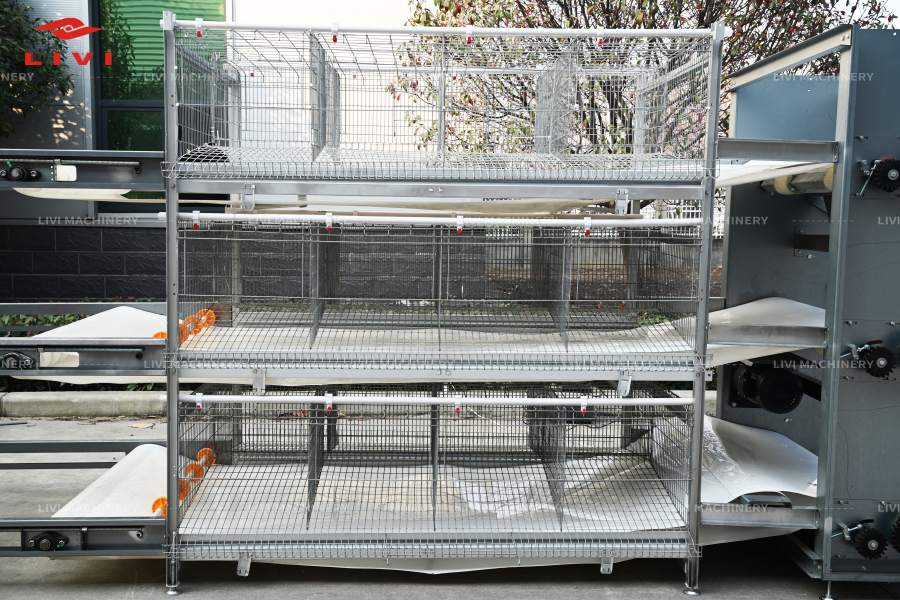
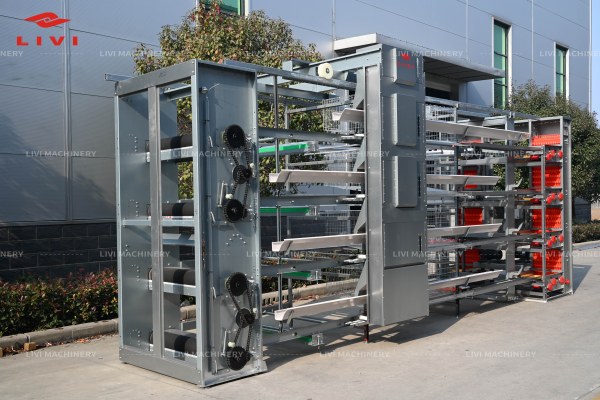
Buyers researching H type layer cage Nigeria often start by comparing cage capacity or price. For a highly automated commercial project, however, the more important question is whether the cage structure can be coordinated with the complete production system.
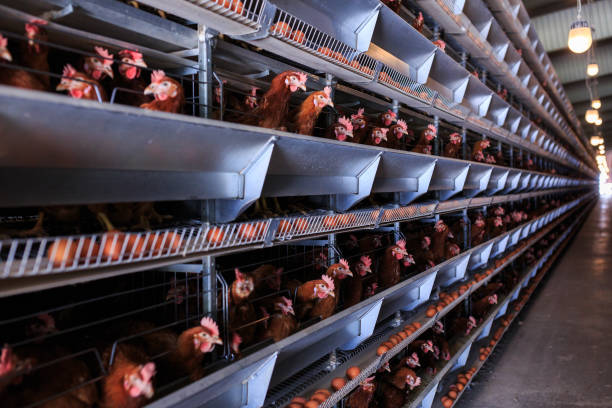
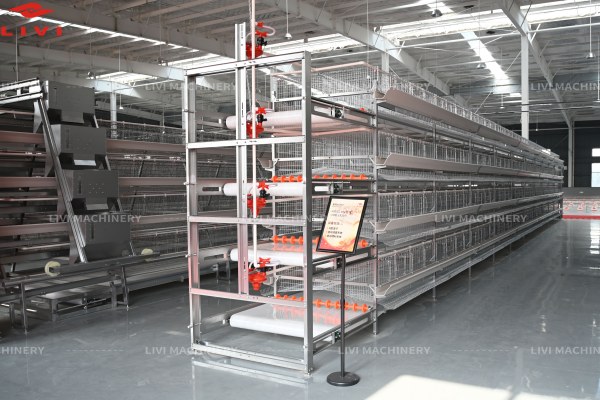
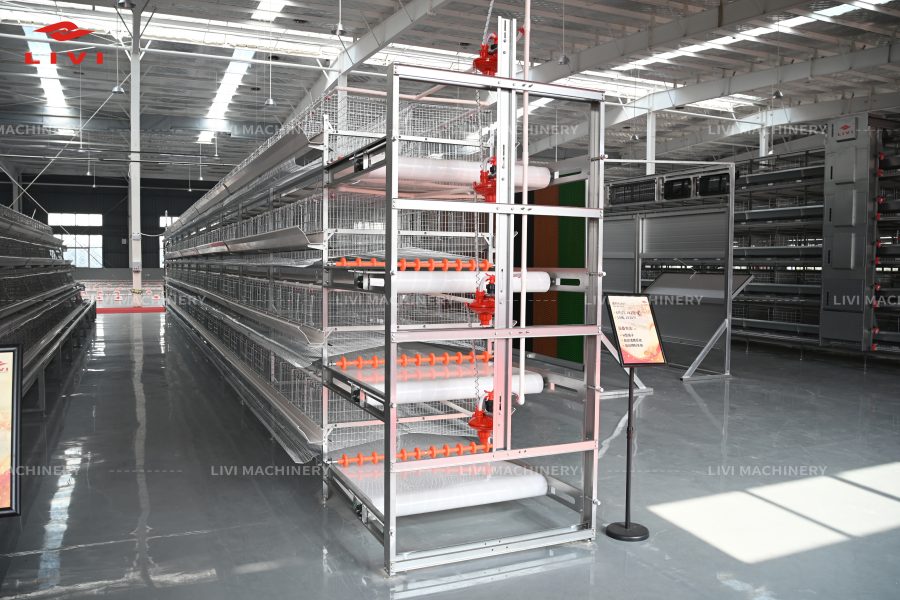
In this 20,000-layer poultry farm in Nigeria, the H-type cage system provides the physical platform around which the automatic equipment is organized:
This integration is particularly relevant when future expansion is already part of the investment plan. Adding more birds later also means moving more feed, supplying more water, collecting more eggs, removing more manure and supporting additional electrical loads.
Buyers evaluating the cage structure can review the LIVI H-Type Layer Cage System before comparing it with the complete automation requirements of their own farm.
How Should Feed Infrastructure Be Planned for Phased Expansion?
Feed is not only a daily input. It is also a logistics system extending from outside the poultry house to every cage row.
The current project includes a feed silo, auger conveying and automatic feeding. When a farm expects to grow toward 50,000 layers, the design team should consider where future feed demand will enter the site and how additional poultry houses may connect to storage and conveying infrastructure.
What Should Be Reserved Now?
The answer does not necessarily mean buying a much larger silo or conveying system immediately. A more disciplined approach is to review:
- feed-truck access and turning space;
- current silo position;
- space for additional storage if required later;
- future feed-conveying routes;
- motor and maintenance access;
- electrical interfaces for additional feeding equipment.
This reduces the risk that Phase 2 requires relocating permanent infrastructure simply because future material flow was not considered during Phase 1.
How Should Drinking, Egg and Manure Routes Scale with the Farm?
Expansion is not only a question of adding cage capacity.
Every additional laying hen increases demand on several material-flow systems:
For Phase 1, each system should work independently and reliably for the current Nigeria commercial layer farm. For future expansion, the project team should identify whether new houses will use independent systems or connect to centralized infrastructure.
For example, an egg collection route that works for one house may become inefficient when additional production houses are built on the opposite side of the farm. Similarly, manure discharge areas should not block future roads, buildings or clean egg-handling routes.
LIVI Machinery therefore needs the overall site plan—not only the dimensions of the first poultry house—when meaningful expansion planning is required.
Does an Open-Sided Poultry House Still Need Automatic Ventilation?
Yes—an open-sided structure and mechanical environmental management are not mutually exclusive.
Open sides can support natural air exchange when weather and wind conditions are favorable. But cage density, house geometry, humidity, temperature and changing weather conditions can create situations where natural airflow alone should not simply be assumed to be sufficient.
The FAO identifies temperature, humidity and air movement as fundamental parts of the poultry housing environment and notes that increasing commercial scale is commonly accompanied by greater mechanization and automation.
For this project, ventilation, environmental control and lighting are therefore included within the automatic equipment system rather than assuming that an open-sided building solves environmental management by itself.
What Should Environmental Control Actually Monitor?
The final design should consider conditions throughout the bird zone. Control strategy should be based on the actual sensors and environmental equipment included in the commercial configuration.
This is particularly important for buyers searching for a poultry farm ventilation system Nigeria. A ventilation quotation should be based on the house, cage arrangement, local conditions and installed equipment—not simply on bird capacity.
How Should Power Infrastructure Be Planned Before the Farm Expands?
A fully automated layer farm creates electrical dependency.
Feeding motors, egg collection, manure removal, ventilation, controls, lighting and other electrical equipment may all depend on a stable power system.
This makes the common search question “What generator size is needed for a poultry farm in Nigeria?” highly relevant—but there is no responsible universal answer.
Calculate Backup Power from Loads, Not Bird Numbers
A future 50,000-layer farm will not automatically require 2.5 times the electrical capacity of the current farm. Different equipment may operate at different times, future houses may have separate systems, and motor starting demand also matters.
The electrical engineer should therefore evaluate the final installed equipment rather than applying a simple birds-to-kW formula.
Which Infrastructure Should Be Sized Now and Which Should Wait?
This is one of the most important investment decisions in a phased farm.
| Infrastructure | Phase 1 Decision | Expansion Question |
|---|---|---|
| Cage Equipment | Configure for current production requirements. | Will future houses use the same platform or independent systems? |
| Farm Roads | Provide access to the current house. | Will the road remain usable after additional houses are built? |
| Feed Area | Serve current feeding requirements. | Is there space for future storage or additional conveying? |
| Water | Provide reliable Phase 1 supply. | Can source, storage and distribution support future demand? |
| Electrical | Serve the confirmed automatic equipment. | Can distribution infrastructure be extended without major reconstruction? |
| Egg Handling | Create a practical collection destination. | Can additional houses connect logically to future egg handling? |
| Manure Handling | Provide a clear discharge route. | Will the area conflict with future buildings, roads or clean zones? |
The Principle
Buy Phase 1 equipment for Phase 1 production, but evaluate permanent infrastructure against the future master plan.
How Much Does a 20,000-Layer Poultry Farm Cost in Nigeria?
Searches for 20000 layers poultry farm cost in Nigeria, automatic layer farm cost Nigeria and automatic poultry cage price in Nigeria often appear to ask for one number. In practice, three different cost questions are being mixed together.
1. Cage Price
This covers the specified cage equipment and whatever components are explicitly included in that quotation.
2. Automatic Equipment Cost
This may include feeding, drinking, manure removal, egg collection, ventilation, environmental controls and lighting depending on the quotation scope.
3. Total Farm Investment
This is broader and can include poultry-house construction, site work, water, electrical infrastructure, backup power, freight, import-related costs, installation and local construction.
A buyer comparing poultry equipment price in Nigeria should first normalize the scope of each quotation.
For more context on how equipment and farm costs should be separated, buyers can review LIVI’s poultry farm and battery cage cost guide .
A-Type or H-Type: Which Is More Economical for a Nigerian Layer Farm?
Another high-intent buyer question is: “A-type or H-type cages—which is more economical for a Nigerian farm?”
“More economical” should not be reduced to cage purchase price.
| Decision Factor | A-Type | H-Type |
|---|---|---|
| Initial System Simplicity | Generally simpler configurations are available | Typically designed around more intensive integration |
| Vertical Space Use | Lower-density arrangement | More intensive vertical arrangement |
| Automation | Can be manual, semi-automatic or automated depending on design | Well suited to integrated automatic systems |
| Project Complexity | Can be lower | Requires stronger coordination of equipment and utilities |
| Expansion Decision | Suitable where it matches capacity and investment strategy | Strong candidate for intensive, automation-led projects |
For this project, H-type is the confirmed choice because the farm requires a fully automatic production system and has a longer-term expansion direction.
Investors who are still deciding can compare the A-Type Layer Cage System with LIVI’s H-type configuration before deciding which approach fits their house, capacity and investment plan.
Planning a 20,000–50,000 Layer Farm in Nigeria?
Send your current capacity, future target, available land, proposed poultry-house dimensions, automation requirements and power conditions. LIVI can use these inputs to prepare a project-specific equipment and expansion plan.
Request Your Nigeria Farm PlanHow Should Biosecurity Affect a 50,000-Layer Expansion Plan?
Expansion adds more than production capacity. It also adds people, vehicles, feed deliveries, manure movement and equipment traffic.
The World Organisation for Animal Health recommends that poultry establishments consider location, drainage, cleaning and disinfection, access control and other biosecurity measures in farm design and operation.
This matters when laying out future poultry houses.
The master plan should consider how feed vehicles enter the farm, where eggs leave the production area, how manure is removed, where visitors and workers enter, and whether future construction could disrupt established clean and dirty routes.
Reserving land for another poultry house without planning these movements is not a complete expansion strategy.
What Should Be Confirmed Before Phase 1 Is Ordered?
Before LIVI Machinery finalizes the technical configuration, the buyer and project team should confirm the information that directly affects layout and equipment interfaces.
- current target capacity;
- future capacity target;
- total available land dimensions;
- confirmed poultry-house dimensions;
- steel-column and structural positions;
- required cage model and automation level;
- feed storage and truck access;
- water source and storage strategy;
- available voltage and electrical supply;
- backup-power strategy;
- egg collection destination;
- manure discharge and storage area;
- future poultry-house locations.
For a new commercial egg farm in Nigeria, these inputs are more useful than asking a supplier to quote “20,000 cages” without a site plan.
Frequently Asked Questions About Commercial Layer Farm Planning in Nigeria
1. How much capital do I need to start a 20,000-layer farm in Nigeria?
A reliable figure requires a defined project scope. Cage equipment, poultry-house construction, feeding, drinking, egg collection, manure handling, ventilation, electrical infrastructure, backup power, freight and installation should be separated before calculating total investment. No verified total cost has been provided for this project, so a project-specific quotation is required.
2. Can a 20,000-layer farm later be expanded to 50,000 layers?
Yes, at farm level, if land, future houses, utilities and material-flow routes are planned accordingly. The future 50,000-layer target in this project does not mean the existing 12 × 10 × 3.5 m house itself is intended to accommodate 50,000 birds.
3. What generator size is needed for an automatic poultry farm in Nigeria?
Generator capacity should be calculated from the installed electrical equipment, critical loads, motor starting demand and operating sequence. Bird capacity alone is not sufficient for selecting a generator.
4. A-type or H-type cages—which is more economical for a Nigerian farm?
The answer depends on farm capacity, house dimensions, automation level, available land, labor strategy, power supply and expansion plans. Initial cage price alone does not determine lifecycle economics. This project uses H-type cages because a fully automated system is part of the confirmed project configuration.
5. What equipment is needed for a fully automatic layer farm?
In this project, the automatic scope includes drinking, feeding with silo and auger conveying, manure removal, egg collection, ventilation, environmental control and lighting. Another farm’s final equipment list should be determined from its house, capacity and operating requirements.
6. Should I build the poultry house before ordering the cages?
For a new project, it is usually better to coordinate the poultry-house design with the cage and automation layout before construction is finalized. For an existing house, provide accurate internal dimensions, structural columns, entrances and other constraints so the equipment layout can be checked first.
7. What should I send a poultry equipment supplier before requesting a quotation?
Provide the project location, current capacity, future target capacity, land dimensions, proposed or existing poultry-house dimensions, preferred automation level, water source and electrical conditions. Expansion projects should also identify existing infrastructure that will remain in use.
Final Planning Logic: Build Phase 1 Without Blocking Phase 2
The main design lesson from this Nigeria layer poultry project is not to install equipment for 50,000 birds before 50,000 birds exist. It is to distinguish between what must be sized for current production and what should be reserved for future development.
The current 20,160-layer stage needs a complete operating system: H-type cages, feed storage and conveying, automatic feeding and drinking, egg collection, manure removal, ventilation, environmental control and lighting.
The future 50,000-layer stage changes a different set of questions: where additional houses will go, how feed and water will reach them, how electricity will be distributed, where eggs and manure will move, and how farm access and biosecurity routes will change.
This is the basis of a scalable 20,000-layer egg farm in Nigeria: current equipment should solve today’s production requirements, while permanent infrastructure should be reviewed against tomorrow’s farm.
LIVI can use the owner’s land plan, poultry-house dimensions, current capacity and expansion target to coordinate the equipment configuration before construction and installation decisions become difficult to change.
Start with Your Current Capacity and Future Target
Planning a new farm or expanding an existing one? Send your land dimensions, current and future layer capacity, poultry-house information, automation requirements and power conditions for technical review.
Get a Project-Specific Layer Farm Solution