


What Equipment Is Needed for a 50,000-Layer Farm in Nigeria?
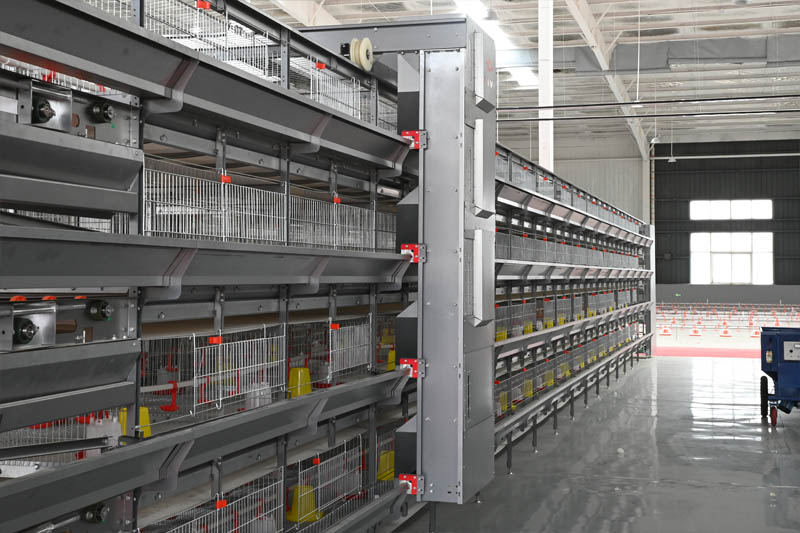
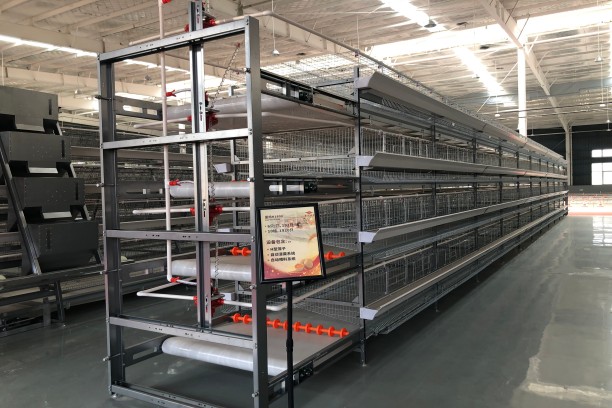
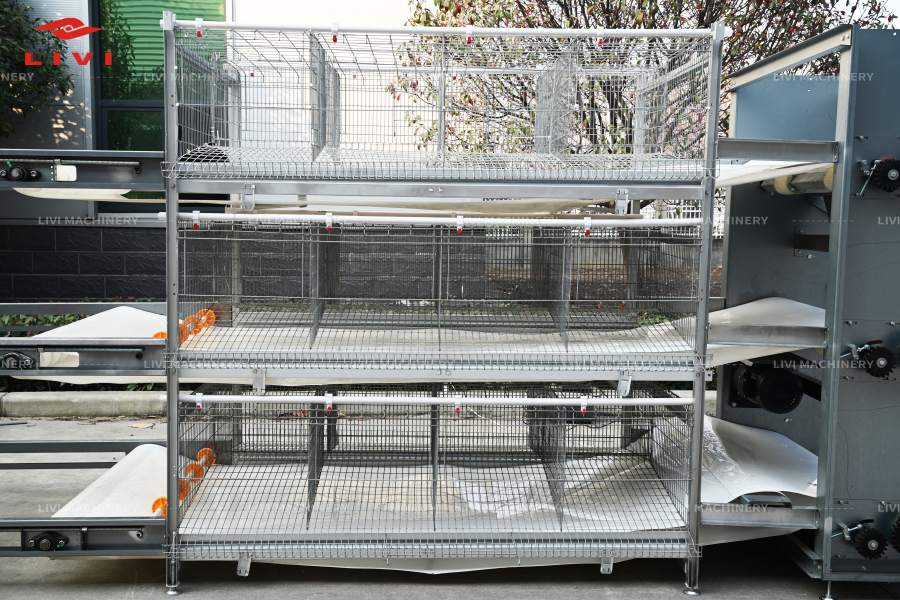
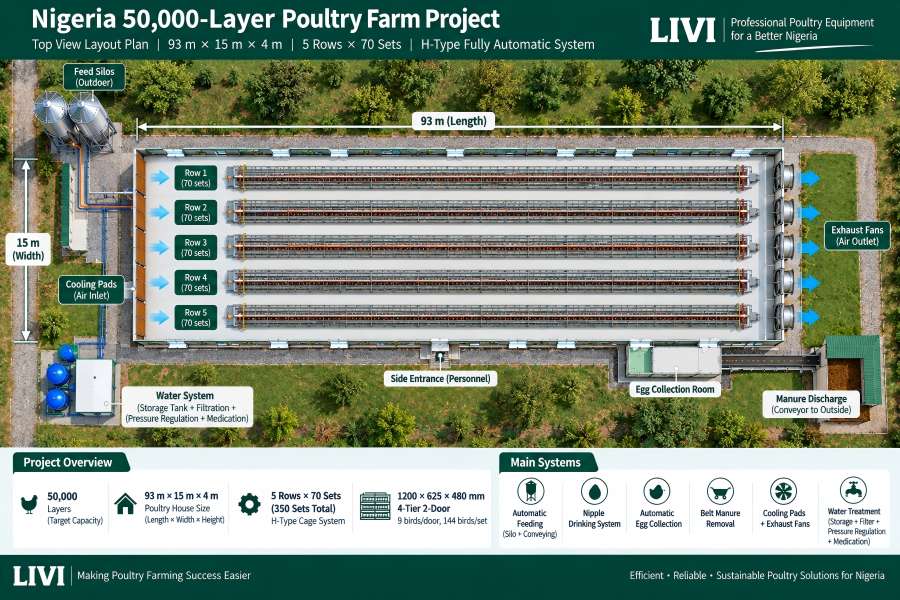
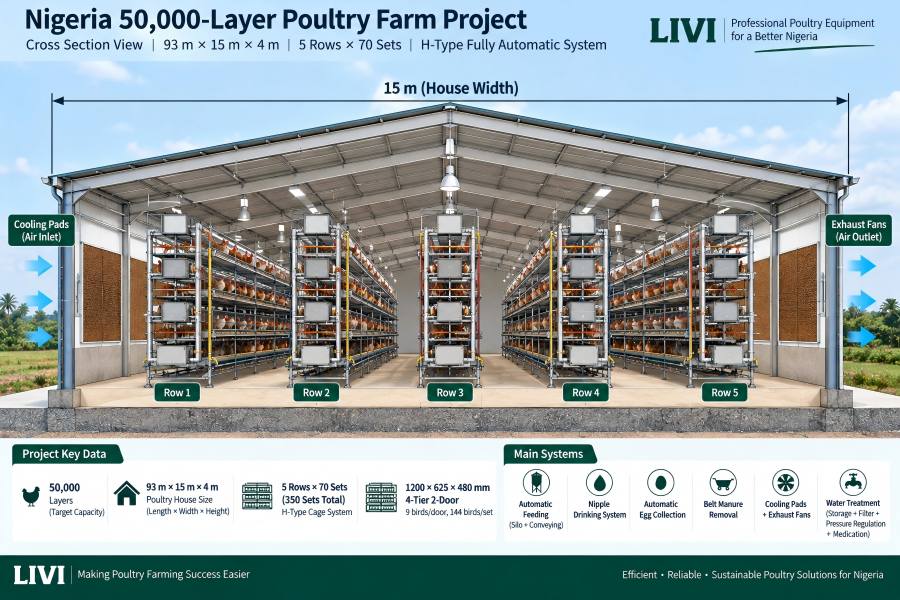
For this project, the 50000 layer farm equipment Nigeria solution is based on one 93 × 15 × 4 m poultry house with five equipment rows and 350 sets of four-tier H-type layer cages. Each cage set provides 144 nominal bird positions, giving 50,400 theoretical cage positions for a target flock of 50,000 layers.
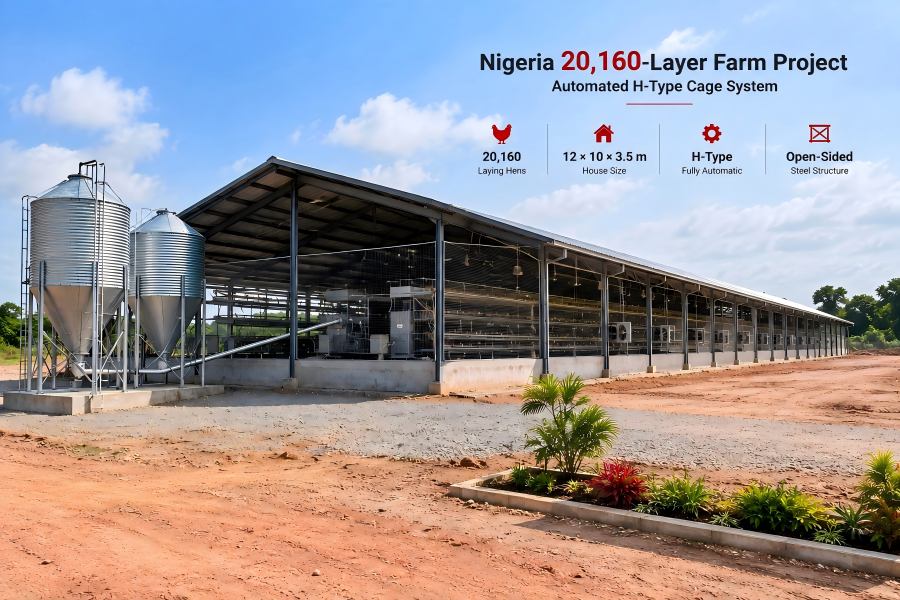
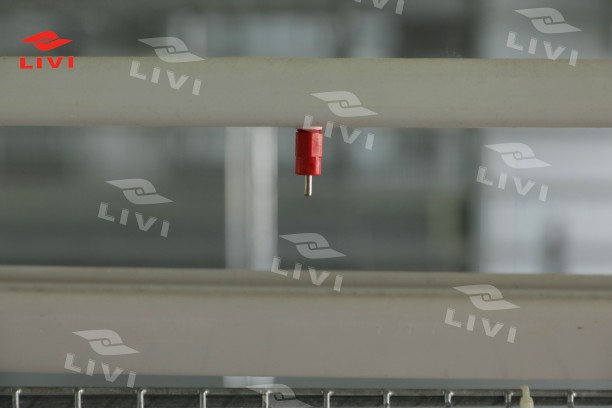
The farm is designed as a fully automatic production system: automatic feeding, nipple drinking, egg collection and belt manure removal are combined with outdoor feed silos, feed conveying, a storage-tank-based water system, filtration, pressure regulation and medication equipment. For environmental management, the design uses cooling pads and exhaust fans rather than relying on natural airflow alone.
For a project of this scale, the key decision is not simply how many cages to buy. The cage quantity, house dimensions, feed route, water capacity, cooling strategy, manure discharge, egg collection and electrical loads need to be verified as one farm design before procurement.
Start with Capacity Verification: How Many H-Type Cages Are Needed?
“How many cages are needed for 50,000 layers?” sounds like a simple purchasing question, but it should be answered from the actual cage model rather than from a generic birds-per-cage assumption.
The confirmed H-type cage specification for this project is:
| Item | Project Specification |
|---|---|
| Cage Model | H-Type |
| Unit Size | 1200 × 625 × 480 mm |
| Configuration | 4-Tier, 2-Door |
| Birds per Door | 9 |
| Nominal Capacity per Set | 144 birds |
| Sets per Row | 70 |
| Equipment Rows | 5 |
| Total Cage Sets | 350 |
Capacity Check
The farm target remains 50,000 laying hens. The additional 400 nominal positions should not be described as an additional 400-bird production target. They are simply the difference between the selected cage-set configuration and the project’s target flock size.
This distinction is useful for investors comparing quotations because cage capacity should always be checked against the actual model, number of tiers, doors per unit and number of installed sets.
The selected 1200 × 625 × 480 mm LIVI H-type cage is published for multi-tier commercial layer applications and the four-tier, two-door version is specified at 144 birds per set.
View the LIVI H-Type Layer Cage System specifications
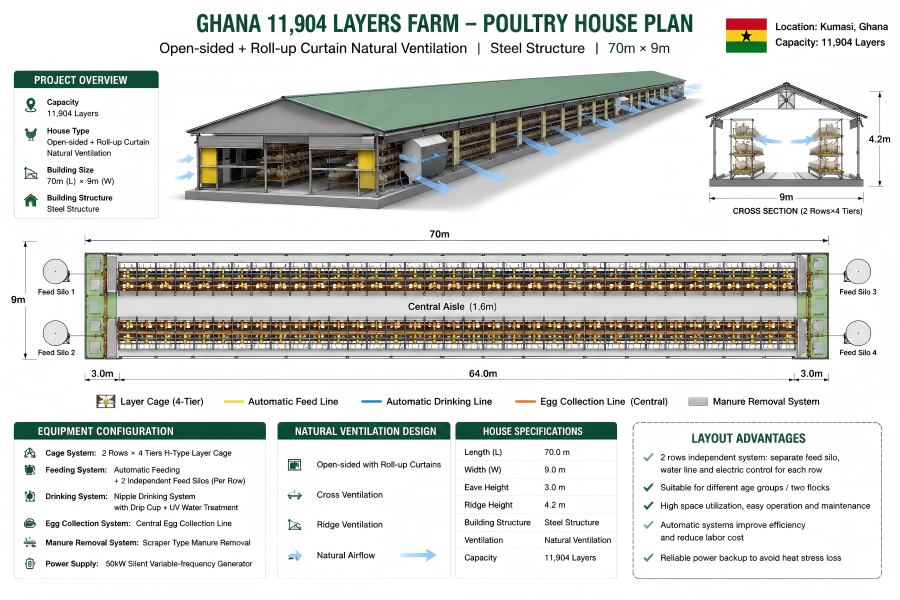
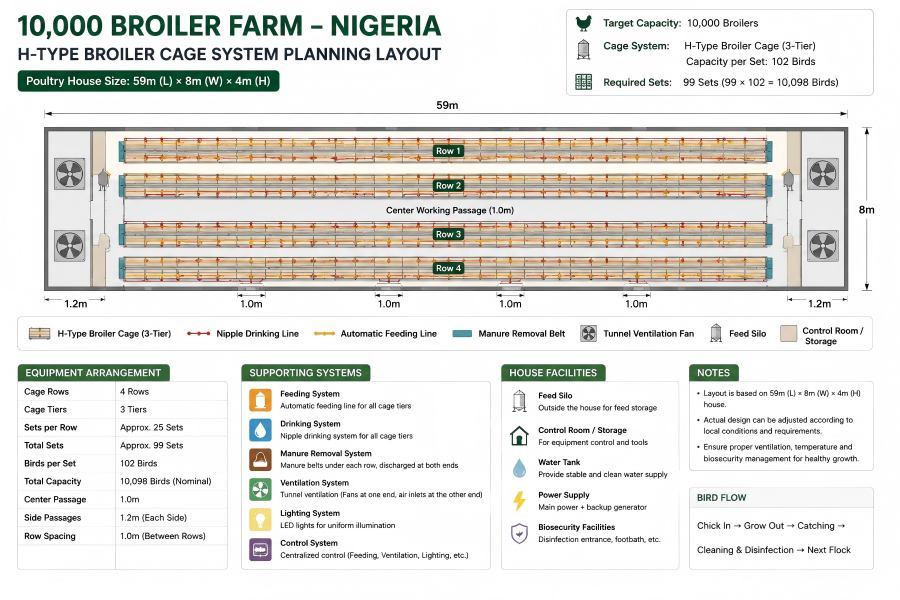
How Are 350 Cage Sets Arranged Inside One Poultry House?
The project uses one poultry house measuring 93 m long × 15 m wide × 4 m high. Inside the house, the equipment plan is divided into five longitudinal cage rows.
At 1.2 m nominal cage-unit length, 70 sets represent 84 m of cage-unit length per row before allowing for end equipment, transitions and other system interfaces.
That leaves approximately 9 m within the confirmed 93 m house length outside the nominal 70 × 1.2 m cage-unit length calculation. This should not automatically be interpreted as a specific aisle or equipment allowance. The final drawing must allocate actual space for feeding equipment, egg collection interfaces, manure discharge, access and structural conditions.
Why Use Five Equipment Rows?
For this project, five rows provide the required equipment quantity within one building while supporting the selected H-type configuration. But “five rows” alone is not enough to finalize the house.
The engineering drawing still needs to verify:
- actual H-frame footprint;
- aisle widths;
- side-wall clearance;
- column positions;
- feed-machine travel and access;
- egg collection interfaces;
- manure discharge space;
- water and electrical routes;
- cooling-pad and fan locations;
- maintenance and emergency access.
Why Is H-Type Selected for This 50,000-Layer Project?
For a 50,000-layer poultry farm in Nigeria, the cage decision affects much more than bird placement. It influences house layout, automation routes, manure handling, egg movement and the way workers inspect the flock.
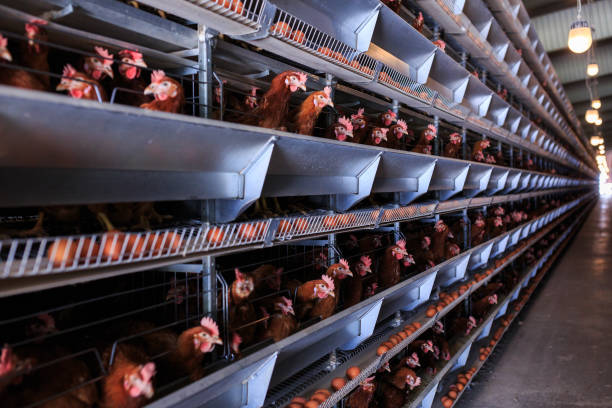
The selected four-tier H-type arrangement concentrates multiple cage levels vertically and allows feeding, drinking, egg collection and manure removal to be integrated around the same equipment structure.
FAO notes that medium- and large-scale commercial poultry production generally makes greater use of commercial equipment, mechanization and automation as production scale increases.
FAO — Poultry Management and Housing
A-Type or H-Type Cages: Which Is More Suitable for 50,000 Layers?
| Decision Factor | A-Type | H-Type |
|---|---|---|
| Typical Planning Priority | Simpler cage architecture and selective automation | Higher integration with multi-tier automation |
| Vertical Space Use | Lower-density arrangement | More intensive multi-tier arrangement |
| Manure Handling | Depends on selected configuration | Well suited to integrated belt manure removal |
| Egg Collection | Can be manual or automated depending on design | Can integrate automatic egg belts and collection |
| Large Commercial Projects | Can be suitable depending on project conditions | Often considered when automation and intensive space use are priorities |
There is no universal rule that every 50,000-layer farm must use H-type cages. In this project, however, H-type equipment is the confirmed selection and is consistent with the required fully automatic operating model.
How Should Feed Move Through a 50,000-Layer Farm?
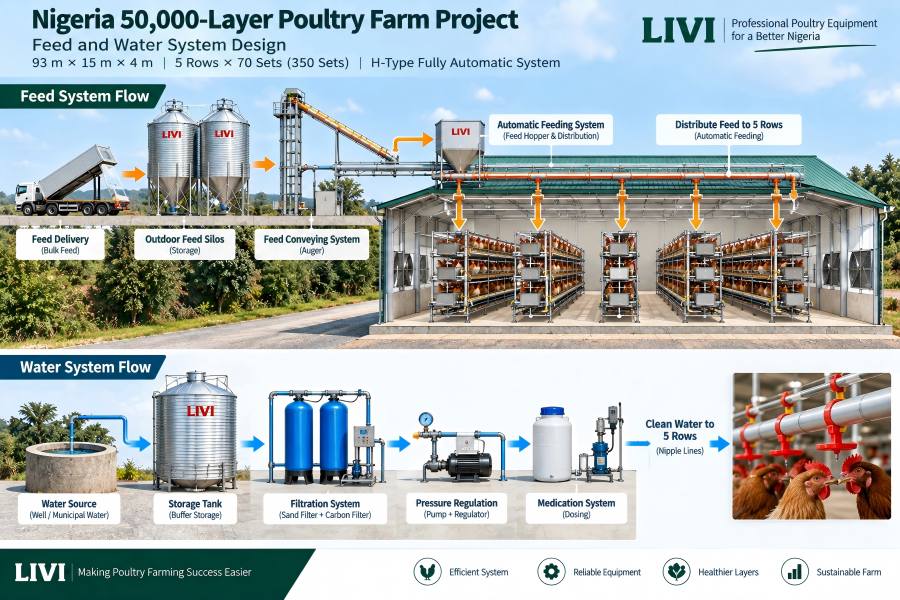
At this scale, feed should be considered as a bulk material flow rather than a manual feeding task. The confirmed project uses outdoor feed silos together with a feed conveying system and automatic feeding equipment.
The silo location should therefore be coordinated with vehicle access, feed delivery, auger routing and the poultry-house entrance.
WOAH poultry biosecurity guidance recommends that feed be stored to prevent access by wild birds and rodents and, where feasible, that feed be delivered to the farm from outside the security fence. This makes feed logistics part of both production planning and biosecurity.
WOAH — Biosecurity Procedures in Poultry Production
What Should Be Confirmed Before the Feed System Is Ordered?
- expected feed delivery method;
- silo capacity and number of silos;
- silo position relative to delivery vehicles;
- conveying distance and route;
- feeding equipment serving the five cage rows;
- motor and electrical requirements;
- maintenance access;
- backup operating procedure during equipment or power interruption.
The confirmed project information specifies outdoor silo storage and feed conveying but does not provide final silo capacity. LIVI Machinery should size the storage and conveying system from the farm’s feed-delivery schedule and operating requirements rather than inventing a fixed tonnage from bird capacity alone.
Why Does the Water System Need More Than Nipple Drinkers?
For a Nigeria 50,000-layer farm, the nipple is only the final point in a much longer water system.
This project includes:
This upstream infrastructure matters because all five cage rows depend on the same water-management strategy.
WOAH recommends potable drinking water for poultry houses and states that microbiological quality should be monitored where contamination is suspected. It also recommends cleaning and disinfecting the water-delivery system between flocks when the house is empty.
What Should the Water-System Design Verify?
Before final equipment selection, the project team should confirm the water source, storage requirement, water quality, filtration requirement, operating pressure, treatment or medication method, pipe routing and peak water demand.
The presence of a storage tank is especially useful as a planning interface because the farm’s external water source and the cage drinking system do not necessarily operate at the same flow or pressure conditions.
LIVI’s drinking-system design should therefore begin upstream of the nipples rather than treating the nipple line as the complete water solution.
Why Does a 15 m Wide Poultry House Need a Defined Cooling Strategy?
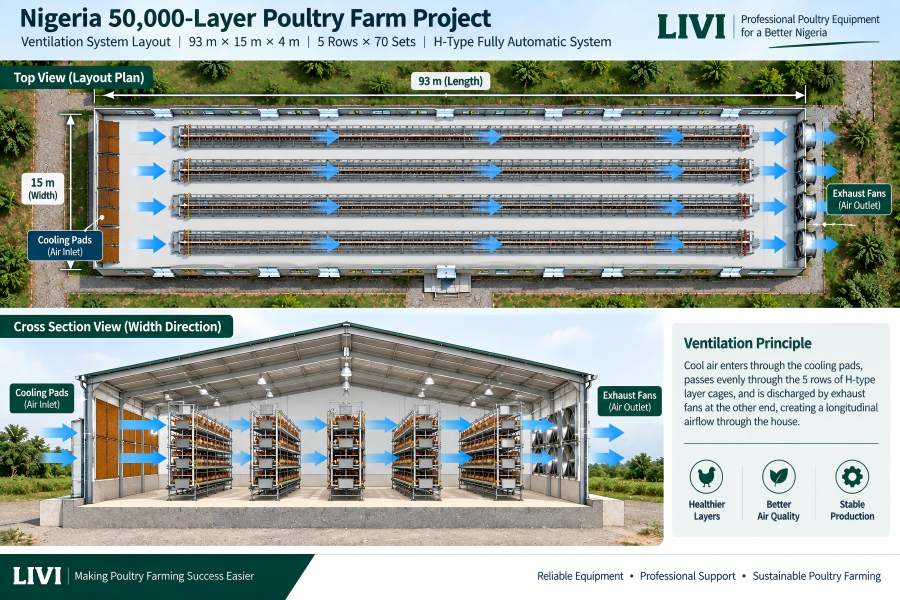
The poultry house in this project is 15 m wide. That makes environmental design one of the most important parts of the solution.
FAO guidance on naturally ventilated poultry housing explains that resistance to air movement increases as house width increases and notes particular limitations for buildings relying on natural airflow when they become wider. The same FAO material also identifies heat stress as a significant poultry-production constraint.
For that reason, this project does not depend on natural ventilation alone.
Its confirmed cooling configuration is:
The objective is to create a deliberate airflow path through the poultry house. FAO technical guidance also describes pad-and-fan evaporative cooling arrangements in which incoming air passes through wet pads and exhaust fans move air through and out of the building.
FAO — Ventilation and Environmental Control
Does “Cooling Pad + Fan” Automatically Define the Final Ventilation System?
No.
The confirmed project specifies cooling pads and fans, but final fan quantity, airflow capacity, pad area and control stages should be calculated from the actual house, cage layout, bird load, local design conditions and equipment performance.
This is especially important when buyers search for a poultry farm ventilation system Nigeria. A supplier should not quote fans simply from the number of birds without verifying the building and environmental design.
How Do Automatic Egg Collection and Belt Manure Removal Fit the Layout?
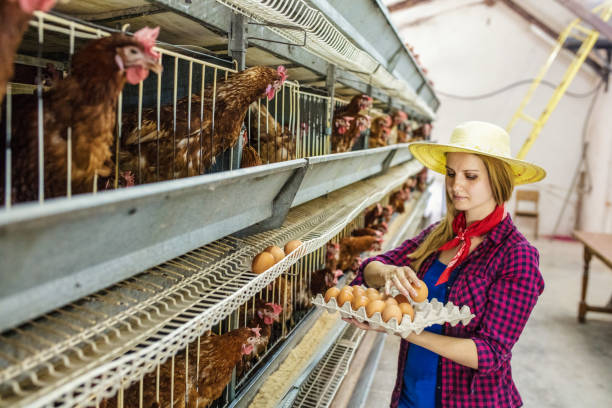
The H-type system separates two continuous outputs from the flock: eggs and manure. Both require a destination outside the individual cage compartment.
Egg Flow
Manure Flow
The project confirms automatic egg collection and automatic belt manure removal. However, the final downstream egg-handling equipment and external manure destination should be confirmed from the customer’s operating plan.
This prevents a common planning error: completing the cage layout before deciding where eggs and manure will physically leave the poultry house.
LIVI Machinery should coordinate these routes in the layout drawing before installation so that the cage equipment, building openings and external handling areas do not conflict.
What Happens During a Power Interruption?
A fully automatic 50,000-layer project creates electrical dependencies.
Feeding drives, egg collection, manure belts, water-system components, fans and controls may all depend on electricity according to the final equipment configuration.
World Bank Enterprise Survey data for Nigeria track firms experiencing electrical outages, which makes backup-power planning a practical project consideration for electrically dependent commercial farms.
World Bank — Firms Experiencing Electrical Outages in Nigeria
What Size Generator Is Needed for a 50,000-Layer Farm?
There is no responsible answer based only on the number of birds.
The correct sequence is:
Fan operation deserves particular attention because environmental equipment may become critical under adverse temperature conditions.
The final generator or backup-power specification should therefore be determined from the electrical load schedule, not from a generic “50,000 birds = X kW” rule.
How Much Does a 50,000-Layer Farm Cost in Nigeria?
The search question “How much does 50000 layers poultry farm cost in Nigeria?” cannot be answered responsibly with one universal number.
For this project, investment should be separated into several scopes:
| Cost Block | Main Variables |
|---|---|
| H-Type Cage System | 350 sets, cage specification, material and supplied accessories |
| Automatic Feeding | Feeding equipment, silo configuration, conveying route and motors |
| Drinking System | Tank, filtration, pressure regulation, medication and nipple system |
| Egg Collection | Row belts, transfer arrangement and final collection scope |
| Manure Removal | Tier belts, drives, discharge and downstream handling scope |
| Climate System | Cooling pads, fans, controls and related installation |
| Poultry House | 93 × 15 × 4 m structure and local construction scope |
| Electrical / Backup Power | Connected loads, cables, control system and backup strategy |
| Logistics | Packaging, shipping basis, destination and import-related scope |
| Installation | Local labor, supervision, commissioning and agreed supplier responsibilities |
No verified total investment figure has been supplied for this project, so LIVI does not need to invent a project price, profit rate or payback period for marketing purposes.
What Does H-Type Layer Cage Price in Nigeria Actually Include?
When comparing quotations, ask whether the quoted amount covers only cage bodies or also feeding, drinking, egg collection, manure removal, feed storage, conveying, climate equipment, packing, installation guidance and spare parts.
A useful comparison requires approximately equivalent quotation boundaries.
For buyers researching poultry farm investment, see the LIVI guide to battery cage poultry farm cost and investment factors .
Should a 50,000-Layer Farm Be Fully Automatic or Semi-Automatic?
This project’s confirmed choice is full automation, but that does not mean every farm at the same scale must make the same decision.
For this commercial layer farm in Nigeria, five equipment rows, 350 H-type cage sets, bulk feed storage, automated egg movement, belt manure removal and a pad-and-fan climate strategy create a strong operational reason to coordinate the systems as one automatic project.
A buyer deciding between semi-automatic and fully automatic equipment should evaluate:
- farm scale;
- house configuration;
- available labor and technical staff;
- power reliability and backup strategy;
- maintenance capability;
- water infrastructure;
- egg and manure handling requirements;
- capital budget;
- future production strategy.
Automation should solve an operating requirement. It should not be added simply because a farm has reached a particular bird number.
What Should Be Confirmed Before Ordering the Equipment?
Before LIVI Machinery converts this planning solution into a final manufacturing and installation package, the project team should close the remaining engineering inputs.
| Input | Why It Matters |
|---|---|
| Final Building Drawing | Confirms columns, openings, clear height and equipment interfaces |
| Site Orientation | Affects environmental design and farm logistics |
| Local Climate Design Conditions | Required for final cooling and ventilation calculations |
| Power Supply | Determines motors, controls and backup-power design |
| Water Source and Quality | Determines storage, filtration and treatment requirements |
| Feed Delivery Schedule | Needed to size silo storage and conveying strategy |
| Egg Handling Plan | Defines the collection-system destination |
| Manure Handling Plan | Defines the discharge and external handling interface |
| Local Installation Resources | Clarifies supplier and customer responsibilities |
Planning a 50,000-Layer Project in Nigeria?
Send your target capacity, site information, poultry-house requirements, available electricity, water source and preferred automation level. LIVI can use these inputs to develop the cage layout and equipment configuration for your project.
Request Your 50,000-Layer Farm Plan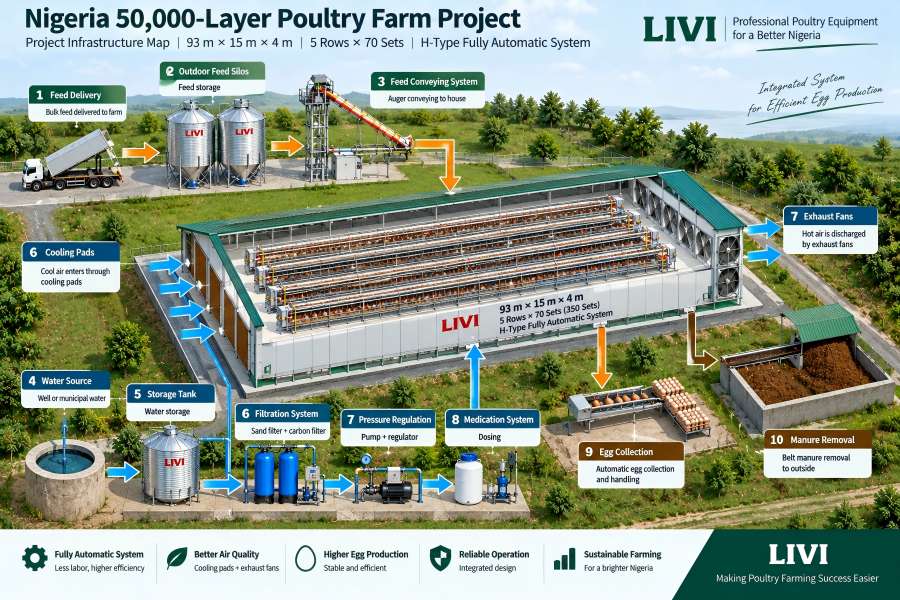
Frequently Asked Questions About a 50,000-Layer Farm in Nigeria
1. How many H-type cage sets are needed for 50,000 layers?
For this specific project, 350 sets are planned. Each four-tier, two-door H-type cage set has 144 nominal bird positions, so 350 sets provide 50,400 nominal cage positions for the target flock of 50,000 layers. Cage quantity for another project should be recalculated from its actual model.
2. What chicken house size is used for this 50,000-layer project?
The confirmed design uses one poultry house measuring 93 × 15 × 4 m with five equipment rows and 70 cage sets per row. This is project-specific and should not be treated as a universal house-size formula for every 50,000-layer farm.
3. Which cage system is suitable for 50,000 layers in Nigeria?
Both cage type and automation level should follow the project conditions. This project uses a four-tier H-type system because the confirmed design requires five rows of highly integrated automatic equipment in one commercial poultry house.
4. How much does a 50,000-layer automatic farm cost in Nigeria?
There is no reliable universal price. The investment depends on cage scope, automation, poultry-house construction, feed storage, water treatment, climate equipment, electrical infrastructure, freight, installation and local project costs. A project-specific quotation should define each scope before prices are compared.
5. Why does this poultry house use cooling pads and fans?
The confirmed house is 15 m wide and the project specifies a pad-and-fan cooling system. Final airflow, fan quantity and cooling-pad area should be calculated from actual environmental design conditions rather than estimated from bird capacity alone.
6. What water equipment is required before the nipple lines?
This project includes a storage tank, filtration, pressure regulation and medication equipment upstream of the automatic nipple drinking system. Final capacities should follow water source, quality and operating-demand data.
7. How do I choose a poultry equipment supplier for a 50,000-layer project in Nigeria?
Compare suppliers on complete system scope rather than cage price alone. Ask for cage specifications, capacity calculations, house layout, feeding and drinking scope, egg and manure systems, environmental design, electrical information, installation responsibilities, spare-parts scope and after-sales support.
From 50,000 Birds to One Buildable Farm Plan
A large commercial layer project should move through a clear engineering sequence:
The value of this solution is not the individual specification alone. It is the relationship between capacity, equipment quantity and the building that must contain and support the system.
The confirmed numbers already provide a strong starting point: 350 LIVI H-type cage sets, five rows, 70 sets per row, one 93 × 15 × 4 m poultry house and a complete automatic production configuration.
The remaining engineering work is to validate the interfaces: exact clearances, environmental capacity, silo sizing, water-system capacity, electrical loads, egg destination, manure discharge and installation conditions.
That is also the information a serious investor should expect from a poultry equipment supplier Nigeria project proposal. The goal is not simply to purchase enough cages for 50,000 birds; it is to convert the target flock into a poultry house and equipment system that can actually be installed, operated and maintained.
Need a Project-Specific 50,000-Layer Layout?
Provide your farm location, land or poultry-house dimensions, target capacity, water and power conditions, and preferred automation scope. LIVI will use the confirmed project inputs to develop a more detailed equipment and house-planning proposal.
Get a Project-Specific Solution