



Quick Answer: Which Retrofit Addresses the Most Urgent Failure?
For poultry farm heat stress and ventilation in Nigeria during power outages, prioritize the failure that most quickly leaves layers without adequate airflow or drinking water. If a house relies on fans that stop when power fails, dependable backup power may be the first investment. If airflow is already uneven during normal operation, improve ventilation and distribution as well.
An independently powered alarm can summon a response, but it does not cool birds or supply water. Emergency openings may help only where a site-specific assessment shows that air reaches occupied cages under the conditions the farm must manage. These options are complementary, not interchangeable.
Where Are Layers Most Vulnerable When Ventilation Stops?
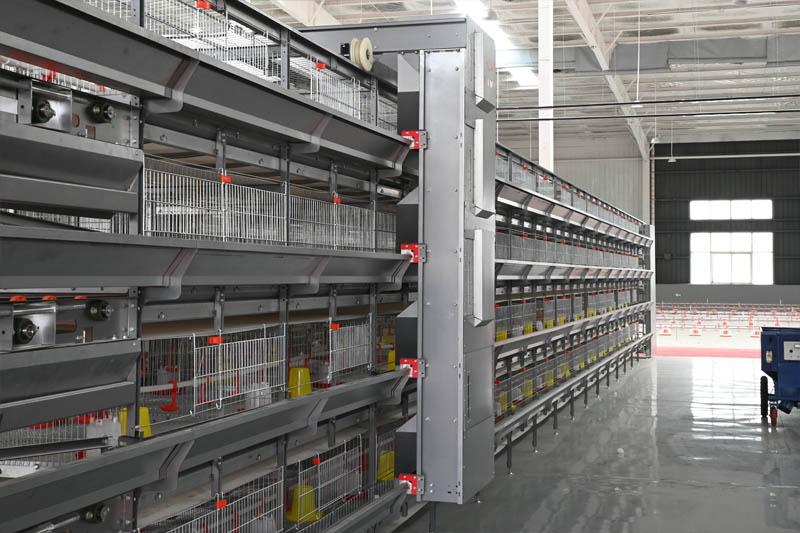
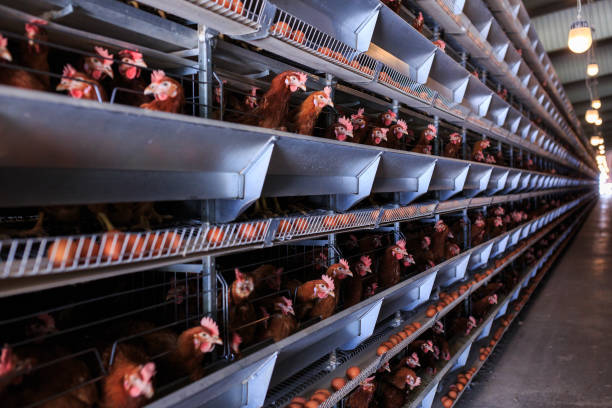
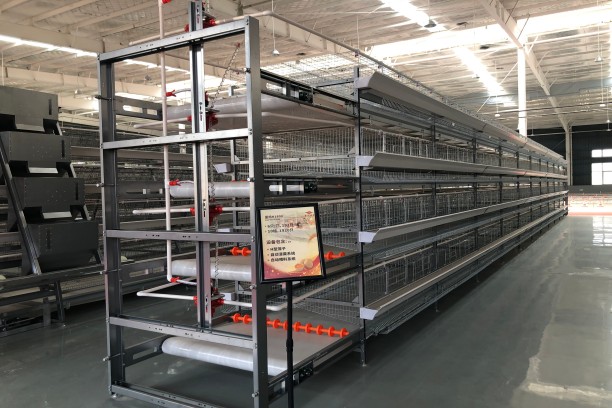
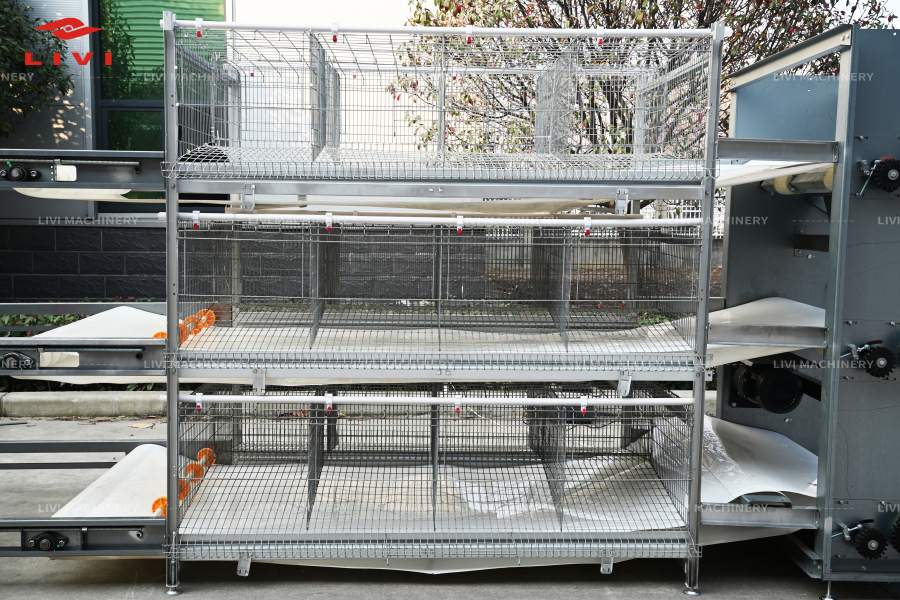
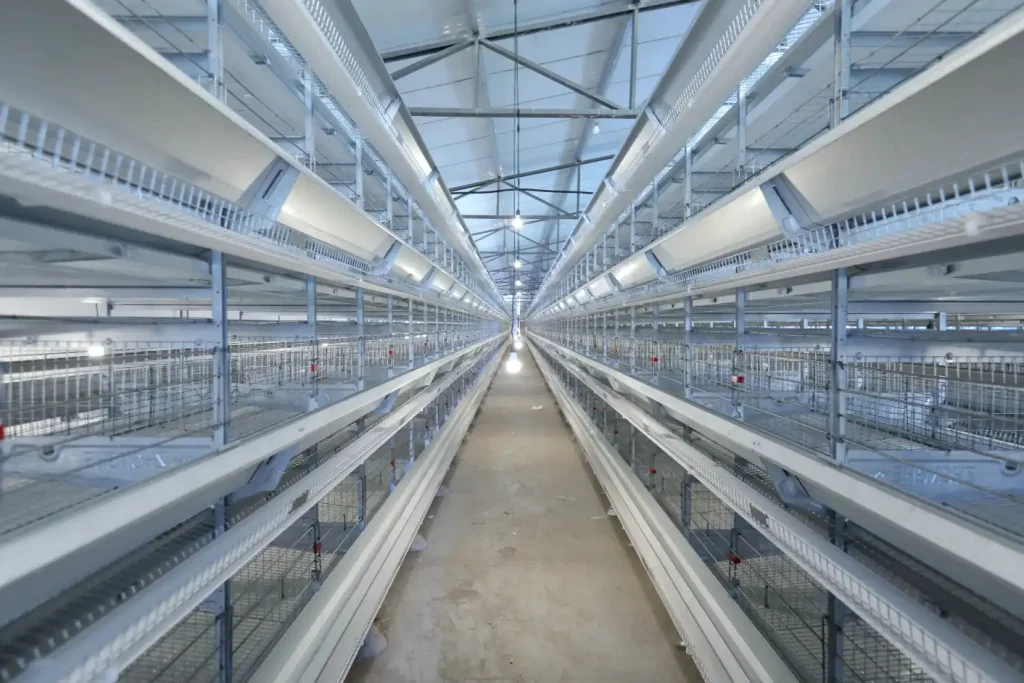
Map the house before ordering equipment. The most vulnerable locations are those where heat, weak air movement and restricted water access coincide—not necessarily the highest tier.
Inspect row ends, the middle of the house, locations near inlets and fans, and representative cage tiers. Record bird-level temperature, relative humidity and air movement alongside outdoor conditions, time and fan operation. Compare readings between locations and with the farm's normal records. Air moving through an aisle does not prove that it reaches birds behind cage structures.
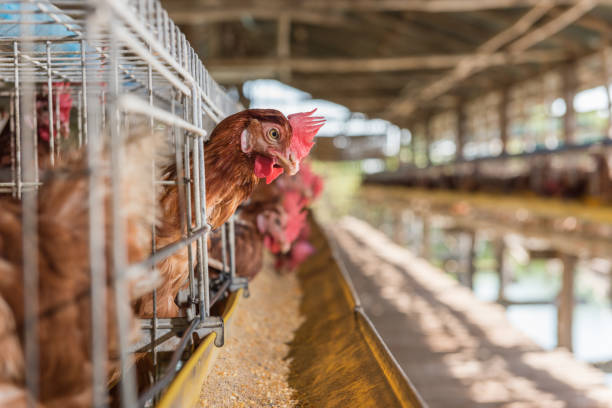
Watch for panting, wings held away from the body and lethargy. Compare feed intake, water consumption, egg production and mortality with the flock's usual records. These changes can signal a problem but do not establish its cause. For severe distress or unusual mortality, activate the emergency plan promptly and contact a local veterinarian. Follow local veterinary and biosecurity guidance.
Plan Your Layer House Equipment Configuration
Share your Nigerian farm location, flock size, house dimensions and outage history with LIVI to discuss an equipment configuration for your existing layer house.
Interpret measurements together. High humidity can limit evaporative cooling, while insufficient air movement can leave birds exposed even when a sensor elsewhere reads lower. Suitable conditions depend on breed, age, climate, density and management; a single universal temperature or airspeed target is not a substitute for assessment.
Is the existing ventilation capacity adequate?
Ask a competent designer to establish the airflow needed for the actual flock, building and operating conditions. Compare that requirement with documented fan performance at the expected operating static pressure—the resistance fans must work against—not simply with the fans' unrestricted ratings.
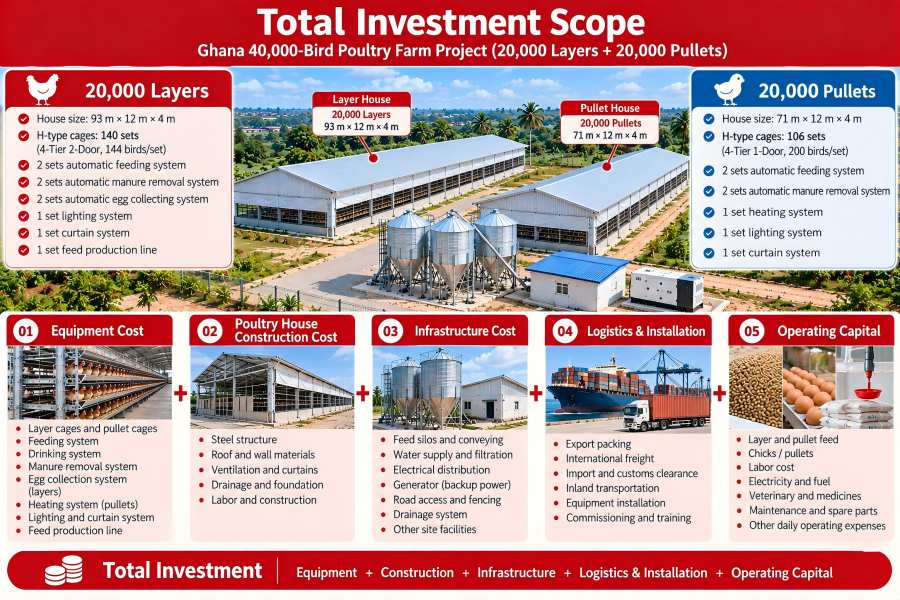
Check inlet restrictions, dirty fans, obstructions and measured distribution through the cages. If total capacity appears adequate but bird-level airflow is weak in particular zones, inlet or distribution changes may be more useful than adding another fan. Verify the result after any adjustment.
Which Upgrade Fits the Failure You Need to Correct?
Use the comparison to identify the first gap, then check the dependencies that must work with it. Site measurements and supplier performance documents should determine the final configuration.
| Retrofit option | Benefit and limitation | Parameters to verify | Selection and implementation |
|---|---|---|---|
| Backup power | Restores selected loads; depends on sizing, transfer, energy supply and maintenance. | Running and starting loads, outage duration, transfer and protection. | Prioritize when otherwise adequate fans stop during outages; have an electrician design and test the connection. |
| Fan and inlet changes | Can improve capacity or distribution; building and electrical changes may be needed. | Fan performance at operating pressure, inlet area, obstructions and bird-level airflow. | Prioritize a measured normal-operation shortfall; confirm layout before ordering. |
| Independent alarms | Warn staff of power loss or heat; do not provide airflow or water. | Backup power, sensor location, signal, notification and response coverage. | Prioritize when failure could go unnoticed; pair installation with a tested response. |
| Emergency openings | May admit natural airflow; results depend on wind, weather and cage layout. | Air movement at cages, external obstructions, structural feasibility and biosecurity. | Consider only after site assessment; verify performance before relying on them. |
| Water resilience | Storage, repairs or pump backup can preserve access; none replaces ventilation. | Usable water, pressure, drinker flow and power dependencies across tiers. | Prioritize where supply or distribution fails; confirm design and maintenance responsibilities. |
For a backup generator for a poultry farm in Nigeria, list the essential fans, controls, alarms and water pumps that must operate together. A qualified electrician should assess running loads, motor starting demand, protection, transfer arrangements and intended outage duration. A generator that starts but cannot carry those loads is not an adequate retrofit. Keep generator exhaust away from the house and occupied areas.
Review Your Ventilation and Water Layout
Send your cage layout, fan and inlet details, water supply arrangements and observed problem areas to discuss a customized equipment plan with LIVI.
What should staff do during an outage?
- Alert the responsible operator, check the birds and activate the farm's approved emergency ventilation plan and backup supply.
- Check drinkers across rows and tiers. If supply fails, use the farm's safe alternative water plan while maintaining biosecurity.
- Record the fault, bird behaviour and conditions. Once the flock is protected, inspect fans, inlets, controls and alarm history.
- Contact a local veterinarian promptly for severe distress or unusual mortality. Restore services safely and follow veterinary advice.
Do not deliberately expose birds to an unsafe outage to test a proposed retrofit. Arrange controlled commissioning with qualified personnel, then maintain and periodically test the alarm, power transfer, fans and water access. Assign response duties for each shift.
How Should Drinking Water and Feeding Affect Retrofit Priorities?
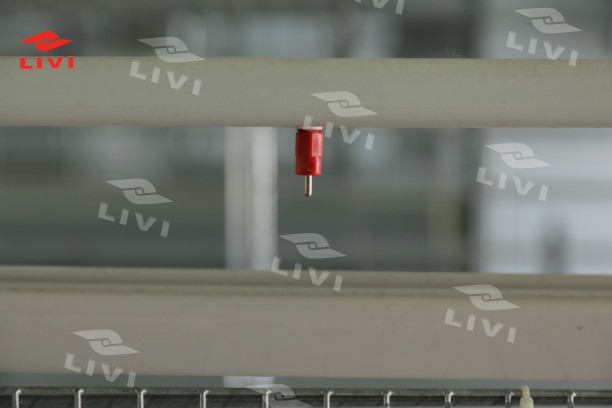
If an outage stops water pressure or leaves a cage tier without access, water resilience deserves immediate attention alongside ventilation. Trace the layer house drinking system from the source and storage through pumps, filters, pressure controls and lines to individual drinkers. Check distant and upper locations for flow, blockages and leaks. Confirm whether stored water can reach birds when the pump is off.
For planning, use this relationship:
Emergency water provision = observed hot-period consumption over the intended outage + distribution losses + other planned uses.
Use the farm's own consumption measurements and intended outage duration; account for cooling-water use if relevant. A designer should verify usable storage and pressure at the drinkers. A tank alone does not establish that water reaches every occupied cage.
Keep clean drinking water accessible and monitor consumption. Where the flock's management program permits, consider distributing feed during cooler periods while maintaining appropriate nutrition; avoid abrupt feed restrictions. Water and feeding arrangements must reflect breed, age, climate and management conditions.
Which Nigerian Site Conditions Could Change the Retrofit Choice?
Use records from the actual Nigerian farm rather than assuming one climate or utility pattern. Outdoor temperature, humidity, rainfall and wind exposure affect whether openings or evaporative cooling are practical. Local climatological normals can provide a benchmark, but they should be considered alongside farm observations and the conditions the emergency plan must address.
Document outage frequency and duration, existing backup arrangements, water-source reliability and which pumps or controls depend on electricity. Confirm local electrical, structural, animal-welfare and biosecurity requirements before modifying the house or connecting backup power. Also check installation access, available electrical skills, fuel or energy supply, spare parts and service arrangements.
Give suppliers the same site information: location, flock details, house dimensions, cage layout, fan and inlet details, power and water arrangements, outage records and problem-zone observations. Ask each supplier to state design assumptions, equipment scope, compatibility, commissioning tests, delivery, installation responsibilities and ongoing support. Compare proposed equipment using performance at the expected operating conditions, not headline ratings alone.
Prepare Your Retrofit Installation Support Plan
Share your proposed upgrades, existing power and water conditions, house dimensions and installation requirements to discuss LIVI's installation guidance and project support scope.
LIVI Machinery supports customized house layouts and equipment configurations. Confirm the proposed retrofit scope, documentation and technical support for the particular project. For poultry farm heat stress and ventilation in Nigeria during power outages, the decision remains a site-specific combination of airflow, water, detection and response—not a single purchase.
FAQ
1. Can emergency openings replace backup fans in a layer house?
Only if a site-specific assessment demonstrates adequate air movement at occupied cage locations under the outage conditions the farm needs to manage. Wind, outside obstructions, weather, structural changes and biosecurity all affect the result. Do not assume an opening replaces backup fans without that assessment and a workable emergency response.
2. How should a backup generator be sized for a layer-house outage?
Size the generator for the essential loads that must operate together during an outage, including ventilation, controls, alarms and water pumping where needed. A qualified electrician should check running loads, motor starting demand, transfer arrangements, protection and the intended outage duration before equipment is selected. Capacity depends on the actual installation.
3. Will a temperature alarm work when the power goes out?
Only if its power supply, sensors and notification path remain operational during the outage. Confirm independent power, signal availability, sensor placement and who will respond. Test the complete alert path safely, including receipt by the responsible staff member; an alarm alone cannot restore ventilation or drinking water.
4. How can fans, evaporative cooling pads, and air inlets be combined to control temperature and humidity?
Assess them as one airflow path: fans and inlets move air through the house, while an evaporative pad can cool incoming air when conditions permit. Humidity, water availability, fan performance and distribution through the cages affect the result. Before prioritizing a cooling retrofit, establish which fans, controls and pumps can operate during an outage.
5. What should I send suppliers to compare layer-house retrofit proposals?
Send the Nigerian farm location, flock details, house dimensions and cage layout, plus fan and inlet details, power and water arrangements, outage records and observations of heat or weak airflow. Ask each supplier to identify essential backup loads, design assumptions, equipment scope, compatibility, commissioning tests, installation responsibilities and ongoing support.
TAGs: poultry heat stress management in Nigeria, layer house ventilation, poultry farm power outage, emergency ventilation, backup generator for poultry farm in Nigeria, layer house drinking water