



Quick Answer
A 100,000-layer poultry farm in Nigeria should not be designed as a cage purchase alone. A complete commercial solution needs to integrate the poultry houses, layer cages, automatic feeding, drinking, manure removal, egg collection, feed storage, ventilation, cooling, climate control, lighting, electrical systems, alarms and backup power.
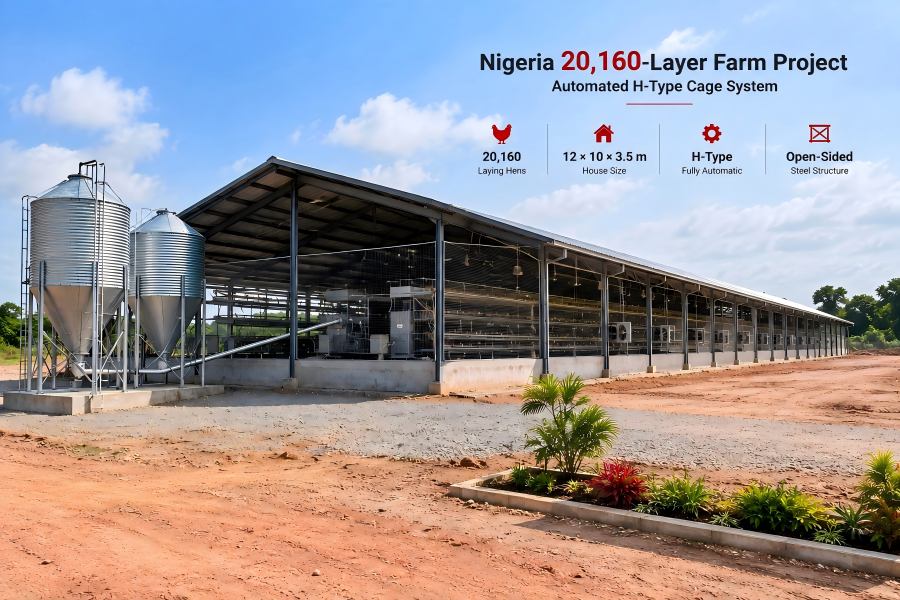
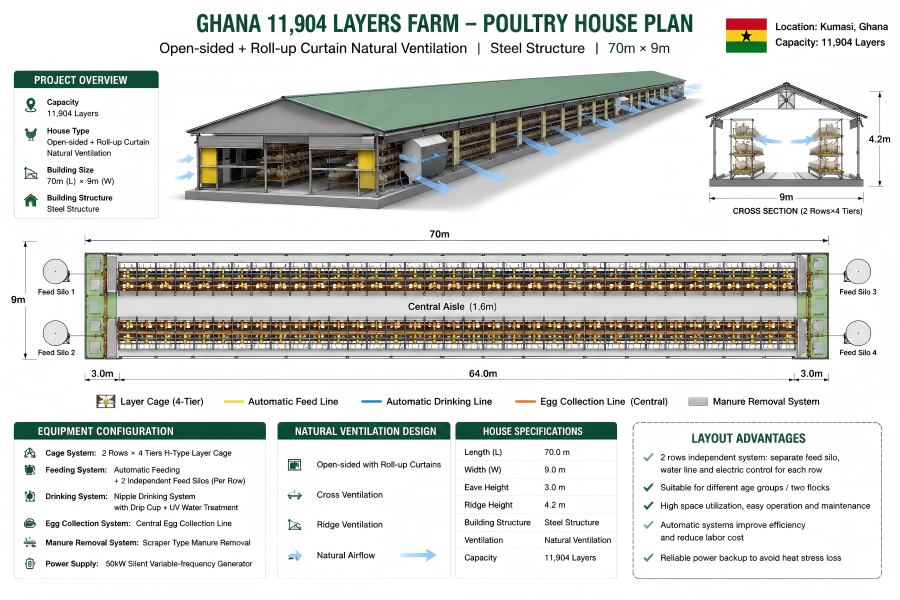
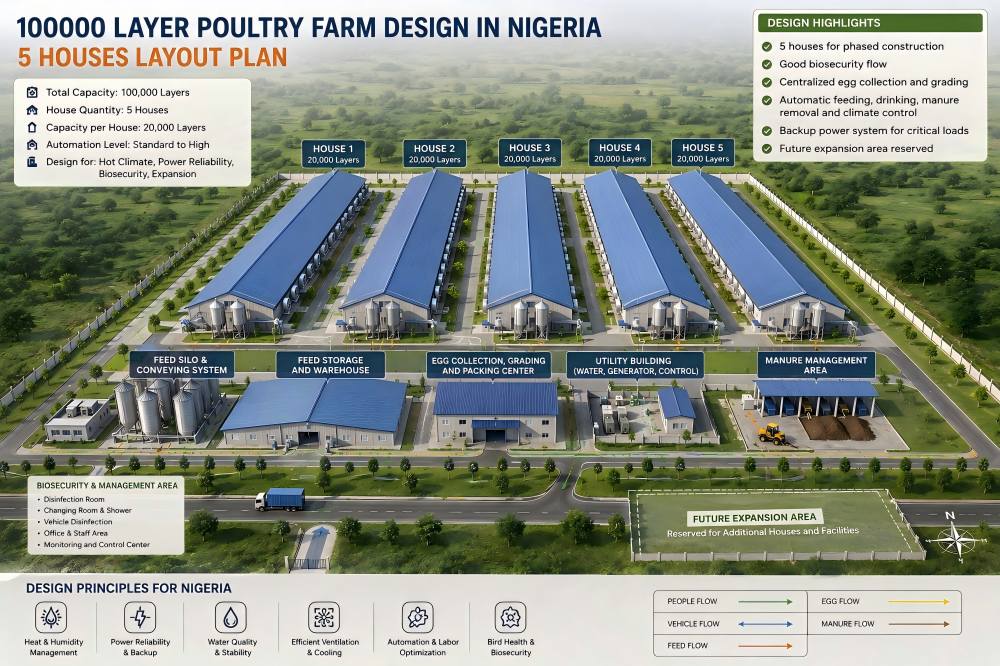
The number of poultry houses is not fixed. For preliminary discussion, the project may be divided into four houses of about 25,000 birds each or five houses of about 20,000 birds each, but the final house quantity must be recalculated from the actual cage model, house dimensions, ventilation, land, utilities, maintenance access and expansion plan.
For Nigeria, the most important design risks are heat, humidity, power reliability, water quality, manure handling and future expansion. These systems need to be planned together because failure in one area—such as power, ventilation or water—can affect the entire production system.
Why a 100,000-Layer Farm Should Be Designed as a System
At 100,000 birds, the main question is no longer:
“Which layer cage should I buy?”
A more useful question is:
“How should the farm be organized so that 100,000 birds can be fed, watered, ventilated, monitored, cleaned and managed every day without creating new bottlenecks?”
That is the core design problem.
The project needs three connected planning levels:
| Planning Level | What Must Be Decided |
|---|---|
| Project Level | Total capacity, house quantity, site layout, phasing, expansion |
| House Level | Cage layout, feed, water, manure, eggs, ventilation, electrical control |
| System Level | Cages, silos, feeding, drinking, egg collection, climate, lighting, manure handling |
The relationship is sequential:
Total Capacity → House Capacity → Cage Quantity → Feed/Water/Egg/Manure Loads → Heat Load → Ventilation & Cooling → Electrical Capacity → Backup Power
This is one of the most important planning principles for a large automated layer farm in Nigeria.
Step 1: Decide How the 100,000 Birds Should Be Distributed
Is Four Houses or Five Houses Better?
There is no universal answer. The attachment provides two example planning scenarios:
| House Strategy | Reference Capacity | Potential Benefit | Main Limitation |
|---|---|---|---|
| 4 houses | About 25,000 birds/house | Fewer houses and more concentrated connections | Higher ventilation, power and equipment load per house |
| 5 houses | About 20,000 birds/house | Easier phasing, zoning and risk isolation | More roads, utilities and external connections |
These are planning examples only, not construction parameters.
Choose Fewer, Larger Houses When:
- Land is limited
- Utility infrastructure is strong
- Centralized management is preferred
- Higher per-house system loads can be supported
Choose More, Smaller Houses When:
- Construction will be phased
- Risk isolation is important
- Future expansion is planned
- The farm wants more flexible flock zoning
The final number should only be determined after confirming site dimensions, cage model, house width and length, ventilation, maintenance space and utility capacity.
Step 2: Select the Right Automation Level
A 100,000-layer project should not rely entirely on manual feeding, manure removal and egg collection.
However, not every farm needs the same automation level.
Automation Options
| Option | Suitable For | Main Benefit | Main Limitation |
|---|---|---|---|
| Basic Automation | Budget-sensitive farms with labor available | Lower initial investment | Higher labor dependence |
| Standard Automation | Medium and large commercial farms | Balanced efficiency and investment | Requires stable utilities and technical support |
| High Automation | Large companies and multi-house farms | Centralized control and standardization | Higher investment and maintenance demand |
The source recommends that a 100,000-layer farm should generally automate the repetitive core operations, while advanced functions such as centralized egg handling and data systems can be phased according to budget and farm design.
Practical Priority Order
If the budget is constrained, prioritize:
- Ventilation
- Drinking water
- Essential feeding
- Manure removal
- Alarms
- Backup power
Central egg collection and advanced data functions can be added later if the first-stage project reserves space, power and control interfaces.
Step 3: Build the Automated Layer House Around Daily Workflows
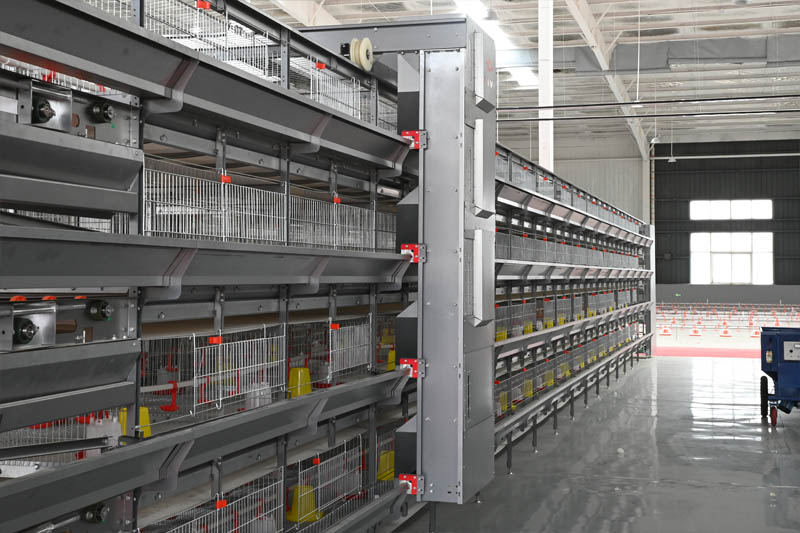
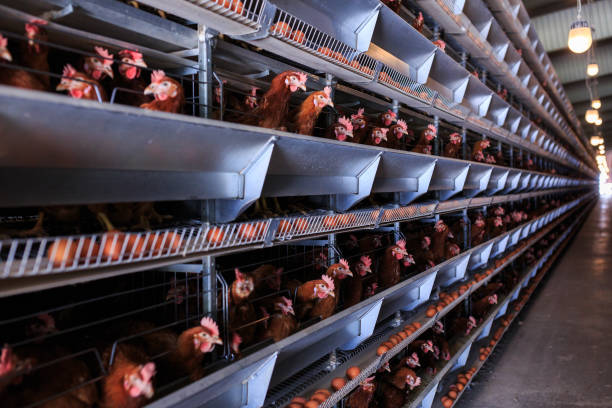
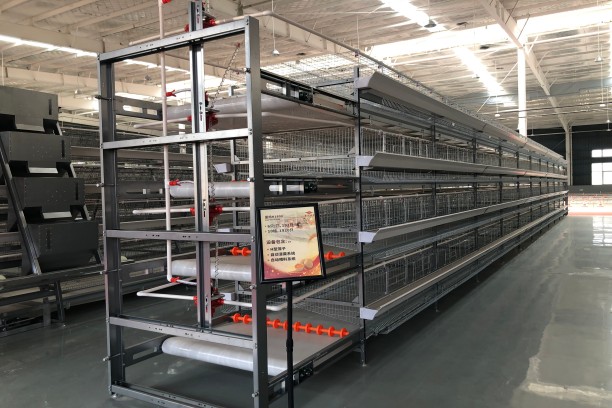
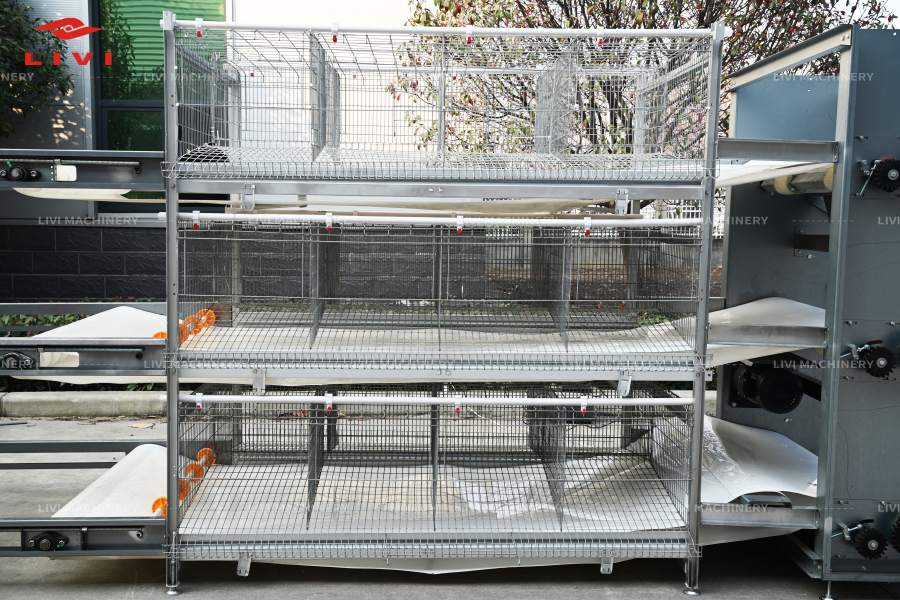
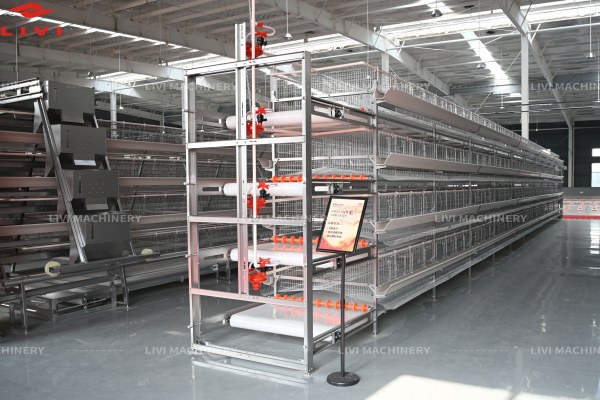
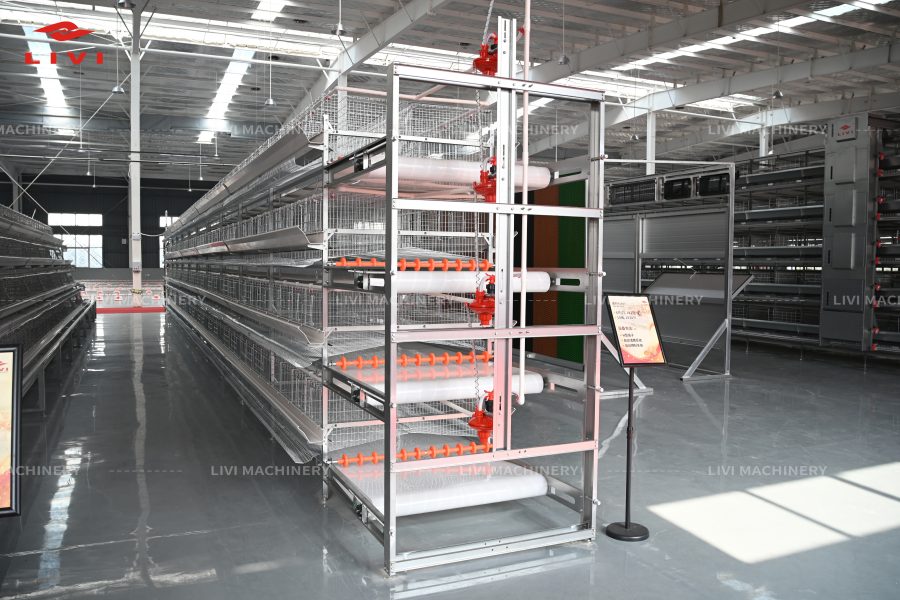
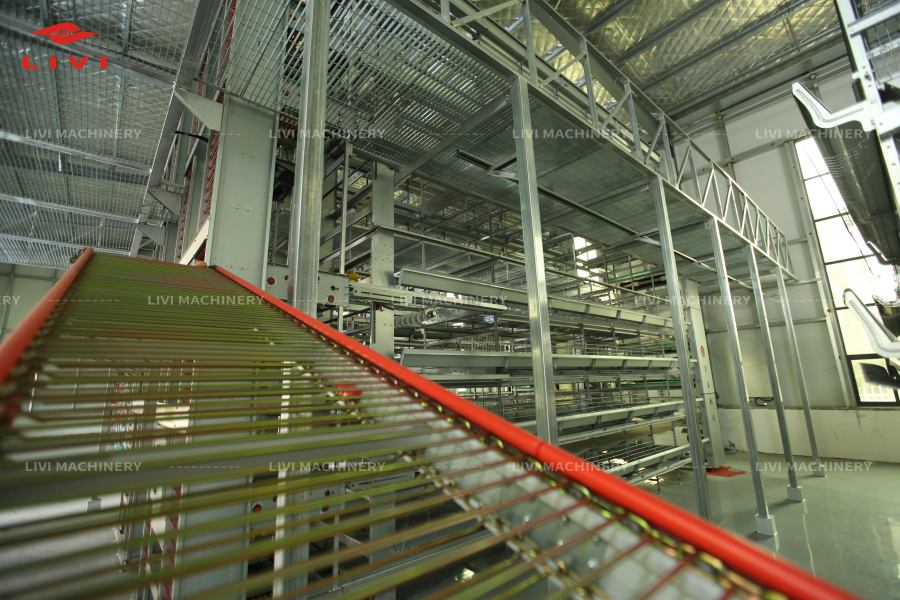
1. Layer Cage System
The cage is the base production structure, but it affects nearly every other system.
Selection should consider:
- Breed
- Cage tiers
- Capacity
- Access
- Corrosion protection
- Service life
The layer cage layout directly influences feeding, drinking, manure removal, egg collection and airflow.
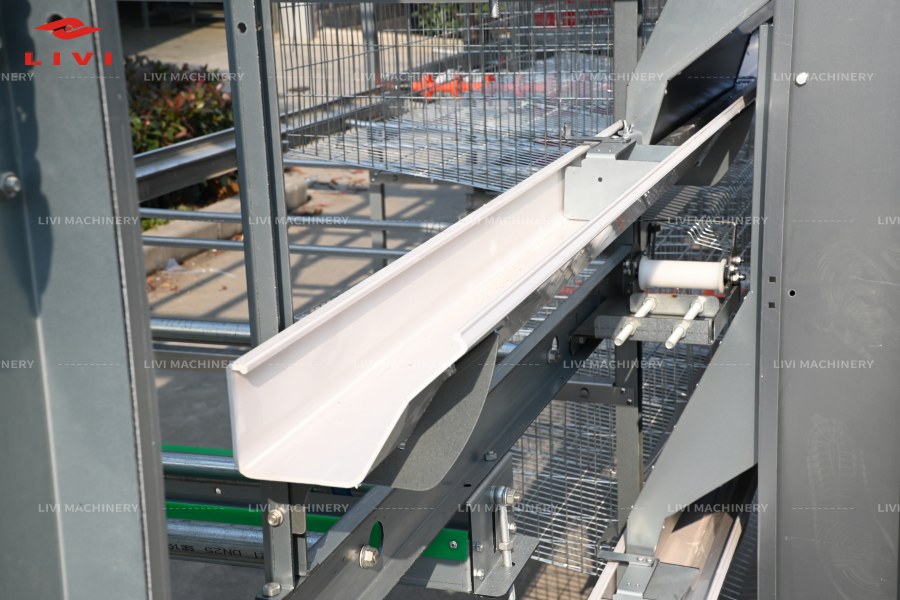
2. Automatic Feeding System
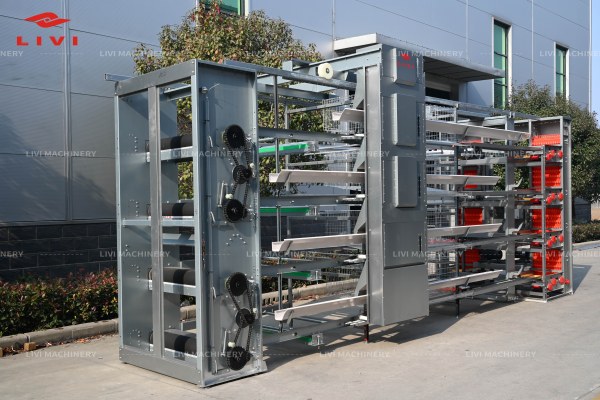
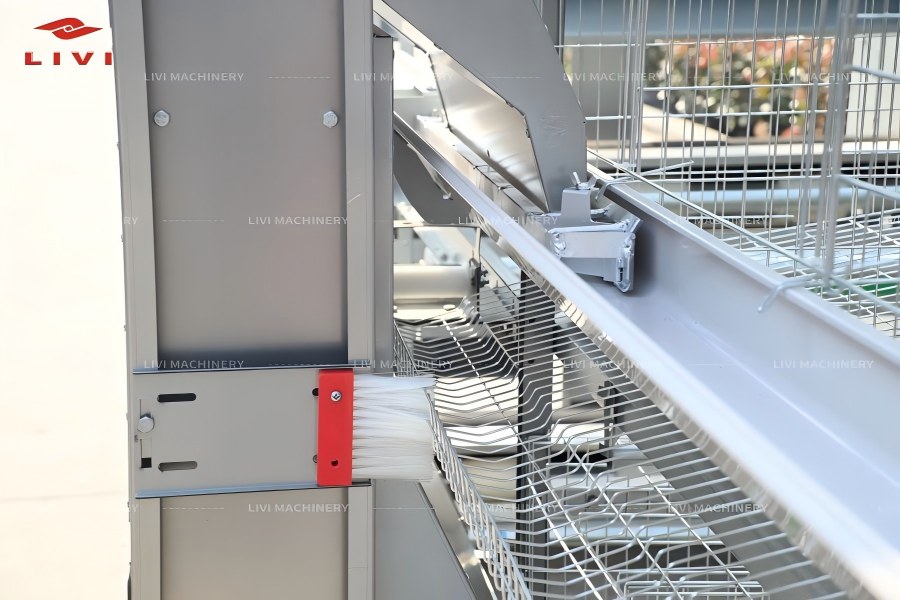
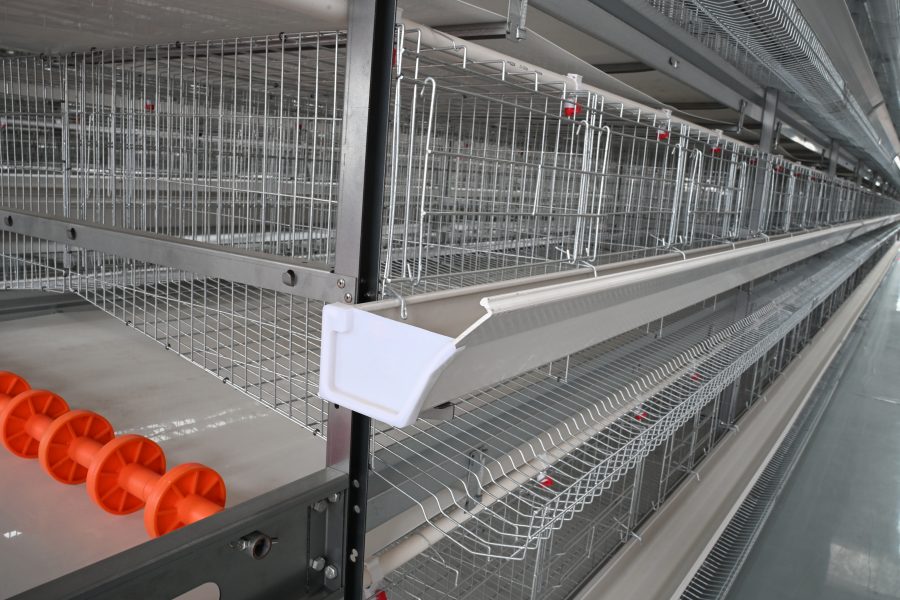
The feeding system should be designed according to:
- Total capacity
- House length
- Feed distribution uniformity
- Motor selection
- Protection
- Silo and conveying arrangement
The source describes feeding as a complete path:
Feed Purchase → Inspection → Storage → Silo → Conveying → Feeding → Intake Inspection
This shows why the silo and conveying system should not be treated separately from the cage house.
3. Automatic Drinking System
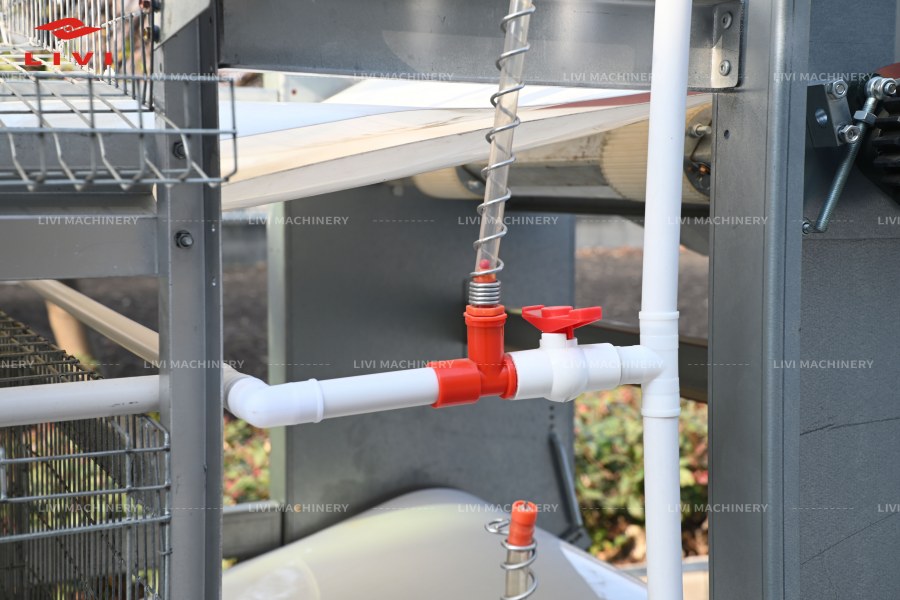
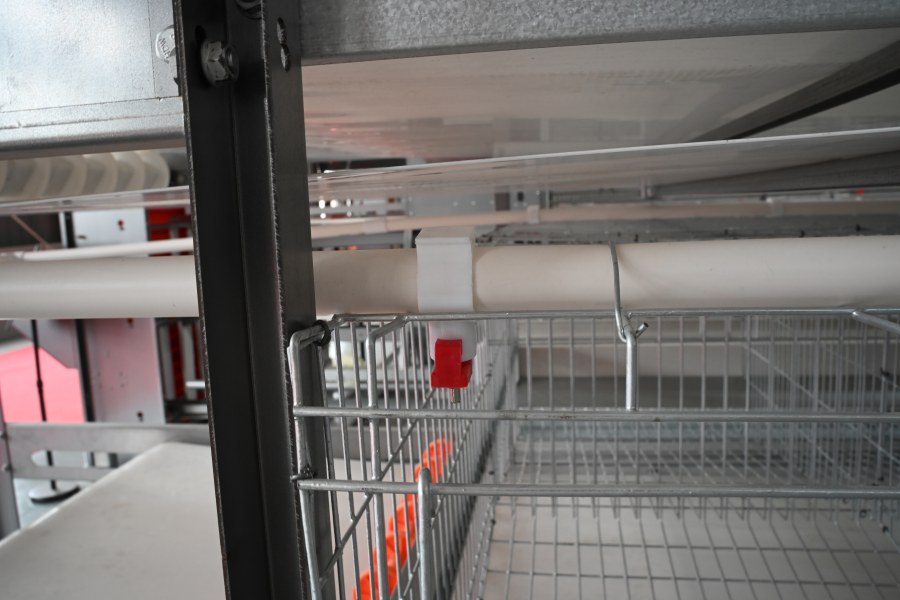
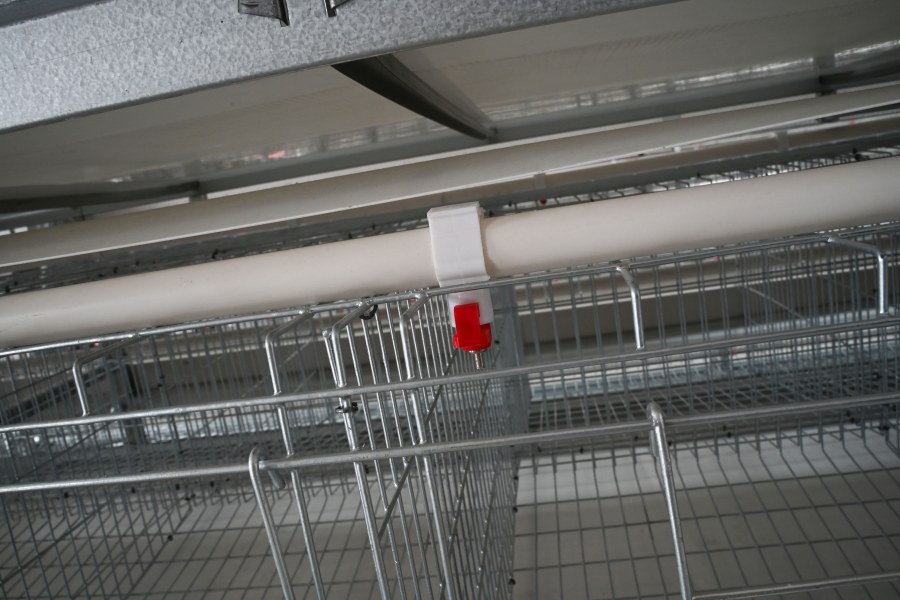
A nipple line alone is not a complete water drinking system.
For a commercial Nigerian layer farm, the water chain should include:
Source → Storage → Filtration/Treatment → Pressure Control → Medication → Water Lines → Flow & Pressure Check
The solution should consider:
- Storage
- Filtration
- Pressure
- Water quality
- Medication
- Flushing
- Alarms
This matters because poor water quality or unstable pressure can lead to blocked drinkers and reduced water intake.
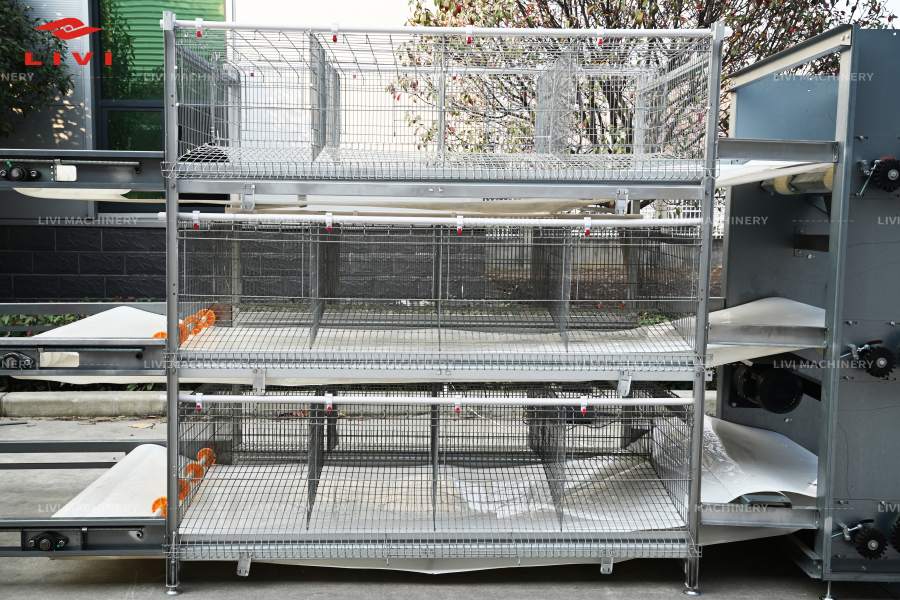
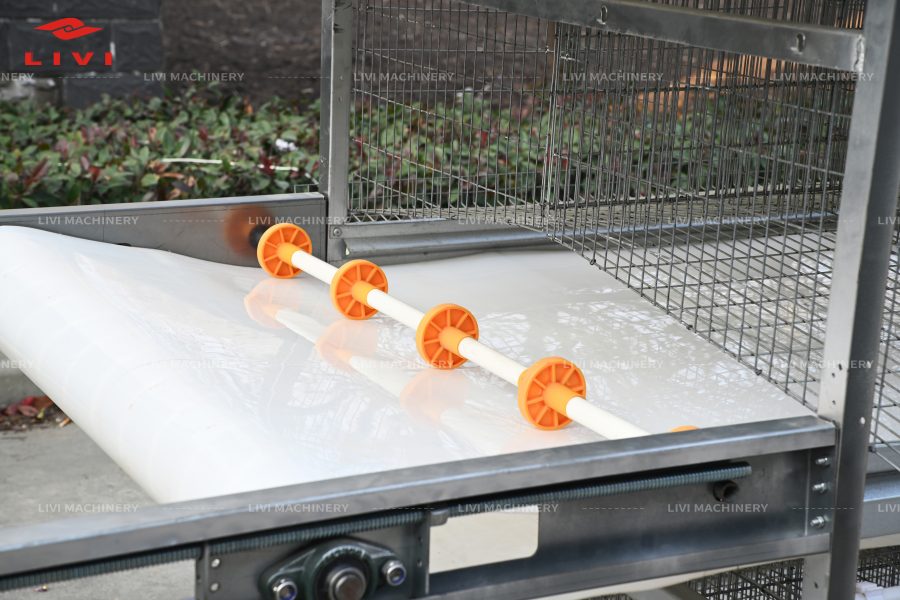
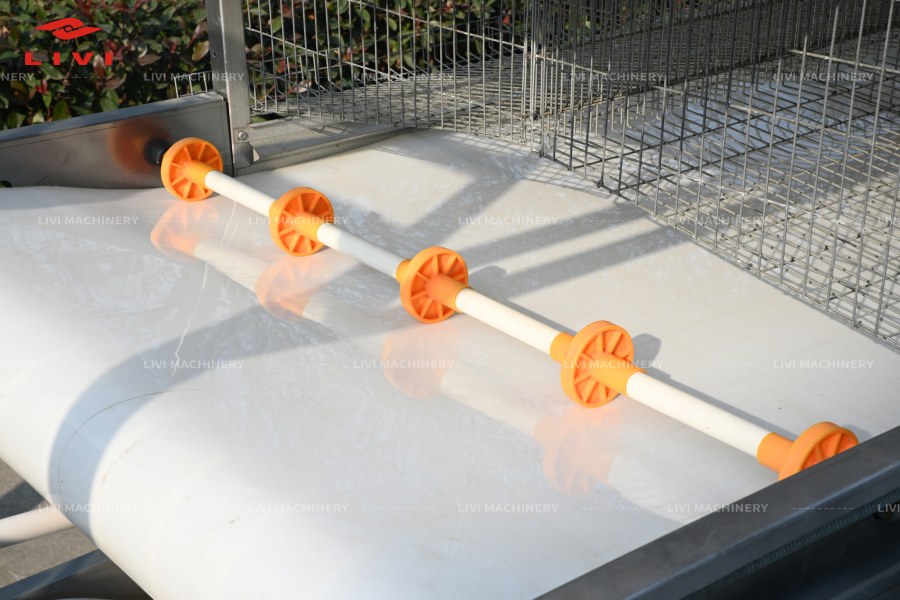
4. Automatic Manure Removal
Manure removal is not just a cleaning function.
It also influences:
- Ammonia
- Moisture
- Air quality
- Ventilation load
- External manure handling
The project should plan:
Manure Belts → Scheduled Removal → External Conveying → Storage/Treatment → Loading or Utilization
The source specifically recommends coordinating manure removal and ventilation rather than treating them as separate systems.
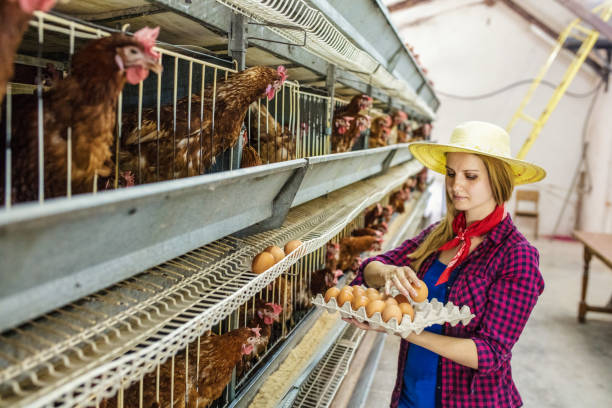
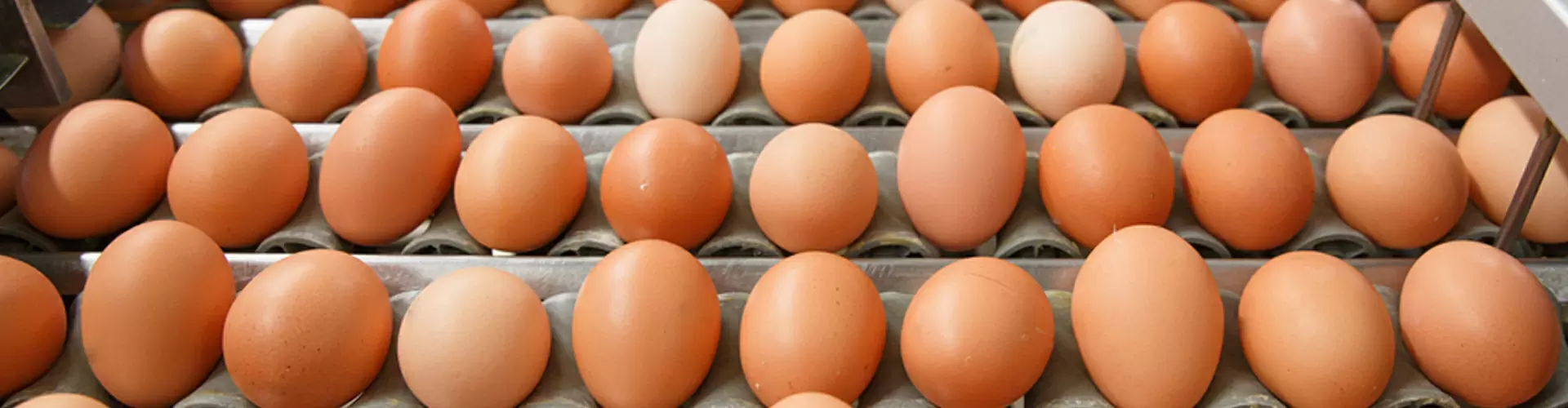
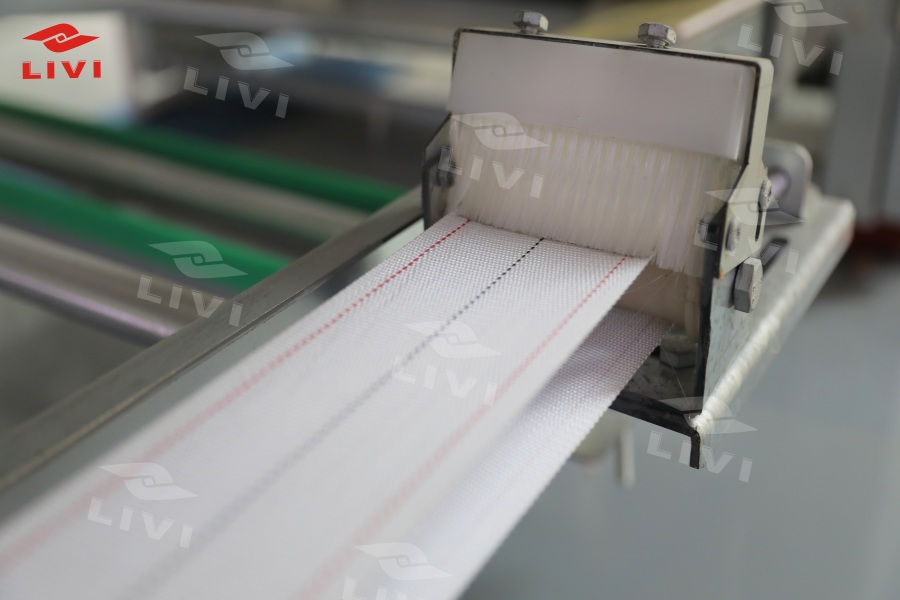
5. Automatic Egg Collection
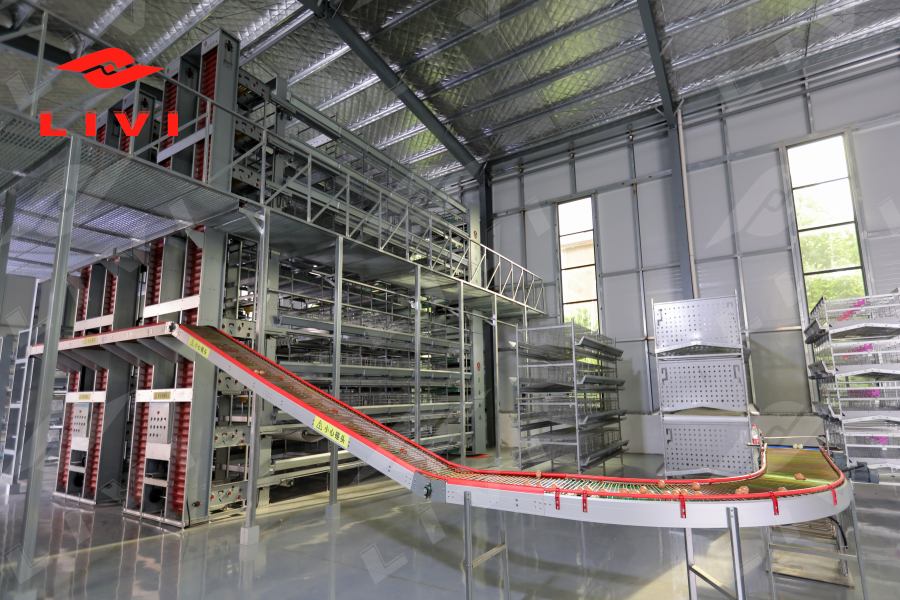
For 100,000 layers, egg collection becomes a major logistics process.
The operating path should be planned as:
Laying → Egg Belts → Elevator → Central Conveyor → Grading/Packing → Storage → Dispatch
Important technical factors include:
- Belt speed
- Lifting
- Curves
- Transfer points
- Back-end capacity
- Egg-room configuration
The source notes that poor belt speed or transfer design can increase egg breakage, so the automatic egg system should be tested as a complete chain rather than as individual components.
Need a 100,000-Layer Equipment Plan?
Share your land size, project location and automation target.
Step 4: Design for Nigeria’s Heat, Humidity and Rainy Season
A Nigeria-specific solution should go beyond saying:
“Nigeria is hot.”
The source explicitly notes that site conditions vary by region and that one national climate parameter set should not be applied to every project.
🌞High Temperature
Main Risk
- Heat stress
- Unstable production
- Uneven airflow
Design Response
- Minimum ventilation
- Transitional ventilation
- Tunnel ventilation
- Correctly matched fan capacity
- Air inlets
- Cooling where suitable
- High-temperature alarms
- Backup power
🌧High Humidity / Rainy Season
High humidity can reduce the effectiveness of evaporative cooling and increase:
- Drainage pressure
- Moisture
- Corrosion
Design Response
- Verify whether cooling pads are suitable
- Strengthen ventilation
- Improve drainage
- Elevate or protect the house where needed
- Improve moisture and corrosion protection
Cooling pads should not automatically be specified for every Nigerian site. Their effectiveness depends on actual temperature and humidity.
Step 5: Treat Power Reliability as a Bird-Safety Issue
In an automated poultry farm, electricity is not merely an operating cost.
It supports critical systems such as:
- Ventilation
- Water
- Controllers
- Alarms
The source recommends classifying these as critical loads and supporting them with:
- Backup generator
- Switching procedures
- Fuel planning
- Emergency SOP
- Regular tests
The farm should not simply own a generator. It should know:
Which systems must restart first?
and:
How will the farm confirm that backup power actually works under load?
Critical Loads vs Deferrable Loads
| Load Type | Examples | Priority During Outage |
|---|---|---|
| Critical | Ventilation, water, controller, alarms | Immediate backup |
| Important | Feeding, manure removal | Restore quickly |
| Deferrable | Some egg-handling or non-critical support tasks | May tolerate limited delay |
This helps avoid one of the biggest risks in high-automation projects: having a generator without a clear priority strategy.
Step 6: Design the Farm Layout Beyond the Poultry Houses
A 100,000-layer project includes much more than layer houses. The source divides the site into five functional zones:
| Farm Zone | Main Functions |
|---|---|
| Production | Layer houses, silos, egg conveying, climate equipment |
| Supporting | Egg room, feed storage, spare parts, maintenance, water treatment, backup power |
| Biosecurity / Management | Disinfection, changing rooms, vehicle control, office, monitoring |
| Manure Management | Conveying, storage, drying/fermentation, loading |
| Future Expansion | Roads, utilities, control interfaces, future house locations |
Routes for birds, staff, vehicles, feed, eggs and manure should be designed to reduce unnecessary crossings.
This is especially important for investors who want the farm to remain manageable as it expands.
Step 7: Avoid the Six Most Common Bottlenecks
The source identifies several recurring project problems.
Problem-Solution Matrix
| Problem | Possible Impact | Recommended Solution |
|---|---|---|
| Excessive house temperature | Heat stress, unstable production | Tunnel ventilation, cooling, automatic control |
| Power interruption | Loss of ventilation/water | Critical-load backup, generator, alarms |
| Unstable drinking water | Blocked drinkers, low intake | Storage, filtration, regulation, flushing |
| Ammonia accumulation | Poor air quality | Coordinate manure removal and ventilation |
| Egg breakage | Saleable egg loss | Optimize belt speed and transfer points |
| Poor expansion planning | Repeated construction and higher cost | Master plan + phased implementation |
This table is particularly important for buyers because it shifts the conversation from:
“What equipment do I need?”
to:
“What operating failure am I trying to prevent?”
Step 8: Reserve Expansion Capacity from Day One
A 100,000-layer farm does not necessarily need to be built in one phase.
The source specifically allows phased construction, but recommends reserving from the beginning:
- Roads
- Power
- Water
- Feed
- Control interfaces
- Manure handling
- Egg handling
- Future poultry house locations
Why This Matters
If expansion is not planned early, a future house may require:
- New roads
- New feed lines
- New power distribution
- New water infrastructure
- Larger egg-handling systems
- Reworked manure routes
This can make phase-two construction significantly more disruptive.
Step 9: Match Automation to Labor and Technical Capacity
Automation reduces repetitive labor, but it does not eliminate the need for people.
A 100,000-layer farm still requires:
- Farm management
- Flock health
- Inspection
- Climate monitoring
- Egg handling
- Maintenance
- Biosecurity
- Warehouse work
The source recommends dividing all tasks into:
Automated Work
Routine Manual Work
Professional Decision-Making
before setting the staffing plan.
This is a more realistic approach than promising a fixed number of workers.
Step 10: Define the Full Farm Operating Process
For GEO and AI readability, the 100,000-layer farm can be summarized through five operational chains.
| Process | Operating Path |
|---|---|
| Feed | Purchase → storage → silo → conveying → feeding → intake check |
| Water | Source → storage → treatment → pressure → water line → checks |
| Eggs | Laying → belts → elevator → conveyor → grading → storage |
| Manure | Belts → removal → conveying → treatment/storage → utilization |
| Data | Sensors → controller → action → alarm → staff confirmation → record |
This makes the farm easier to understand as an operating system rather than a collection of machines.
Building in Phases?
Plan roads, utilities and automation interfaces before installing the first house.
What Should Never Be Reduced Just to Save Initial Cost?
According to the source, several systems should not be compromised simply to reduce CAPEX:
- Ventilation
- Water
- Bird safety
- Essential feeding
- Manure removal
- Alarms
- Critical backup power
Other functions may be phased.
This distinction helps investors decide where budget flexibility is acceptable and where it creates unacceptable operating risk.
What Results Should a Well-Designed Automated Farm Improve?
The source does not promise fixed egg production, feed efficiency or financial returns.
Instead, it identifies more appropriate observable operational improvements:
| Goal | Main System | Observable Improvement |
|---|---|---|
| Reduce repetitive labor | Feeding, manure, egg automation | Lower routine workload |
| Improve environmental stability | Ventilation and climate control | More controllable conditions |
| Reduce egg damage | Egg collection | Less handling and transfer impact |
| Improve air quality | Manure removal + ventilation | Less manure retention and ammonia |
| Support expansion | Modular planning | Less repeated infrastructure work |
That is a much more credible way to evaluate poultry equipment than guaranteeing production results that also depend on breed, feed, health and management.
Who Is This 100,000-Layer Solution Suitable For?
1. First-Time Investors
Most concerned with:
- Feasibility
- Land
- Process
- Training
- Risk
- Staffing
2. Existing Layer Farmers
More concerned with:
- Expansion
- Automation
- Labor reduction
- Climate improvement
- Consistency
3. Agricultural Companies
Usually prioritize:
- Standardization
- Multi-house control
- Replication
- Long-term operation
4. Purchasing Managers
Need clarity on:
- Scope
- Quality
- Delivery
- Shipping
- Installation
- After-sales support
5. Technical Managers
Focus on:
- Parameters
- Integration
- Installation
- Operation
- Maintenance
This customer-role segmentation comes directly from the source document and is useful because different buyers need different information before approving the same 100,000-layer project.
Project Implementation Process
A professional 100,000-layer project should progress through a defined sequence.
| Stage | Customer Provides | Supplier Provides |
|---|---|---|
| Requirement Discussion | Location, breed, capacity, schedule | Preliminary feasibility |
| Site Data Collection | Land, climate, utilities, roads | Project baseline |
| Solution Design | Objectives and budget | Master plan and system scope |
| Configuration & Quotation | Confirmed project boundaries | Equipment list and quotation |
| Manufacturing & QA | Technical confirmation | Production, testing, packing |
| Shipping & Installation | Site readiness | Documents, installation guidance, commissioning |
| Training & After-Sales | Operating team | Training, maintenance, troubleshooting |
This makes the solution page more useful for a buyer who is already moving from information search toward procurement.
What Information Is Needed for a Preliminary 100,000-Layer Plan?
Before a meaningful layout or quotation can be prepared, collect:
- Project state or city
- Layer breed
- One-stage or phased construction
- Land dimensions and terrain
- Site photos
- Maximum temperature
- Humidity and rainy-season conditions
- Voltage and frequency
- Power reliability
- Water source and quality
- Water storage
- Required automation level
- Planned start date
- Whether house, installation, training and long-term support are required
The source states that these inputs can then be used to prepare a preliminary layout, house quantity, equipment configuration, ventilation/cooling proposal, implementation plan and quotation.
Frequently Asked Questions
- How many poultry houses are needed for 100,000 layers?
There is no fixed answer. Four houses of about 25,000 birds or five houses of about 20,000 birds are possible discussion scenarios, but the final number must be recalculated from cage type, house dimensions, ventilation, utilities and maintenance requirements.
2. What equipment is required for a 100,000-layer poultry farm?
A complete system normally includes cages, feeding, drinking, manure removal, egg collection, feed storage/conveying, ventilation, cooling, climate control, lighting, electrical control, alarms and backup power.
3. Does a 100,000-layer project need full automation?
It should not normally depend completely on manual feeding, manure removal and egg collection. Standard or high automation can be selected according to utilities, labor, budget and management capability.
4. Are cooling pads always recommended in Nigeria?
No. Cooling-pad effectiveness depends on the actual temperature and humidity at the project site, so they should not be specified automatically for every region.
5. How should the farm prepare for power outages?
Ventilation, water, controllers and alarms should be treated as priority loads with backup power, switching procedures and regular testing.
6. Can the project be built in phases?
Yes. Roads, utilities, feed, egg handling, manure systems and future house locations should still be planned from the beginning.
7. How much land is needed?
Capacity alone is not enough to calculate land. The answer depends on house quantity, dimensions, spacing, roads, egg rooms, manure areas and future expansion.
8. How are cage tiers selected?
Cage tiers depend on house height, capacity, ventilation, maintenance access, budget and local requirements. More tiers are not automatically better.
9. Can basic automation be upgraded later?
Yes, if the first phase reserves the required space, power, control interfaces, conveying routes and back-end capacity.
10. Can equipment guarantee egg production?
No. Equipment provides operating conditions, but egg production, livability, feed efficiency and egg quality also depend on breed, feed, health, environment and management.
Start with the Site, Not the Equipment List
A reliable 100,000-layer farm begins with land, climate, utilities, capacity and operational priorities.