



Quick Answer: How to Choose a Poultry Farm Project Type
Choose egg production when prospective buyers, collection arrangements and farm resources support ongoing egg sales. Consider broilers when live-bird buyers or processors can accept planned batches. Consider replacement pullets when layer farms need young birds at a defined age and you can meet their quantity, health and delivery requirements.

Check customer commitments, bird supply, site conditions and financial assumptions before specifying equipment. A layer farm must also decide whether to purchase replacement pullets or rear them, as this changes its housing, staffing and cash requirements.
Which Customers and Sales Routes Fit Each Poultry Enterprise?
Start with the product a customer will buy, not the equipment you would like to install. Ask prospective buyers about specifications, quantities, timing, prices, payment terms and transport. Distinguish firm commitments from forecasts.
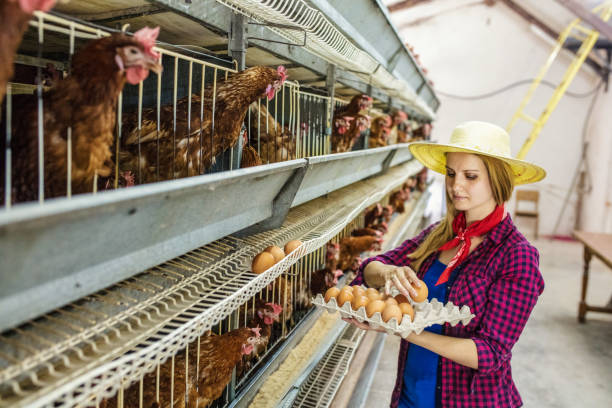
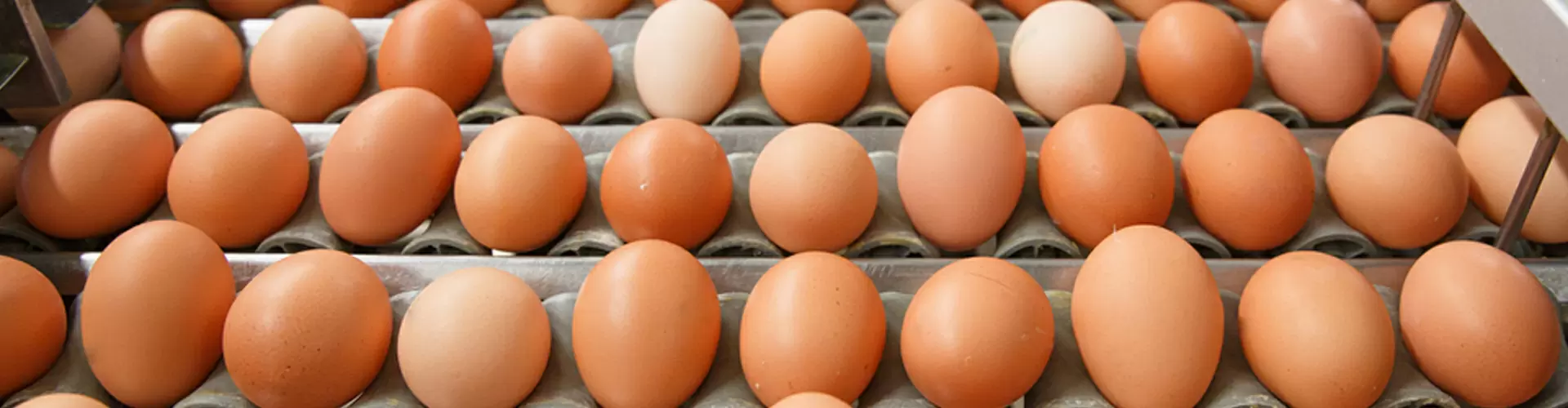
For eggs, investigate distributors, retailers and other buyers. Ask about quality, packaging, delivery frequency and rejected eggs. Compare expected purchases with planned output and the farm’s ability to collect, store and deliver eggs.
For broilers, establish whether buyers accept live birds or require processing. Discuss bird specifications, collection dates, transport and access to a processor. A meat market is not enough if processing or collection cannot be coordinated with the flock’s sale date.
For replacement pullets, ask layer farms about breed, health records, quantity, delivery age and receiving-house schedules. If birds are for your own layer houses, plan around their availability in the same way.
Investigate competing supply and current local prices. Compare each opportunity with land, house space, labour, working capital and expansion plans. If a critical sales or operating condition cannot be validated, pause the equipment commitment.
Compare Poultry Directions Against Your Sales Plan
Share your intended customers, preferred poultry direction and project location with LIVI to discuss the information needed for an equipment planning brief.
Eggs, Broilers or Replacement Pullets: Which Direction Fits?
| Direction and output | Potential advantage | Limitation and implementation condition | Selection rule |
|---|---|---|---|
| Eggs sold to distributors, retailers or other buyers | Regular sales may fit recurring demand. | Collection, distribution and replacements must support continuing production. | Consider eggs when the sales route and replacement plan match available resources. |
| Broilers sold live or through processing | Batches can be planned around collection or processing dates. | Buyer acceptance, transport and processing access can constrain the sale date. | Consider broilers when growing capacity and the route to market can be coordinated. |
| Replacement pullets sold to layer farms or transferred internally | Rearing can be scheduled around replacement needs. | Young-bird management and an available receiving house are needed. | Consider pullets when breed, age, quantity and transfer date are defined. |
The planning investments differ: eggs need a continuing replacement strategy; broilers need a batch-to-market plan; pullets need a rearing-to-receiving schedule. Compare these conditions rather than assuming one direction has the better return.
Should a Layer Farm Buy Pullets or Rear Its Own?
Purchasing pullets may suit a farm when a supplier can meet its breed, health, quantity and delivery requirements. The farm avoids managing earlier rearing but depends on supplier availability. Check health documentation, transport and arrangements for late delivery.
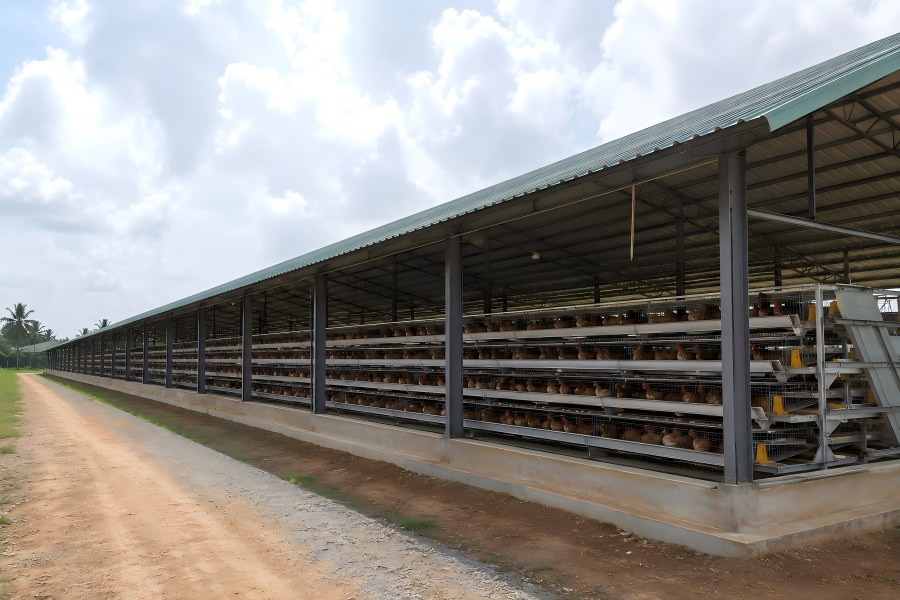
Rearing replacements may fit an operator with suitable housing, trained staff, chick supply and working capital. It requires a plan for losses, health management and surplus capacity. Compare the full rearing cost with the delivered cost of purchased pullets—not just the price of chicks.
Work backward from the receiving house
Suppose a laying house has a planned replacement date. Allow for removal of the outgoing flock, cleaning and preparation. From the date the house can receive birds, work backward using the intended transfer and chick placement ages. Check rearing-house availability and transport.
Align Your Pullet and Production Plans
Tell LIVI about your planned bird quantities, placement ages, transfer dates and house capacity so the rearing and production stages can be assessed together.
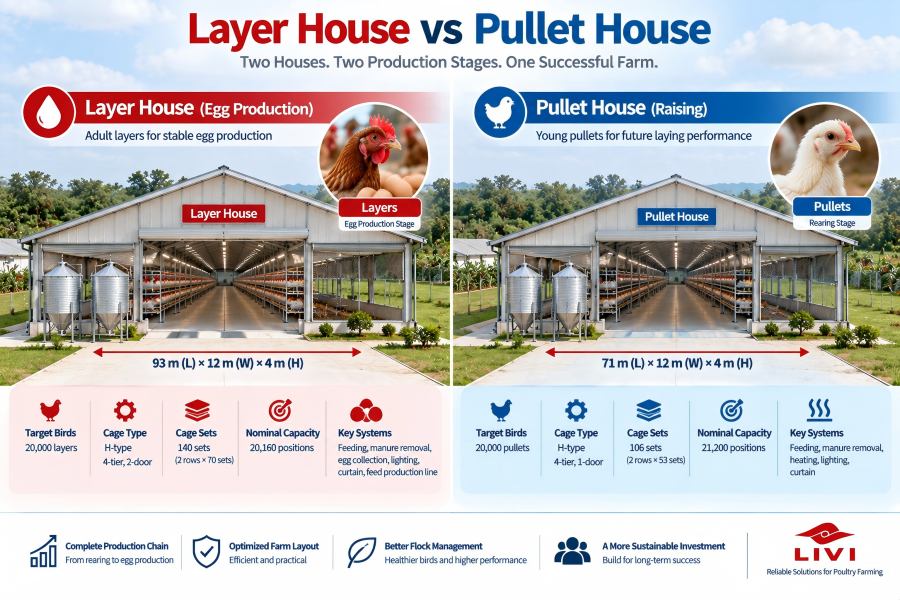
Estimate chicks to place from the target transfer quantity and the farm’s own expected losses. Expected survivors must fit the receiving house. Review what a delayed transfer would mean for feed, labour, housing and the next batch.
Test revenue, costs and cash needs
For each direction, calculate expected saleable output multiplied by the assumed selling price. Subtract relevant operating costs and map when cash is paid and received. Include birds, feed, labour, health care, utilities, transport and maintenance; add financing and exchange-rate exposure where relevant.
For eggs, test laying rate, rejected eggs and selling price. For broilers, test feed conversion, mortality, sale weight and buyer acceptance. For pullets, test survival, rearing costs, delivery timing and the value or sale price of transferred birds. Change assumptions to see which risks could make the plan unworkable; a calculation is not a profit guarantee.
Can the Site and Supply Chain Support the Chosen Direction?
Check seasonal temperature and humidity, then assess whether an open, semi-enclosed or enclosed house can support the selected bird stage. Confirm water source, quality and pressure, electricity supply and backup arrangements. Powered ventilation or feeding needs an operating plan for interruptions.
Check road access for feed, chicks, pullets, eggs or broilers as relevant. Confirm installation labour, maintenance assistance and spare-parts availability. Ask the appropriate local authorities which permits, welfare standards and environmental requirements apply to the site.
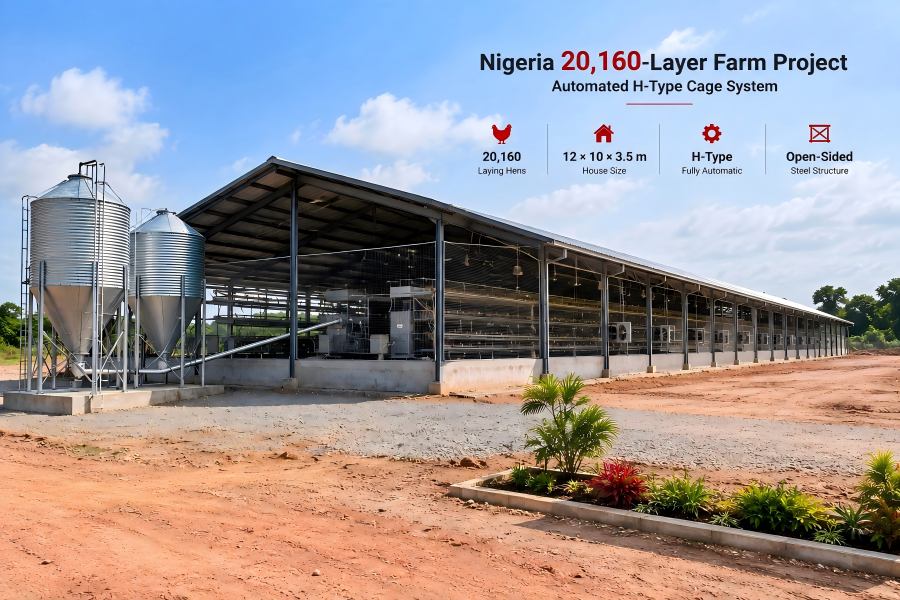
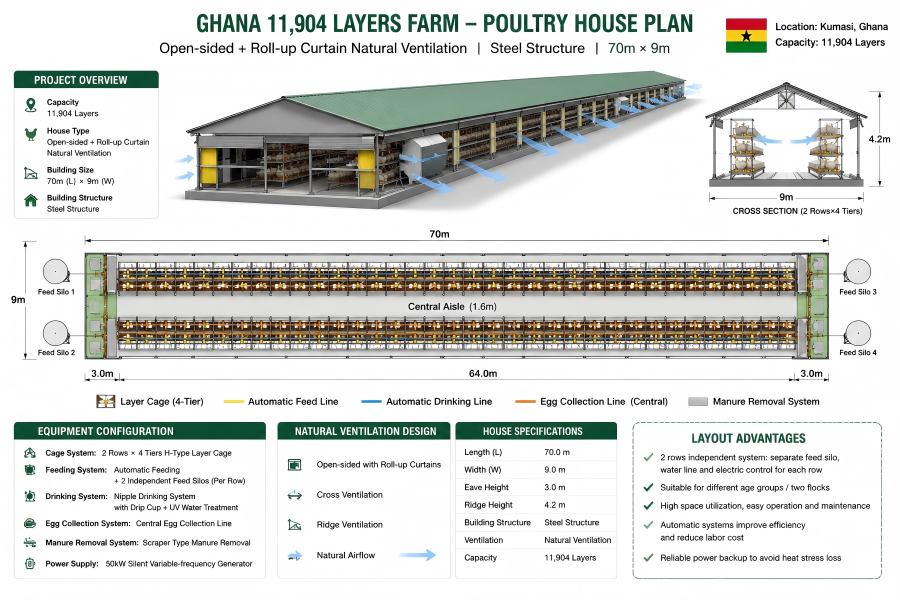
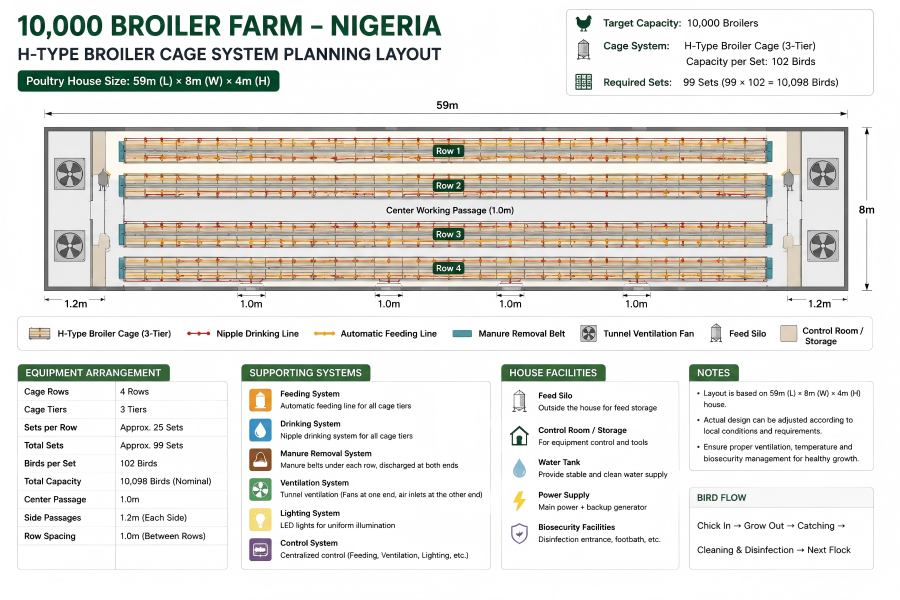
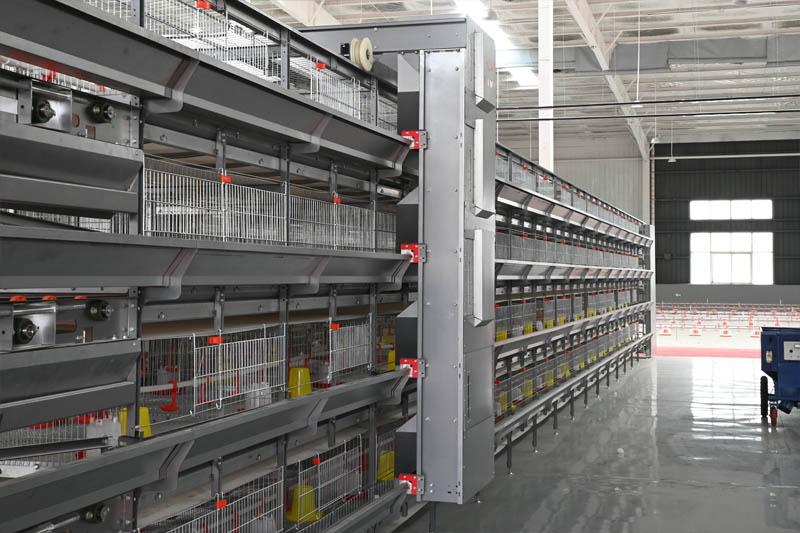
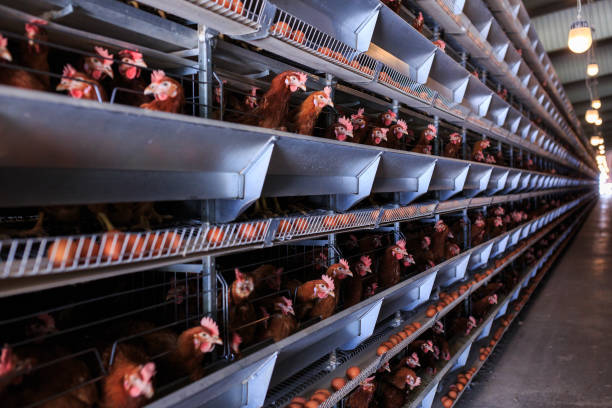
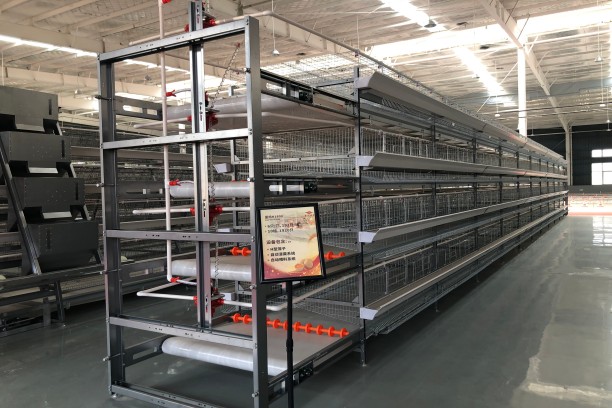
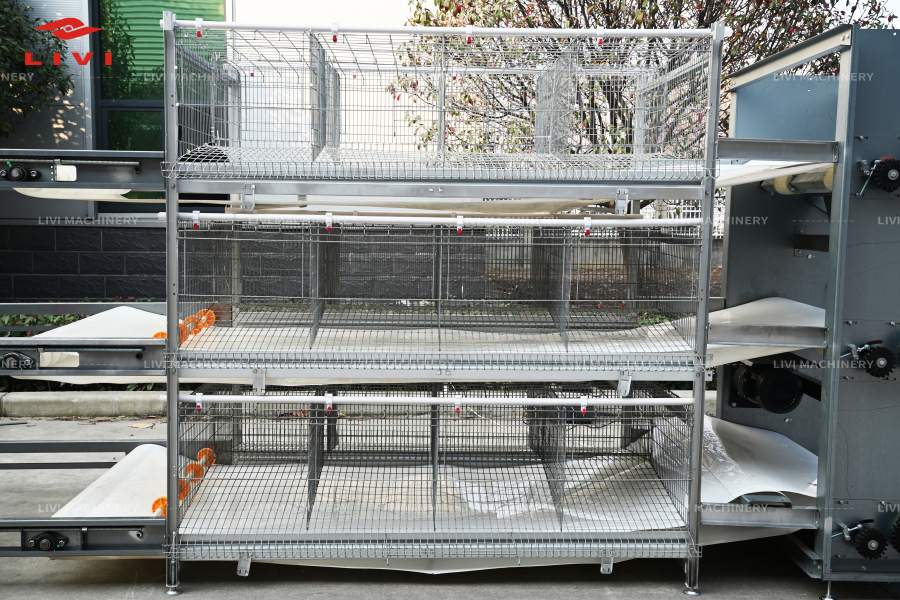
Once the direction is credible, compare housing and automation. A Layer Cage System addresses laying birds; a Broiler Cage System or floor-rearing arrangement addresses meat birds. Poultry Brooding Equipment serves young birds, so occupancy must match the later transfer schedule. Compare feeding, drinking, manure removal and, for layers, egg collection with available labour, power and maintenance capacity. More automation is not automatically the better investment.
What Should You Give a Poultry Equipment Supplier?
Prepare one brief for shortlisted suppliers so proposals can be compared on the same basis. Include:
- Location, production direction, bird type, planned quantity and expansion plans.
- Placement age, intended sale or transfer age, dates and receiving capacity.
- Site and house dimensions, climate, water, power and backup plans.
- Budget, labour, automation objectives and delivery location.
- Required layout, configuration, installation, training, spare parts and service scope.
Request a layout matched to bird stage and house, with a written scope of supply. Ask for cage material, wire diameter, frame thickness, surface treatment, capacity basis and inspection records where applicable. Check how feeding, drinking, manure removal and environmental controls connect; include egg collection where needed.
Compare supplier evidence and delivery responsibilities
| Check | Evidence or answer to request |
|---|---|
| Business and production | Registration, manufacturing scope, production evidence and subcontractor identity. |
| Project fit and quality | Stage-specific layout, materials, surface treatment, inspection records and checkable references. |
| Delivery and support | Written shipping, unloading, installation, commissioning, training, warranty, spare-parts and support responsibilities. |
| Complete cost | Itemised equipment, transport, installation, exclusions and expected operating costs. |
LIVI Machinery describes house-layout and equipment-configuration support and states that it can provide packing lists, installation documents and technical support. Agree project deliverables and responsibilities in writing. Compare local and imported offers on equivalent configurations and delivery terms; a lower quotation may exclude essential work or components.
Prepare Your Poultry Equipment Supplier Brief
Send LIVI your location, poultry type, planned quantity, house dimensions, water and power conditions, and automation goals to discuss a project-specific equipment configuration.
Before ordering, confirm the customer route, bird schedule, site utilities and supplier scope. Avoid choosing capacity from a cage quotation alone or treating an unverified buyer enquiry as a sales agreement.
FAQ
1. How do I choose a poultry farm project type when I have access to several buyers?
Compare each buyer’s product, quantity, timing, payment and collection requirements with your resources. Investigate competing supply and distinguish enquiries from commitments. Test revenue, operating costs and cash requirements for each viable direction before choosing a flock plan.
2. What should I check before choosing a broiler project?
Confirm whether the buyer accepts live birds or needs a processor. Discuss specifications, collection dates, transport and payment, then align placement and growing capacity with that route. Test your feed-cost, mortality and selling-price assumptions before committing.
3. When should a layer farm purchase replacement pullets rather than rear them?
Purchasing may suit a farm when a supplier can deliver the required breed, health status and quantity on time. Compare delivered cost and reliability with rearing costs, including chicks, feed, labour, housing and utilities. Consider how delayed replacements would affect the laying-house schedule.
4. How can pullet transfers be coordinated with layer house capacity?
Start with the receiving house’s availability and work backward to the intended placement and transfer ages. Allow for flock removal, cleaning, transport and project-specific losses. Check that expected pullet numbers fit receiving capacity and that delays can be managed in the rearing house.
5. What should I send a poultry equipment supplier after choosing a production direction?
Send the location, bird type, planned quantity and ages, house dimensions, site conditions, water and power details, budget and automation objectives. Include the sales or transfer schedule. Request a stage-appropriate configuration, scope of supply and written delivery, installation and service responsibilities.
TAGs: poultry farm project type, egg production, broiler production, replacement pullet rearing, poultry farm sales channels, pullet transfer planning