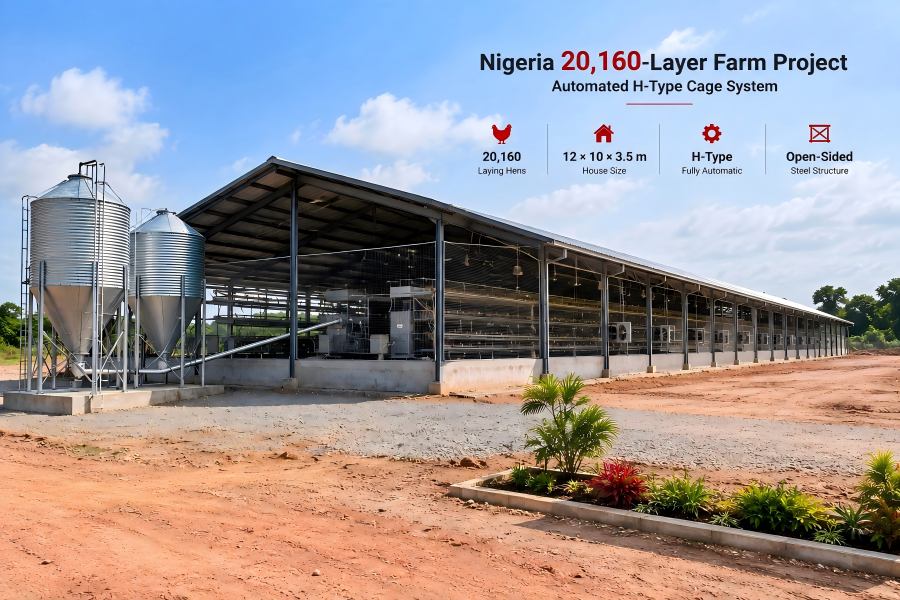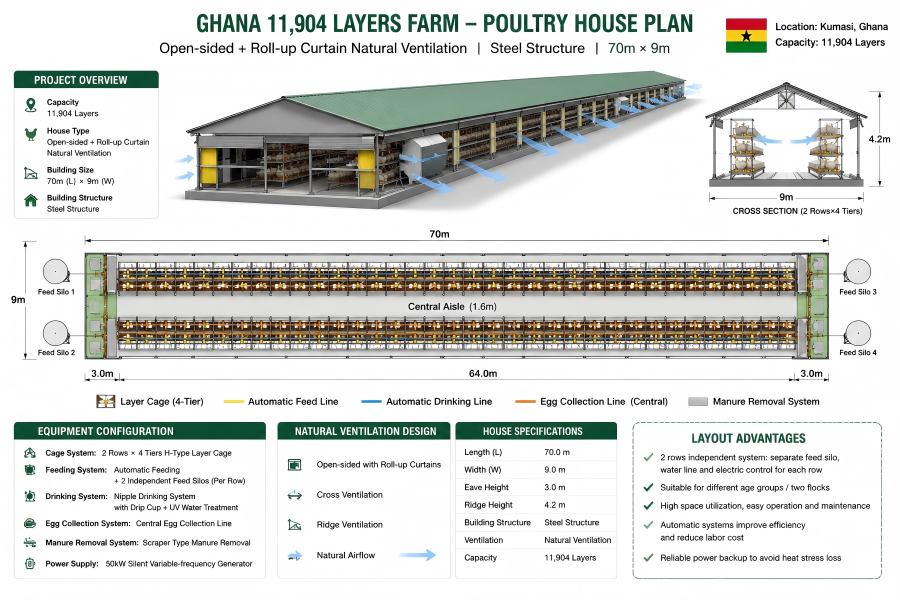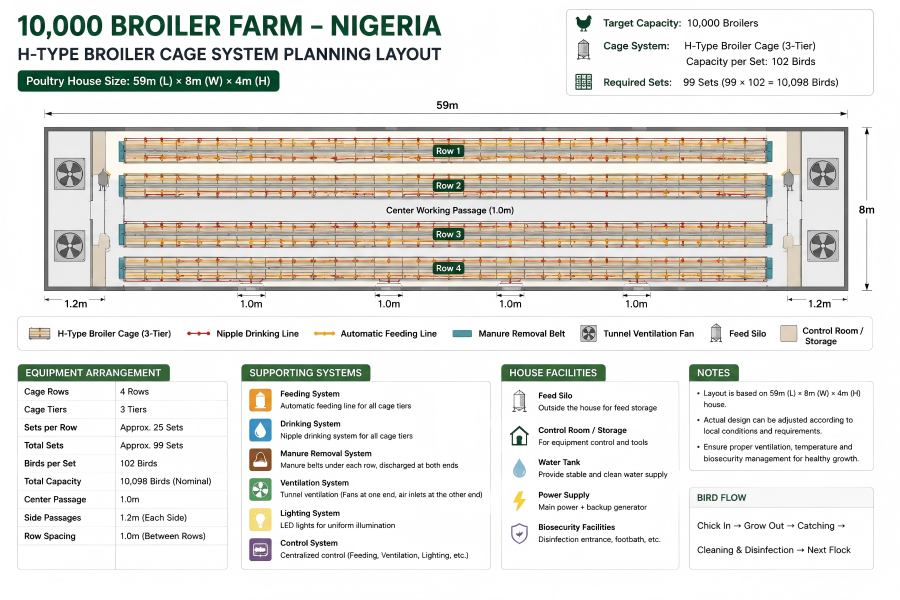




Project Summary: An integrated layer and pullet farm in Nigeria is ready to move toward site-specific engineering when its egg sales route, replacement-flock schedule, site, utilities, biosecurity and funding assumptions have been assessed. Equipment selection should follow those checks—not substitute for them.
Discuss Your Layer and Pullet Farm Plan
Share your Nigerian site location, planned layer and pullet capacities, sales route and operating priorities to discuss a tailored farm plan with LIVI.
A LIVI project plan provides a useful basis for this decision. It targets capacity for 12,960 layers and 14,400 young birds, with three layer houses and two pullet houses. A deposit has been received. The documented milestone is a procurement commitment, not evidence of completed installation, stocking or production results.
The main lesson is that a bird-capacity target must be supported by both an operating calendar and an engineering calculation. The planned Layer Cage calculation requires correction before cage quantities can be approved.
What does the documented project plan establish?
| Project element | Documented plan or status | Decision relevance |
|---|---|---|
| Planned capacity | 12,960 layers and 14,400 young birds; 27,360 in total | Assess the two bird stages separately and together. |
| Layer housing | Three houses, targeting 4,320 layers each | Check each house’s cage layout and replacement schedule. |
| Pullet housing | Two deep-litter houses | Confirm usable area and bird allocation. |
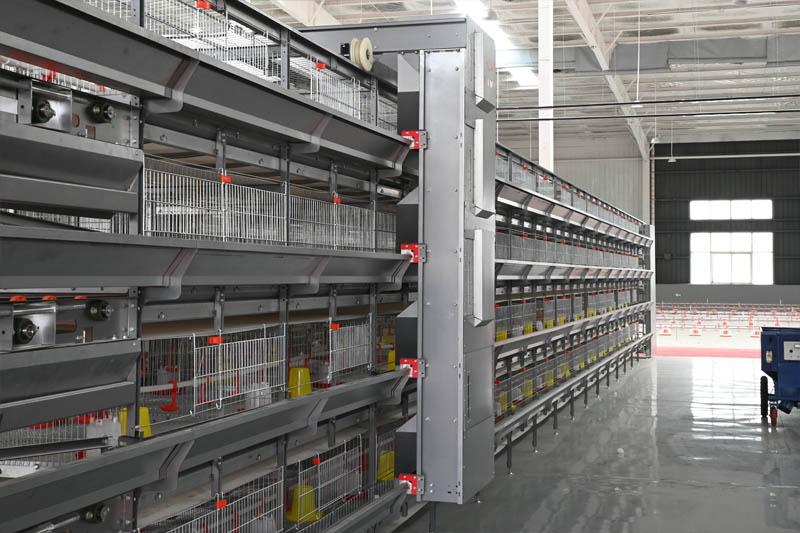
| Layer equipment | A-Type Layer Cages and one shared semi-automatic feeding machine | Verify capacity and the machine’s route. |
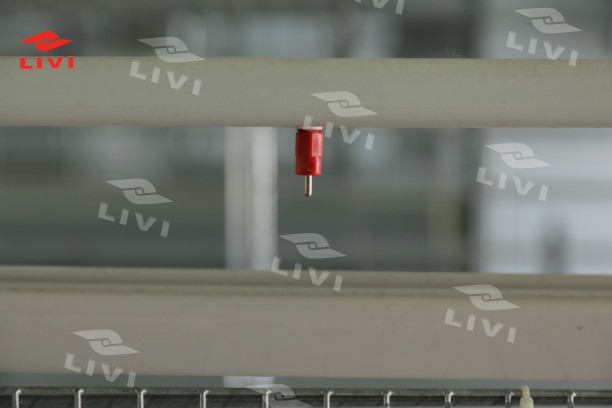
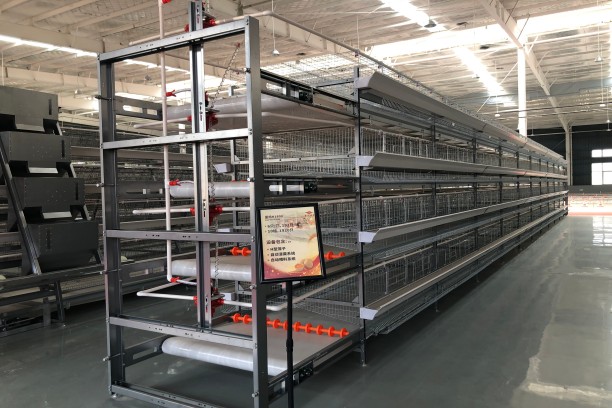
| Pullet equipment | Feeding pans and adjustable-height Automatic Drinking equipment | Check positions against usable area and bird age. |
| Procurement | Deposit received; freight channels compared | Shipment, installation and operating results require separate confirmation. |
The customer wanted staggered placement in the layer houses to support a goal of continuous egg production. That was an operating objective, not a verified result. Each house needs its own placement and replacement dates before the plan can be tested.
What must buyers establish before committing to the farm?
Test the market and operating budget
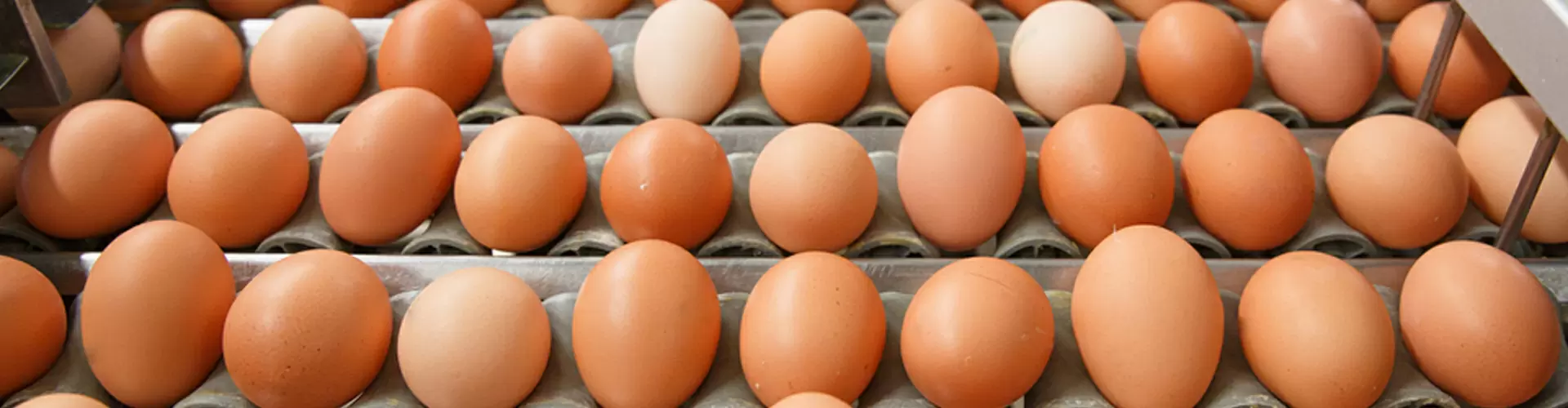
Identify prospective egg buyers and discuss expected volumes, delivery arrangements, product requirements and payment terms. Compare those conversations with current local selling prices and competing supply. A planned house capacity is not the same as a confirmed sales volume.
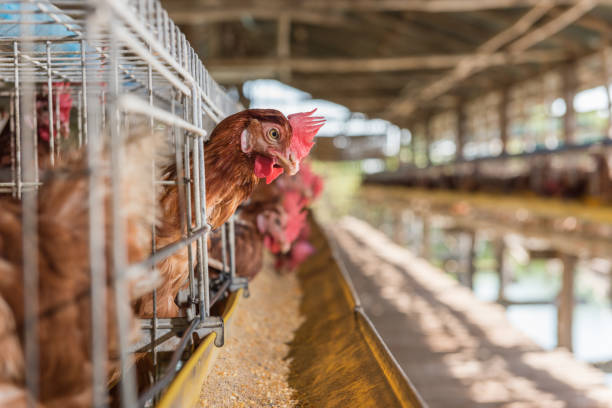
Prepare a working budget for both production stages. It should account for chicks, feed, labor, veterinary support, utilities, transport, maintenance and the period before sales receipts are collected. Test whether available funding can support the proposed flock schedule as well as construction and equipment purchases. If sales or funding assumptions are weak, reconsider the timing or phasing before making a further major commitment.
Check the availability and terms of chick and feed supply as well. An integrated pullet section gives an operator a way to organize replacement rearing, but it also adds responsibilities for young-bird care, housing and working capital.
Connect replacement supply to each layer house
The planned 14,400-young-bird capacity does not guarantee that 12,960 replacements will be ready when needed. Placement dates, flock development, expected losses, transfer readiness and layer-house availability all affect the number available for transfer.

Build a house-by-house calendar. For each layer house, identify the intended emptying date, cleaning and preparation period, and the date replacements should arrive. Work backward to the young-bird placement date and compare expected transfer-ready birds with that house’s planned allocation. Include a response for a delayed flock or a house that is not ready.
The two pullet houses can help organize groups separately, but their allocations should follow the calendar and usable floor area. Poultry Brooding Equipment and management provisions should be assessed for the birds’ actual ages and rearing stages, rather than assumed to match the Layer Cage section.
Which Nigerian site and delivery conditions affect the decision?
The operator of a proposed farm in Nigeria should establish the conditions at the chosen location before approving the house design or equipment order. The following are inputs for the buyer to confirm; they are not completed checks or operating results for the documented project.
Climate, ground conditions and access at the Nigerian site
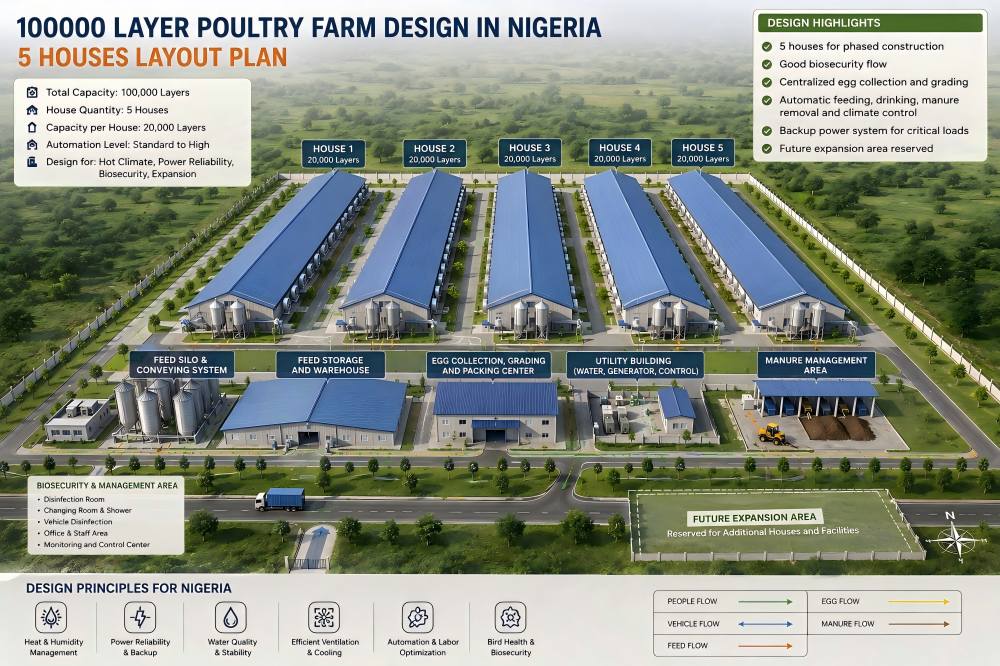
Obtain local seasonal temperature, humidity, rainfall and prevailing wind information for the proposed Nigerian location. Inspect ground levels, drainage and the access road during the conditions the farm expects to operate in. Give these inputs to the designer to assess ventilation, house orientation and protection of pullet-house litter. Reserve space for manure handling and possible expansion without blocking access or biosecurity routes.
Water and electrical supply for the proposed Nigerian farm
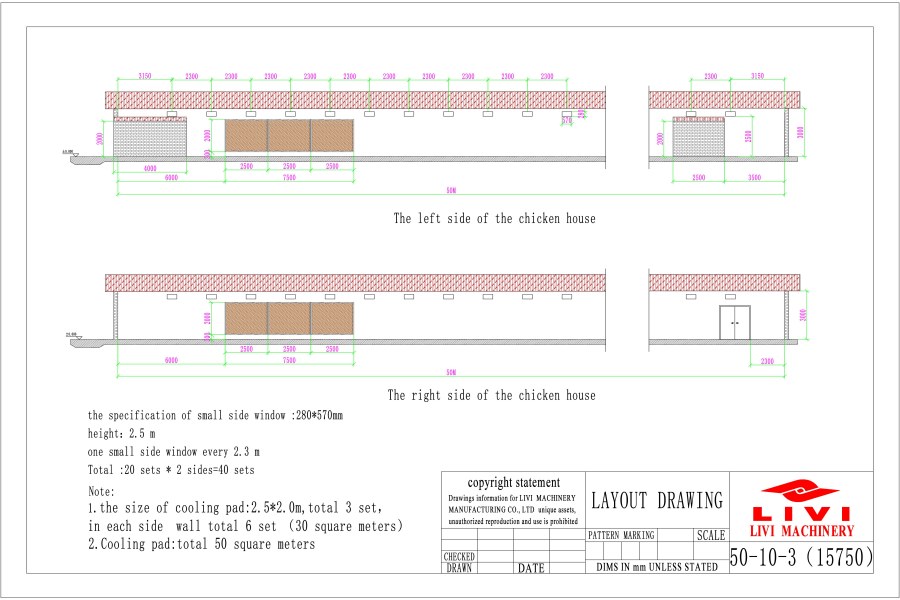
Identify the local water source and confirm its tested quality, available flow, supply reliability and storage arrangements. Ask the designer to compare these inputs with both bird stages and cleaning needs, including Drinking System pressure requirements. Confirm the electrical connection’s voltage, phase, available capacity and expected reliability with the local provider. The proposed equipment loads and consequences of an interruption should determine the required backup arrangements.
Nigerian approvals, welfare and biosecurity
Ask the relevant Nigerian authorities and qualified local advisers which land-use, construction, animal-welfare and import requirements apply to the specific site and proposed equipment. Confirm who is responsible for each approval and when it is needed. On the site drawing, map movements of people, vehicles, feed, eggs, litter, manure and replacement birds; define cleaning procedures and boundaries between age groups before finalizing the buildings.
Plan a Coordinated Poultry House Layout
Send your house dimensions, replacement-flock schedule, water and power conditions, and preferred feeding approach to discuss a site-specific equipment layout.
Delivery, installation labor and service in Nigeria
For the proposed Nigerian delivery destination, confirm the import and inland transport route, delivery handover point, road access and unloading arrangements with the freight provider. Establish who will supply local installation labor, electrical and water connections, operator training and spare-parts support. The project record describes assistance with import-payment documentation; another buyer should confirm current documentation and responsibilities with its bank, freight provider and relevant authorities. LIVI Machinery can provide packing lists and installation documentation; agree the documents and services included for each order.
What engineering evidence should guide the next commitment?
Reconcile the Layer Cage capacity
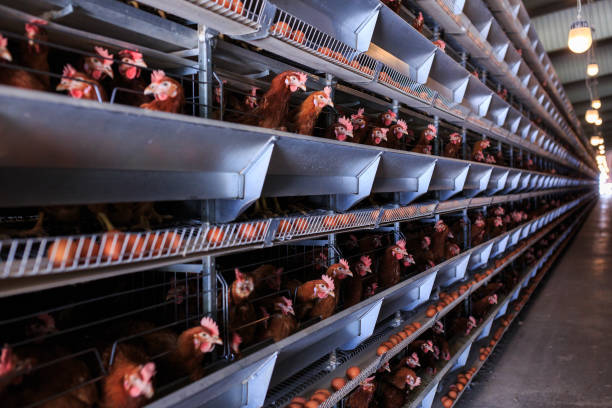
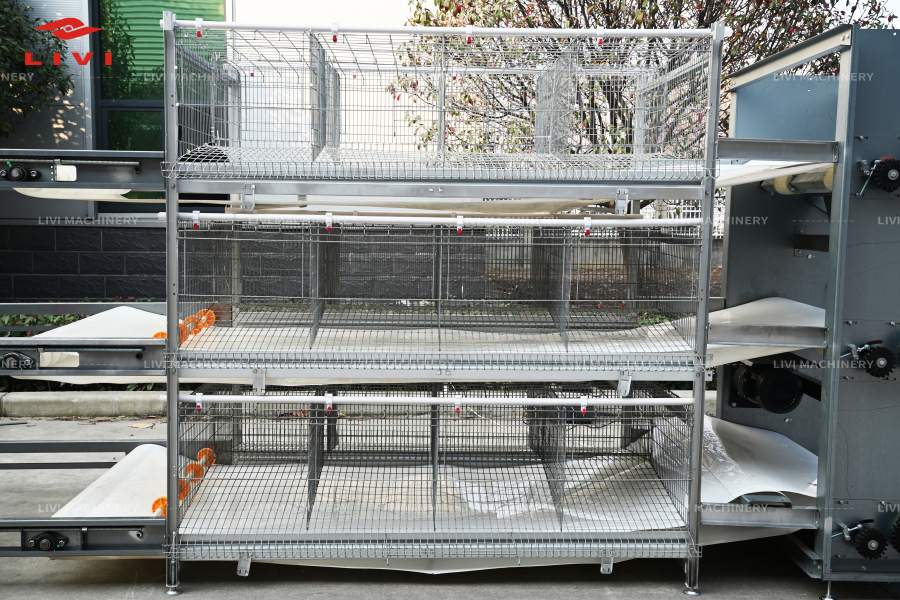
The project record describes a four-tier, five-door A-Type Layer Cage with a stated capacity of 120 birds per set. Its preliminary calculation lists 16 sets per row and two rows per house:
120 birds per set × 16 sets per row × 2 rows = 3,840 birds per house.
That result does not equal the planned 4,320-layer target per house. Retain 4,320 as the project target, but do not infer an order quantity from the preliminary expression. Ask the supplier to reconcile the definition of a set, the rows, the number of sets and the house capacity in a corrected drawing and bill of quantities.
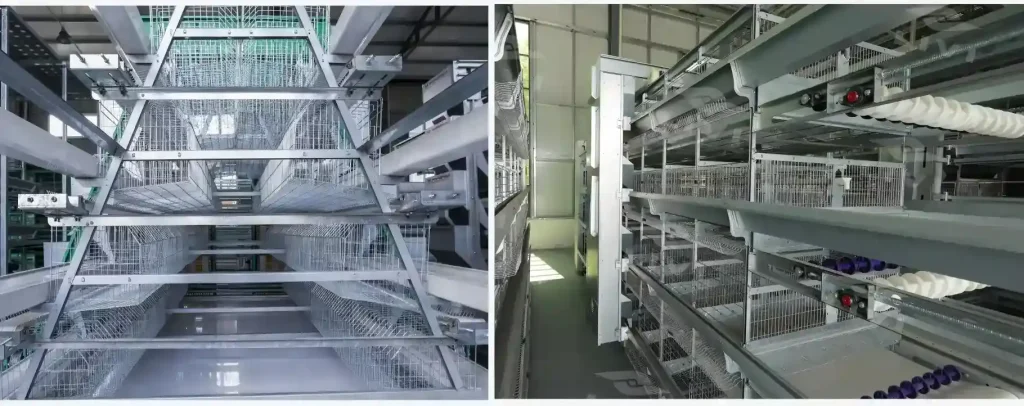
An A Type Layer Cage System also needs a house-specific plan showing cage rows, access aisles, feeding routes, drinking connections, manure handling, egg collection and maintenance clearances. Confirm bird allocation and applicable welfare requirements before accepting the drawing. The supplier should show the calculation for each house, not just a farm-wide total.
LIVI A45-41 is a separate Layer Cage option that can be evaluated against the buyer’s application and layout. It is not identified as the documented project model, and its product specifications should not be substituted for the project’s recorded cage configuration.
Compare feeding arrangements before ordering
The documented plan proposes one shared semi-automatic feeding machine for the three layer houses. An alternative is to allocate feeding equipment separately. Both options need supplier-supported layouts and scopes before a purchase decision.
| Option | Verified basis and possible advantage | Limitation and application conditions | Decision stage |
|---|---|---|---|
| Shared machine | The project plan specifies one machine for three layer houses; sharing may avoid duplicated machinery. | Confirm travel route, house connections, cleaning, feeding time and backup arrangements. A single failure could affect the shared schedule. | Compare during engineering, before final equipment approval. |
| Separately allocated equipment | A buyer alternative that can avoid moving one machine between houses. | Equipment quantities, investment, maintenance and utility interfaces depend on the proposed design. | Obtain a matched supplier scope during engineering. |
Selection rule: Compare the options at the same planned bird capacity and house layout. Choose an arrangement only after checking operating schedules, biosecurity procedures, utility requirements, initial investment, maintenance and service scope. Neither arrangement should be assumed cheaper or more reliable without a project-specific comparison.
Verify the pullet layout and complete order scope
For the deep-litter houses, request drawings showing usable floor area, bird allocation, feeding-pan and drinking positions, access for litter management and transfer routes. Uneven drinker height or restricted feeder access can affect how birds use the available area. The operator should also plan litter preparation and cleaning between groups.
Recheck lighting and electrical scope against all five planned houses. For the layer section, match the corrected capacity drawing to the equipment list. For the pullet section, match proposed positions and quantities to the usable floor area. This prevents a change in house count from leaving the electrical or equipment scope out of step with the site plan.
Compare supplier proposals using matched capacities, drawings, equipment quantities and utility interfaces. Ask which items cover freight, inland delivery, unloading, installation labor, training, spare parts and support. LIVI offers remote installation guidance and may arrange an on-site engineer according to the agreed project scope.
Define Your Equipment and Delivery Scope
Provide your target capacities, site access, house layout and installation requirements to discuss equipment configuration, delivery boundaries and installation guidance with LIVI.
How should a buyer move from assessment to installation?
- Review feasibility: Test prospective sales, supply arrangements, funding and the replacement-flock calendar.
- Document the site: Record dimensions, local environmental conditions, utilities, access and biosecurity boundaries.
- Request coordinated drawings: Show layer and pullet allocations, equipment clearances, routes and utility connections.
- Resolve capacity and feeding: Reconcile the cage calculation and compare shared with separately allocated feeding equipment.
- Agree the order scope: Confirm manufacturing documents, inspection, delivery boundaries, installation, training and support responsibilities.
- If proceeding: Prepare the site, inspect equipment on arrival, install and test the agreed systems, and train operators before stocking.
For this integrated layer and pullet farm in Nigeria, the next decision is therefore conditional: proceed to detailed engineering when the commercial and site assumptions support it, and approve final quantities only when the drawings and calculations agree.
FAQ
1. Can an integrated layer and pullet farm in Nigeria proceed before finding egg buyers?
Early planning can begin, but prospective buyers and delivery arrangements should be identified before a major equipment commitment. Test expected sales volumes and payment terms against the flock schedule and operating budget using current local information. If the proposed output has no credible route to market, reconsider the project timing or scale.
2. Does a planned capacity of 14,400 young birds guarantee replacements for 12,960 layers?
No. Replacement availability depends on placement dates, flock development, expected losses, transfer readiness and layer-house availability. Build a calendar for each layer house, including emptying, cleaning and preparation, then compare the expected transfer-ready birds with that house’s planned allocation. A capacity figure alone does not establish a replacement schedule.
3. What cage type and poultry house dimensions are recommended for this project?
Select the Layer Cage and house dimensions from a site-specific layout, confirmed bird allocation and equipment clearances. The documented project planned A-Type cages, but its capacity calculation needs reconciliation. LIVI A45-41 is a separate product option, not a confirmed project model; its fit must be assessed against the proposed house.
4. Can one feeding machine serve three layer houses?
It may be possible if the machine route, house connections and operating schedule support it. The documented project planned one shared semi-automatic feeding machine, but its practical operation must be checked through drawings and a backup procedure. Compare that arrangement with separately allocated equipment using equivalent capacities and complete scopes.
5. What should buyers compare in equipment and delivery proposals?
Compare proposals for the same bird capacities and house layouts, including equipment quantities, utility interfaces and services. Check freight and inland delivery boundaries, unloading, installation labor, training, spare parts and technical support. An itemized scope helps reveal whether an apparent equipment-price difference reflects a different supply or delivery responsibility.
6. Has the documented Nigerian farm started production?
Production is not confirmed by the documented milestone. The record confirms receipt of a deposit for the planned project and describes a comparison of freight channels. Installation, stocking and operating performance are later milestones that require their own evidence; the planned capacities should not be read as actual flock numbers.
TAGs: integrated layer and pullet farm in Nigeria, 12,960-layer farm project, 14,400-pullet rearing project, A-Type Layer Cage planning, semi-automatic feeding arrangement, poultry house layout