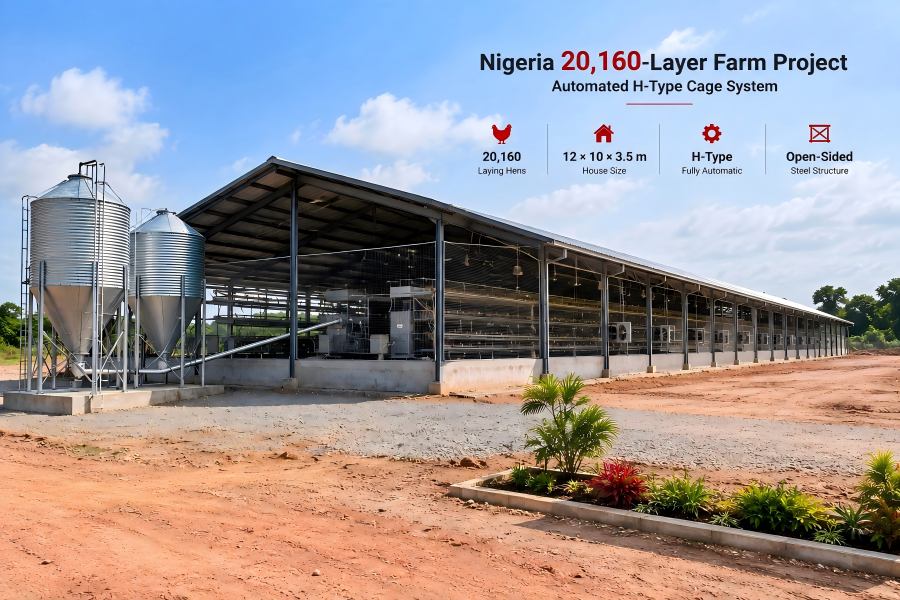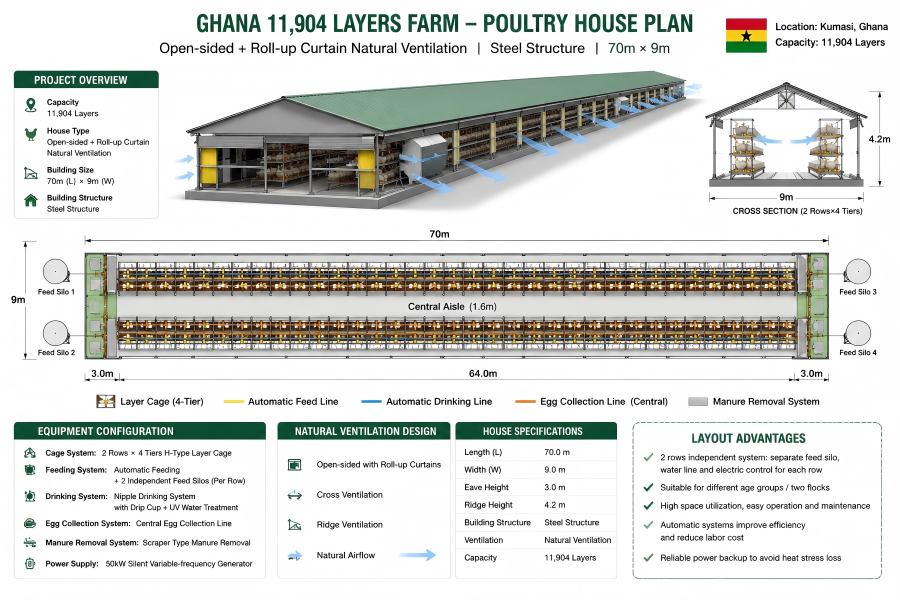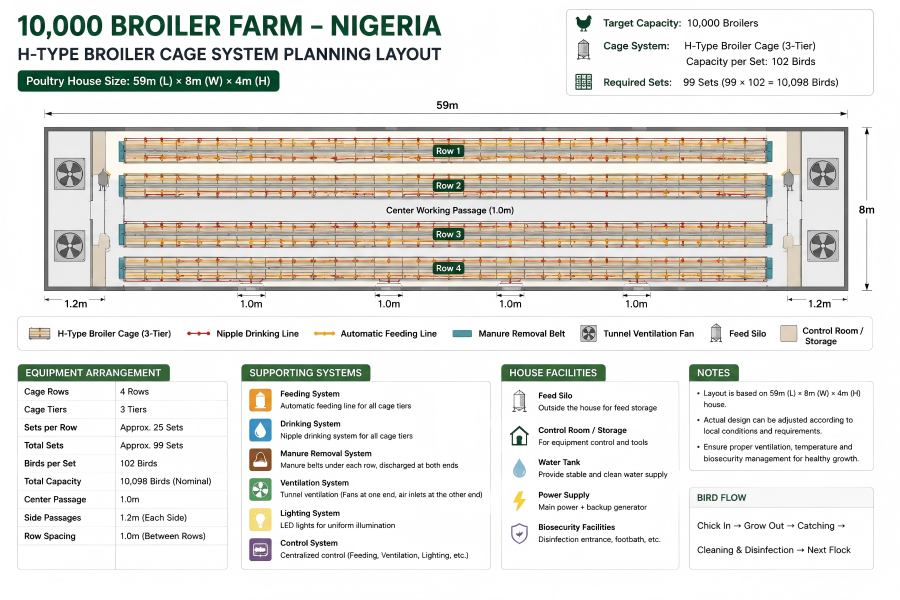




Quick Answer: What Must Be Checked Before Handover?
A 25,000-bird Pullet Rearing Cage System should be handed over only after the poultry house, approved layout, water and power connections, feeding and drinking arrangements, manure workflow, ventilation provisions, safety procedures, and operating responsibilities have been checked as one working system. Equipment delivery alone is not commissioning.
Plan Your Uganda Pullet Commissioning Scope
Share your 25,000-bird target, bird-age plan, house dimensions, water and power conditions, delivery scope, and automation priorities for a practical handover checklist.
No fixed Uganda project price, final cage quantity, house size, freight cost, installation fee, utility load, operating cost, ROI, or payback period is available from the supplied project information. These items require a site-specific technical scope and commercial quotation. The documented LIVI A-Type and H-Type Chick Cage references are for brooding-stage use; their final role in a 25,000-bird pullet program must be confirmed against bird age, flock movement, house conditions, and selected automation.
The key decision is not simply which cage to buy. It is whether the farm can receive, install, test, operate, maintain, and accept the selected system before chicks enter the house. The commissioning file should record what was supplied, tested, accepted, and left open for correction.
Uganda Project Scope: What Is Known and What Requires Confirmation
The confirmed inputs are Uganda as the target market, a 25,000-bird target, and LIVI A-Type and H-Type Chick Cage references. They do not establish a completed Uganda installation, final equipment schedule, or operating outcome.
A project record should separate confirmed facts from items awaiting approval. It should assign responsibility for house preparation, utilities, equipment supply, delivery, local handling, assembly, testing, training, and acceptance.
| Planning item | Current status | Decision required before handover |
|---|---|---|
| Target flock | Confirmed: 25,000 birds | Confirm bird-age program and flock movement |
| Target market | Confirmed: Uganda | Confirm actual site and access conditions |
| Cage arrangement | To be confirmed | Approve quantity, layout, and configuration |
| Poultry house | To be confirmed | Provide dimensions, drainage, work areas, and ventilation provisions |
| Utilities | To be confirmed | Verify water continuity, electrical supply, controls, and backup-power approach |
| Operating team | To be confirmed | Define training, daily checks, fault reporting, and maintenance responsibility |
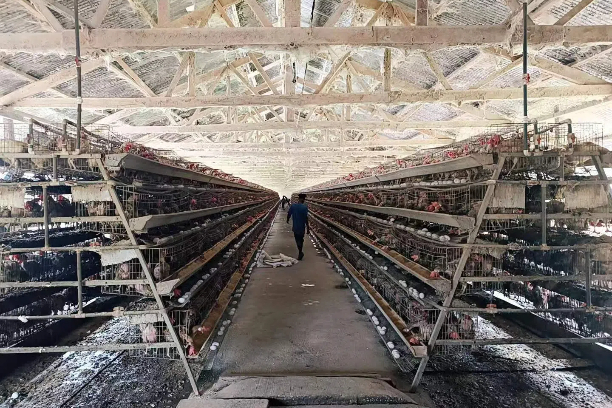
A house should support dry conditions, ventilation, feed and water access, and sanitation planning. These are general housing fundamentals described in poultry housing guidance, not a substitute for project-specific design or local compliance review. The approved workflow should also show how people, feed, water, manure, tools, and maintenance access move through the house.
Documented Chick Cage Options and Commissioning Verification Items
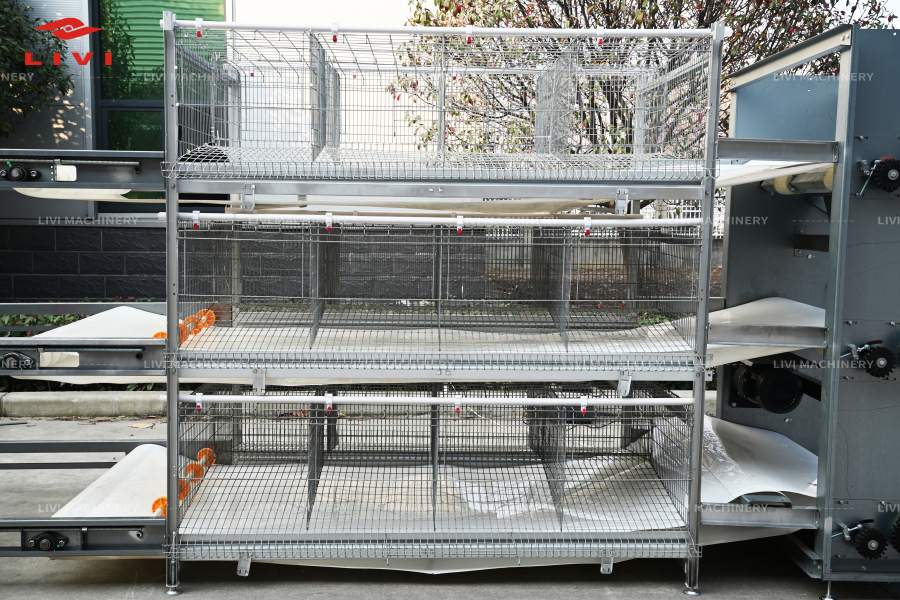
The two product references should be compared as documented options, not as a universal A-Type-versus-H-Type verdict. Both have independent compartments and a stated design service life of 15–20 years. This is a product reference, not a project guarantee.

| System or item | Documented product reference | Commissioning or quote verification required |
|---|---|---|
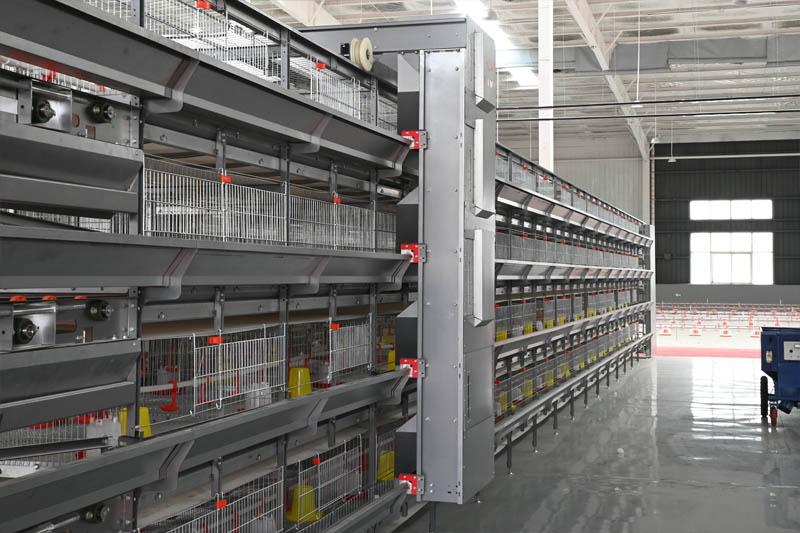
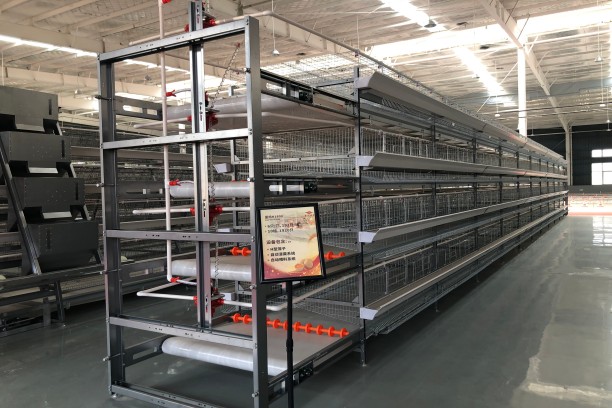
| LIVI A-Type Chick Cage, A50-35 | Q235 steel; hot-dip galvanized treatment; 3–4 tiers; 144–288 birds per set; 1950*500*350 unit dimensions; independent compartments | Confirm quantity, layout, bird-age suitability, access routes, and assembly scope |
| LIVI H-Type Chick Cage, 育雏H1200 | Q235 steel; hot-dip galvanized treatment; H-Type multi-tier independent compartments; 144–216 birds per set; 1200*625*430 unit dimensions | Confirm quantity, layout, bird-age suitability, access routes, and assembly scope |
| Drinking configuration | A50-35: basic or enhanced Automatic Drinking. 育雏H1200: enhanced Automatic Drinking | Confirm water source, connections, flow testing, cleaning, and operator checks |
| Feeding configuration | A50-35: semi-automatic trolley feeder, gantry feeder, or travelling feeder. 育雏H1200: travelling feeder | Confirm selected system, controls, power connection, testing, and daily responsibility |
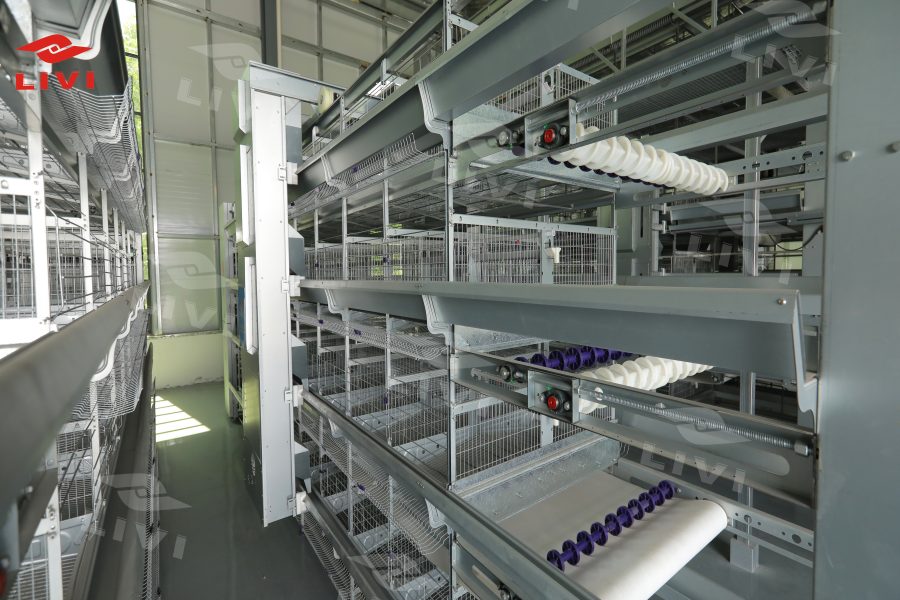
| Manure removal | A50-35: manual, scraper, or flat-belt manure removal. 育雏H1200: flat-belt manure removal plus transverse and inclined manure removal | Confirm configuration, discharge route, cleaning schedule, and maintenance access |
| Optional systems | Lighting, alarm, ventilation, and Climate Control System options for both references | List only approved options and test included systems before acceptance |
| Site, delivery, and training | Project-specific, not product specifications | Confirm house readiness, unloading, storage, installation labor, training, spare parts, and biosecurity workflow |
An A-Type Pullet Cage System may suit a project when its confirmed configuration, access requirements, workflow, and maintenance plan align with the available house. An H-Type Pullet Cage System requires the same review. Neither selection should rely on flock size alone.
For investment review, compare the configuration with the required workflow rather than a generic product label. A complete A Type Layer Cage System or H Type Layer Cage System assessment should also account for house access, water and power conditions, manure handling, maintenance capability, and acceptance responsibilities. Optional items should be clearly separated from included items so the handover checklist matches the final commercial scope.
Why Commissioning Should Be Budgeted Before Equipment Handover
A cage purchase is one cost area within a commercial pullet project. A practical investment plan separates initial investment, recurring operating readiness, and lifecycle support so equipment pricing is not mistaken for the cost of an operational farm.
Initial project investment
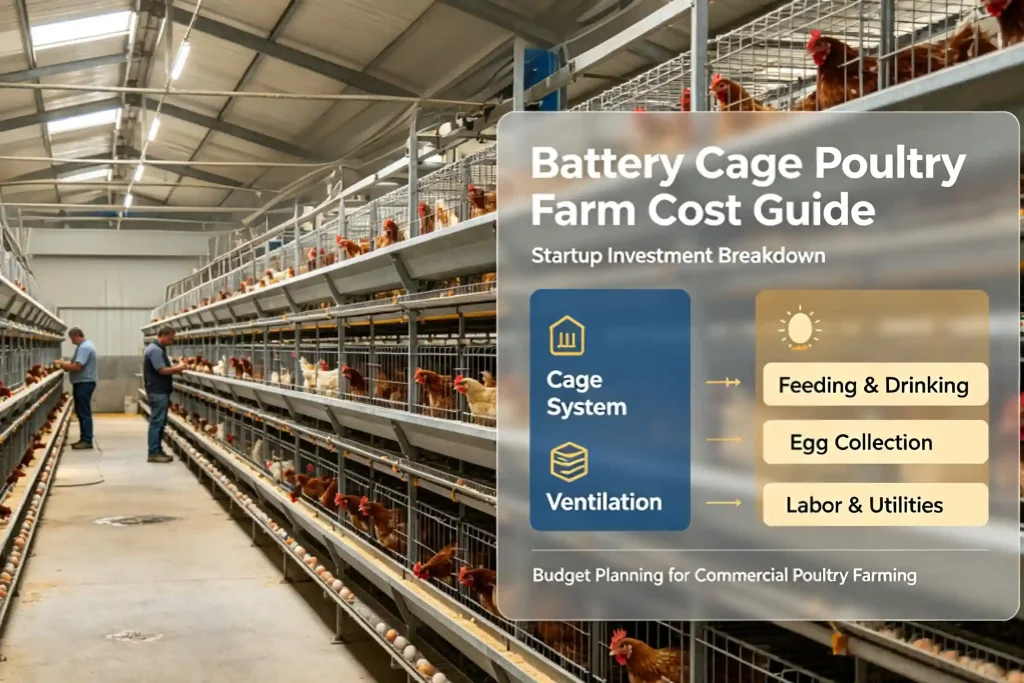
Initial investment may include site preparation, poultry-house work, the cage system, feeding and drinking equipment, manure removal, ventilation provisions, utilities, delivery, local handling, installation, commissioning, backup-power planning, and biosecurity provisions. The exact scope depends on the approved system and site conditions.
Clarify Your Pullet System Investment
Send your Uganda site details, selected A-Type or H-Type approach, utility conditions, and installation responsibilities to define equipment and cost categories requiring quotation.
The budget should also identify pre-release work, including layout approval, unloading and storage preparation, and assignment of local installation responsibility. These items affect the required quote and should not be hidden in a single equipment line.
Recurring operating readiness
Operating costs should remain separate from capital expenditure. They can include chicks, feed, labor, water, electricity, cleaning, health management, biosecurity, manure handling, and routine equipment inspection. Automation can change routine work, but it does not remove the need for observation, cleaning, and management.
The operating team should know which tests occur before placement and which checks become daily routines. Feeding and drinking equipment, water connections, manure handling, and electrical controls need a defined operator responsibility.
Lifecycle maintenance and replacement
Long-term budgeting should allow for inspections, maintenance labor, spare parts, wear-item replacement, system checks, and future upgrades. The handover file should identify systems requiring regular attention, maintenance resources, and fault-reporting steps.
FAO notes that commercial poultry operations tend to use more mechanization and automation as scale increases, while waste storage, management, and use should also be considered in planning management and housing guidance. This does not determine the right Uganda configuration; it explains why manure workflow belongs in the approval and commissioning scope.
How Should Delivery Scope and Site Readiness Be Checked for Uganda?
The documented Chick Cage products can be quoted on FOB or CIF terms. Neither term confirms that local handling, clearance, installation, commissioning, training, or spare parts are included. The quotation should state what each party supplies, arranges, pays for, and accepts.
Before dispatch, confirm packaging requirements, packing lists, container planning, shipping documents, and site inventory procedures. LIVI states that it can support export packing, container loading, packing lists, installation materials, equipment instructions, and technical support. Before arrival, verify unloading access, storage conditions, local handling resources, and a process for reporting missing or damaged items.
Before installation, confirm that poultry-house work is sufficiently complete, the unloading route is accessible, work and storage areas are available, and water and electrical connections, drainage, ventilation provisions, manure route, tools, and local installation labor are ready. Review a backup-power approach and water-continuity plan before accepting electrically supported equipment. Final capacity depends on the approved equipment list and actual site conditions.
The delivery-to-handover record should keep factory supply separate from international transportation, local logistics, clearance responsibilities, installation, and commissioning. This prevents equipment pricing from being treated as a landed and operational farm budget.
A Practical Installation, Test, and Acceptance Sequence
- Confirm the 25,000-bird target, bird-age plan, flock movement schedule, and required commissioning date.
- Provide site or house dimensions, water and power conditions, ventilation approach, manure route, and preferred automation level for technical review.
- Approve the equipment list, layout, commercial scope, delivery responsibility matrix, spare-parts list, and acceptance checklist.
- Prepare the poultry house, unloading zone, storage space, tools, local labor, water and electrical connections, drainage, and biosecurity access controls.
- Check packages against the packing list and separate cage, feeding, drinking, manure-removal, and optional-control components before assembly.
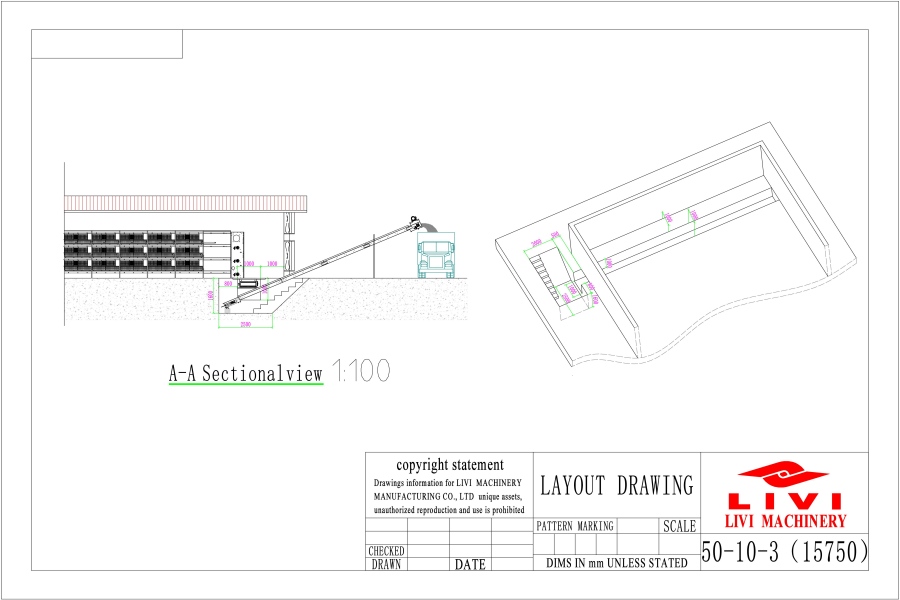
- Install the cage structure and associated systems according to approved drawings and instructions. Record site variations for technical resolution.
- Test water flow, feeding movement, selected manure-removal functions, included ventilation or climate-control options, lighting and alarms, and safe operation before placement.
- Train operators, document unresolved items, assign maintenance responsibilities, and complete handover only after agreed acceptance checks are complete.
Each test should be recorded against the selected scope. An optional system not included in the order should not become an uncompleted acceptance item. If a selected system cannot be tested because a site connection or local work item is unfinished, record the boundary and responsible party.
LIVI states that it can provide installation drawings, operating instructions, video guidance, and remote technical support. Larger projects may request on-site engineer assistance according to requirements. These services still need definition in the agreed project scope.
FAQ
What should a 25,000-bird Pullet Rearing Cage System handover checklist include in Uganda?
The checklist should cover the approved layout, delivered components, cage assembly, feeding, drinking, manure handling, selected ventilation or climate-control equipment, water and power connections, safety checks, operator training, maintenance records, and unresolved items. House size, final cage quantity, utility load, generator capacity, and Uganda-specific compliance requirements must be confirmed for the actual project.
Does the cage price include shipping, installation, and spare parts?
Do not assume that cage pricing includes shipping, local handling, clearance, installation, commissioning, training, or spare parts. The documented products can be quoted on FOB or CIF terms, but the final quotation should identify the agreed supply scope and assign responsibility for every cost category before an order is released.
Should a 25,000-bird project use an A-Type or H-Type Pullet Cage System?
Neither system should be selected solely from the 25,000-bird target. The decision requires review of the poultry-house layout, bird-age program, desired automation, manure workflow, utilities, installation conditions, maintenance capability, and budget. A50-35 and 育雏H1200 are documented brooding-stage Chick Cage references, so suitability for the pullet program requires technical confirmation.
Which systems should be tested before chicks are placed in a Pullet Brooding Cage System?
Test the installed drinking and feeding systems, selected manure-removal system, water connections, electrical controls, and included lighting, alarm, ventilation, or climate-control equipment before placement. Testing should also confirm safe access, component completeness, operator understanding, maintenance responsibilities, and the process for recording and resolving faults.
How should ongoing costs be separated from the initial Pullet Rearing Cage System investment?
Record initial investment separately from recurring and lifecycle costs. Initial items can include site and poultry-house work, equipment, utilities, delivery, installation, and commissioning. Recurring costs include chicks, feed, labor, water, electricity, cleaning, health management, and biosecurity. Lifecycle planning should cover inspections, maintenance labor, spare parts, wear items, and upgrades; no project-specific amounts are available.
What information is needed for a Uganda Pullet Rearing Cage System quotation and commissioning plan?
Provide the target bird number, bird-age and flock-movement plan, site or house dimensions, location, water and power conditions, ventilation approach, manure route, preferred automation level, delivery terms, and installation responsibility. Also identify backup-power planning, local unloading and installation resources, the desired commissioning date, biosecurity workflow, and whether training or engineer assistance is required.
Plan Your Uganda Pullet Commissioning Scope
Clarify Your Pullet System Investment
TAGs: Pullet Rearing Cage System, 25,000-bird pullet project Uganda, Pullet Cage System in Uganda, A-Type Pullet Cage System, H-Type Pullet Cage System, Pullet system commissioning