



Quick Answer: What Should You Confirm Before Comparing an H Type Layer Cage Price in Nigeria?
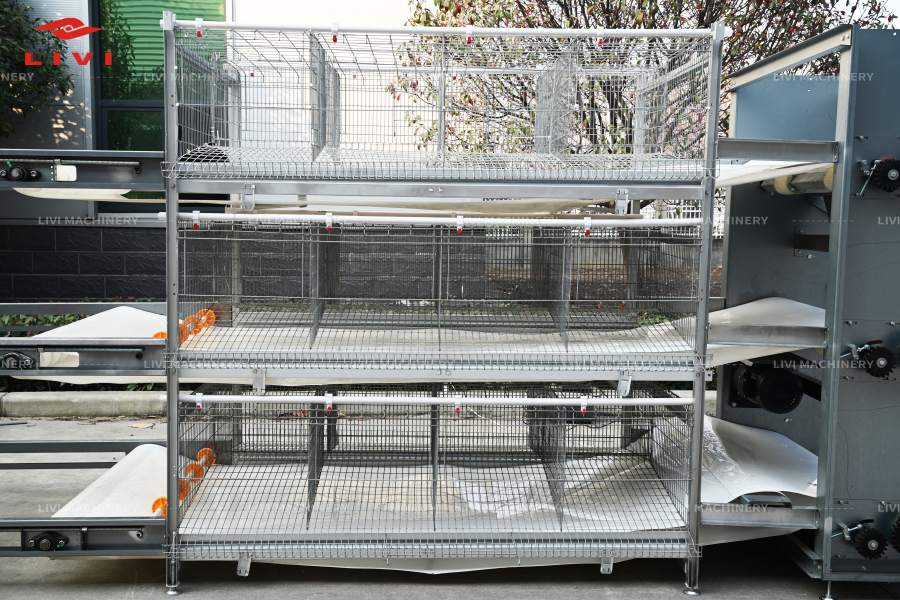
A meaningful H type layer cage price comparison in Nigeria requires the same equipment scope, layout, automation level, delivery terms, and installation boundary. The supplied H-Type layer cage product reference supports 5,000–30,000 chickens, uses Q235 steel with hot-dip galvanizing and aluminum-zinc alloy coating, and has a stated 15–20 year service life. Automatic egg collection and manure removal are referenced features, but the final cage count and automation scope must come from the poultry house layout. No verified price, landed cost, ROI, or payback period is available; equipment price is never total farm investment.
Plan the 50,000-Layer Project Before You Compare Prices
Send your target capacity, poultry house or land dimensions, power and water conditions, and required automation level for a structured equipment scope review.
Why a 50,000-Layer Nigeria Project Needs More Than a Cage Price
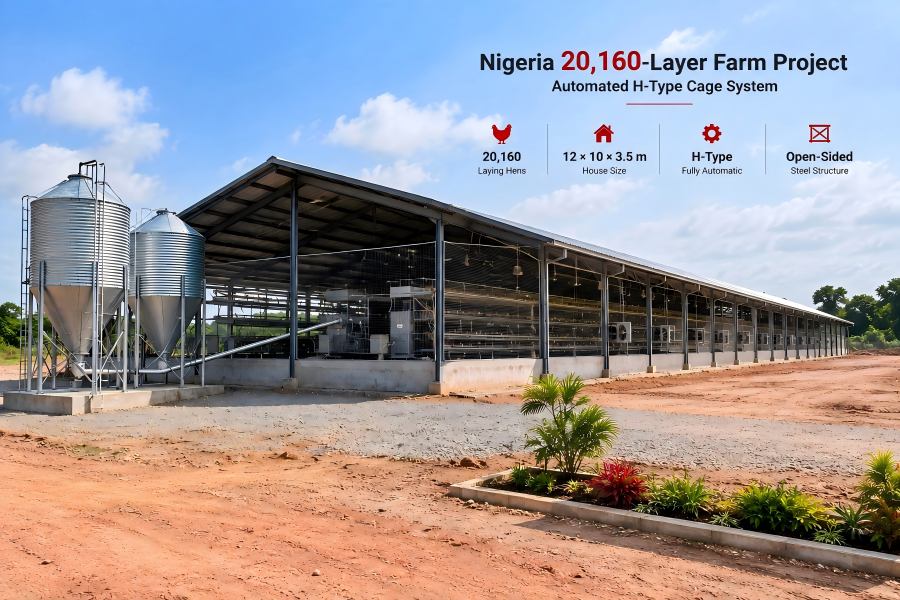
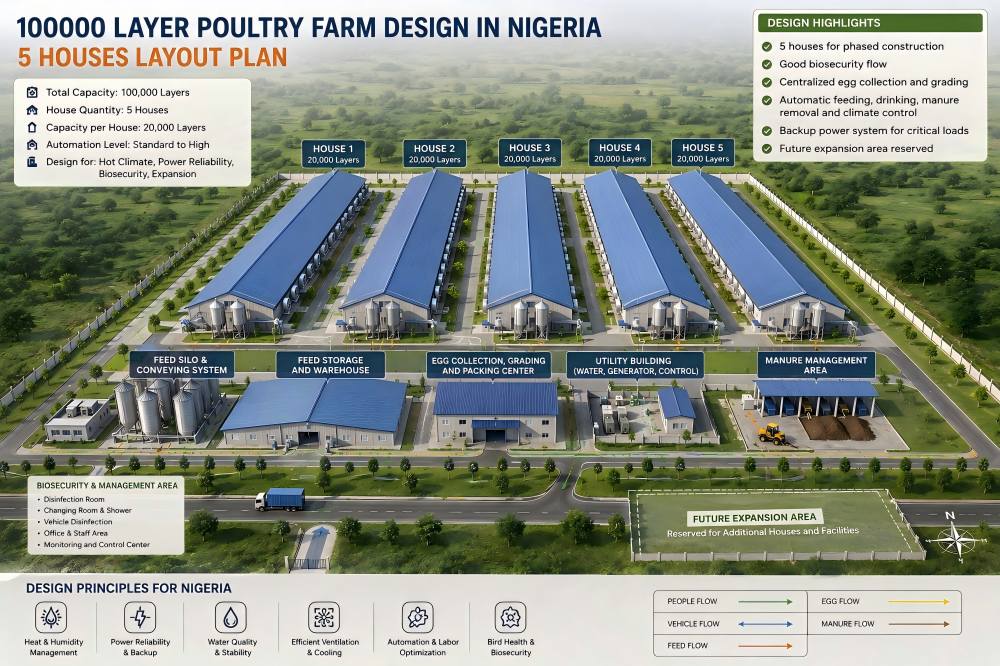
A 50,000-layer farm in Nigeria is not validated by cage quotations alone. Buyers must first confirm the project scale, site, water and power availability, biosecurity, and egg sales or off-take route. Total investment must separate land and site preparation, poultry house construction, cage systems, feeding and drinking equipment, ventilation and cooling, water treatment, backup power, transport, installation, working capital, and long-term maintenance. The equipment price is only one capital line item inside the larger farm budget.
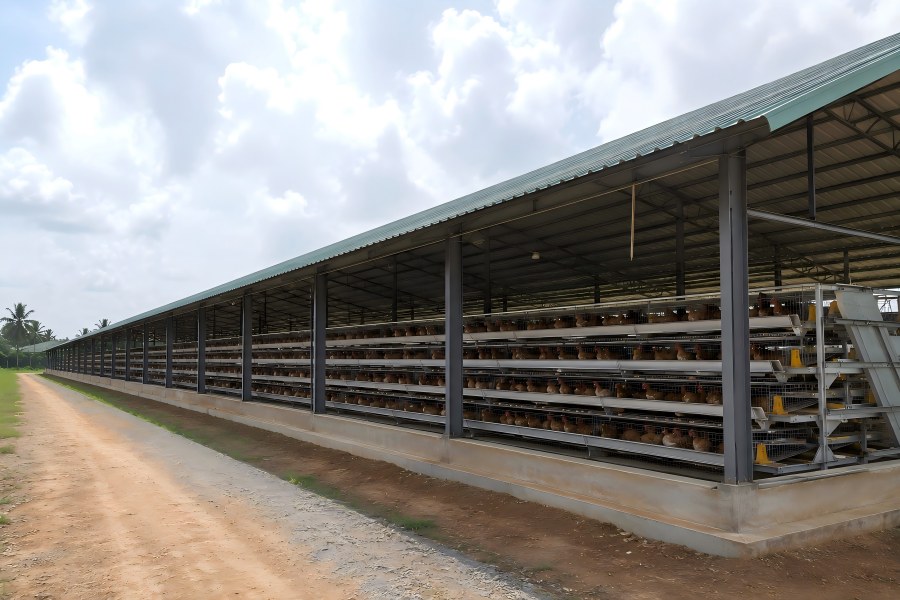
That is why the H-Type cage system, poultry house, utilities, and automation should be planned as one interface before supplier comparison. A lower device quote can become a higher total cost if the layout does not fit the house, the feeding route needs extra conveyors, water pressure is insufficient, or power cannot support automated motors. As commercial production moves toward larger operations, the system depends more on commercial materials and equipment, mechanization, and automated ventilation, so equipment configuration should follow the operating system, not a standalone cage price.
H-Type Layer Cage Reference and Cost Comparison Checklist
Before comparing quotes, confirm these items across suppliers.
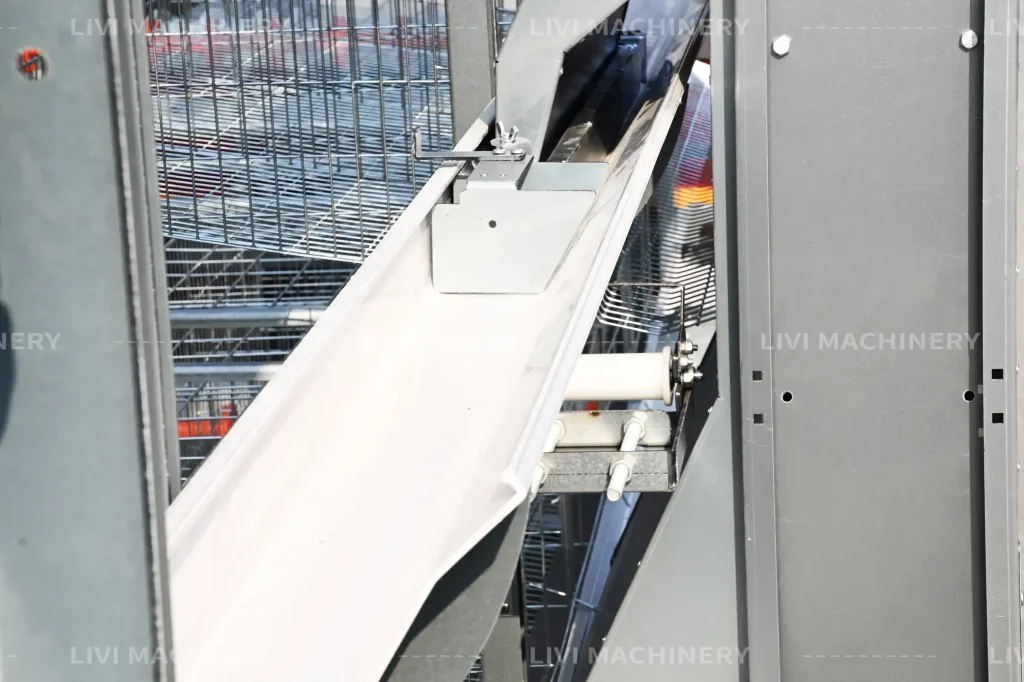
| Cost comparison item | What to confirm before comparing quotes |
|---|---|
| Flock size | Product reference supports 5,000–30,000 birds per system; a 50,000-layer project needs a site-specific house layout with multiple rows or systems. |
| Material and surface treatment | Q235 steel with hot-dip galvanizing and aluminum-zinc alloy coating; compare durability under the same maintenance assumptions. |
| Service life | Stated 15–20 year design life should be compared only with the same cleaning, loading, and maintenance conditions. |
| Automation scope | Automatic egg collection and manure removal are referenced; confirm feeding, drinking, ventilation, cooling, control, and backup power. |
| Delivery basis | FOB or CIF; clarify ocean freight, insurance, port handling, and inland transport responsibility. |
| Quote status | No verified price is supplied; request a technical quotation based on a defined layout rather than a standalone cage unit price. |
This checklist defines the evidence boundary for a comparable H type layer cage price in Nigeria. Ask whether the quotation includes only cage frames and troughs, or a complete working H Type Layer Cage System with feeding, drinking, egg collection, manure removal, ventilation, electrical control, and spare parts.
Project Evidence: A 50,000-Layer H-Type Design Reference for Nigeria
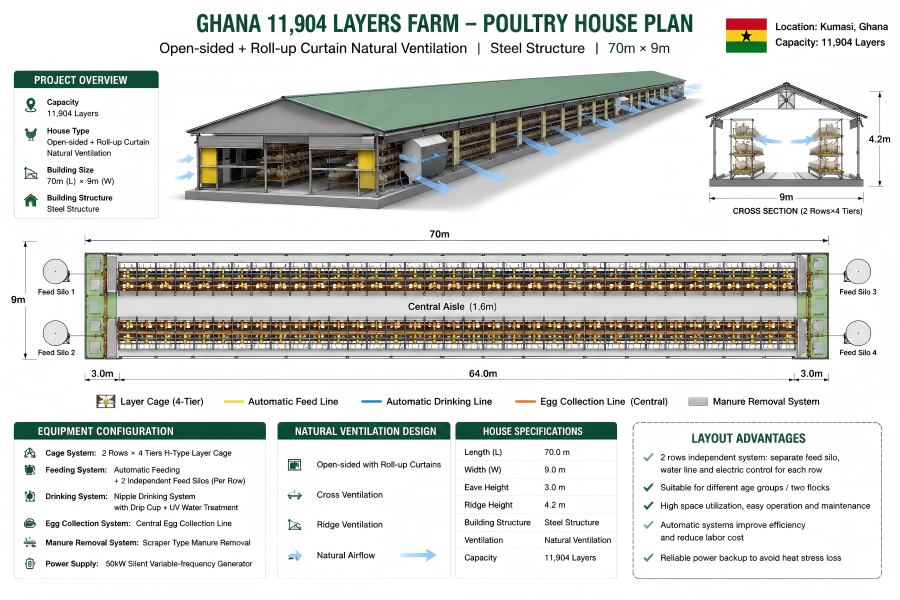
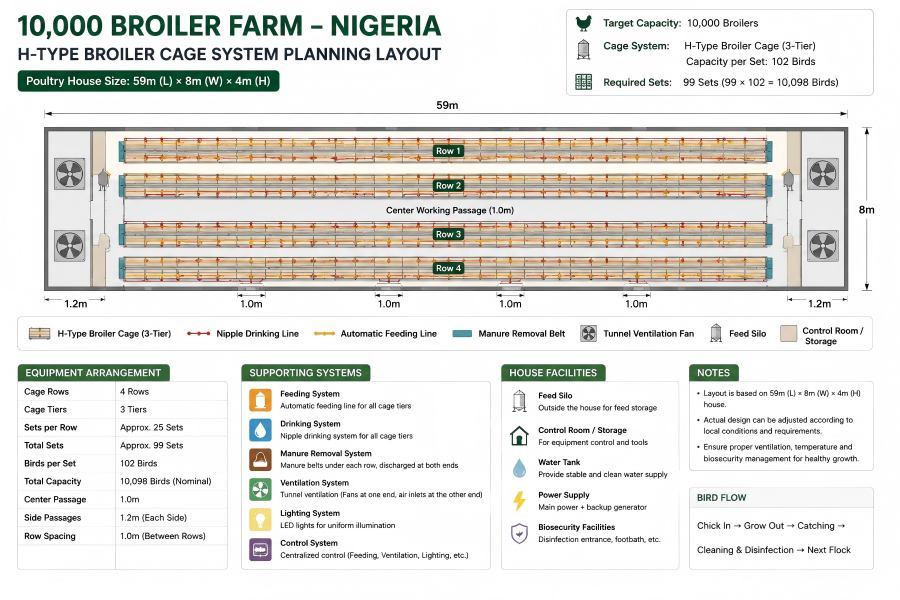
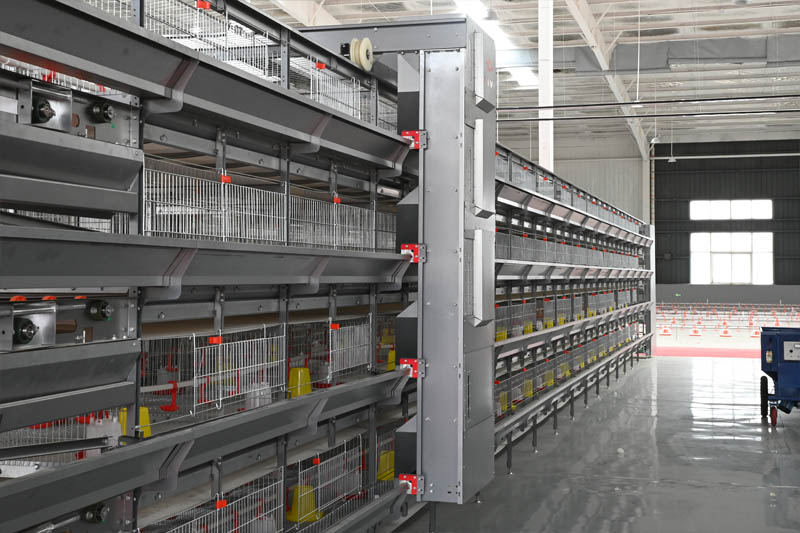
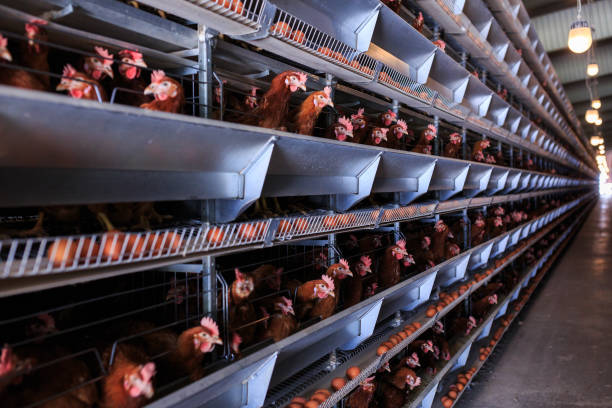
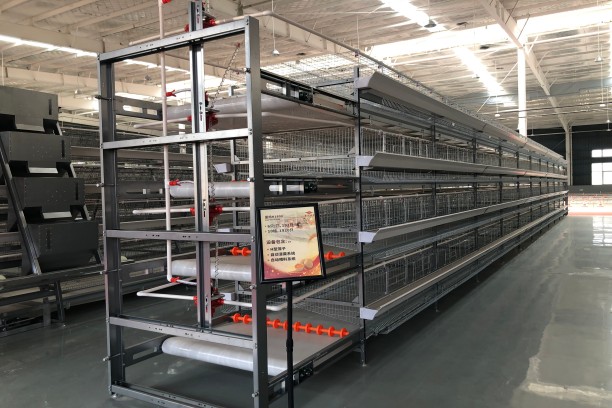
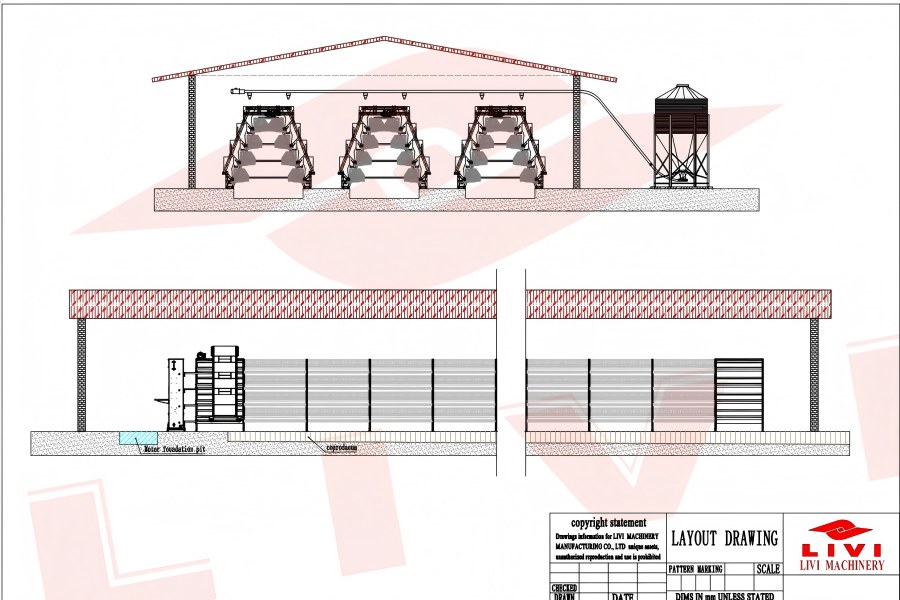
A documented 50,000-layer Nigeria design reference uses one 93 × 15 × 4 m poultry house with five equipment rows. The layout uses 350 sets of four-tier H-type layer cages, each with 144 nominal bird positions, giving 50,400 theoretical positions for a 50,000-layer target. Cage count depends on row length, aisle width, tiers, and clear span, not on simple bird division.
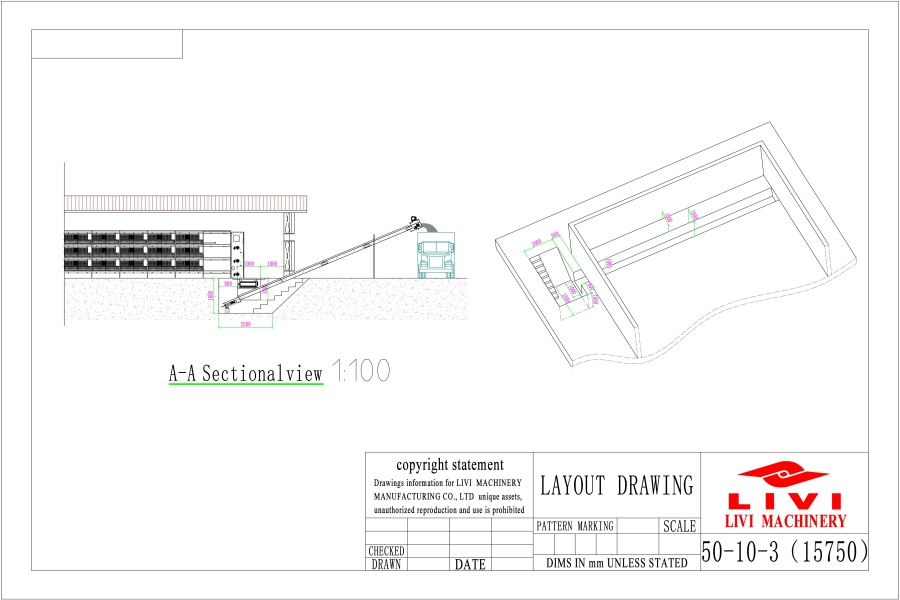
The project scope includes feeding, nipple drinking, egg collection, belt manure removal, outdoor feed silos, feed conveying, water storage and filtration, pressure regulation, medication equipment, cooling pads, and exhaust fans. The H Type Layer Cage is therefore one component of a connected production line. No customer name, price, ROI, or production result is verified; this is a design reference for budget planning, not a quotation.
Freight, Delivery Basis, and Site Readiness for a Nigerian H-Type Project
FOB and CIF quotation methods are available, but they move different cost responsibilities. A buyer comparing an H type layer cage price in Nigeria should separate ocean freight, insurance, port handling, and inland transport from the equipment price. Neither FOB nor CIF automatically includes customs clearance, farm offloading, or final positioning in the poultry house.
Get a Comparable H-Type Layer Cage Quotation for Nigeria
Share your preferred delivery basis, installation boundary, and site readiness details so the technical quotation can be reviewed against the same scope.
Standard equipment lead time is 15–25 days; whole-house customized orders require 30–45 days. Design lead time is 5–7 working days for a standard scheme and 10–15 working days for a customized design. Buyers should align these dates with land preparation, building completion, power, and bird arrival. Site readiness includes access roads, unloading space, utility connection points, water source, power supply, and installation boundary.
How Automation, Utilities, and Maintenance Change the Cost Boundary
Automatic feeding, drinking, egg collection, manure removal, ventilation, and environmental control each add capital equipment, electrical load, control complexity, and maintenance. Define which systems are required now and which can be phased later, then compare suppliers using the same automation and control scope. Power and water are part of the same decision. If the site has unstable power, plan backup power and motor starting loads. If water is seasonal or low-pressure, include storage and pressure regulation in the initial layout.
Long-term maintenance also matters: cages, feed chains, nipple drinkers, manure belts, egg collection lines, fans, pumps, and controls have wear parts requiring inspection and replacement. The stated 15–20 year service life assumes regular cleaning and maintenance, not zero upkeep. Include spare parts support and after-sales scope in the controlled investment review.
Minimum Evidence Checklist Before Requesting a Nigerian H-Type Quotation
- Confirm target flock and phasing; plan a 50,000-layer farm as a site-specific layout rather than a fixed package.
- Measure land and poultry house dimensions or planned clear span before requesting a layout.
- Document electrical supply, voltage, water source, backup power need, and climate conditions.
- Define automation level: feeding, drinking, egg collection, manure removal, ventilation, and environmental control.
- Select FOB or CIF and clarify installation boundary, offloading, and site access.
- Compare suppliers using identical technical scope: cage sets, rows, tiers, automation, spare parts, after-sales, and delivery terms.
- Request a technical layout and a controlled investment estimate before financing or procurement.
This evidence helps avoid comparing a cage-only supplier with a complete Automatic H Type Layer Cage System. The goal is not the lowest line item, but the most buildable configuration for the actual house and utility conditions. A supplier review should also confirm standard scheme design lead time of 5–7 working days, whole-house customized design lead time of 10–15 working days, 48-hour after-sales response, and installation guidance before the buyer moves from project direction into procurement.
How Supplier Capability Affects the Nigerian H-Type Cage Scope
A quotation should be reviewed against design, production, delivery, and after-sales capability before the buyer commits to financing. The supplied company reference states standard scheme design lead time of 5–7 working days and whole-house customized design lead time of 10–15 working days. Standard equipment production lead time is 15–25 days, while whole-house customized orders require 30–45 days. This distinction matters because a 50,000-layer Nigeria layout is typically a whole-house project rather than an off-the-shelf cage set.
Production and delivery evidence also helps the buyer test whether the supplier can support a phased rollout. The company reference includes a 50 mu production base, approximately 33,000 m², with welding, equipment component, and whole-machine assembly production systems. Annual capacity is 20,000+ layer cage groups, with batch production and customized whole-house configurations. If the buyer later expands from 20,000 to 50,000 layers, the supplier must be able to align the next cage delivery with house construction rather than delay the flock placement.
After-sales scope should include online remote guidance, senior engineer on-site support, installation drawings, operation instructions, video guidance, and long-term technical support. The reference states a 48-hour after-sales response time. Confirm whether the quotation includes installation boundary and commissioning, or whether local labor and technicians must be arranged separately.
FAQ
What does an H type layer cage price in Nigeria actually cover?
The supplied H-Type layer cage product reference covers a cage system for 5,000–30,000 chickens, with Q235 steel, hot-dip galvanizing and aluminum-zinc alloy coating, and a stated 15–20 year service life. A comparable scope must separately confirm automatic egg collection, manure removal, feeding, drinking, ventilation, controls, spare parts, delivery basis, and installation. No verified price is available; compare only identical technical and delivery scope. Request a line-by-line scope and confirm whether the price includes installation materials, controls, and spare parts before comparing totals.
Why is a 50,000-layer H-type layer cage quote not the same as the total farm investment?
A 50,000-layer farm must also budget for land or site works, poultry house construction, water and power, feeding and drinking systems, climate control, backup power, transport, installation, labor, feed, veterinary inputs, and long-term maintenance. The cage price is one capital equipment item inside the larger farm development and operating budget. For a 50,000-layer target, moving from a standalone cage order to a whole-house interface usually shifts the highest risk from cage unit cost to layout, utilities, and project execution.
What site information should I prepare before comparing H type layer cage prices in Nigeria?
Prepare land and poultry house dimensions or planned house size, target flock and phasing, power and water conditions, required automation level, and manure and egg handling route. Also confirm delivery basis FOB or CIF and installation boundary so suppliers compare the same technical scope. These inputs allow the supplier to calculate cage sets, row length, ventilation capacity, feeding route, and power demand as one layout.
How do FOB and CIF affect H type layer cage price comparison in Nigeria?
FOB and CIF move different cost responsibilities for ocean freight, insurance, and port or clearance stages; the equipment price alone is not enough for comparison. Buyers should confirm port of discharge, inland transport, offloading, and site access before comparing total landed-cost estimates. Inland freight, customs clearance, port storage, and final offloading are usually outside both terms and must be priced or arranged locally.
What is the difference between the 5,000–30,000 bird H-Type layer cage product and a 50,000-layer farm solution?
The product reference describes an H-Type layer cage system suitable for 5,000–30,000 chickens. A 50,000-layer farm requires a site-specific house layout and multiple rows or systems, such as the project reference using 350 four-tier cage sets and 50,400 theoretical positions. The 50,000-layer solution also requires the house width, row count, feed silo location, and water/power connections to be designed together.
How should automation level affect the budget before requesting an H-type layer cage quote?
Automatic feeding, drinking, egg collection, manure removal, ventilation, environmental control, and backup power each add capital and operating cost. Define which systems are required now and which can be added later, then compare suppliers using the same automation and control scope. Phasing begins with labor-intensive manual tasks and adds automated systems after power and management capacity are confirmed.
Plan the 50,000-Layer Project Before You Compare Prices
Get a Comparable H-Type Layer Cage Quotation for Nigeria
TAGs: H type layer cage price in Nigeria, H Type Layer Cage System, 50,000 layers Nigeria, poultry cage cost Nigeria, automatic layer cage equipment, battery cage system Nigeria, layer farm investment checklist