


How Is This 20,000-Layer Farm in Nigeria Configured?
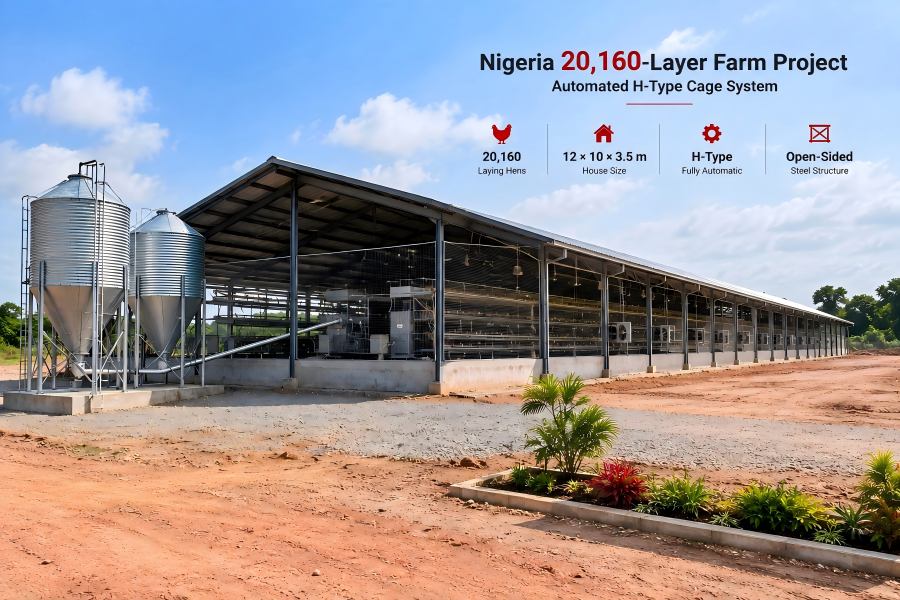
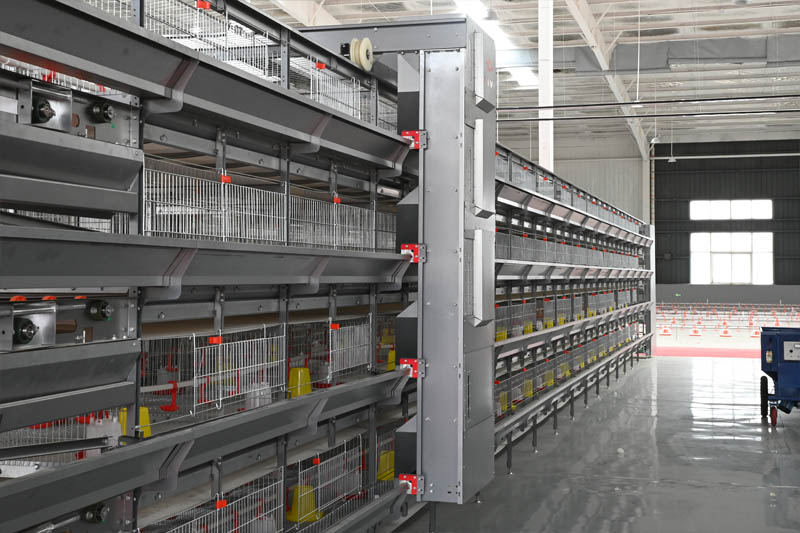
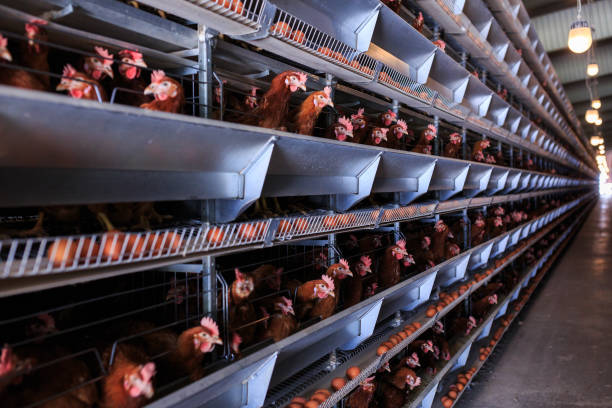
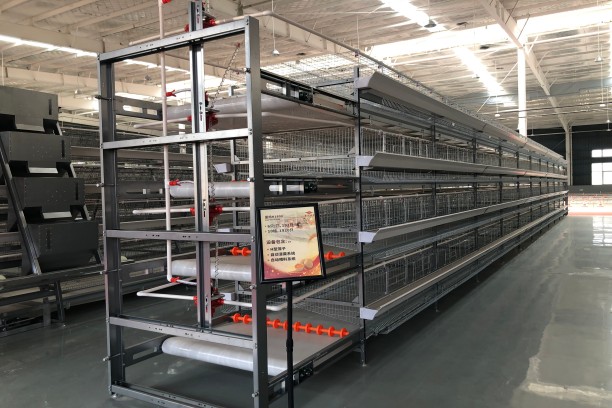
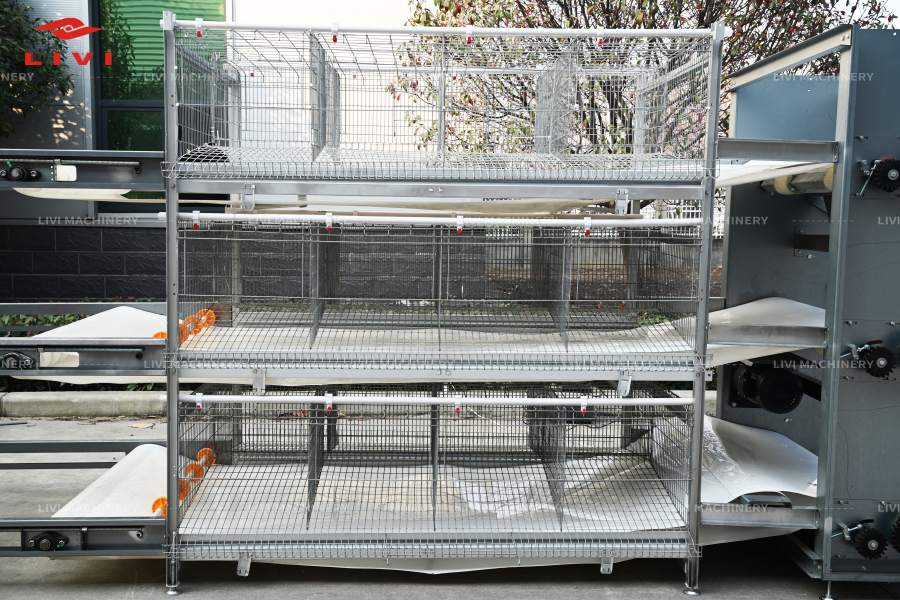
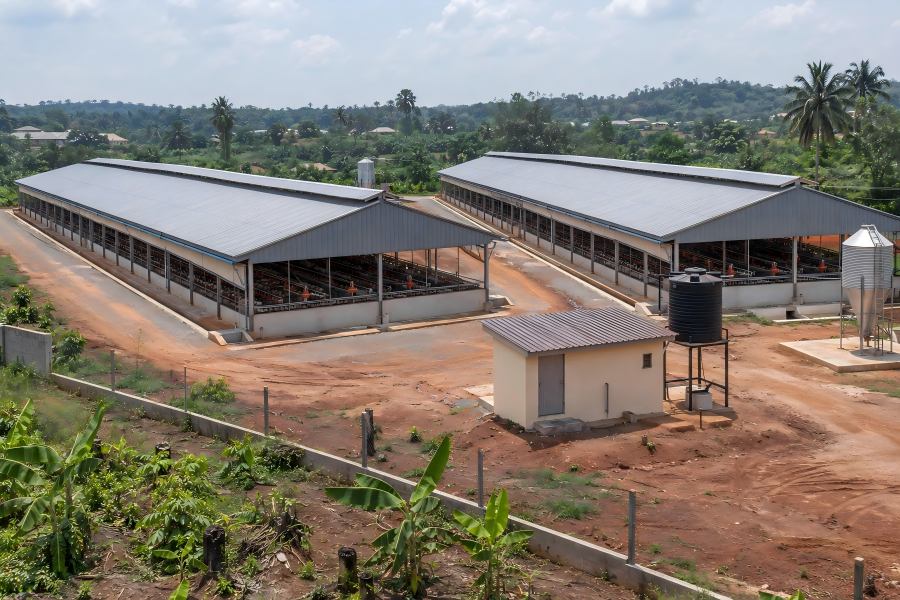
This Nigeria 20,000 layer farm divides the flock between two poultry houses, with approximately 10,000 laying hens in each house. Each house uses two rows of 4-tier A-type layer cages, a layout selected with high local temperatures and the need to avoid excessive crowding in mind.
The cage specification is 1950 × 450 × 410 mm, 4 tiers × 5 doors, 4 birds per door and 160 birds per cage set. The confirmed farm equipment includes 520 feed troughs, 6,000 drinking nipples, two scraper manure-removal machines and one semi-automatic feeding machine.
Rather than maximizing automation, the project balances bird housing, mechanization and local electricity conditions. For Nigerian farm investors, it provides a useful example of why climate and power reliability should influence equipment selection before cage price is compared.
Why Divide 20,000 Layers Between Two 10,000-Bird Houses?
The project starts with a total capacity of 20,000 laying hens, but the flock is divided between two poultry houses instead of being concentrated in one building.
Each house is planned with two cage rows.
This is one of the defining decisions in this 20,000-layer poultry project in Nigeria. The project brief specifically identifies high temperatures and overcrowding as issues that should influence cage-house planning.
The design target was not simply to maximize the number of cage rows inside each house.
Bird concentration, airflow, aisle access and local heat conditions needed to be considered together.
This also makes each house a useful reference for buyers researching 10000 layer farm equipment Nigeria. A 10,000-bird house should not be specified by bird number alone; the usable building dimensions, cage rows, water supply, feeding workflow, manure handling and ventilation conditions all influence the final equipment plan.
High Temperature Is a Poultry-House Design Input
In warm climates, poultry-house layout and ventilation need to be considered before final cage density is approved.
Laying hens release heat and moisture into the house. As bird concentration increases, the building must manage a greater environmental load.
That is why buyers searching for a poultry farm ventilation system Nigeria should first define the poultry-house geometry, bird capacity, cage-row arrangement and local temperature conditions instead of purchasing fans as isolated equipment.
The two-row arrangement in this case is project-specific. It should not be interpreted as a universal rule for every Nigerian layer house.
A-Type Layer Cage Specification for the Project
The Nigeria commercial layer farm uses A-type cages manufactured from hot-dip galvanized material.
| Project Item | Confirmed Specification |
|---|---|
| Bird Type | Layers |
| Total Capacity | 20,000 laying hens |
| Poultry Houses | 2 |
| Birds per House | Approximately 10,000 |
| Cage Rows | 2 rows per house |
| Cage Type | A-Type Layer Cage |
| Cage Dimensions | 1950 × 450 × 410 mm |
| Configuration | 4 tiers × 5 doors |
| Birds per Door | 4 |
| Nominal Capacity | 160 birds / set |
| Material | Hot-dip galvanized material |
Buyers comparing an A type layer cage price in Nigeria should normalize these specifications before comparing quotations. A lower quoted cage price may represent a different cage dimension, capacity, material or equipment scope.
More details on this housing format are available on LIVI’s A-Type Layer Cage System page.
How Many A-Type Cage Sets Does a 20,000-Layer Farm Need?
The nominal cage capacity provides a useful first calculation:
20,000 birds ÷ 160 birds per set = 125 theoretical cage sets.
However, 125 should not automatically be treated as the confirmed installed quantity.
The flock is divided between two approximately 10,000-bird houses, and 10,000 is not exactly divisible by 160. The approved row length, aisle spacing, building dimensions and actual stocking allocation therefore need to determine the final number of sets installed in each house.
A-Type vs H-Type Layer Cage: Which Is More Economical for a Nigerian Farm?
This is one of the highest-frequency questions among Nigerian layer-farm buyers:
A-type or H-type cages—which is more economical for a Nigerian farm?
There is no universal winner.
| Decision Factor | A-Type Cage | H-Type Cage |
|---|---|---|
| Space Utilization | Lower bird concentration per building is possible | Higher vertical space utilization is possible |
| Automation | Can support manual, semi-automatic or automatic configurations | Commonly selected for higher automation levels |
| Electricity Dependence | Can be configured with fewer power-dependent systems | Often increases dependence on motors and control systems when fully automated |
| Farm Scale | Suitable for many small and medium commercial projects | Often considered for higher-density commercial production |
| Correct Selection | Depends on climate, house dimensions, capacity, power reliability, labor and investment priorities | |
In this project, A-type cages were matched with two-row poultry-house layouts and selective mechanization.
Buyers researching A type vs H type layer cage Nigeria should therefore compare total farm design rather than cage purchase price alone.
6,000 Drinking Nipples: Water Supply Is a Continuous Requirement
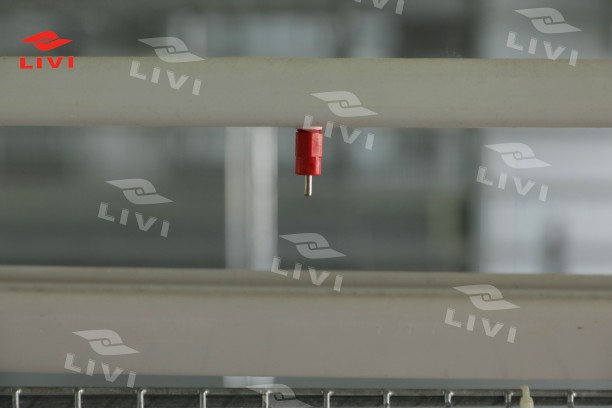
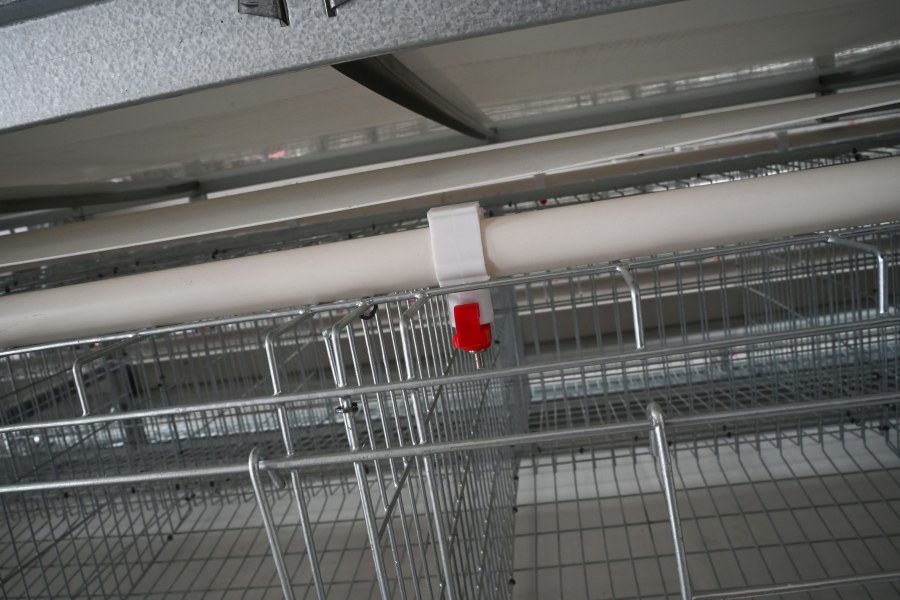
The complete project includes 6,000 nipple drinkers.
Divided theoretically across 20,000 birds, the project provides approximately one nipple for every 3.3 birds. This is a project-derived ratio, not a universal specification for another farm.
Final drinking-system performance also depends on water pressure, pipe distribution, nipple operation, flushing and reliable water availability.
LIVI’s automatic poultry drinking system provides further information on nipple-based water delivery for commercial poultry houses.
520 Feed Troughs and Semi-Automatic Feeding
The confirmed equipment list includes 520 feed troughs together with one semi-automatic feeding machine.
The project therefore does not use the same operating model as a fully automatic feeding installation.
This distinction matters when buyers compare poultry equipment price in Nigeria. Two quotations may serve the same 20,000-bird capacity while including very different levels of automation.
LIVI recommends comparing the operating workflow as well as the equipment list:
- Which feeding tasks still require an operator?
- Which motors require electricity?
- How is feed distributed between two poultry houses?
- What happens if power is temporarily unavailable?
- What labor is required under normal operation?
Why Electricity Reliability Changes the Automation Decision
The Nigeria 20,000 layer farm illustrates why equipment automation should be matched to local power conditions.
The relevant question is not simply:
“Can this process be automated?”
It is:
“Can the farm operate reliably with this level of automation under its actual electricity conditions?”
Feeding machines, manure-removal motors, lighting, ventilation and other powered equipment create different electrical loads and different consequences if power is interrupted.
That is why the high-frequency search generator size for poultry farm Nigeria cannot be answered responsibly from bird capacity alone.
Generator sizing requires an electrical load list.
The calculation should identify which systems must operate simultaneously, motor starting loads, lighting and ventilation demand, backup priorities and future expansion requirements.
Two Scraper Manure-Removal Machines
The project includes two scraper manure-removal machines.
Scraper manure removal provides mechanical assistance without requiring the same equipment architecture as a fully automatic manure-belt system.
The external manure route still needs to be planned carefully so manure can be moved away from the production houses without unnecessarily interfering with feed delivery, egg handling or biosecurity routes.
Buyers can review LIVI’s poultry manure removal systems to compare alternative manure-handling approaches for different cage projects.
Planning a 10,000 or 20,000-Layer Farm in Nigeria?
Send LIVI your bird capacity, poultry-house dimensions, local temperature, water supply and electricity conditions to compare cage layout and automation options.
Get a Customized Farm ProposalHow Much Does a 20,000-Layer Farm Cost in Nigeria?
This is one of the most frequent commercial questions behind searches for 20000 layers poultry farm cost in Nigeria.
There is no responsible fixed answer from bird capacity alone.
The cost of a 20,000-layer farm can change substantially depending on:
- poultry-house construction;
- A-type or H-type cages;
- final cage quantity;
- cage material and specification;
- manual, semi-automatic or fully automatic feeding;
- drinking system;
- manure-removal method;
- egg collection method;
- ventilation and environmental equipment;
- generator or backup-power requirements;
- shipping, customs and inland transport;
- installation and locally supplied materials.
No verified total investment figure has been provided for this project, so this case does not publish an invented project price, ROI or payback period.
Investors researching How much does a 20,000 or 50,000-layer farm cost in Nigeria? should therefore start by defining the same scope before comparing supplier quotations.
What Does “Layer Cage Price in Nigeria” Actually Include?
Search terms such as layer cage price in Nigeria and battery cage price in Nigeria often appear to ask for a simple number, but quotations may include very different scopes.
| Quotation Item | What the Buyer Should Verify |
|---|---|
| Cage | Dimensions, tiers, doors, birds per set and material |
| Feeding | Manual, semi-automatic or automatic; number and type of feeding components |
| Drinking | Nipple quantity, pressure regulation and water-line components |
| Manure | Manual cleaning, scraper system or manure belt |
| Egg Handling | Manual or automatic collection scope |
| Electrical Scope | Motors, control boxes, wiring responsibility and backup requirements |
| Logistics | EXW/FOB/CIF terms, shipping, customs and inland delivery |
| Installation | Supplier supervision, local labor, commissioning and exclusions |
Compare equivalent scope, not headline price.
An inexpensive cage quotation may not be an inexpensive farm solution if drinking, feeding, manure handling, freight or installation are excluded.
LIVI’s poultry farm cost planning guide can help buyers identify the main cost categories before requesting a complete quotation.
How Should Imported Poultry Equipment Cost Be Compared?
Nigerian buyers importing poultry equipment should distinguish equipment price from total delivered project cost.
The search term poultry equipment landed cost Nigeria reflects this difference.
Buyers researching how to import poultry equipment from China to Nigeria should ask suppliers to state the commercial terms and exclusions clearly.
Currency movement, freight rates, destination charges, duties and inland transport can change over time, so this case does not publish a fixed landed-cost figure.
Frequently Asked Questions About a 20,000-Layer Farm in Nigeria
1. How much does a 20,000-layer farm cost in Nigeria?
The total investment depends on the poultry house, cage type and quantity, feeding and drinking equipment, manure handling, egg collection, ventilation, backup power, freight, installation and locally supplied infrastructure. Bird capacity alone is not enough to produce a reliable project price.
2. How much does a 10,000-layer battery cage farm cost in Nigeria?
In this project, each house accommodates approximately 10,000 layers, but no verified cost per house has been provided. A 10,000-layer quotation should specify cage configuration, automation level, water system, manure removal, poultry-house scope, logistics and installation before prices are compared.
3. A-type or H-type cages—which is more economical for a Nigerian farm?
It depends on farm capacity, house dimensions, desired bird concentration, labor, electricity reliability, automation level and budget. A-type cages can support less power-dependent configurations, while H-type systems are often selected when higher-density housing and greater automation are priorities.
4. What size generator is needed for an automatic poultry farm in Nigeria?
Generator size cannot be determined from bird capacity alone. The electrical load of feeding, manure removal, ventilation, lighting, water equipment and other essential systems must be calculated, including motor starting loads and which systems need to operate simultaneously.
5. How many A-type cage sets are needed for 20,000 layers?
At the confirmed nominal capacity of 160 birds per set, 20,000 birds gives a theoretical requirement of 125 sets. However, the farm uses two approximately 10,000-bird houses, so the final installed quantity must be confirmed from the approved row layout rather than theoretical division alone.
6. Is this a fully automatic poultry farm?
No. The confirmed configuration includes a semi-automatic feeding machine, 6,000 nipple drinkers and two scraper manure-removal machines. The project uses selective mechanization rather than a fully automatic production package.
7. What should I send to a poultry equipment supplier in Nigeria before requesting a quotation?
Provide the farm location, layer capacity, number of poultry houses, exact house dimensions, local temperature, ventilation conditions, water supply, electricity reliability, preferred cage type, required automation level and any existing building drawings.
Project Takeaway: Optimize the Farm for Local Conditions, Not Maximum Automation
The strongest lesson from this project is that equipment selection should follow the operating environment.
More cage rows and more automation are not automatically the best investment if the poultry house, local temperature or electricity supply cannot support them reliably.
This Nigerian layer farm uses two approximately 10,000-bird houses, two cage rows per house, A-type cages, nipple drinking, semi-automatic feeding and scraper manure removal.
The result is a project structure built around two practical local constraints: heat and electricity.
LIVI can use this same decision process to evaluate another layer project, but the final equipment configuration should always be based on that farm’s own building, climate, utility and investment conditions.
Planning a Layer Farm in Nigeria?
Send LIVI your bird capacity, house dimensions, local temperature, water supply and electricity situation to compare A-type cage and automation options.
Request Your Project-Specific Quotation