



Uganda Poultry Farm Project Overview
For commercial egg producers, increasing layer capacity is not only a matter of buying more chicken cages. The farm must also coordinate bird rearing, feed delivery, drinking water, manure management and flock transfer.
In this Uganda project, LIVI Machinery supplied an integrated equipment package covering both pullet rearing and commercial layer production.
| Project Item | Layer Houses | Pullet House |
|---|---|---|
| Country | Uganda | Uganda |
| Target Capacity | 40,000 Layers | 10,000 Pullets |
| Number of Houses | 4 Houses | 1 House |
| Capacity per House | 10,000 Birds | 10,000 Birds |
| House Dimensions | 50 × 12 × 3.5 m | 50 × 12 × 3.5 m |
| House Structure | Open-Sided Timber Frame | Open-Sided Timber Frame |
| Cage Type | A-Type Layer Cage | A-Type Pullet Cage |
| Cage Dimensions | 1950 × 350 × 380 mm | 1950 × 500 × 350 mm |
| Cage Configuration | 4-Tier, 4-Door | 3-Tier, 3-Door |
| Birds per Door | 4 | 10 |
| Birds per Set | 128 | 180 |
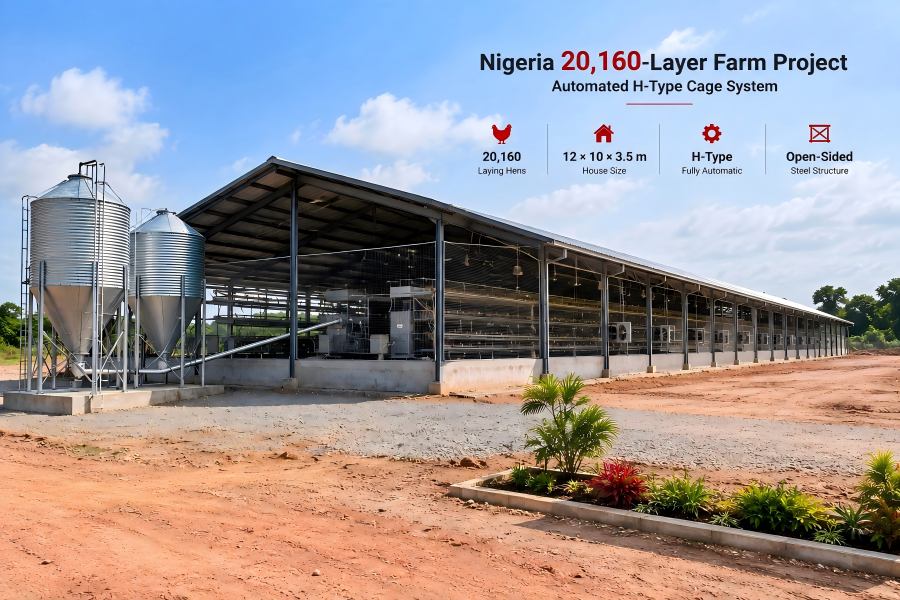
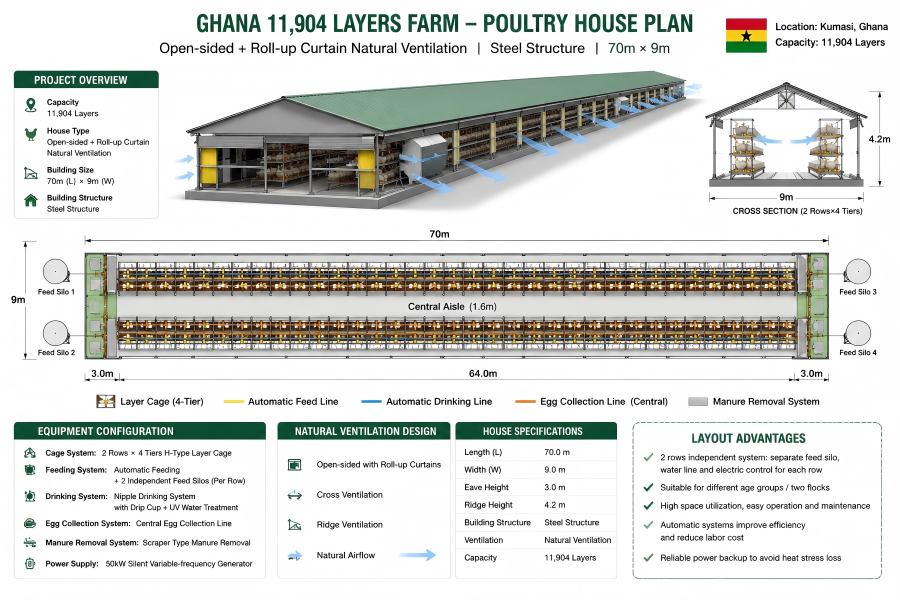
The project consists of five poultry houses: four layer houses accommodating 10,000 laying hens each and one pullet house accommodating 10,000 pullets. Every house measures 50 × 12 × 3.5 m, with an open-sided timber-frame structure.
The Customer’s Challenge: Connecting Rearing with Egg Production
The central challenge was coordinating two production stages. Pullet rearing requires age-appropriate housing and management, while mature laying hens need a cage arrangement suited to commercial egg production.
If the rearing and layer equipment arrive at different times, the farmer may face additional scheduling pressure during flock transfer.
For this project, LIVI arranged the pullet cages, layer cages, feeding equipment, drinking systems and feed-conveying components for delivery within the same supply schedule.
This coordinated approach addresses an important concern for buyers planning a commercial layer cage system in Uganda: how to prepare the next production stage before the birds are ready to move.
Customized A-Type Cage Systems for Five Poultry Houses
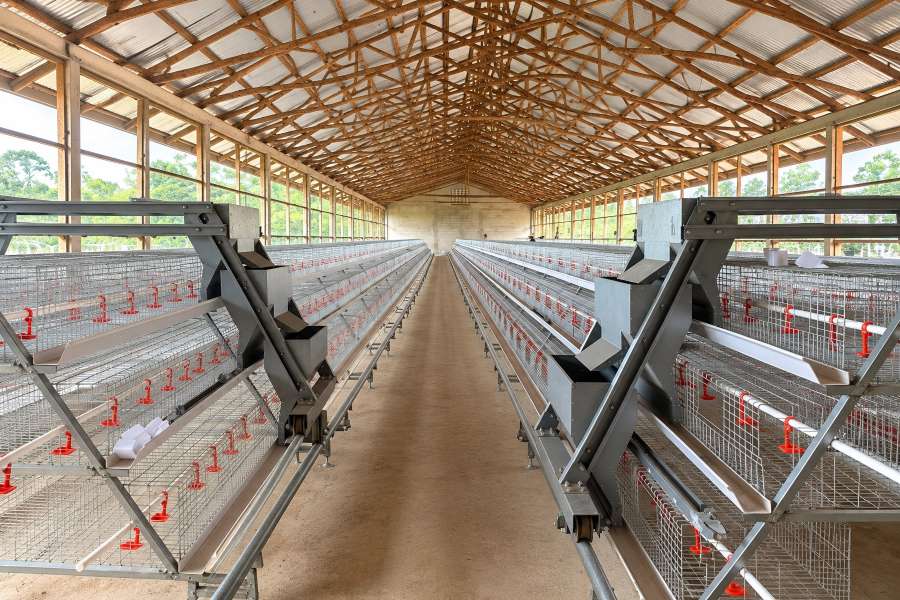
LIVI Machinery supplied two A-type cage configurations for the Uganda project, matching the different requirements of commercial laying hens and growing pullets.
Four Layer Houses: 40,000 Laying Hens
The farm includes four open-sided layer houses, each measuring 50 × 12 × 3.5 m and designed for 10,000 laying hens.
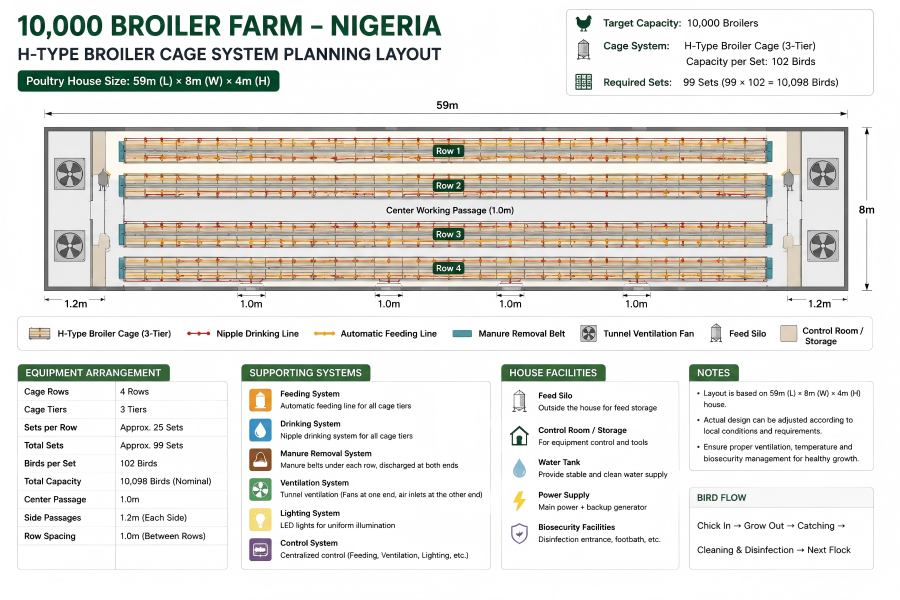
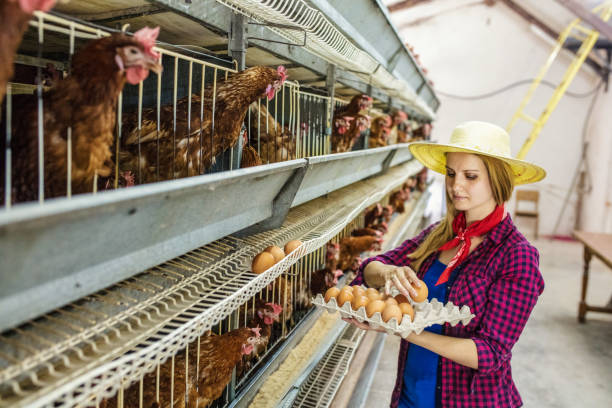
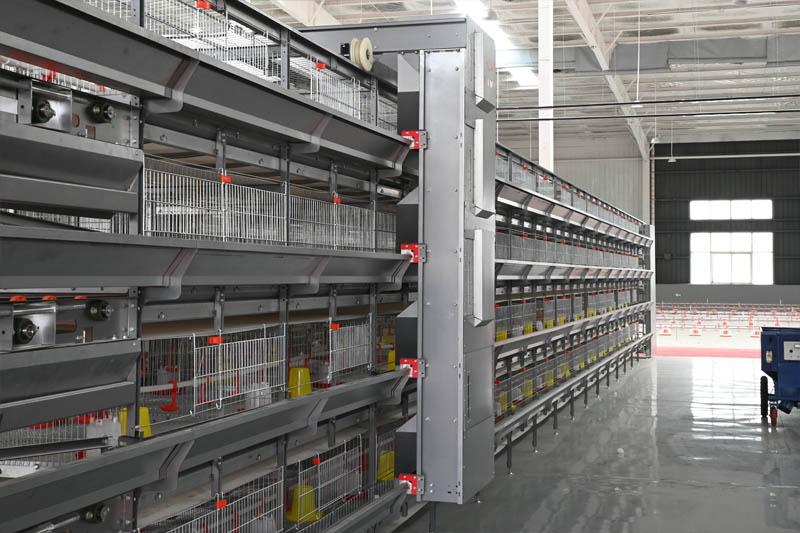
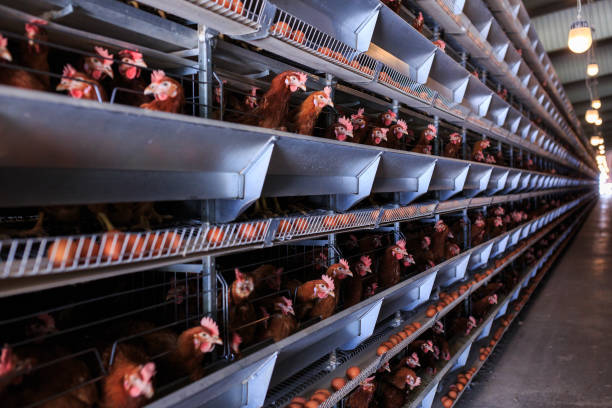
Each house uses A-type layer cages measuring 1950 × 350 × 380 mm, with a 4-tier, 4-door configuration. Each door accommodates four birds, providing a nominal capacity of 128 birds per cage set.
One Pullet House: 10,000 Growing Birds
The separate pullet-rearing house also measures 50 × 12 × 3.5 m.
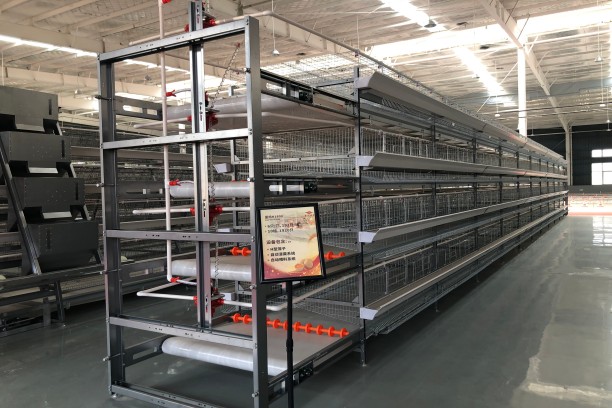
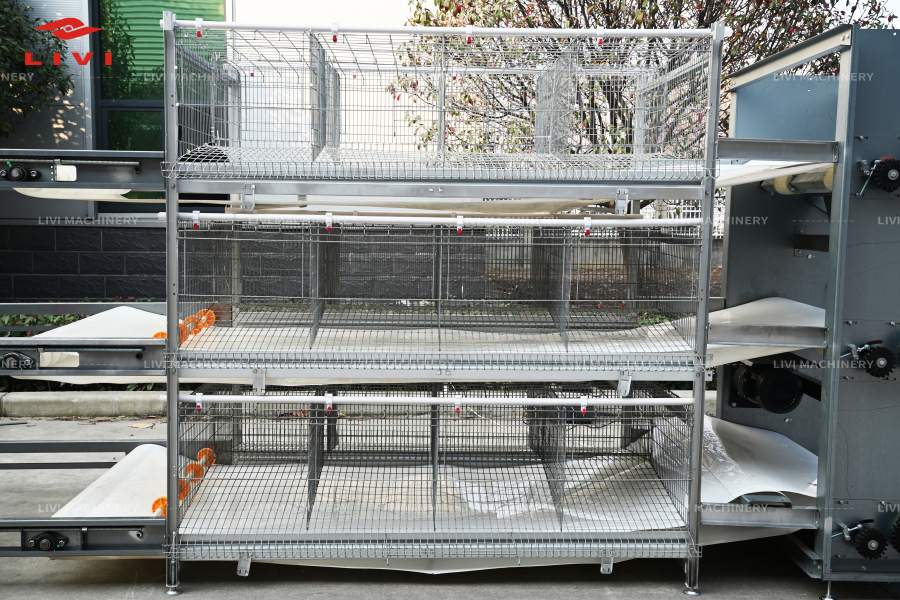
Its A-type pullet cages measure 1950 × 500 × 350 mm, with a 3-tier, 3-door configuration. Each door accommodates 10 birds, providing a nominal capacity of 180 birds per cage set.
Adjustable barriers are incorporated into the pullet cages to help reduce chick escape through cage openings.
Why Separate Cage Specifications Matter
Layer and pullet cages serve different production stages. Buyers comparing A type layer cage prices in Uganda should therefore verify cage dimensions, nominal capacity, accessories and installation requirements rather than comparing prices per set alone.
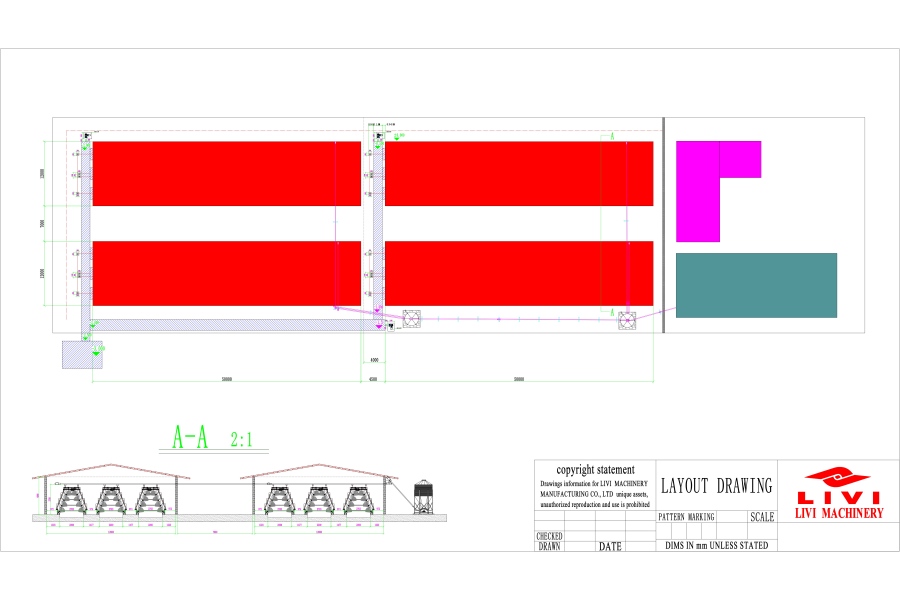
The final number of cage sets and row arrangements must be confirmed against the available installation length, aisles and equipment clearances.
Explore the A-Type Layer Chicken Cage System for additional product information.
Automatic Feeding and Independent Feed Supply
Feed handling was a major part of the project scope.
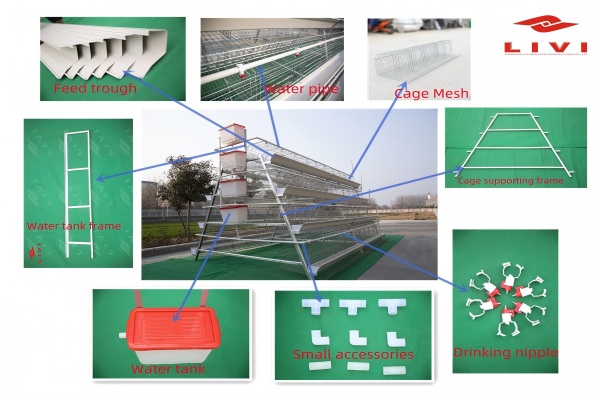
The installed equipment package includes automatic traveling feeders, feed silos and conveying equipment. The pullet house has its own silo and lifting equipment, allowing the two production stages to be supplied separately.
The feed-processing configuration described in the project materials includes:
Feed-level sensors provide a stopping signal when the designated filling level is reached.
This arrangement is intended to reduce repetitive feed transport, organize daily feeding and limit unnecessary material handling. Actual feed savings depend on the farm’s feed formulation, equipment settings and operating records.
See LIVI’s Automatic Poultry Feeding System for further equipment details.
Drinking, Manure Removal and Open-House Management
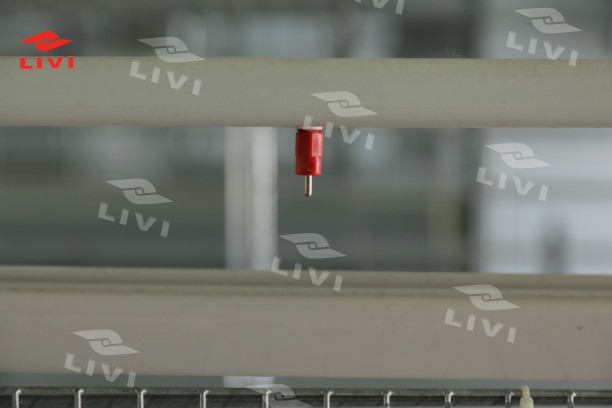
Each cage tier includes independently regulated nipple drinking equipment, allowing water pressure to be managed according to the cage arrangement.
The project also uses automatic scraper manure removal to reduce dependence on manual cleaning beneath the cages.
Because the poultry houses are open-sided, environmental management remains important. The FAO poultry housing guidance identifies temperature, humidity and air movement as important housing considerations.
For Uganda farms using naturally ventilated housing, actual airflow, rain protection, drainage and bird-level conditions should be assessed for the specific site.
The WOAH poultry biosecurity guidance also emphasizes preventing disease introduction and transmission through appropriate farm-management procedures.
Project Delivery and Current Progress
One important confirmed milestone is that the first flock has already moved from the pullet-rearing house into the layer house.
The equipment package was coordinated for shipment together, covering A-type cages for four layer houses and one pullet house, along with the associated feeding, drinking and feed-conveying systems.
LIVI Machinery also provided installation documentation, remote engineering guidance and an ongoing after-sales communication channel.
Equipment package delivered under a coordinated supply arrangement.
First flock transferred from rearing to the layer house.
Egg production rate, actual feed savings, labor savings and project ROI.
The reported flock transfer demonstrates progress in the production-stage transition. It should not be interpreted as proof of a specific laying rate or financial return.
What Should Uganda Poultry Investors Learn from This Case?
For a buyer evaluating poultry farming equipment in Uganda, the main lesson is to plan rearing and laying equipment as connected production stages.
- Confirm layer and pullet capacities separately.
- Match cage dimensions and tiers to the intended flock.
- Define feed processing, storage and conveying interfaces.
- Check water pressure and manure-removal requirements.
- Coordinate delivery and installation with the flock-transfer schedule.
- Compare equipment price, freight, installation and operating requirements separately.
A poultry equipment manufacturer or supplier should provide a configuration-based quotation rather than relying only on a price per cage set.
For related operating considerations, see the Automatic Manure Removal System.
Frequently Asked Questions
1. What poultry cage system is used in this Uganda project?
The project uses 4541 A-type layer cages with four tiers and 5035 A-type pullet cages with three tiers.
2. Can A-type cages support automatic feeding?
Yes. This project integrates A-type cages with automatic traveling feeders, feed silos and conveying equipment.
3. How many poultry houses are included in this Uganda project?
The project includes five open-sided timber-frame poultry houses: four layer houses for 40,000 laying hens and one pullet house for 10,000 pullets. Each house measures 50 × 12 × 3.5 m.
4. How are pullets transferred into the layer house?
The rearing and layer equipment were supplied together to support the planned production transition. The first flock has already been transferred.
5. Does the system include manure removal?
Yes. Automatic scraper manure removal is included in the confirmed equipment configuration.
6. How much does a 40,000-layer poultry farm cost in Uganda?
The total depends on cage quantities, house construction, automation, feed processing, transport and installation. A project-specific quotation is required.
7. Can LIVI supply equipment for both layer and pullet houses?
Yes. In this Uganda project, LIVI supplied A-type cage systems for four layer houses and one pullet house, together with feeding, drinking and feed-handling equipment.
From Pullet Rearing to Commercial Egg Production
This Uganda case shows how coordinated cage equipment, feeding infrastructure and delivery planning can support the transition from pullet rearing to commercial laying operations.
For LIVI, the project demonstrates an integrated equipment-supply approach built around the customer’s production stages, poultry housing and management requirements.
Planning a Commercial Layer Farm in Uganda?
Share your layer and pullet capacity, poultry-house dimensions, required automation and project location to request a customized cage layout and equipment quotation.