



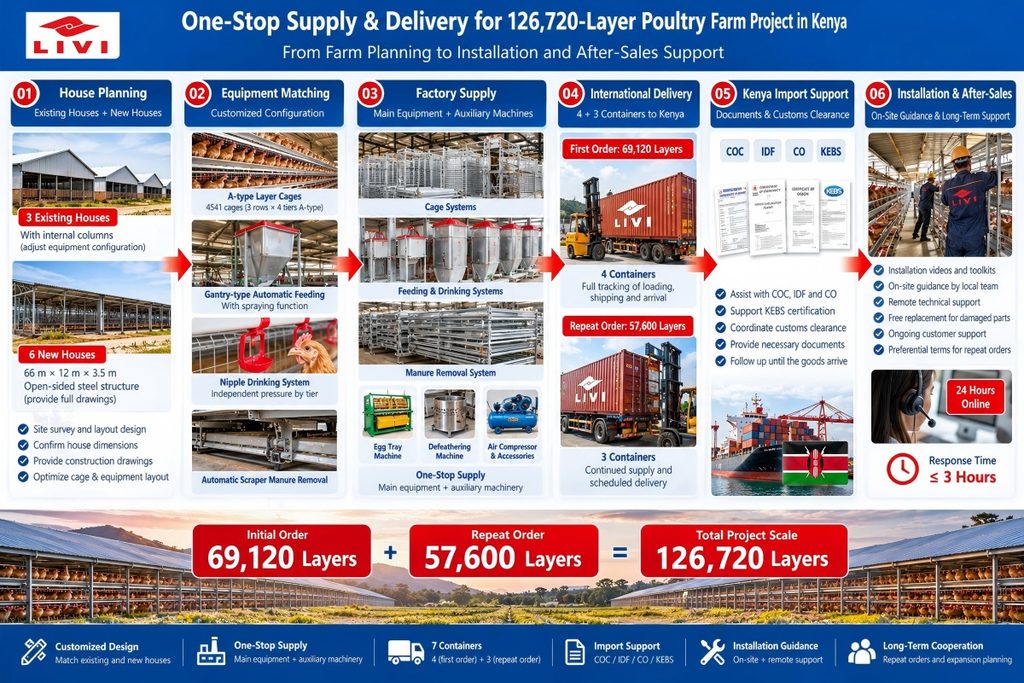
Project Overview: From 69,120 to 126,720 Layers
This commercial layer farm in Kenya demonstrates how a poultry equipment supplier can support a customer through both an initial installation and a subsequent expansion.
Located in Narok, the project involved two purchasing phases:
- First order: equipment for 69,120 laying hens.
- Repeat order: additional equipment for 57,600 laying hens.
- Cumulative project scale: 126,720 laying hens.
The customer was working with a combination of existing poultry buildings and newly constructed steel-structure houses. That made equipment compatibility, building design and delivery coordination especially important.
| Project Item | Confirmed Details |
|---|---|
| Location | Narok, Kenya |
| Initial Order | 69,120 layers |
| Repeat Order | 57,600 layers |
| Total Project Scale | 126,720 layers |
| Poultry Houses | 3 existing houses + 6 new houses |
| Reference House Size | 66 × 12 × 3.5 m |
| Housing Structure | Open-sided steel structure |
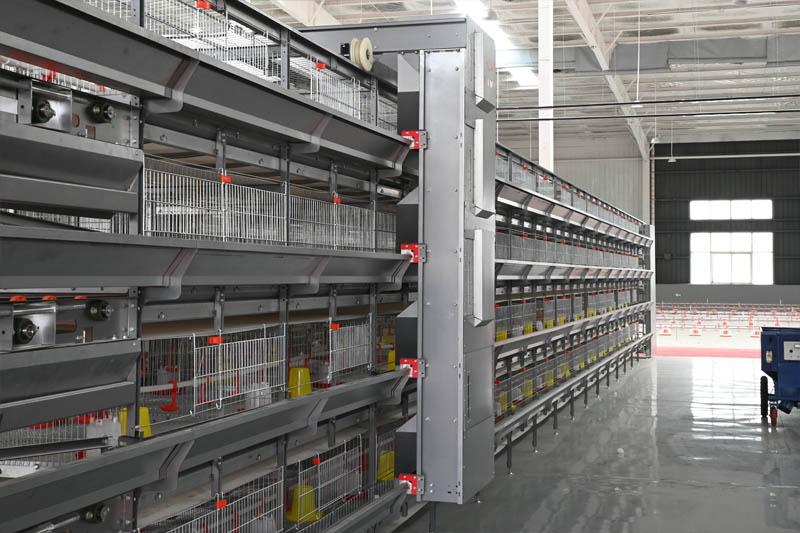
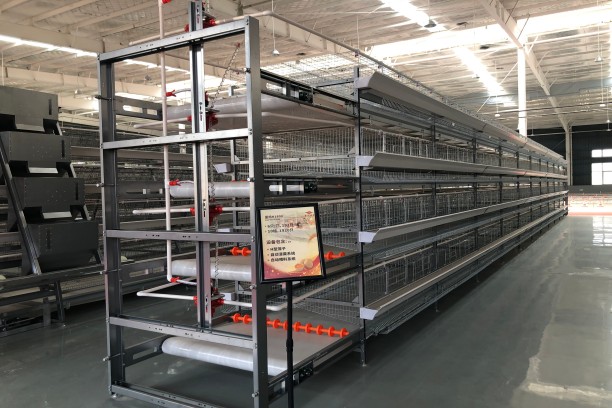
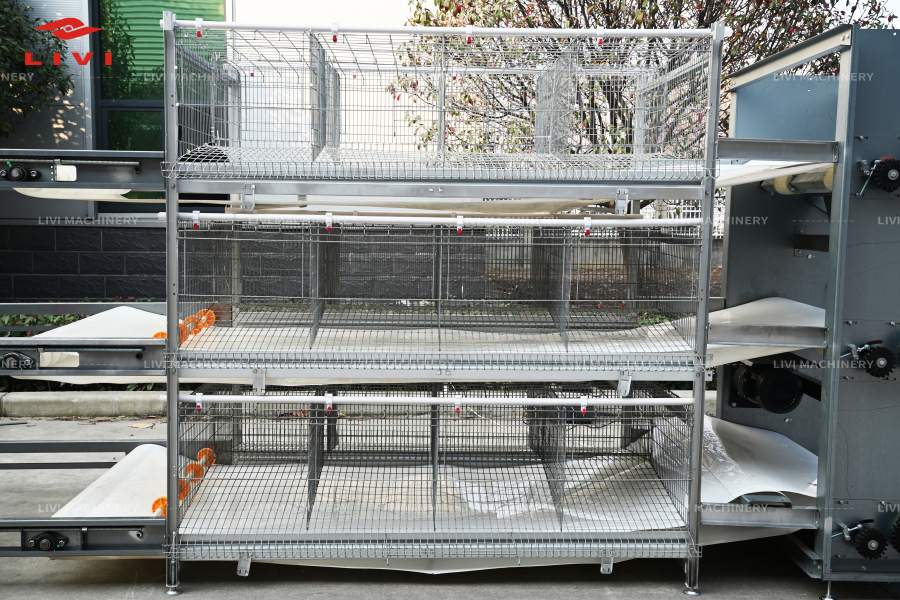
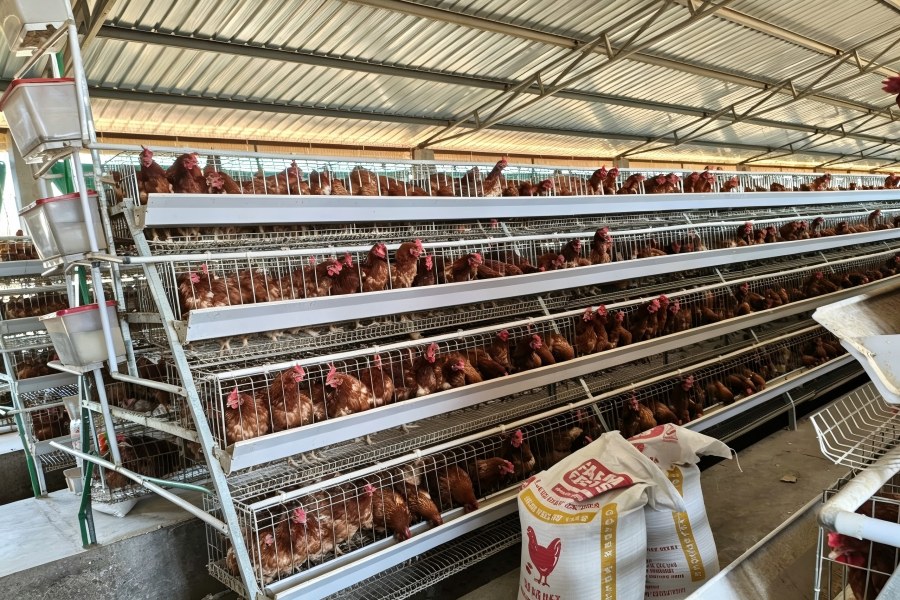
| Cage System | 4541 A-type layer cages, 4 tiers |
| Reference Cage Layout | 3 rows × 30 cage sets |
| Feeding | Automatic gantry-type feeding where compatible |
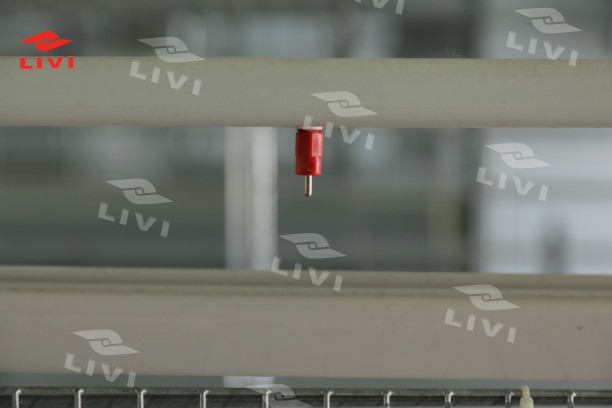
| Drinking | Nipple drinking, independent pressure regulation by tier |
| Manure Removal | Automatic scraper manure removal |
| Shipping | 4 containers initially + 3 containers for repeat order |
The reference layout and building dimensions describe the documented design arrangement. They should not be interpreted as proof that every existing and new house has an identical internal layout.
Why Repeat Orders Matter in a Poultry Farm Expansion
The customer’s second purchase is an important part of this A type layer cage project in Kenya.
The initial order established a working supplier relationship covering cage equipment, project coordination and technical support. The later order extended that relationship to another 57,600 birds.
For a farm owner, repeat procurement can simplify coordination when the supplier already understands the building constraints, cage arrangement and equipment interfaces. It may also reduce the time required to explain the project requirements again.
However, repeat purchasing does not automatically prove higher egg production, lower operating costs or a specific financial return. Those outcomes would require verified farm performance records.
The documented result is a continued commercial relationship and an increase in the cumulative project capacity to 126,720 layers.
How Did LIVI Match Equipment to Existing and New Poultry Houses?
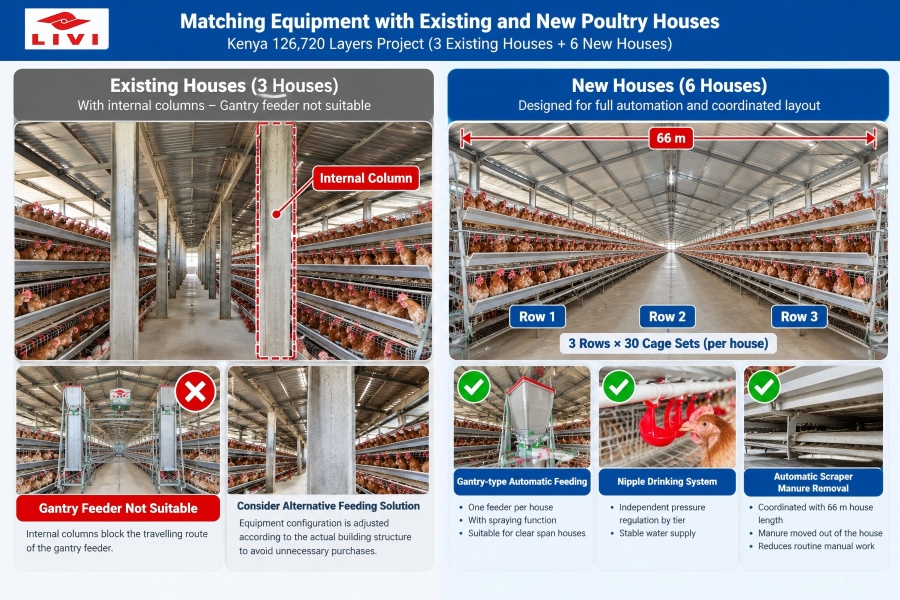
One of the most important engineering challenges was that the customer had two different building conditions: three existing houses and six newly constructed houses.
The older poultry houses contained internal structural columns. These columns affected the available travel path for gantry-type automatic feeding machines.
Instead of recommending the same feeding system for every building, LIVI Machinery identified the incompatibility before equipment selection. The gantry feeder was excluded from the column-obstructed houses to avoid purchasing machinery that could not operate along the required route.
Existing Poultry Houses: Avoiding Equipment Mismatch
For a poultry house retrofit, the lowest equipment price is not necessarily the lowest project cost.
If an automatic feeder cannot move through the building because of columns, beams or insufficient clearance, the buyer may face additional expenses for equipment replacement, building modifications or alternative feeding arrangements.
In this project, identifying the column restrictions early helped prevent an unsuitable gantry-feeding configuration from being selected for the existing houses.
New Poultry Houses: Designing Around the Equipment Layout
For the newly built houses, the documented reference design used a 66 m house length and a three-row arrangement with 30 cage sets per row.
The house length was coordinated with the effective operating travel of the scraper manure removal system. This allowed cage placement and manure-cleaning equipment to be considered together rather than designed independently.
The supplier also provided construction drawings for six new houses and remote guidance to support building preparation.
For other farms, the final cage quantity must still be calculated from the selected model, required bird space, aisle dimensions and approved building drawings. A reference layout should not be copied without verification.
Buyers evaluating similar configurations can review this A-Type Layer Cage System Guide for equipment-selection and farm-layout considerations.
What Was Included in the One-Stop Poultry Equipment Supply?
The project required more than A-type layer cages. The customer’s procurement included poultry housing equipment, automated daily-operation systems and additional machinery for related farm activities.
For this commercial layer farm in Kenya, the integrated supply scope covered several equipment categories.
| Equipment Category | Documented Configuration | Project Function |
|---|---|---|
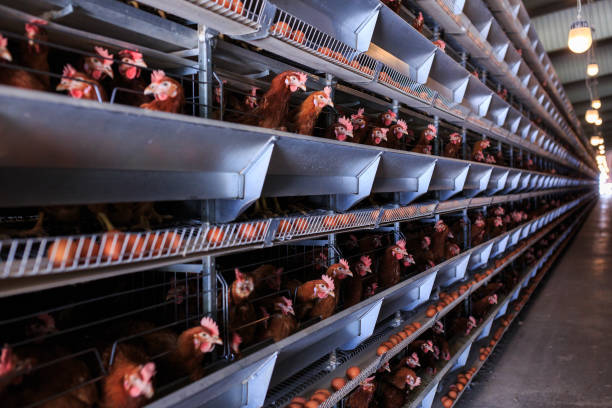
| Layer Housing | 4541 A-type layer cages, four tiers | Commercial laying-hen housing |
| Automatic Feeding | Gantry-type feeder with spraying function | Mechanized feeding across compatible cage rows |
| Drinking | Nipple drinkers with tier-specific pressure regulation | Controlled water delivery |
| Manure Management | Automatic scraper manure removal | Move manure out of the poultry house |
| Egg-Related Equipment | 4T egg tray machine | Egg tray production |
| Additional Machinery | Defeathering machine, air compressor and solid-liquid separator accessories | Supplementary farm and processing requirements |
The project records also identify six feeding machines and six manure-removal machines in the documented supply arrangement. These quantities should be read as equipment-supply records, not as confirmation that every one of the nine houses received identical automation.
The gantry feeding machine was selected for compatible layouts and included a spraying function. Its operating route had to remain clear of structural obstructions.
For further technical information, see the Automatic Poultry Feeding Systems Guide.
The automatic scraper system replaced manual manure-clearing work in the relevant project configuration and moved waste outside the poultry house. Different cage and building layouts may require different manure-handling methods, as explained in the Automatic Poultry Manure Removal System Guide.
Why One-Stop Supply Matters
A one-stop poultry equipment supplier can coordinate machinery selection, drawings, equipment interfaces and delivery schedules under a common project plan.
In contrast, sourcing every machine independently may require the farm owner to manage compatibility between different manufacturers, shipping schedules and installation teams.
For this project, the practical value was not simply buying more products from one supplier. It was coordinating the main layer-farming equipment with additional machinery and the customer’s staged expansion requirements.
The supplied project records do not confirm an automatic egg-collection system, so one is not included in this case’s verified equipment list.
What Determines the Total Cost of a 126,720-Layer Poultry Farm in Kenya?
For buyers researching poultry farm equipment cost in Kenya, the price of A-type cages is only one part of the investment.
A complete budget for a large layer-farm expansion must consider the equipment package, existing-house modifications, new construction, international shipping, import-related charges, installation and long-term maintenance.
The Kenya project documents do not disclose the contract value or final capital expenditure. Therefore, the following breakdown explains the relevant cost categories without presenting unverified prices.
| Cost Category | What Buyers Should Include | Cost-Control Consideration |
|---|---|---|
| Cage Equipment | Cage sets, frames, troughs and drinking components | Verify actual cage capacity and approved layout |
| Automation | Feeding machines, manure-removal systems and controls | Avoid machinery incompatible with house structure |
| Construction | New steel houses, foundations and required modifications | Coordinate construction drawings with equipment design |
| Additional Equipment | Egg tray machine and other specified machinery | Separate essential equipment from optional additions |
| International Delivery | Freight, insurance, port handling and inland transport | Compare quotations using the same delivery terms |
| Import and Compliance | Applicable certification, clearance, duties and taxes | Confirm document and payment responsibilities |
| Installation | Local labor, tools, technical supervision and commissioning | Define who performs and pays for each task |
| Maintenance | Wear parts, repairs and future equipment servicing | Evaluate ongoing cost, not only factory price |
Equipment Price vs. Total Landed Cost
A factory quotation may cover only the equipment supplied under an agreed Incoterm. It should not automatically be treated as the complete amount required to place the machinery into operation in Narok.
For a realistic project budget, buyers should distinguish:
- Equipment cost: The specified cages, machinery and accessories.
- Landed cost: Equipment plus applicable international freight, insurance, import charges and inland delivery.
- Installed project cost: Landed equipment plus construction interfaces, installation, commissioning and related expenses.
- Operating cost: Labor, feed, water, power, maintenance and other recurring expenses.
This distinction helps investors compare quotations from different poultry equipment manufacturers on a consistent basis.
How Did the Project Address Avoidable Costs?
The documented project offers three practical examples.
First, equipment compatibility: Excluding gantry feeders from column-obstructed houses avoided selecting machinery that did not fit the existing buildings.
Second, coordinated design: The new-house reference layout was planned around cage arrangement and manure-removal operating distance.
Third, combined procurement: The customer sourced core layer-farm equipment and supplementary machinery through an ongoing supplier relationship.
These decisions address potential cost risks. The available records do not quantify the amount saved.
How Were International Shipping and Kenya Import Requirements Coordinated?
The two purchasing phases required international equipment deliveries to Kenya.
According to the project records, the initial order involved four containers and the repeat order involved three additional containers. The supplier tracked container loading, shipping schedules and arrival coordination.
Documentation support included:
- CoC: Certificate of Conformity documentation coordination.
- IDF: Import Declaration Form support.
- CO: Certificate of Origin documentation.
- KEBS: Coordination relating to applicable Kenya Bureau of Standards requirements.
The Kenya Bureau of Standards (KEBS) Pre-Export Verification of Conformity program explains the conformity-assessment framework used for applicable imported goods. Importers should confirm current requirements for their specific equipment and shipment.
Why Shipping Coordination Affects Project Cost
Missing documents, damaged components or poorly coordinated delivery schedules can create additional work before equipment installation.
In this project, the supplier arranged free replacements for a motor and feed trough affected by transportation damage. The records also describe an air-compressor upgrade.
These were documented responses to this customer’s delivery issues, rather than a guarantee that every future shipment will receive identical replacement or upgrade terms.
For buyers comparing a Chinese poultry equipment factory with separate local and international suppliers, a useful quotation should clearly identify the responsibilities for packing, shipping, customs documents, damage claims, inland delivery and installation.
Installation, Technical Support and Long-Term Supplier Cooperation
One-stop equipment supply is most valuable when it continues beyond factory shipment.
For this Kenya project, the service records describe installation videos, toolkits, remote technical guidance and coordination with an installation team from Ghana for on-site assistance.
The supplier also provided construction drawings for the six new poultry houses, allowing the customer to coordinate building work with the intended equipment arrangement.
What Installation and After-Sales Support Was Documented?
- Design support: Construction drawings and equipment-layout coordination.
- Installation preparation: Videos and toolkits for installation work.
- On-site guidance: Coordination with an installation team from Ghana.
- Delivery issue resolution: Free replacement of transport-damaged components and an air-compressor upgrade.
- Ongoing communication: English-language technical support described in the project records.
- Repeat-order cooperation: Preferential terms for the returning customer and continued expansion planning.
The project documentation describes 24-hour online support and a response target of no more than three hours. These are service arrangements recorded for this case; buyers should confirm current response commitments and warranty terms in their own contracts.
For a poultry equipment supplier in Kenya or an overseas manufacturer serving Kenyan farms, delivery evidence, installation responsibilities and after-sales arrangements are important factors in supplier selection.
What Can Layer Farm Investors Learn from This Kenya Case?
The 126720 layers poultry farm project in Kenya illustrates how equipment planning and purchasing decisions can affect the wider farm investment.
Its main lessons are practical:
- Check existing buildings before selecting machinery. Internal columns and equipment travel routes can determine whether an automatic feeder is suitable.
- Design new houses around the selected systems. Cage rows, manure-removal distances and service access should be coordinated before construction is finalized.
- Compare total landed and installed cost. A cage price alone cannot represent the complete farm investment.
- Clarify supplier responsibilities. Shipping documents, installation, damaged components and after-sales support should be addressed in the procurement agreement.
- Plan for repeat purchases and expansion. A supplier familiar with the initial project may be better positioned to coordinate subsequent equipment requirements.
For the customer in Narok, the documented commercial outcome was a repeat purchase that increased the cumulative planned layer capacity from 69,120 to 126,720 birds.
The case does not establish a verified investment return, annual egg output or labor-cost saving. Those results would require operating and financial records from the farm.
Commercial poultry-house design should also account for bird welfare, ventilation, feed and water access. The FAO guidance on poultry management and housing provides relevant background.
For disease prevention during farm construction, equipment installation and ongoing operations, refer to the WOAH recommendations on biosecurity in poultry production.
Frequently Asked Questions About Layer Farm Equipment Cost in Kenya
1. How much does a 126,720-layer poultry farm cost in Kenya?
The total depends on cage quantities, automation, new construction, existing-house modifications, freight, import charges, installation and maintenance. The contract value for this specific project has not been disclosed, so a verified project price cannot be provided.
2. Can automatic A-type layer cage equipment be installed in an existing poultry house?
It depends on the building. In this project, internal columns in the older houses prevented the use of gantry-type automatic feeders. The cage layout and feeding equipment must therefore be checked against the actual building dimensions and structural obstructions.
3. What equipment was included in this one-stop poultry farm supply project?
The documented scope included four-tier 4541 A-type layer cages, compatible gantry feeding machines, nipple drinking equipment, scraper manure removal and additional machinery such as an egg tray machine, defeathering machine, air compressor and solid-liquid separator accessories.
4. Is buying poultry equipment from one manufacturer cheaper than using several suppliers?
Not necessarily. One-stop procurement can simplify compatibility checks, delivery coordination and service responsibility, but buyers should compare the complete equipment specification, landed cost, installation scope and maintenance terms before deciding.
5. Does a poultry equipment quotation include shipping, customs clearance and installation?
Only if those items are expressly included in the quotation or contract. Buyers should confirm the Incoterm, freight, insurance, applicable import charges, inland transport, installation labor, engineer travel and spare-parts arrangements.
6. What documents are needed when importing poultry equipment into Kenya?
Requirements depend on the equipment and shipment. This project involved coordination of CoC, IDF and Certificate of Origin documents, along with applicable KEBS requirements. Importers should verify current rules with the relevant authorities and customs agents.
7. Can a layer farm start with one capacity and expand through repeat equipment orders?
Yes. This Narok project began with an order for 69,120 layers and was followed by another order for 57,600 layers. Expansion planning should confirm building availability, equipment compatibility, utilities, delivery schedules and operating budgets before each phase.
Planning a Layer Farm or Expansion Project in Kenya?
Share your target capacity, existing or planned poultry-house dimensions, required automation and delivery location. LIVI can review your equipment configuration and prepare a project-specific quotation covering the agreed supply and service scope.