



Project at a Glance
| Project Item | Confirmed Configuration |
|---|---|
| Country | Zambia |
| Bird Type | Commercial layers |
| Target Capacity | 10,000 layers |
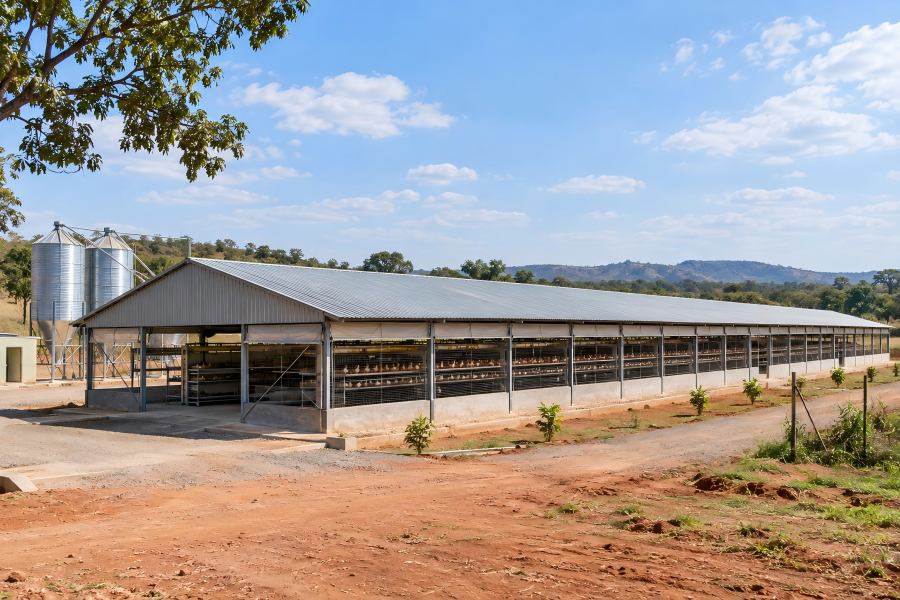
| Housing Type | Open-sided poultry house |
| House Size | 72 × 8 × 3.5 m |
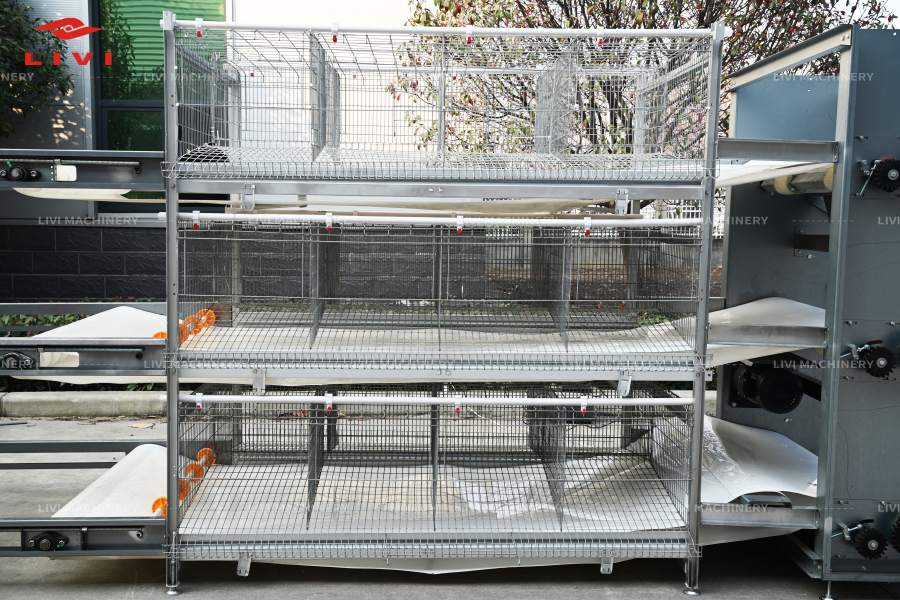
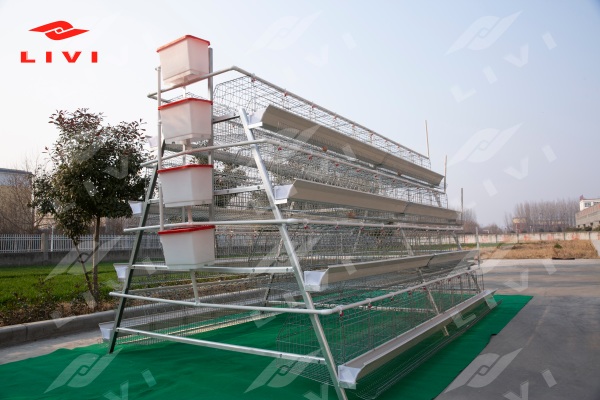
| Cage System | A-type layer cages |
| Cage Size | 1950 × 450 × 410 mm |
| Configuration | 4-tier, 5-door |
| Birds per Door | 4 |
| Capacity per Set | 160 birds |
| Cage Quantity | 64 sets |
| Automatic Systems | Feeding, egg collection and manure removal |
For a commercial layer project, selecting cages is only one part of the decision. The equipment quantity, poultry house dimensions and automation systems must work together as one layout.
In this Zambia project, LIVI Machinery configured the A-type system around a confirmed 72 × 8 × 3.5 m open-sided house rather than selecting equipment from bird capacity alone.
10,000 Layers → House Dimensions → Cage Model → Cage Quantity → Automatic Feeding → Egg Collection → Manure Removal
Why Was an A-Type Layer Cage Selected for This 10,000-Layer Project?
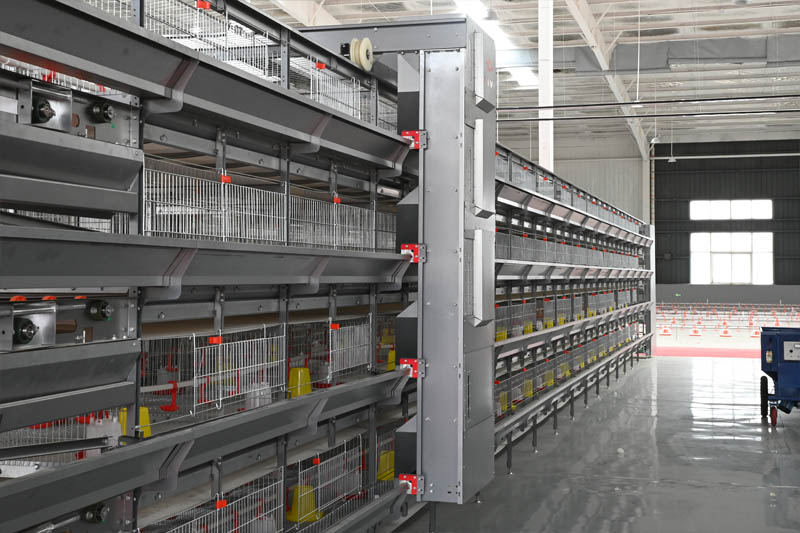
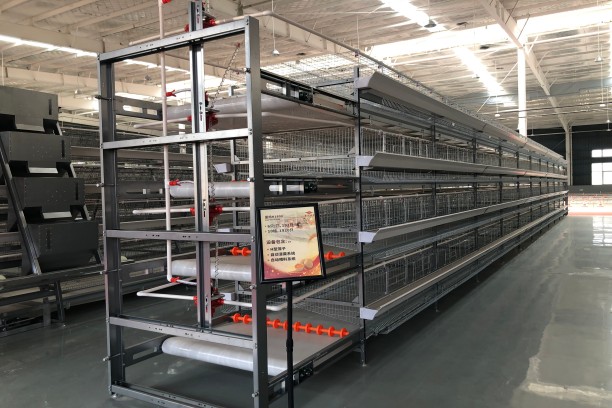
The project uses LIVI A-type layer cages with a four-tier structure. For this farm, the selected cage model provides a practical way to combine the confirmed house dimensions with the required level of automation.
The choice should not be interpreted as a universal rule that A-type cages are always preferable for a 10,000-bird farm. When comparing A type vs H type layer cage systems, buyers should evaluate house dimensions, available land, automation requirements, labor conditions, power supply, investment budget and future expansion together.
More technical information about the equipment used for this type of project is available on the LIVI A-Type Layer Cage System product page.
10,000 Birds vs 10,240 Cage Positions
The confirmed cage configuration makes the capacity calculation transparent:
The customer’s production target remains 10,000 laying hens. The 10,240 figure represents nominal equipment capacity based on the confirmed cage specification; it should not be presented as the actual flock size.
This distinction is useful when comparing a battery cage for 10000 layers from different manufacturers. Buyers should verify the capacity per cage set, total cage quantity and actual poultry-house arrangement rather than comparing only a rounded bird-capacity claim.
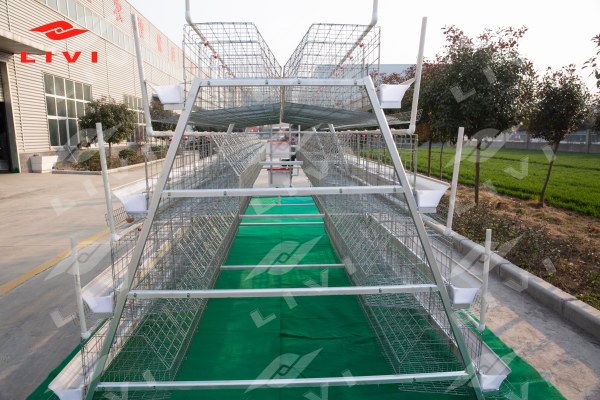
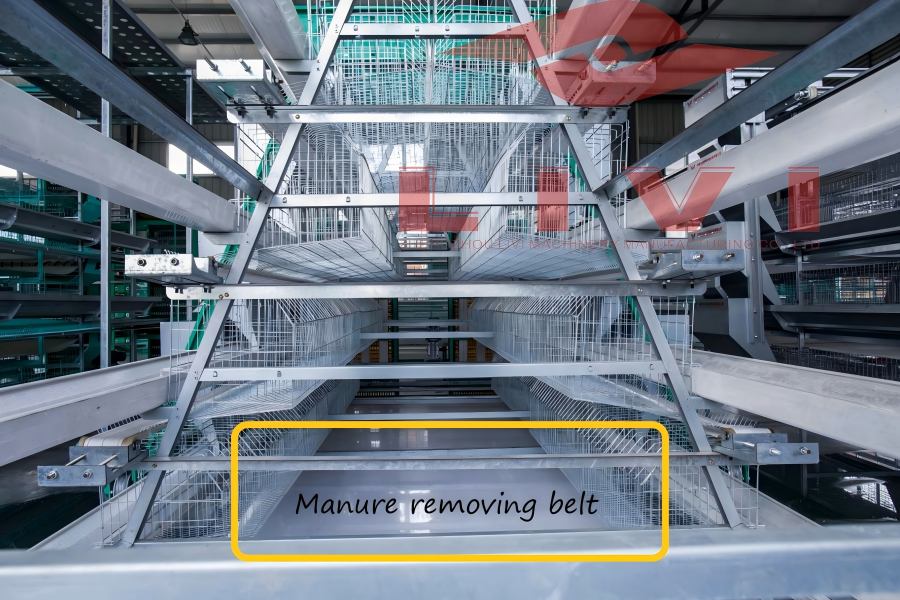
Three Automation Systems Built Around the Cage Layout
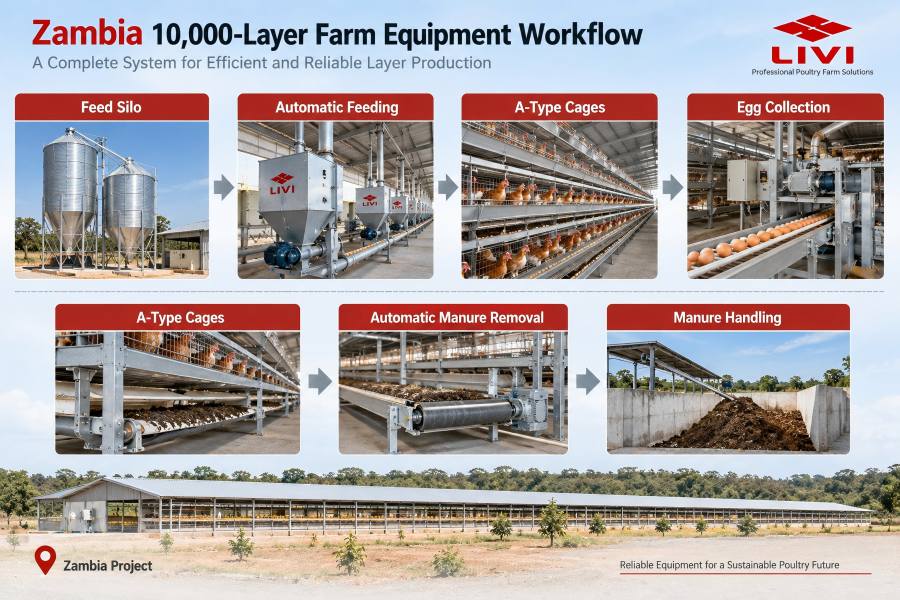
This project is not a cage-only installation. The confirmed equipment package connects the A-type cages with three major automated functions.
Automatic Feeding + Feed Silos
Two automatic feeding systems are included together with feed storage. Their role is to move feed from storage into the house and distribute it to the cage feeding system according to the project configuration.
Automatic Egg Collection
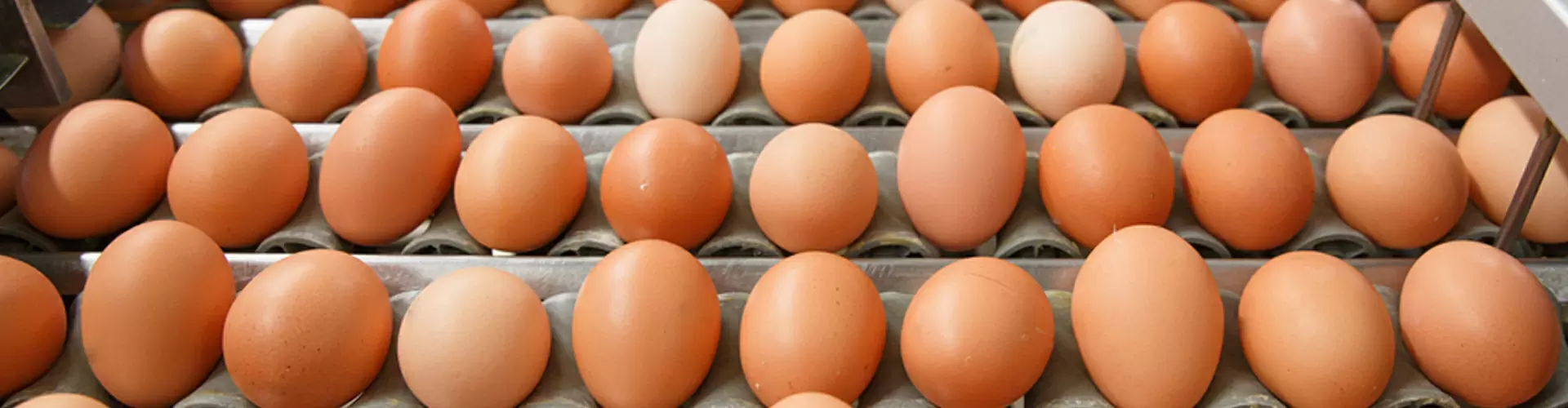
Two automatic egg collection systems are included to transfer eggs from the cage rows into the collection process, reducing the dependence on manual collection along individual cages.
Automatic Manure Removal
One automatic manure removal system is included as part of the house configuration so manure handling is planned together with the cage arrangement rather than added after installation.
For buyers researching an automatic layer farm in Zambia, the important distinction is that “automatic” should be defined by the systems actually included in the quotation. One supplier may quote cages only, while another quotation may include feeding, manure removal, egg collection, silos, controls and installation-related accessories.
You can also review LIVI’s automatic manure removal system to understand how manure handling can be integrated with commercial cage projects.
Why the 72 × 8 m Open-Sided House Matters
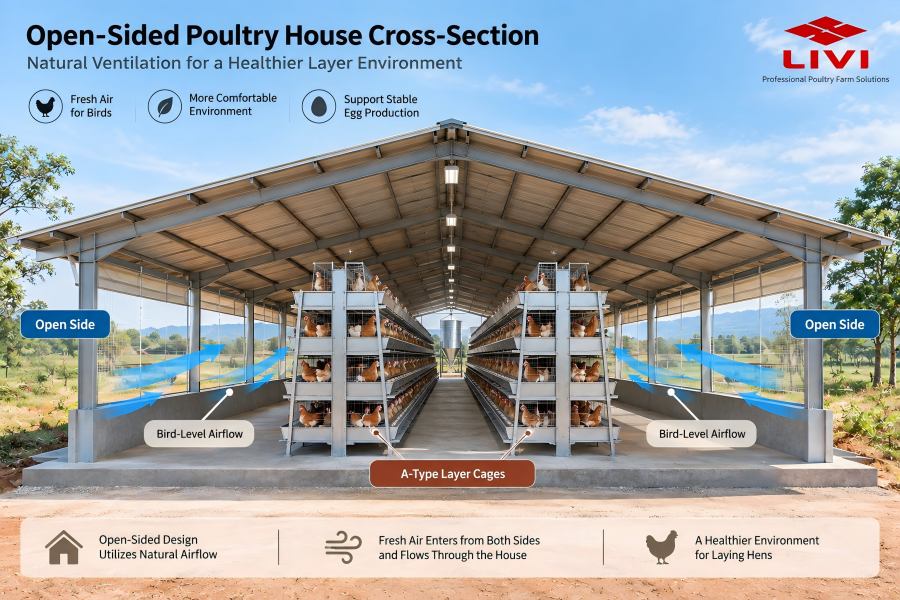
The confirmed poultry house measures 72 m long, 8 m wide and 3.5 m high. The 8 m width is particularly relevant because the project uses an open-sided housing concept.
FAO guidance on small-scale poultry housing and ventilation explains that open sides can support cross-house airflow and notes that increasing house width makes natural air movement more difficult. This provides useful general context for the project’s 8 m-wide house, although final airflow performance still depends on local wind, orientation, stocking conditions and the actual building design.
More broadly, FAO poultry management and housing guidance emphasizes that poultry-house management must address the birds’ physical environment together with clean water, feed and disease exposure.
For a buyer planning a similar 10,000 layer farm in Zambia, this means the poultry house should be coordinated with the cage layout before equipment production. Changing the building width, length or internal arrangement later can affect cage rows and equipment interfaces.
WOAH’s biosecurity guidance for poultry production also recommends considering farm location, drainage, building design, feed storage, access control, drinking water and cleaning when planning commercial poultry establishments.
How Much Does a 10,000-Layer Cage Project Cost in Zambia?
Battery cage price for 10000 layers is a common buyer question, but this case does not provide a verified project price, so a fixed amount should not be inferred from the equipment list.
The final poultry equipment cost depends on what is included in the supply scope.
| Quotation Item | What the Buyer Should Verify |
|---|---|
| A-Type Cages | Model, capacity per set, quantity and accessories |
| Feeding | Feeding machines, silos, conveying equipment and controls included |
| Egg Collection | Collection equipment and interface scope |
| Manure Removal | System configuration and discharge interface |
| Electrical Components | Motors, control cabinets and required site power conditions |
| Shipping | Trade term, destination and freight scope |
| Installation | Supply only, installation guidance or on-site service |
| Local Works | Poultry house, foundation, electricity, water and other site works |
Therefore, a complete poultry equipment quotation should be compared by scope rather than total price alone. A low cage-only price and a quotation covering cages plus automatic systems are not equivalent offers.
Cage Specification + Cage Quantity + Automation Scope + Silos + Controls + Accessories + Shipping + Installation Scope
This is also why the cost of an automatic poultry farm cannot be calculated reliably from “10,000 birds” alone. House condition, automation level, logistics and local infrastructure all influence the overall investment.
What Should a Buyer Check When Choosing a Poultry Equipment Supplier?
For this type of project, supplier comparison should move beyond the question “Who has the lowest cage price?” A commercial buyer should verify whether the manufacturer can connect the cage model with the house layout and supporting automation.
- Is the stated bird capacity supported by a clear cage quantity calculation?
- Does the supplier prepare the poultry house and cage layout before production?
- Are feeding, egg collection and manure removal clearly included or excluded?
- Are feed silos and conveying interfaces identified in the quotation?
- Are electrical requirements confirmed before shipment?
- Are spare parts, installation guidance and after-sales responsibilities defined?
- Can the buyer inspect the manufacturer’s equipment and relevant project references?
LIVI Machinery approaches this project as an equipment system rather than 64 independent cage sets. The cage arrangement, automatic feeding, egg collection and manure handling must operate inside the same confirmed house.
Manure planning is particularly important in cage-based layer production. FAO notes that poultry waste needs appropriate management because poor storage or handling can create air, water and health concerns. The FAO poultry production resource recommends considering waste storage, management and utilization during the planning, construction and operation of poultry facilities. :contentReference[oaicite:3]{index=3}
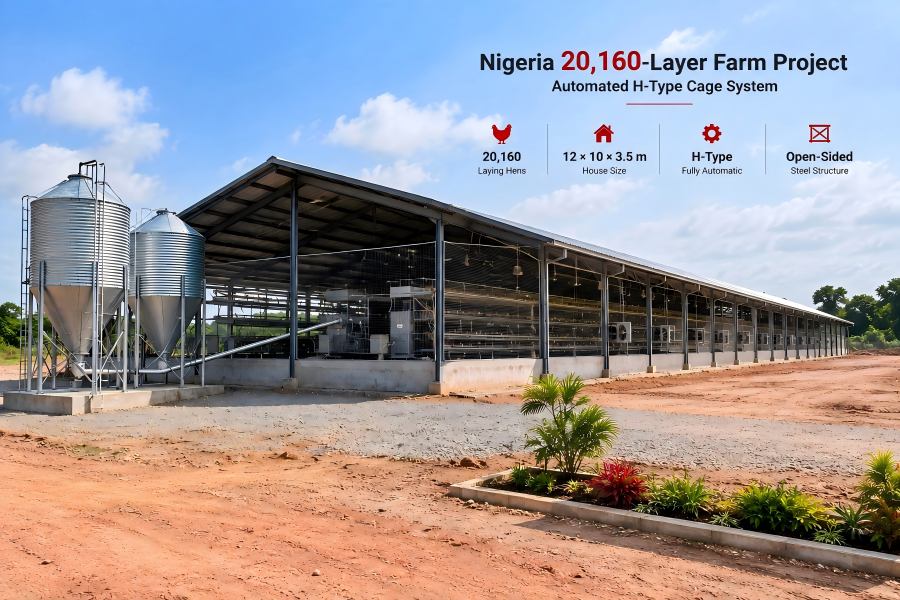
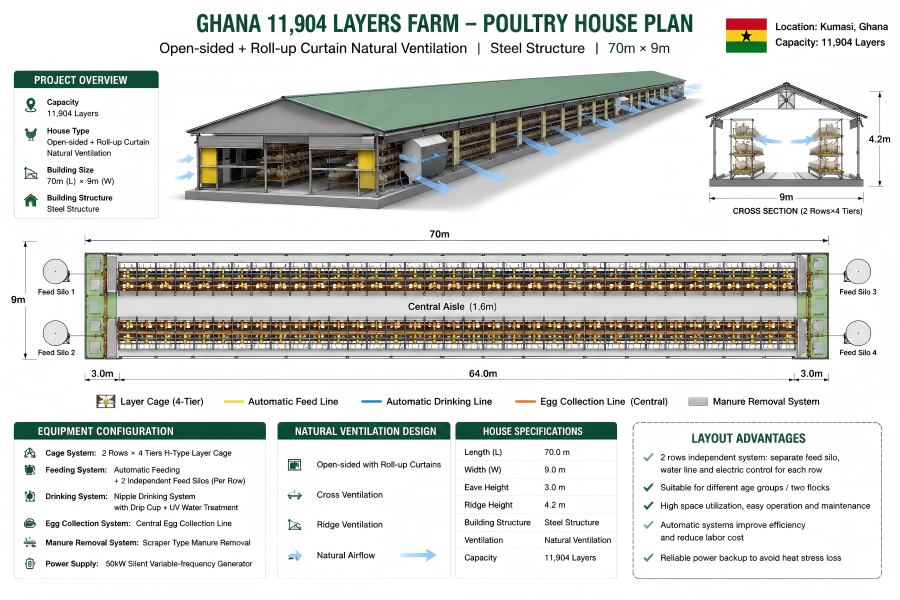
Buyers comparing suppliers can also review another LIVI commercial layer reference: the 11,904-layer H-type cage project in Ghana. It uses a different cage system and project scale, making it useful for understanding why equipment selection should follow the actual house and automation requirement.
What Can Investors Learn from This Zambia Layer Project?
1. Start with the Poultry House, Not Just the Bird Number
A target of 10,000 layers does not automatically determine one universal cage layout. The confirmed 72 × 8 × 3.5 m house is part of the equipment decision.
2. Separate Target Flock Size from Equipment Capacity
This project targets 10,000 layers while the 64 confirmed cage sets provide 10,240 nominal positions. Keeping these figures separate makes quotations easier to verify.
3. Define Exactly What “Automatic” Means
For this project, automation specifically includes two feeding systems with silos, two egg collection systems and one manure removal system. Buyers should request the same level of detail from every poultry equipment supplier.
4. Compare Total Supply Scope Before Comparing Price
Equipment price becomes meaningful only after cage specifications, automation, accessories, logistics and installation responsibilities are defined.
5. Match the System to the Farm Instead of Copying Another Project
LIVI uses the customer’s bird capacity, poultry house dimensions and automation requirements as project inputs. A configuration used for another farm should not automatically be copied to a different site.
FAQ: Planning a 10,000-Layer Farm in Zambia
1. How many A-type cages are used for 10,000 layers in this project?
The confirmed project uses 64 cage sets, each providing 160 nominal bird positions. The calculated equipment capacity is therefore 10,240 positions for the customer’s 10,000-layer target.
2. What poultry house size is used for the 10,000 layers?
The confirmed open-sided poultry house measures 72 m × 8 m × 3.5 m. This is a project-specific dimension and should not be treated as a universal house size for every 10,000-layer farm.
3. Is A-type or H-type better for 10,000 laying hens?
Neither cage type should be selected from bird number alone. Buyers should compare house dimensions, land, automation requirements, labor, power supply, budget and expansion plans. A-type was selected for this specific Zambia project.
4. What automatic equipment is included in this layer project?
The confirmed package includes two automatic feeding systems with silos, two automatic egg collection systems and one automatic manure removal system.
5. How much does a battery cage system for 10,000 layers cost?
A reliable price requires a defined equipment scope. Cage model and quantity, automation, silos, electrical components, accessories, shipping destination and installation scope can all affect the quotation.
6. What should be included in a poultry equipment quotation?
The quotation should clearly identify cage specifications and quantities, automatic systems, supporting equipment, controls, accessories, spare parts where applicable, trade terms, shipping scope and installation responsibilities. Local civil works should be identified separately if they are not included.
7. What information does LIVI need to prepare a similar project?
Provide the farm location, target layer capacity, poultry house dimensions, whether the house is existing or new, required automation level, available electricity and any future expansion plan. These inputs allow the equipment layout and quotation to be prepared around the actual farm.
Planning a Similar 10,000-Layer Farm?
This project shows how a relatively compact open-sided poultry house can be coordinated with an A-type cage system and selected automation. The important step is to confirm the house, cage quantity and automation scope before comparing equipment quotations.
Prepare these four inputs:
Bird Capacity + Poultry House Size + Farm Location + Automation Requirement
LIVI Machinery can use these project inputs to prepare a cage layout, equipment configuration and quotation for technical discussion.