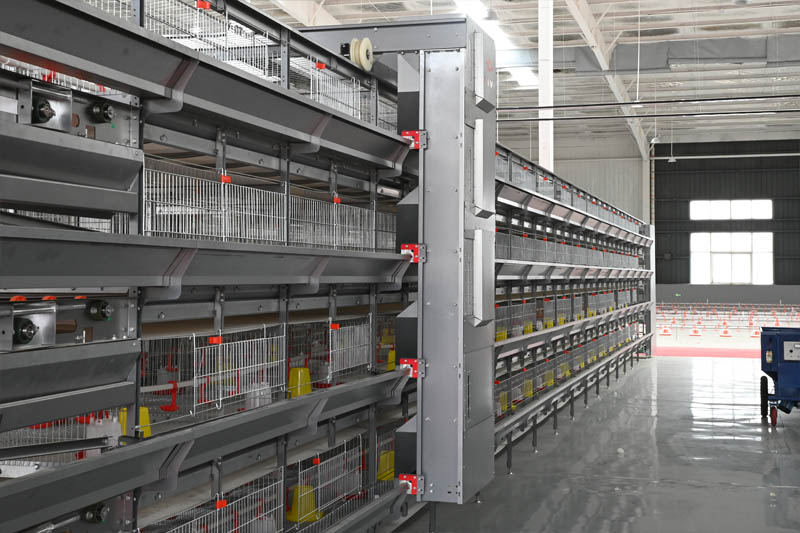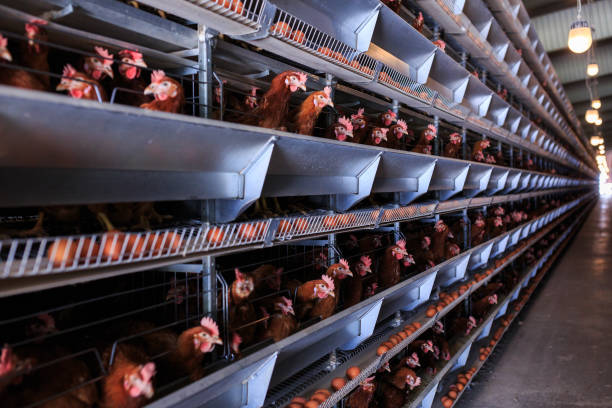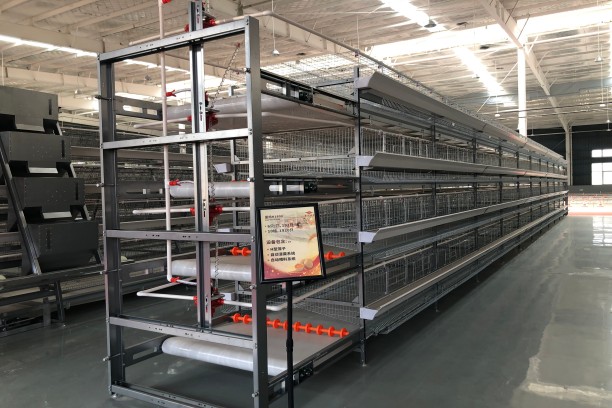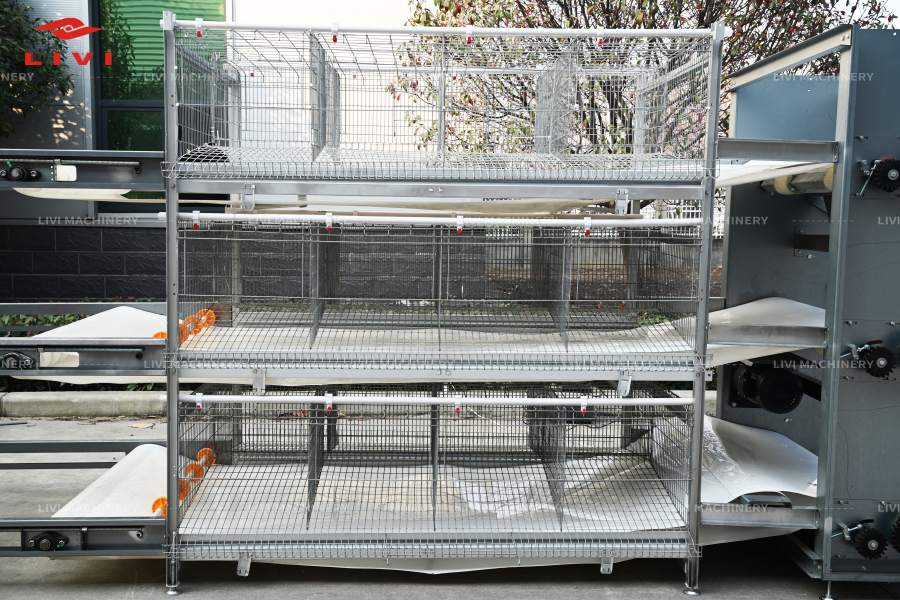


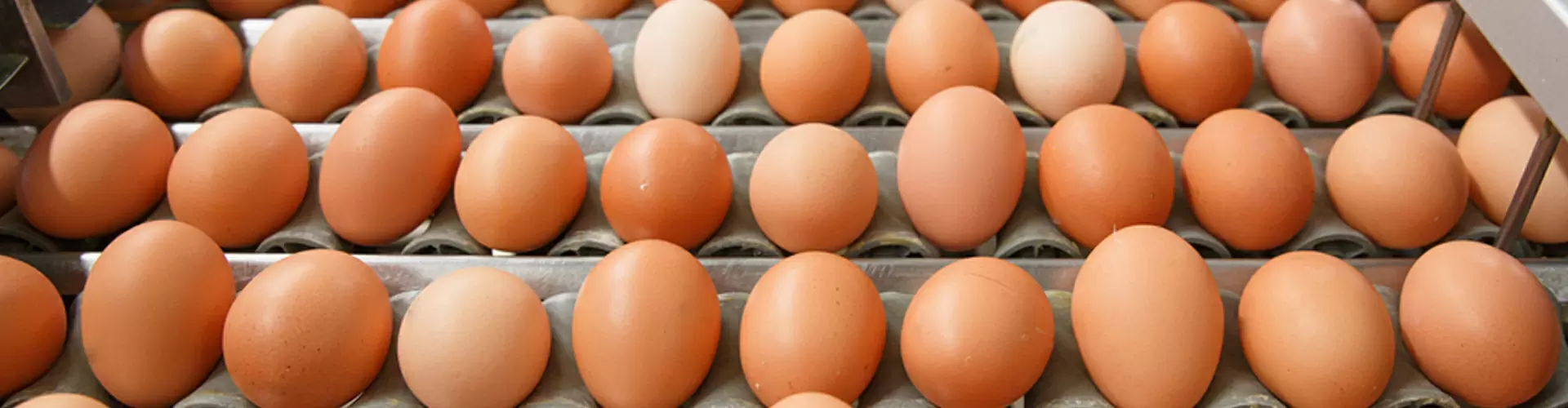

Commercial poultry farm equipment is not one machine or one cage system. A complete commercial farm may combine poultry housing or cages, feed storage and feeding, nipple drinking, manure removal, egg collection, ventilation, cooling or heating, lighting, and environmental controls.
The correct configuration starts with five basic inputs:
Bird Type → Bird Capacity → Housing System → House Dimensions → Automation Level
A layer farm and a broiler farm should not automatically use the same equipment package. Likewise, a 10,000-bird open-sided farm and a 100,000-bird environmentally controlled farm require different planning.
Before asking a poultry equipment manufacturer for a price or quotation, define the farm first.
What Is Poultry Farm Equipment?
Poultry farming equipment includes the housing, feeding, drinking, environmental and production-handling systems used to operate a chicken farm.
At small scale, this may mean relatively simple feeders, drinkers and housing equipment. At commercial scale, these individual components increasingly become connected production systems.
The FAO poultry management and housing guidance explains that medium- and large-scale poultry production makes greater use of commercial materials and equipment, together with increased mechanization and automation.
| Farm System | Main Function | Typical Planning Question |
|---|---|---|
| Cage / Rearing System | Houses and organizes birds | Which housing system fits the birds and building? |
| Feed Storage & Feeding | Stores, conveys and distributes feed | How will feed move from silo to birds? |
| Drinking | Supplies water | How will water be treated, regulated and distributed? |
| Egg Collection | Moves eggs from laying area | How will eggs leave the cage rows? |
| Manure Removal | Removes manure | Where will manure go after leaving the house? |
| Ventilation & Climate | Manages air and thermal conditions | What does the actual house and climate require? |
| Electrical & Control | Coordinates automated equipment | Can the power system support the selected automation? |
Why Does a Commercial Chicken Farm Need Specialized Equipment?
Commercial poultry production places many birds inside a defined production environment. This creates several processes that must be managed every day:
As flock capacity increases, coordinating these processes entirely by hand becomes more difficult. Poultry farm automation is therefore not simply about replacing labor. Its more important function is to create repeatable operating flows inside the poultry house.
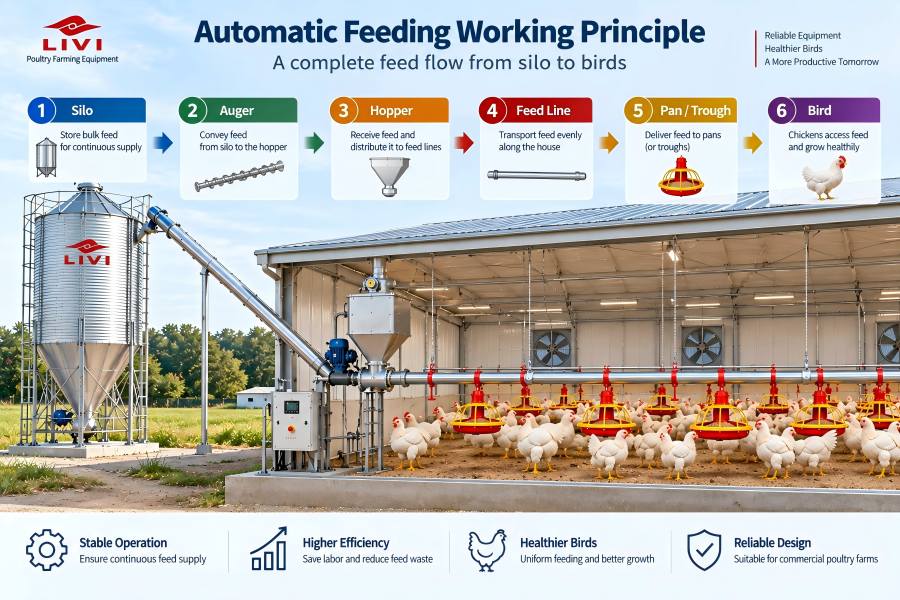
Example: Feed Flow
Example: Water Flow
Example: Egg Flow
These flows explain why automatic poultry equipment should be selected as an integrated system rather than as unrelated machines.
The World Organisation for Animal Health also recommends that poultry drinking water meet applicable potable-water standards, that water delivery systems be cleaned and disinfected between flocks, and that feed be stored in a way that limits access by wild birds and rodents. See the WOAH poultry biosecurity guidance.
What Equipment Is Needed for a Commercial Poultry Farm?
There is no universal equipment list for every chicken farm. The required configuration changes according to bird type, housing method, flock capacity, poultry house dimensions and automation requirements.
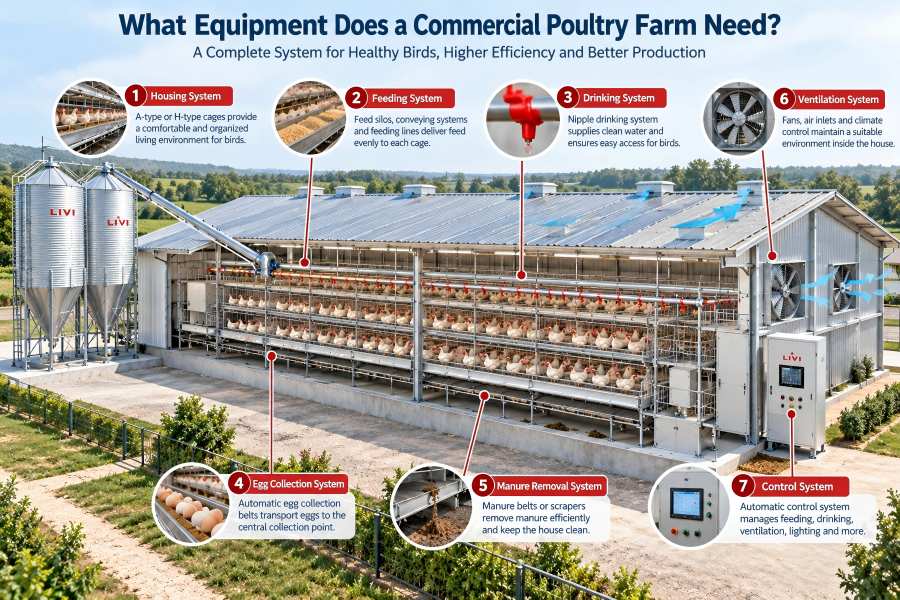
However, most commercial projects can be understood through seven core systems.
1. Poultry Housing or Cage System
The first decision is the production and housing method.
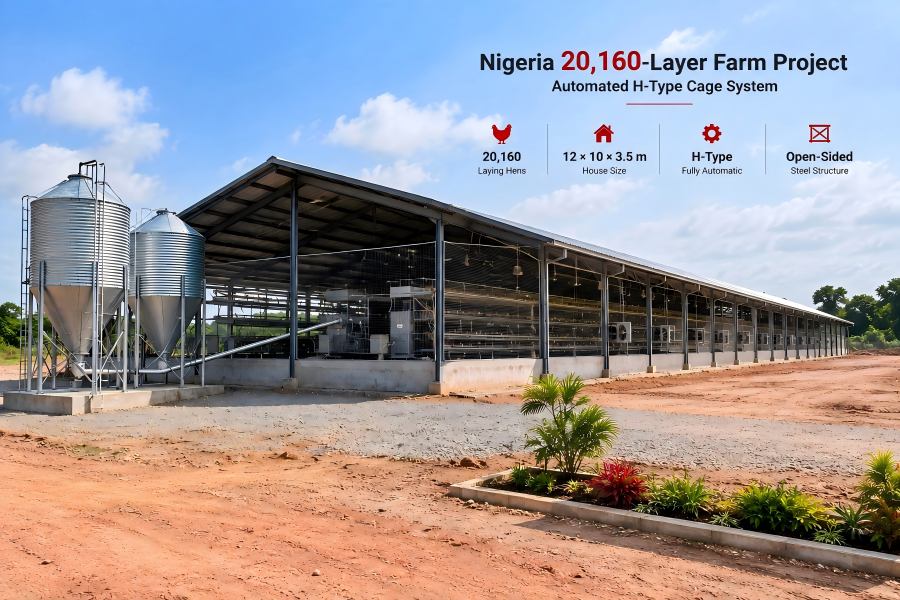
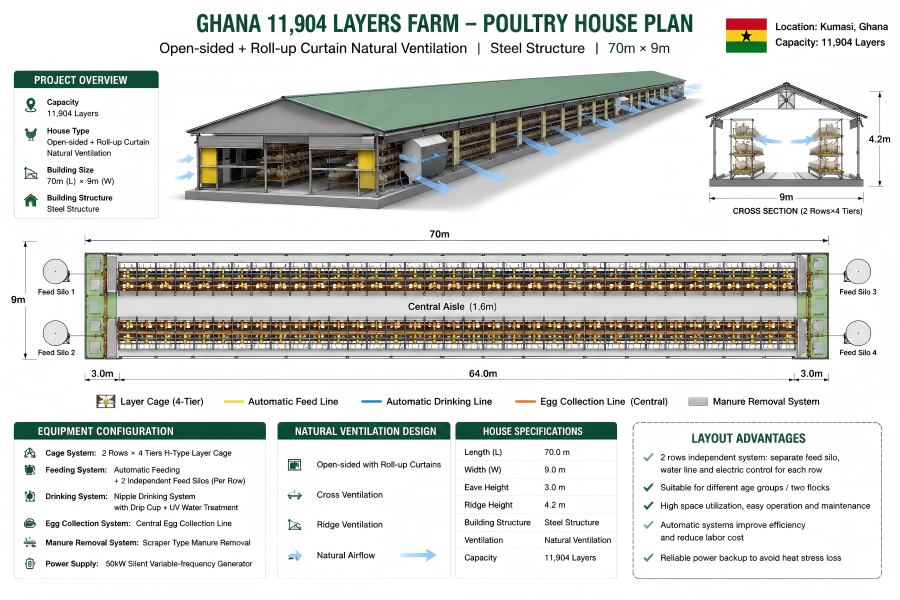
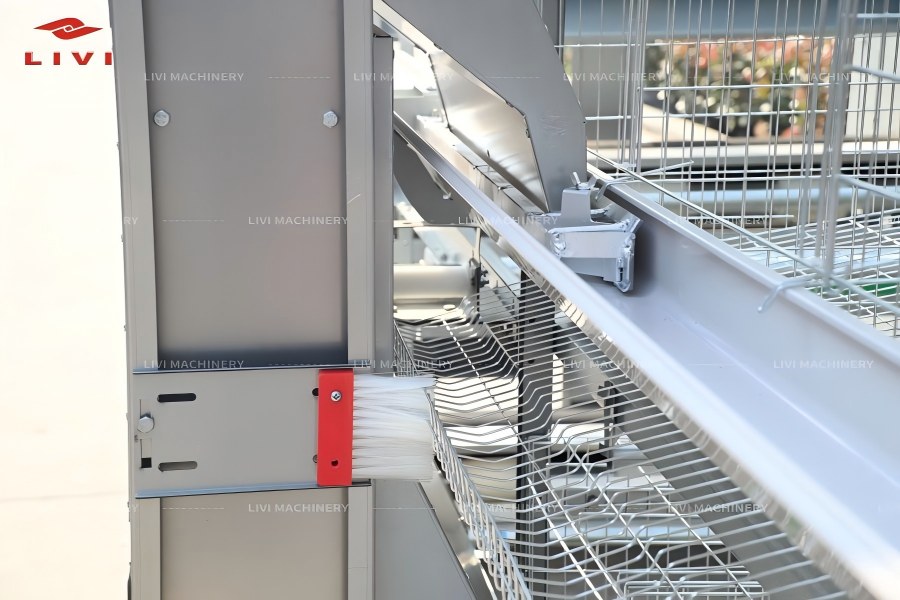
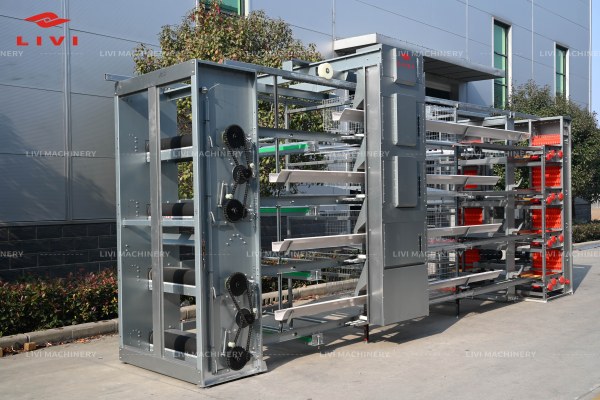
For commercial layer projects, cage-based farms may use A-type or H-type systems depending on capacity, building layout, automation strategy and project requirements.
H-type systems use vertically stacked cage tiers and can be integrated with feeding, nipple drinking, egg collection and manure removal. A-type configurations use a different structural arrangement and may fit projects with different building, capacity and investment requirements.
Buyers comparing layer cage prices should therefore avoid comparing cage units alone. The quotation scope should show the cage configuration and the systems connected to it.
See the LIVI H-Type Layer Cage System for an example of how cage equipment is integrated into commercial layer projects.
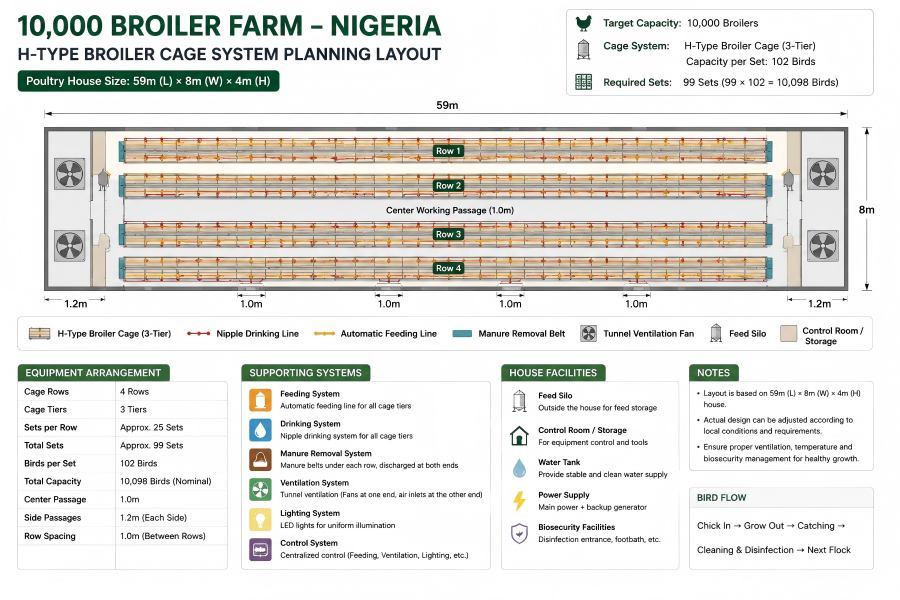
For broiler farms, another early decision is:
This choice changes much of the downstream equipment configuration.
2. Automatic Feeding System
Feeding begins before feed reaches the chickens.
A typical automatic feeding system may include feed silos, conveying augers, hoppers, feed lines, troughs or pans, drive equipment and feed-level controls where required.
For broiler floor-rearing houses, automatic pan feeding commonly uses longitudinal feed lines. LIVI Machinery’s Broiler Pan Feeding System is one example of a system that connects feed conveying with feeding pans for commercial broiler houses.
The number of feed lines or feeders should not be selected from bird capacity alone. House width, line arrangement, feeder access, equipment spacing and the selected rearing system also matter.
3. Automatic Drinking System
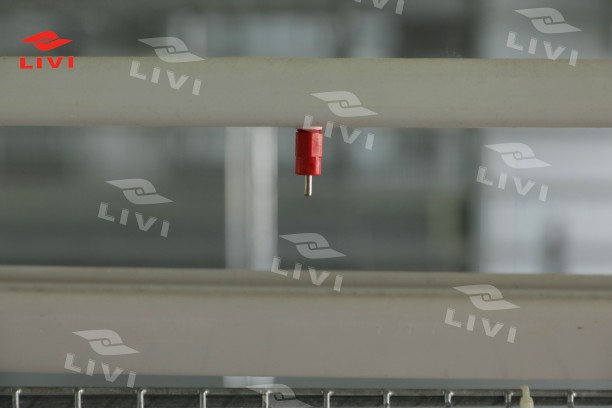
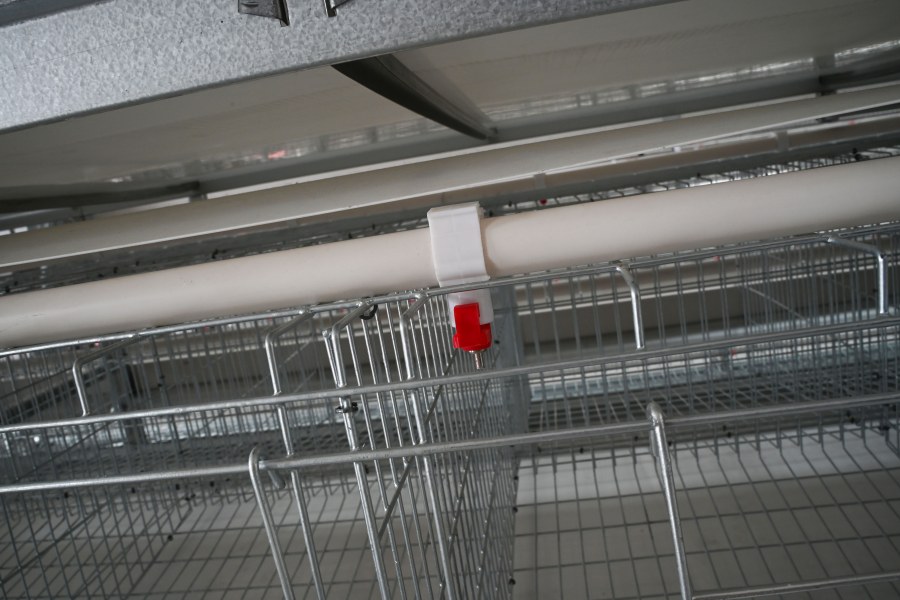
Water equipment may include storage, filtration or treatment, medication equipment where required, pressure regulation, main pipes, nipple drinking lines and drip cups depending on the configuration.
The correct drinking-system design requires more than a bird number. Water source, water quality, pressure, house layout and drinking-point requirements should also be evaluated.
4. Manure Removal System
Manure management is particularly important in cage-based poultry houses.
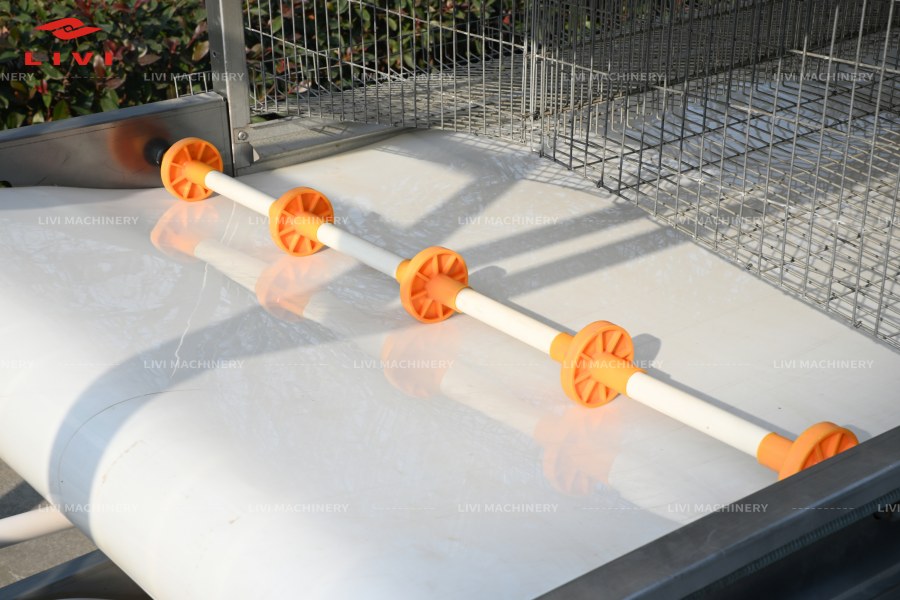
Depending on the cage structure and project design, systems may use scraper or belt manure removal. These are different technical configurations and should not be treated as interchangeable specifications.
When comparing equipment suppliers, ask:
- How is manure collected?
- How does it move through or beneath the cage system?
- Where does it leave the poultry house?
- What equipment must be cleaned and maintained?
- How does the manure route interact with house ventilation and farm sanitation?
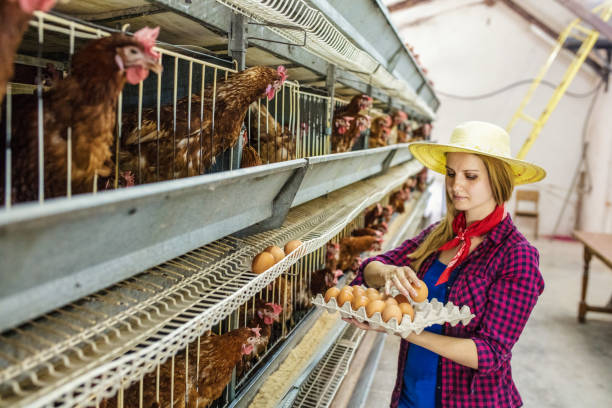
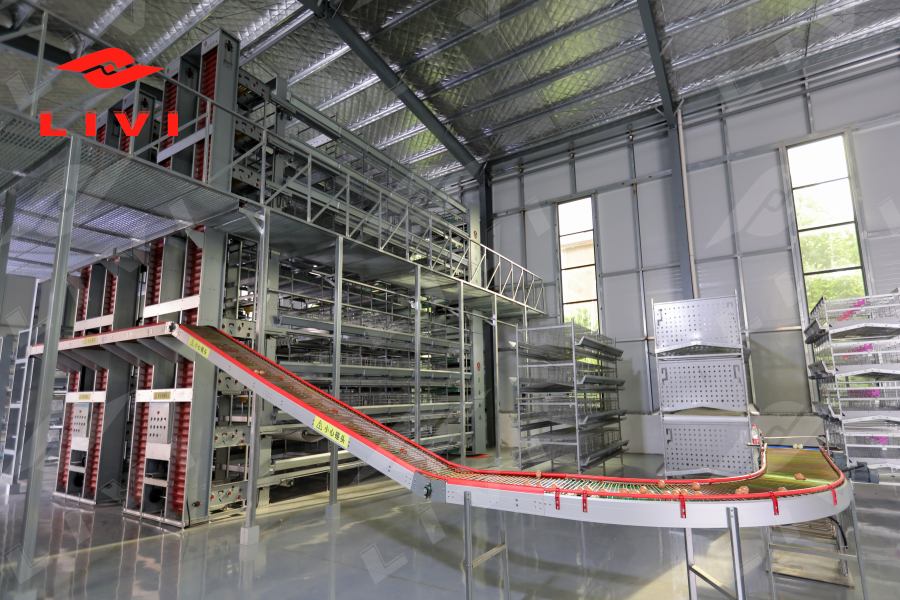
5. Automatic Egg Collection System
Egg collection is a major equipment interface in automated layer farms.
The actual arrangement depends on cage rows, tiers, house length, collection direction and the required downstream handling process.
This is why cage and egg-collection systems should ideally be planned together rather than purchased independently and connected later.
6. Ventilation and Environmental Control
A poultry house is also an environmental system. Birds generate heat, moisture and carbon dioxide, while manure or litter can affect humidity, dust and ammonia conditions.
The FAO identifies temperature, humidity, air movement, adequate feed and water, and disease exposure as fundamental parts of the poultry production environment.
Ventilation planning therefore needs to consider climate, bird type, age, house dimensions, housing system, cooling or heating equipment, air inlets, fans and control strategy.
7. Electrical and Control System
Modern chicken farm equipment may connect feeding motors, egg collection, manure removal, fans, pumps, cooling equipment, lighting, sensors and environmental controllers.
The correct planning sequence is:
This is particularly important for farms where grid electricity is unreliable or unavailable.
A poultry equipment supplier should not determine generator, solar or battery capacity from bird numbers alone. The actual electrical load schedule must be established first.
How Does an Automated Poultry Farm Work?
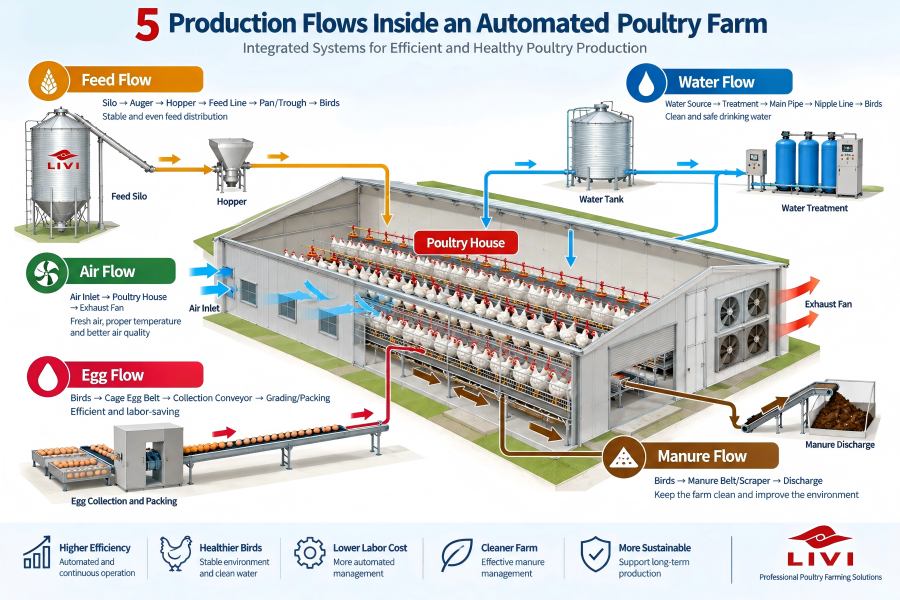
The easiest way to understand an automated farm is to stop thinking about individual machines and start thinking about production flows.
Feed Flow
Silo → Conveying → Feeding → Birds
Water Flow
Source → Treatment → Regulation → Drinking → Birds
Egg Flow
Birds → Egg Belt → Collection → Handling
Manure Flow
Birds → Collection Area → Removal → Discharge
Airflow
Air Inlet → Bird Zone → Exhaust
Control Flow
Sensors / Settings → Controller → Equipment → Response
When these flows are designed together, the project becomes an integrated production system.
When equipment is purchased independently without interface planning, later modifications may be required to connect feeding, cages, manure removal, egg handling, ventilation or electrical systems.
Layer Farm vs. Broiler Farm: Is the Equipment the Same?
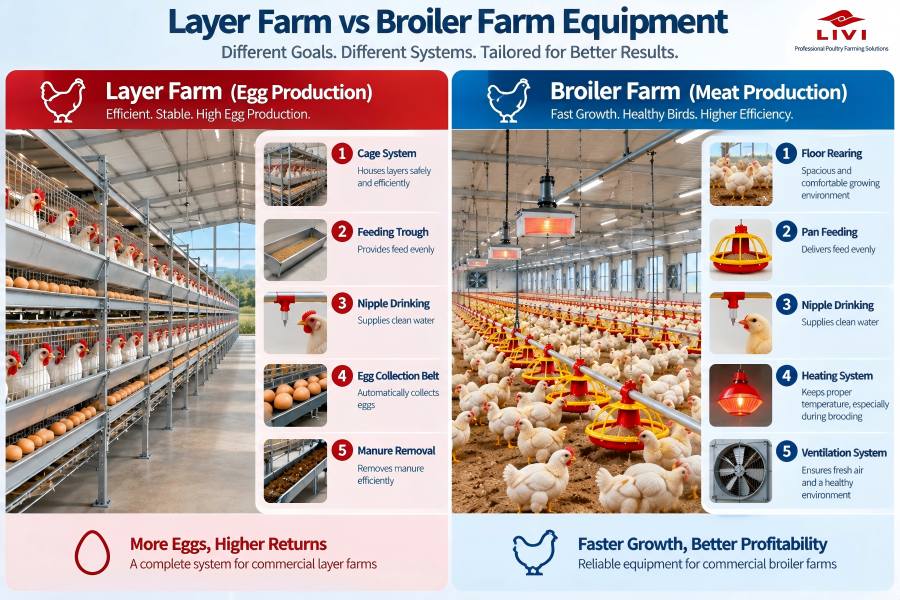
No. Although both production models require feed, water, suitable housing and environmental management, their equipment requirements differ.
| Equipment Area | Commercial Layer Farm | Commercial Broiler Farm |
|---|---|---|
| Primary Output | Eggs | Meat birds |
| Housing | Cage or other permitted layer housing | Floor or cage system |
| Feeding | Cage-row feeding / trough system depending on design | Pan feeding or cage feeding |
| Drinking | Nipple drinking | Nipple drinking |
| Egg Collection | Required in automated cage-based layer projects | Not required |
| Manure Handling | Major cage-system interface | Depends on floor or cage rearing |
| Heating | Depends on bird stage and project | Especially relevant during brooding |
| Ventilation | Required according to house design | Required according to house design |
Layer farm planning: Housing → Feeding → Drinking → Egg Flow → Manure Flow → Climate
Broiler farm planning: Housing → Feed → Water → Brooding → Airflow → Bird Removal
This difference is important when requesting a poultry equipment quotation. A supplier cannot produce a meaningful equipment list from bird capacity alone.
How Much Poultry Farm Automation Do You Need?
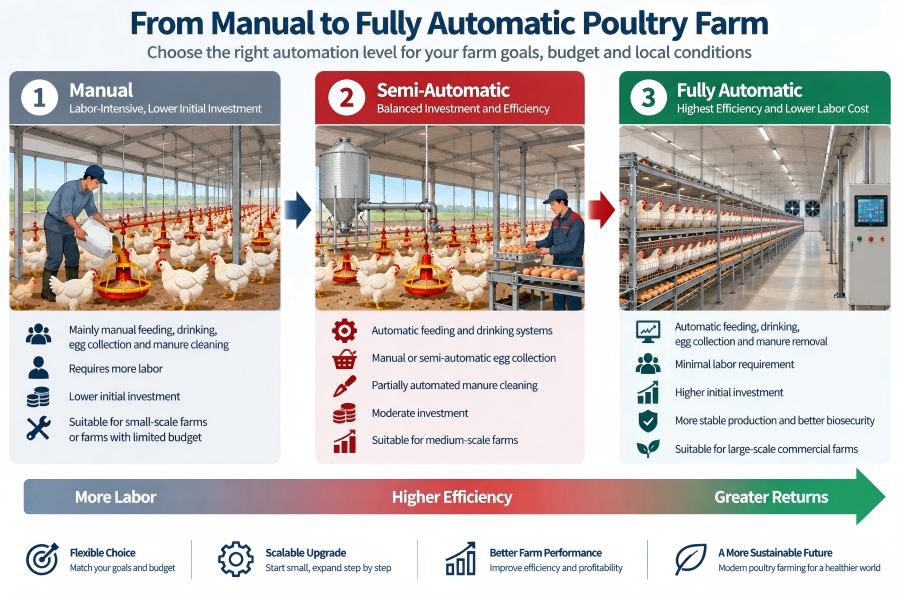
More automation is not automatically the correct answer.
Manual / Basic
More daily operations depend on labor. This may fit smaller projects or farms with limited electrical infrastructure.
Semi-Automatic
Selected repetitive operations are mechanized while other tasks remain manual.
Fully Automatic
Major processes may integrate feeding, drinking, egg collection, manure removal, ventilation, climate management and lighting.
The decision should consider:
- Farm capacity
- Labor availability and cost
- Electricity reliability
- Management capability
- Maintenance capacity
- Investment budget
- Future expansion
What Should You Check Before Buying Poultry Farming Equipment?
1. Bird Type
Define whether the project is for layers, broilers, pullets or breeders. Different birds require different production processes and equipment.
2. Target Bird Capacity
Specify the planned capacity, such as 10,000 layers, 50,000 layers or 30,000 broilers per house.
Capacity affects equipment quantity, building layout, infrastructure and automation planning.
3. Poultry House Dimensions
Provide:
If the poultry house already exists, the equipment layout needs to fit the building.
If it has not yet been built, coordinate the house and equipment layout before construction wherever possible.
4. Local Climate
Project location affects decisions around open or enclosed housing, ventilation, cooling, heating, curtains and environmental control.
Country alone may not be enough. Local climate and site conditions should also be considered.
5. Water and Electricity
Confirm the water source, water quality if known, storage strategy, voltage, frequency, grid reliability and backup-power conditions.
6. Required Automation
Define the required scope clearly:
or
Feeding + Drinking + Manure Removal + Egg Collection
or
Integrated Automation + Environmental Control
7. Future Expansion
If the farm may expand later, include that information before the first-stage layout is finalized.
Future capacity can affect site roads, house positions, feed storage, water infrastructure, electrical distribution, manure handling and central egg collection.
5 Common Mistakes When Selecting Chicken Farm Equipment
Mistake 1: Asking for a Price Before Defining the Farm
“How much is poultry equipment for 20,000 chickens?” is not enough information for an accurate quotation.
Twenty thousand layers in cages and 20,000 broilers on floor rearing are fundamentally different projects.
Mistake 2: Building the Poultry House Before Confirming the Equipment Layout
A completed building can restrict cage rows, feeding lines, aisles, equipment clearances, egg collection, manure discharge and ventilation.
Mistake 3: Buying Every System from an Independent Equipment List
Cages, feeding, drinking, manure handling, ventilation and egg collection have physical and operational interfaces.
A lower individual equipment price may not mean a lower complete-project cost if later modification is required.
Mistake 4: Ignoring Water or Power Failure
Automatic equipment depends on utilities. Farms should identify critical water and electrical loads and determine appropriate contingency strategies before operation.
Mistake 5: Comparing Quotations Only by Total Price
Two poultry equipment quotations may have very different scopes.
Compare these items before deciding which quotation represents the same project scope.
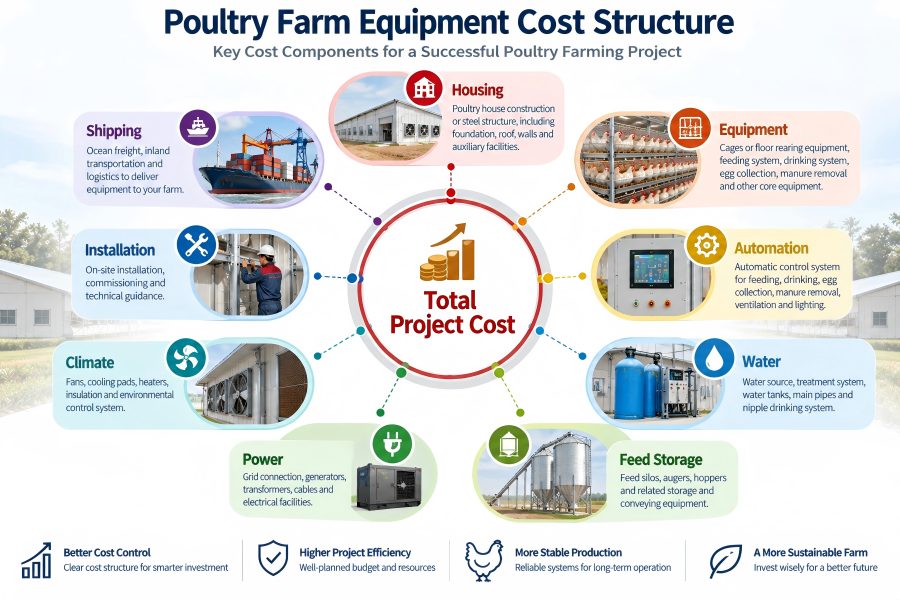
How Much Does Poultry Farm Equipment Cost?
There is no reliable universal poultry equipment price per bird that applies to every commercial project.
Poultry farm equipment cost can change significantly according to:
- Bird type and target capacity
- Cage or floor-rearing system
- Cage specification and tiers
- Poultry house dimensions
- Automation level
- Feeding and drinking systems
- Egg collection
- Manure removal
- Ventilation, cooling or heating
- Feed silos and conveying
- Environmental controls
- Electrical configuration
- Shipping destination
- Installation and service scope
For a more detailed explanation of the variables behind cage-farm investment, see LIVI Machinery’s Battery Cage Poultry Farm Cost Guide.
Instead of asking only “What is your poultry equipment price?”, request a scope-based quotation covering the required housing/cage, feeding, drinking, manure, egg, climate, control and service systems.
Does the Cheapest Poultry Equipment Quotation Mean the Lowest Farm Cost?
Not necessarily.
The purchase price is only one part of the investment decision. Buyers should also verify what is included, what infrastructure is required, what must be sourced locally, how equipment interfaces are handled and what installation or technical support is included.
This makes quotation comparison more useful for investment planning than comparing one headline price.
How Do You Choose a Poultry Equipment Manufacturer or Supplier?
A commercial farm buyer should evaluate more than the equipment catalogue.
The key question is whether the poultry equipment manufacturer can convert farm parameters into a coordinated project plan.
| What to Verify | Question to Ask the Supplier |
|---|---|
| Capacity | Does the equipment layout match the target bird number? |
| House Layout | Can you provide an equipment arrangement based on my house dimensions? |
| System Interfaces | How do cages, feeding, drinking, manure and egg systems connect? |
| Utilities | What water and electrical inputs must I prepare? |
| Installation | What installation drawings or guidance are included? |
| Operation | What must the farm prepare before commissioning? |
| Spare Parts | Which critical parts should be kept on site? |
| Expansion | Can the current design accommodate future houses or capacity? |
LIVI Machinery is a poultry equipment manufacturer providing equipment and project planning for commercial layer, broiler and pullet farms. Rather than beginning with a generic equipment package, LIVI project discussions can start from bird capacity, house dimensions, production method and required automation.
You can also review LIVI’s complete poultry farming solutions to understand the available system categories before preparing your project requirements.
Need a Poultry Equipment Quotation?
Send your country, bird type, target capacity and poultry house dimensions so the project can be evaluated before equipment configuration.
Request a Poultry Farm ProposalWhat Information Do You Need for a Poultry Equipment Quotation?
A useful quotation begins with useful project data.
↓
Bird Type
↓
Target Capacity
↓
Housing Method
↓
Existing or New House
↓
House Length × Width × Height
↓
Required Automation
↓
Water Supply
↓
Power Supply
↓
Future Expansion
These inputs allow a supplier to move from a generic equipment price toward a project-specific equipment configuration.
Ask the supplier to coordinate the preliminary equipment layout with the building dimensions before construction. This can reduce conflicts between equipment rows, aisles, ventilation, manure discharge, egg collection and service areas.
Frequently Asked Questions About Poultry Farm Equipment
1. What equipment do I need to start a commercial poultry farm?
The required equipment depends on bird type and production method. A commercial farm may need housing or cages, feeding, drinking, ventilation, heating or cooling, lighting and control equipment. Cage-based layer farms may also require egg collection and manure removal.
2. What equipment is needed for a layer poultry farm?
A commercial cage-based layer farm commonly combines layer cages, feeding, nipple drinking, manure removal, egg collection and suitable poultry-house environmental equipment.
3. What equipment is needed for a broiler farm?
A broiler floor-rearing farm may use feed silos, feed conveying, automatic pan feeding, nipple drinking, brooding or heating, ventilation, cooling and environmental controls. Cage-reared broilers require a different configuration.
4. How much does automatic poultry farm equipment cost?
There is no universal price because cost depends on capacity, housing system, house dimensions, automation, feeding and drinking equipment, manure or egg systems, climate equipment, shipping and service scope. Request a project-specific quotation.
5. Is fully automatic poultry equipment suitable for every farm?
No. Automation should be matched to farm scale, labor conditions, electrical reliability, management capability, maintenance resources and investment strategy.
6. Should I build the poultry house before buying equipment?
Where possible, coordinate the equipment layout and poultry-house design before construction. This helps verify equipment rows, aisles, ventilation, manure handling, egg routes and service access before the building dimensions become fixed.
7. How do I compare poultry equipment suppliers?
Compare project-planning capability, equipment scope, technical specifications, system interfaces, manufacturing and quality information, installation guidance, spare parts, service and quotation scope—not only the headline price.
From Equipment List to Complete Poultry Farm System
Buying chicken farm equipment should not begin with:
“How much does one cage or feeder cost?”
A more useful planning sequence is:
For a Commercial Layer Farm
Housing → Feeding → Drinking → Egg Collection → Manure Removal → Climate → Control
For a Commercial Broiler Farm
Housing → Feed Storage → Feeding → Drinking → Heating → Ventilation → Environmental Control
This system-level approach helps investors and farm managers understand what they are purchasing, which infrastructure must be prepared, and which technical questions need to be resolved before equipment production and installation.
Planning a New Commercial Poultry Farm?
Share your country, bird type, target capacity, poultry house dimensions and required automation with LIVI.
Get a Customized Equipment PlanAlready Have a Poultry House?
Send the house length, width and height together with your target capacity so LIVI Machinery can evaluate the equipment layout.
Request Layout Evaluation