


Quick Answer
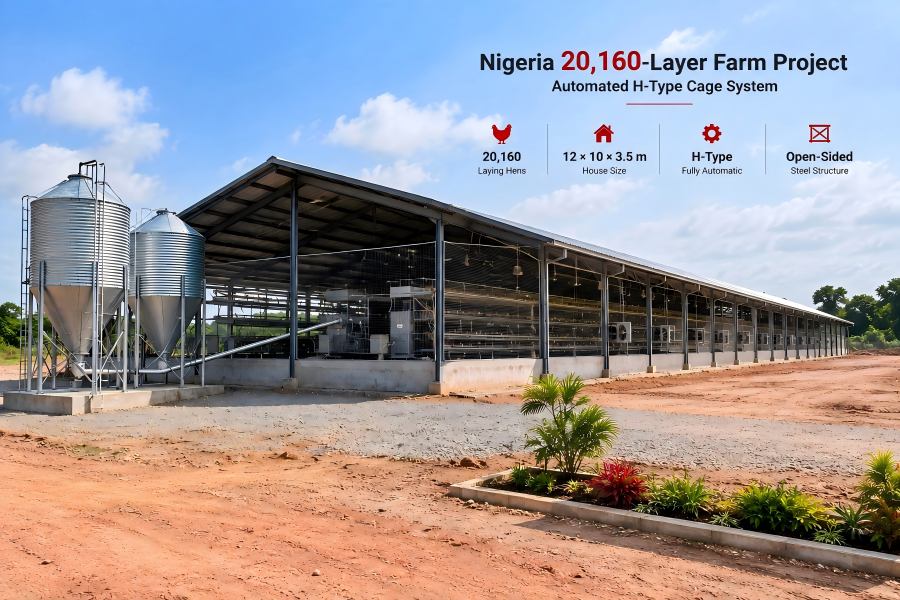
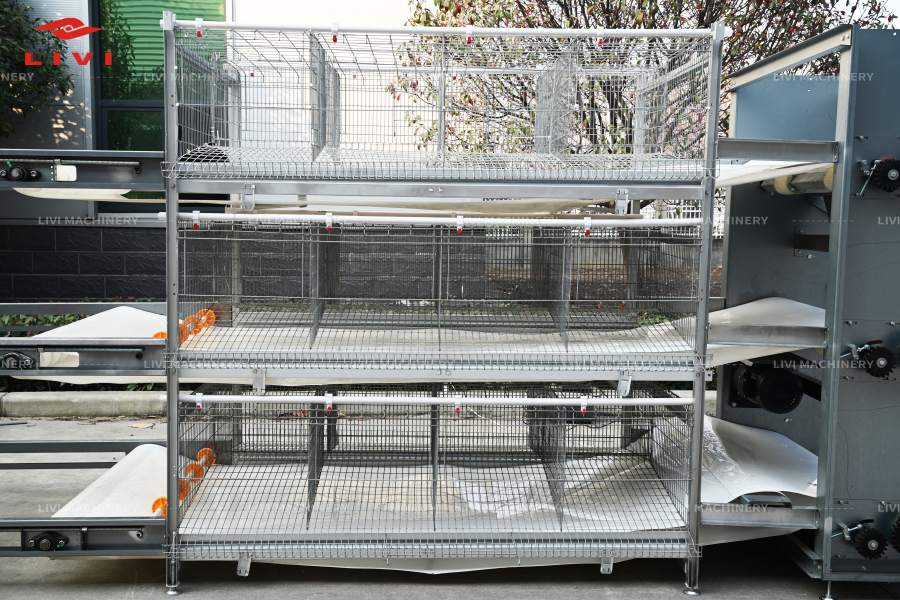
Choosing the right automatic layer cage system depends on farm size, production goals, house design, labor availability, and automation requirements. A Type Layer Cage System is suitable for small and medium poultry farms, while H Type Layer Cage System is preferred for large commercial egg production farms because it supports higher capacity, better space utilization, and integration with automatic feeding, egg collection, and manure removal systems.
Planning a Commercial Egg Production Farm?
Tell Livi your farm size, location, and production goals.
Our engineers will recommend the suitable layer cage solution.
How to Choose an Automatic Layer Cage System for Commercial Egg Farms?
Starting a commercial egg production farm requires more than selecting chicken cages.
The cage system directly affects:
- farm capacity
- labor efficiency
- egg production performance
- equipment investment
- long-term operating costs
For investors planning a layer farm, choosing between A Type Layer Cage System and H Type Layer Cage System is one of the most important decisions before purchasing poultry equipment.
This guide explains the key factors that should be considered before selecting an automatic layer cage system.
1. Consider Your Farm Scale Before Choosing a Layer Cage System
The first question every investor should ask is:
How many layers do you plan to raise?
Different farm sizes require different cage solutions.
| Farm Scale | Recommended Cage System |
|---|---|
| 1,000-20,000 layers | A Type Layer Cage System |
| 20,000+ layers | H Type Layer Cage System |
| Large commercial egg farms | Fully automatic H Type system |
For small farms, A Type cages provide:
- lower investment cost
- simple operation
- easier management
For large commercial farms, H Type cages provide:
- higher stocking capacity
- better land utilization
- easier automation integration
2. Understand the Difference Between A Type and H Type Layer Cage Systems
Many new investors ask: Which is better, A Type or H Type chicken cage? The answer depends on your production goals.
A Type Layer Cage System
Suitable for:
- small and medium farms
- farms with limited investment budgets
- areas requiring simple management
Advantages:
- lower initial investment
- simple structure
- easy installation
Limitations:
- lower automation level
- requires more labor
- lower space utilization compared with H Type systems
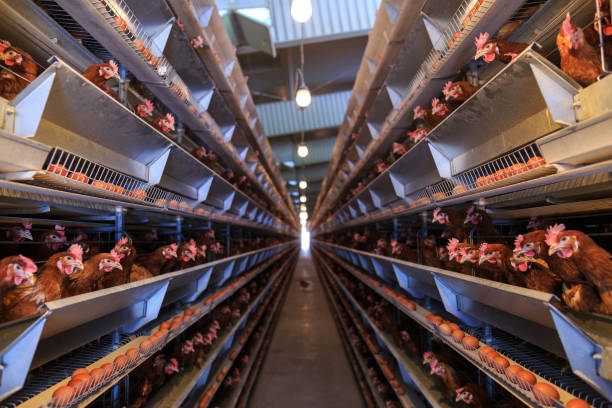
H Type Layer Cage System
Suitable for:
- commercial egg production farms
- large-scale projects
- automated poultry farms
Advantages:
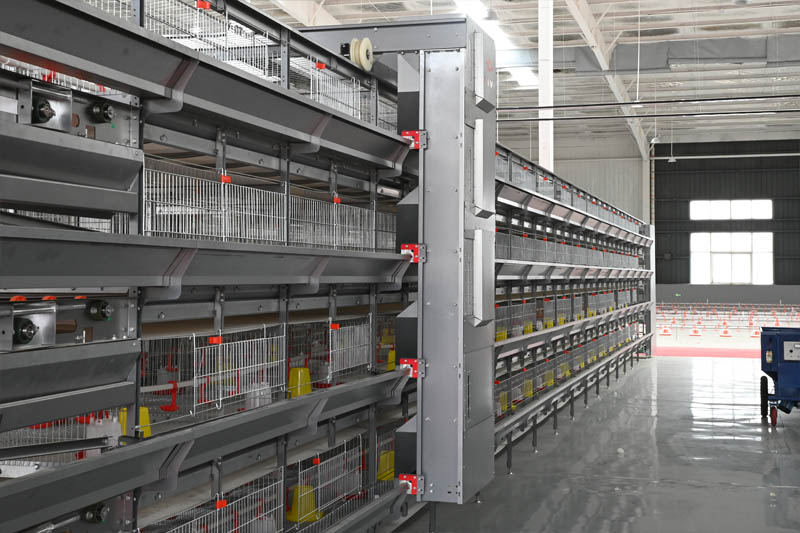
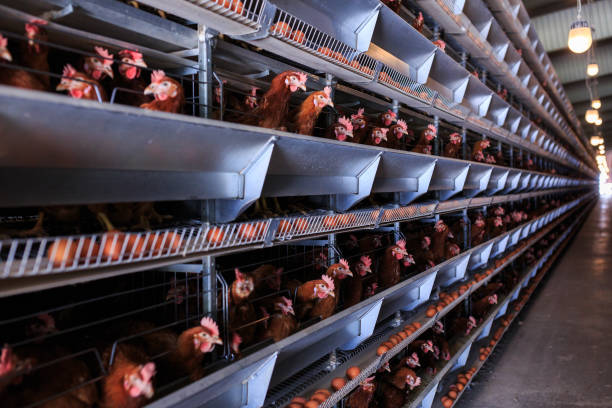
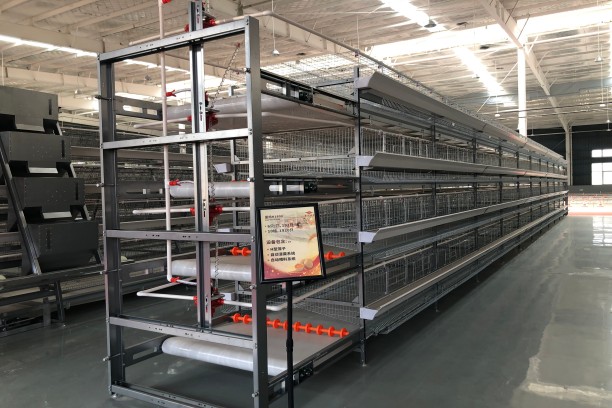
- multi-tier design
- higher cage capacity
- better use of poultry house space
- compatible with automatic systems
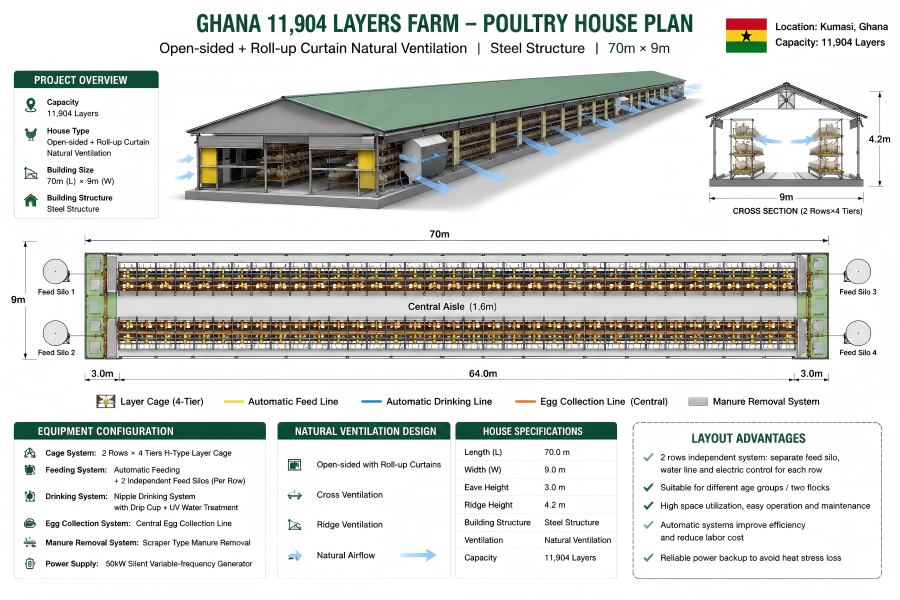
A complete H Type system can integrate:
- automatic feeding system
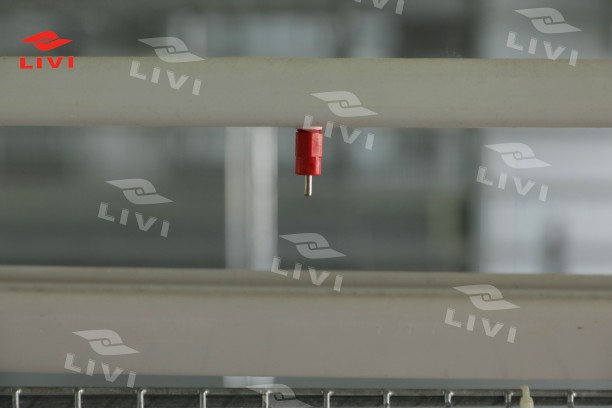
- nipple drinking system
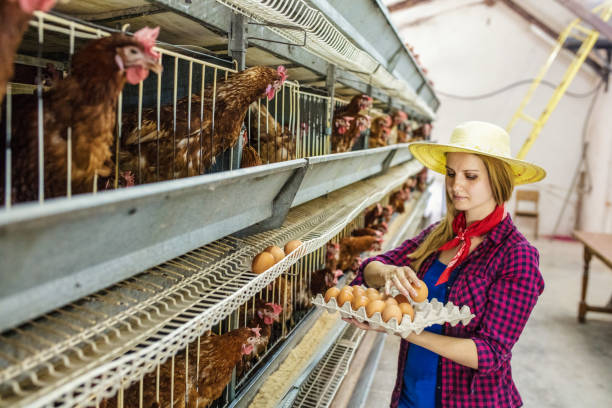
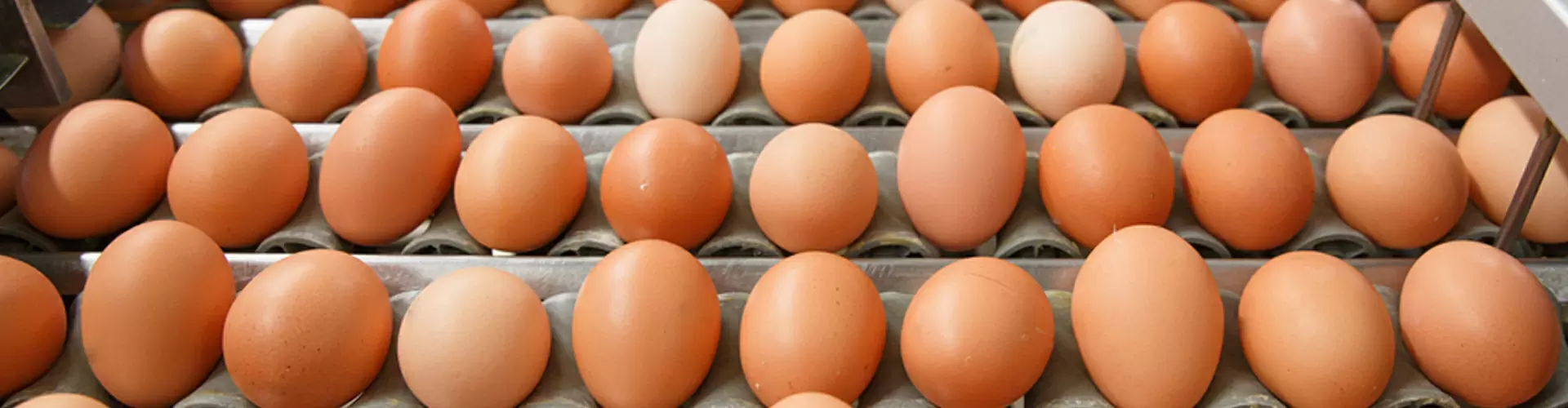
- automatic egg collection
- manure belt removal
- ventilation system
This makes it a preferred solution for farms above 30,000 layers.
3. Consider the Level of Automation Required
Before purchasing equipment, farmers should evaluate:
How much manual labor is available?
Traditional farms usually require workers for:
- feeding
- egg collection
- manure cleaning
Automatic poultry equipment helps reduce labor dependence.
A complete automatic layer farm usually includes:
Automatic Feeding System
Benefits:
- uniform feed distribution
- reduced feed waste
- lower labor cost
Automatic Egg Collection System
Benefits:
- improved egg collection efficiency
- reduced egg breakage
- cleaner egg handling
Automatic Manure Removal System
Benefits:
- improved poultry house hygiene
- reduced ammonia
- easier farm management
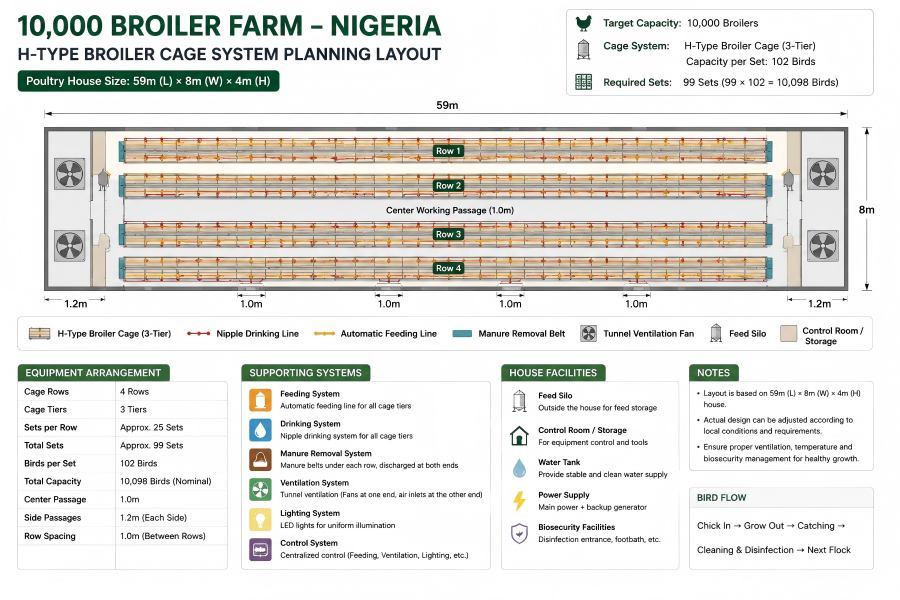
4. Evaluate Your Poultry House Design
The cage system must match your chicken house.
Important factors include:
House Width
The number of cage rows depends on:
- house width
- equipment layout
- feeding system design
House Length
Longer houses may require:
- additional feeding lines
- longer manure belts
- optimized ventilation
House Height
Multi-tier H Type systems require sufficient height for:
- cage installation
- ventilation
- maintenance access
5. Consider Local Climate Conditions
Different countries require different poultry solutions.
For example:
Hot Climate Areas
Such as:
- Nigeria
- Ghana
- Kenya
Main challenges:
- heat stress
- humidity
- ammonia accumulation
Recommended solutions:
- ventilation system
- cooling system
- manure removal system
Cold Climate Areas
Need:
- insulation
- heating equipment
- airflow control
6. Evaluate Equipment Quality and Manufacturer Capability
Choosing a poultry equipment supplier is as important as choosing the cage type.
Before purchasing, consider:
Does the supplier provide complete solutions?
A professional poultry equipment manufacturer should provide:
- Farm design
- Equipment configuration
- Installation guidance
- Technical support
- After-sales service
7. Common Mistakes When Choosing Layer Cage Systems
Mistake 1: Choosing Equipment Only Based on Price
The cheapest equipment may lead to:
- higher maintenance cost
- shorter service life
- production problems
Mistake 2: Ignoring Future Expansion
Many farmers start small but expand later.
A scalable cage system allows:
- additional equipment installation
- easier farm expansion
Mistake 3: Buying Equipment Without Farm Design
Incorrect planning may cause:
- insufficient space
- poor ventilation
- inefficient workflow
Professional farm planning should be completed before equipment production.
8. Recommended Layer Farm Equipment Configuration
For a modern commercial egg farm:
Complete Solution Includes:
Housing System
- H Type Layer Cage System
- A Type Layer Cage System
Feeding System
- Automatic feeding line
Drinking System
- Nipple drinking system
Egg Handling
- Automatic egg collection system
Waste Management
- Manure removal system
Environment Control
- Ventilation system
Livi Automatic Layer Cage System Solutions
Livi provides customized poultry equipment solutions according to:
- farm capacity
- country climate
- poultry house size
- investment plan
Our solutions include:
- A Type Layer Cage System
- H Type Layer Cage System
- Automatic Feeding System
- Egg Collection System
- Manure Removal System
- Complete Layer Farm Design
From small farms to large commercial egg production projects, Livi helps customers build efficient poultry production systems.
FAQ: Choosing Automatic Layer Cage Systems
What is the best layer cage system for commercial egg production?
For large commercial egg farms, H Type Layer Cage System is commonly recommended because it provides higher capacity and supports complete automation.
What is the difference between A Type and H Type layer cages?
A Type cages are suitable for small and medium farms, while H Type cages are designed for larger farms requiring higher efficiency and automation.
How many chickens can an H Type layer cage system hold?
Capacity depends on cage size, tier number, and farm design. A professional supplier can calculate the required cages based on your target bird quantity.
What equipment is needed for an automatic layer farm?
A complete automatic layer farm usually includes cages, feeding system, drinking system, egg collection system, manure removal system, and ventilation system.
How do I choose a reliable poultry equipment manufacturer?
Choose suppliers that provide:
- complete solutions
- farm design
- installation support
- project experience
- after-sales service
Need Help Choosing A Type or H Type Layer Cage?
Contact Livi for professional equipment recommendations and customized farm design.