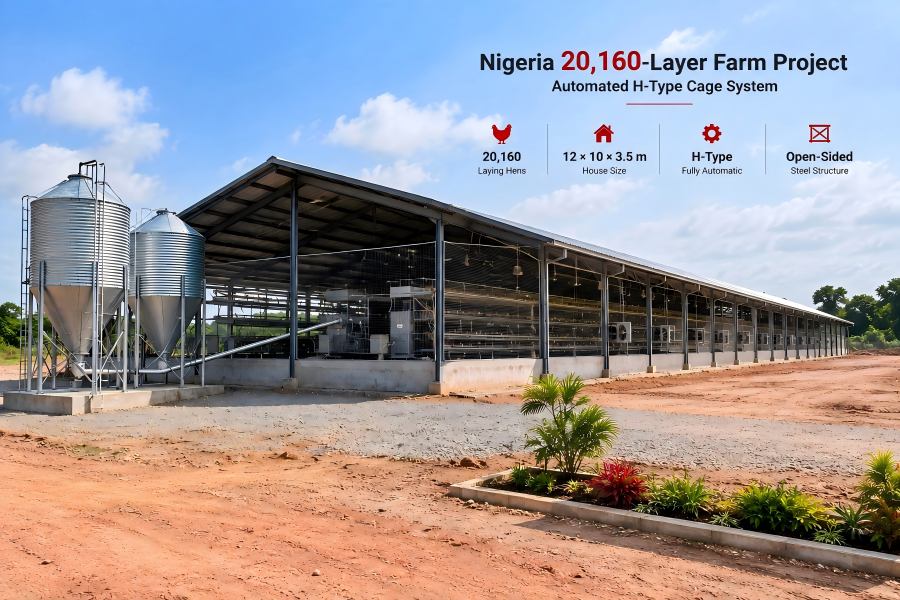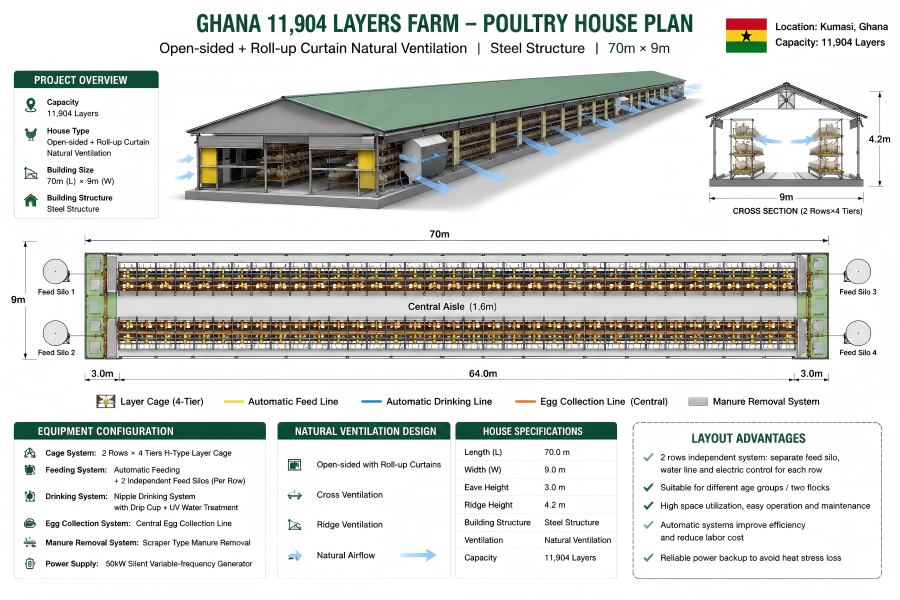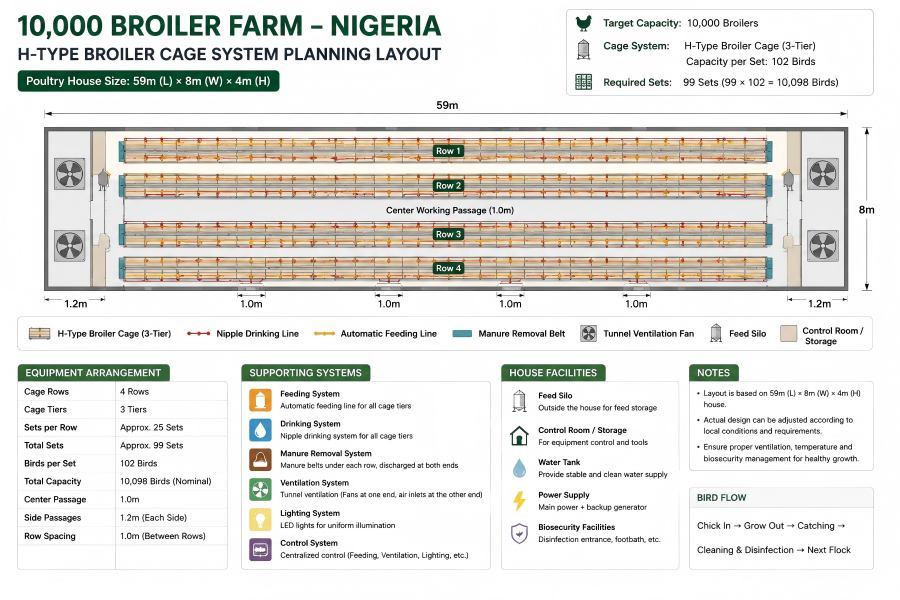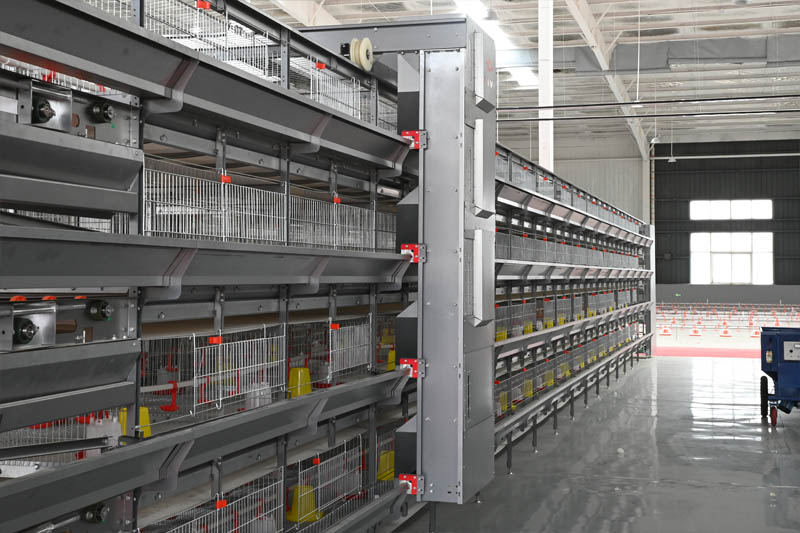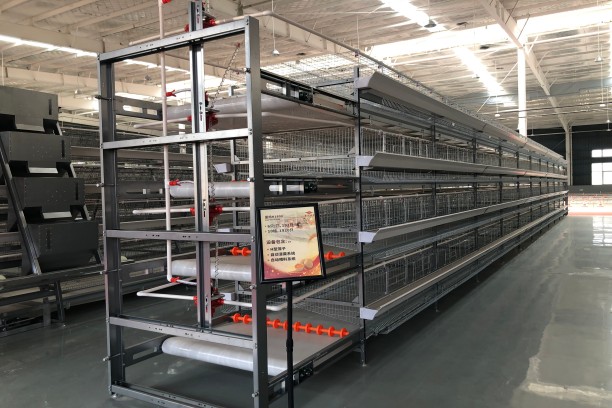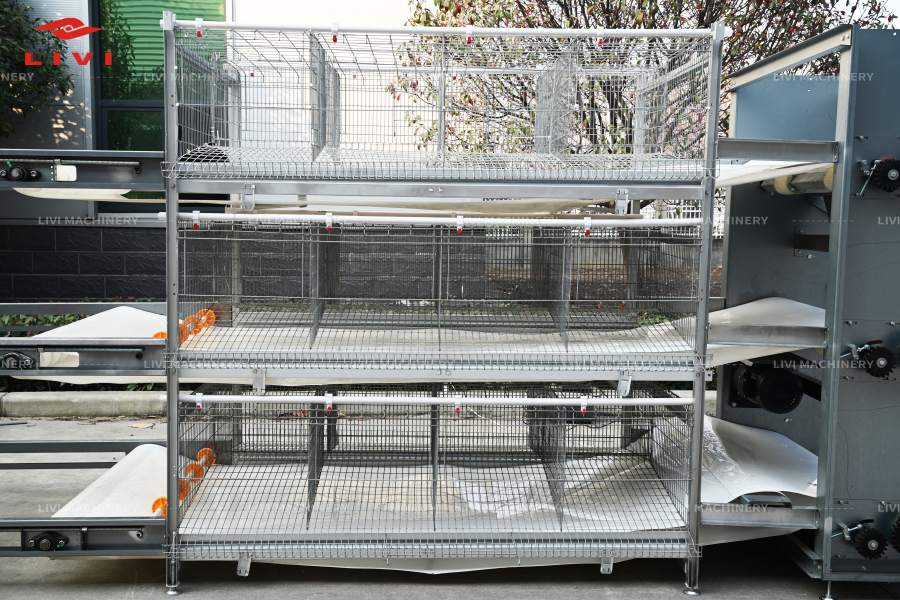




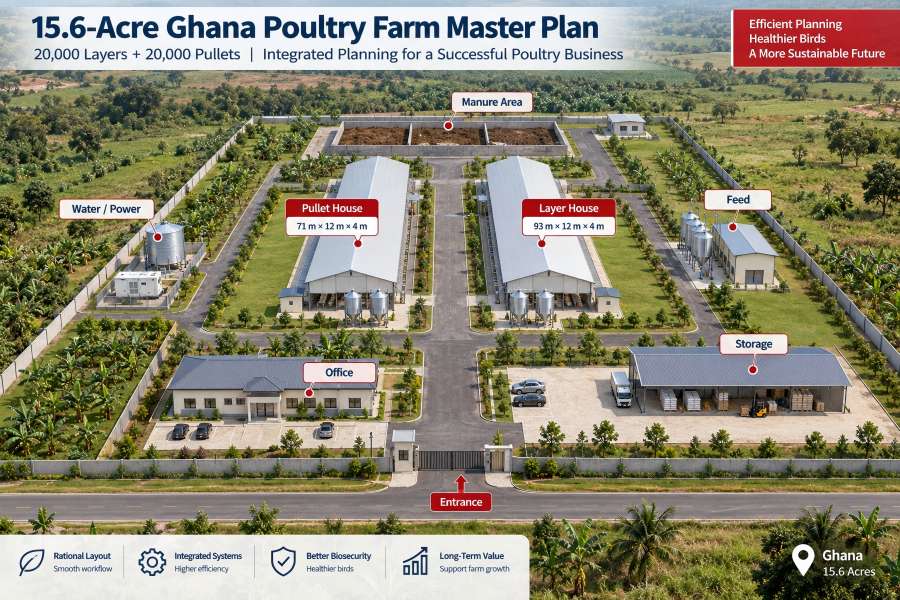
The Ghana 20,000 layer and 20,000 pullet farm solution is planned as an integrated 40,000-bird project with one 93 × 12 × 4 m layer house and one 71 × 12 × 4 m pullet house, both using open-sided housing and H-type cage systems.
The project goes beyond first-stage equipment procurement. The customer also asked LIVI to prepare the overall planning logic for the full 15.6-acre site, including poultry houses, storage, office areas, water and electrical infrastructure, manure management and future farm operation.
Pullet Rearing → Layer Production → Feed → Water & Power → Manure → Farm Logistics
Why This Ghana Project Needs More Than Two Equipment Lists
A commercial poultry farm in Ghana should not be planned by calculating cage quantities first and dealing with the rest of the site later.
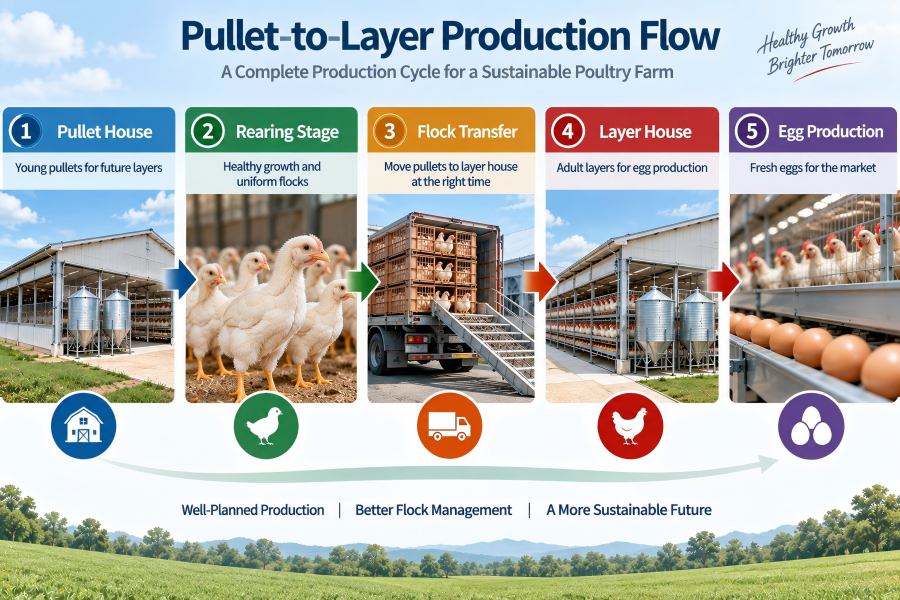
This project has two connected production stages: approximately 20,000 pullets must be reared before birds enter the laying stage, while the 20,000-layer house must support feeding, egg collection and manure handling during commercial egg production.
The customer also owns a 15.6-acre site. This changes the planning question from:
“What equipment is required for 20,000 layers?”
to:
“How should the entire site support a 20,000-layer and 20,000-pullet production system?”
That distinction matters for poultry house positioning, internal roads, feed movement, water and electrical distribution, manure routes, storage and future expansion.
Two Poultry Houses, Two Different Production Tasks
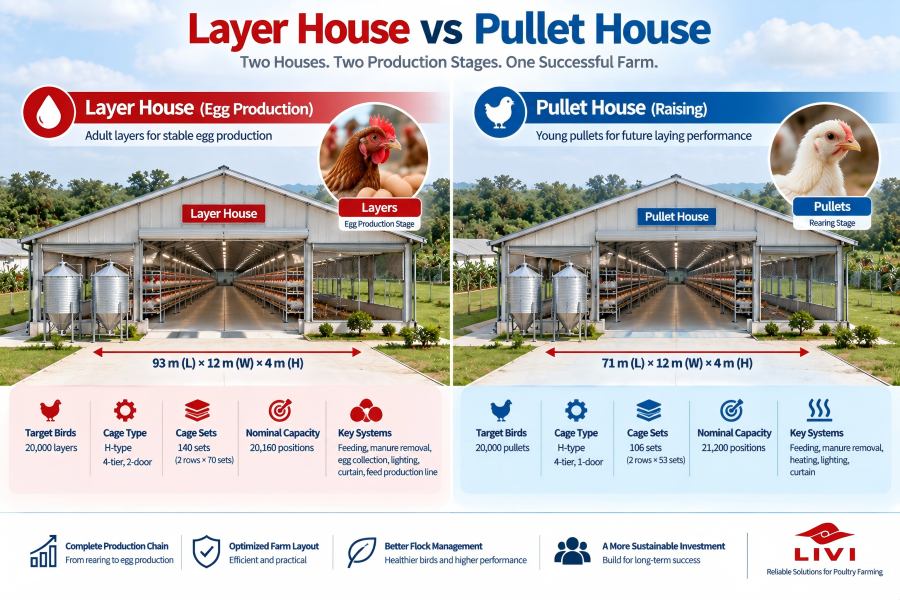
The layer house and pullet house belong to the same farm, but they should not be treated as identical buildings.
| Project Item | Layer House | Pullet House |
|---|---|---|
| Target Birds | 20,000 layers | 20,000 pullets |
| House Size | 93 × 12 × 4 m | 71 × 12 × 4 m |
| House Type | Open-sided | Open-sided |
| H-Type Cage | 1200 × 625 × 480 mm | 1200 × 625 × 430 mm |
| Configuration | 4-tier, 2-door | 4-tier, 1-door |
| Birds / Set | 144 | 200 |
| Cage Sets | 140 | 106 |
| Arrangement | 2 rows × 70 sets | 2 rows × 53 sets |
| Nominal Cage Capacity | 20,160 positions | 21,200 positions |
The nominal cage capacities are equipment calculations, not revised production targets. The farm requirement remains approximately 20,000 layers and 20,000 pullets.
For buyers researching an H type layer cage in Ghana, LIVI’s H-Type Layer Cage System provides additional information about commercial cage configurations and automation interfaces.
How Is the 20,000-Layer House Configured?
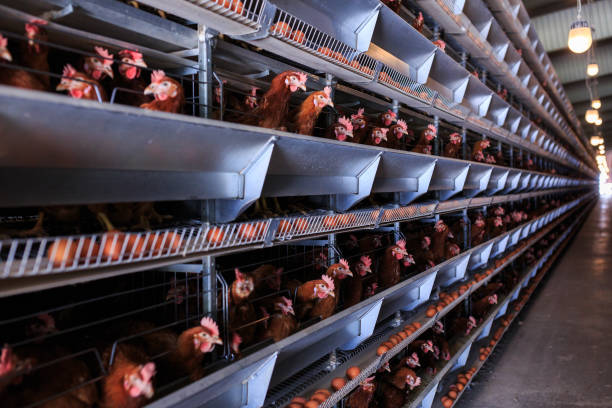
The 93 × 12 × 4 m layer house uses 140 sets of four-tier H-type cages arranged as two rows of 70 sets.
The confirmed equipment scope includes:
- 140 H-type layer cage sets
- 2 automatic feeding systems
- 2 automatic manure removal systems
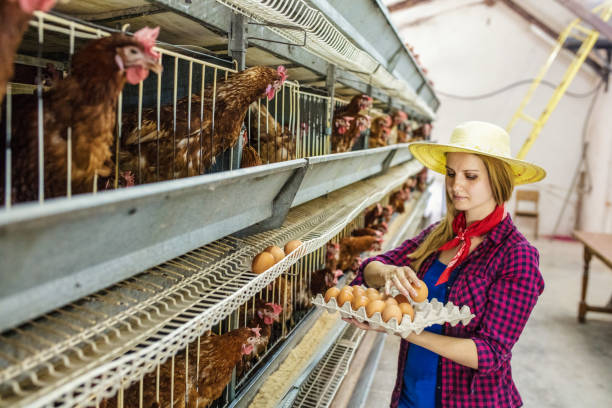
- 2 automatic egg collection systems
- 1 lighting system
- 1 curtain system
- 1 feed production line
This configuration creates several connected operating flows:
Eggs → Automatic Egg Collection → Egg Handling
Layers → Manure Removal → Farm Manure Route
The important design issue is not simply fitting 140 cage sets inside the building. Feeding, egg and manure systems need clear interfaces with the cage rows and with the external farm infrastructure.
LIVI Machinery uses the same system-level principle in other commercial H-type projects: cage layout and automation are planned together rather than as independent purchases. :contentReference[oaicite:1]{index=1}
Planning a 20,000-Layer Farm in Ghana?
Send your site location, house dimensions and required automation to LIVI for a project-specific cage and equipment layout.
Why Does the 20,000-Pullet House Need a Different System?
The pullet house supports the rearing stage rather than commercial egg collection. It therefore has a different equipment package.
The 71 × 12 × 4 m building contains 106 sets of H-type pullet cages arranged as two rows of 53 sets. Each set is specified at 1200 × 625 × 430 mm with a four-tier, one-door configuration and a nominal capacity of 200 birds.
The confirmed equipment includes:
- 106 H-type pullet cage sets
- 2 automatic feeding systems
- 2 automatic manure removal systems
- 1 heating system
- 1 lighting system
- 1 curtain system
Unlike the layer house, this building does not require an egg collection system. Instead, heating is included because thermal management is part of the pullet-rearing requirement for this project.
Should You Use an Open-Sided Poultry House in Ghana?
This is one of the high-frequency planning questions for commercial poultry farming in Ghana.
For this project, both buildings are confirmed as open-sided poultry houses with curtain systems. However, “open-sided” does not mean environmental management can be ignored.
The FAO poultry management and housing guidance identifies temperature, humidity and air movement as important parts of the physical environment required by poultry. :contentReference[oaicite:2]{index=2}
The final poultry house design in Ghana should therefore verify:
- local site orientation and prevailing airflow;
- side-opening and curtain operation;
- bird-level air movement;
- rain protection;
- heat management;
- the interaction between stocking layout and natural ventilation.
The confirmed curtain systems provide an operating interface for the open sides, but detailed ventilation performance should be validated from the actual site and house design rather than assumed from country climate alone.
How Should the 15.6-Acre Poultry Farm Be Master-Planned?
This is the defining feature of the project.
The customer is not asking LIVI only for first-stage poultry equipment. The 15.6-acre property also needs an overall farm plan covering production buildings and supporting infrastructure.
The final locations and dimensions of these areas require a surveyed site plan and engineering confirmation. At the solution stage, however, several interfaces should already be reserved.
Separate Clean and Manure Movement Where Practical
Feed, staff and routine production traffic should be considered separately from manure movement and waste handling. This supports a clearer farm operating route and biosecurity planning.
The WOAH poultry biosecurity recommendations emphasize controls around people, vehicles, feed, water, cleaning and waste management on poultry establishments.
Reserve Utility Routes Before Construction
Water mains, electrical distribution, feed routes and drainage should be coordinated with building positions. Installing them only after poultry houses are completed can create unnecessary crossings or rework.
Plan Manure Beyond the House Exit
The automatic manure removal system solves only the movement of manure out of the cage rows. The master plan must also determine where manure goes after leaving each house and how it is stored, treated or removed from the site.
What Water and Power Infrastructure Should Be Planned?
A Ghana automatic poultry farm depends on more than cage equipment.
Water planning should define:
WOAH guidance recommends potable drinking water according to applicable standards and appropriate cleaning of drinking-water systems between flocks.
Electrical planning should begin with the actual equipment list:
Do I need backup power for an automatic poultry farm in Ghana? It should at least be evaluated. World Bank Enterprise Survey data for Ghana recorded power-outage experience among many surveyed establishments, although those enterprise results should not be interpreted as a direct measurement of this poultry farm or of all Ghanaian farms. :contentReference[oaicite:3]{index=3}
The project has not yet supplied a complete electrical load schedule, so generator capacity or other backup-power ratings should not be invented at this stage.
What Water and Power Infrastructure Should Be Planned?
A Ghana automatic poultry farm depends on more than cage equipment.
Water planning should define:
WOAH guidance recommends potable drinking water according to applicable standards and appropriate cleaning of drinking-water systems between flocks.
Electrical planning should begin with the actual equipment list:
Do I need backup power for an automatic poultry farm in Ghana? It should at least be evaluated. World Bank Enterprise Survey data for Ghana recorded power-outage experience among many surveyed establishments, although those enterprise results should not be interpreted as a direct measurement of this poultry farm or of all Ghanaian farms. :contentReference[oaicite:3]{index=3}
The project has not yet supplied a complete electrical load schedule, so generator capacity or other backup-power ratings should not be invented at this stage.
How Much Does a 20,000-Layer Farm Cost in Ghana?
20000 layer farm cost Ghana is a common investment search, but bird capacity alone is not enough to produce a reliable project price.
For this farm, cost and quotation scope can include:
- 140 layer cage sets and 106 pullet cage sets;
- automatic feeding systems;
- automatic manure removal;
- automatic egg collection;
- heating, lighting and curtains;
- feed production equipment;
- two poultry houses and related civil works;
- water and electrical infrastructure;
- storage and office facilities;
- manure management infrastructure;
- shipping to Ghana;
- installation and technical service scope.
Therefore, a poultry equipment price in Ghana and a complete 15.6-acre farm investment are not the same number.
Buyers comparing a battery cage price in Ghana should request a scope-based quotation and identify what is supplied by the poultry equipment manufacturer, what is constructed locally and what freight, installation or commissioning services are included.
For additional cost-planning principles, see LIVI’s poultry farm cost guide.
Need a Complete Ghana Poultry Equipment Quotation?
Send the site plan together with your layer and pullet capacity, house requirements, water source and power conditions so the equipment scope can be separated from local construction and infrastructure costs.
What Should a Poultry Equipment Supplier Plan Before Construction?
For a project of this type, supplier evaluation should go beyond cage factory price.
A qualified poultry equipment supplier in Ghana’s commercial market should be able to explain the interfaces between:
LIVI Machinery’s role in this project is therefore broader than supplying H-type cages. The planning scope connects the two production houses with the customer’s wider 15.6-acre development requirement.
Before final engineering, the project still needs confirmation of items such as the surveyed land plan, site orientation, water source and quality, electrical supply, manure destination, storage requirements, office requirements and future development priorities.
These inputs should be confirmed before treating the preliminary master plan as a construction drawing.
FAQ: Planning a Commercial Poultry Farm in Ghana
1. Is an H-type cage suitable for 20,000 layers in Ghana?
It can be. In this project, the confirmed layer configuration uses 140 four-tier H-type cage sets in a 93 × 12 × 4 m house. Final suitability should still be checked against the complete house, automation and management requirements.
2. Why are there 20,160 layer cage positions for a 20,000-layer target?
140 sets × 144 positions equals 20,160 nominal cage positions. The project production target remains 20,000 layers; the calculated cage capacity should not be interpreted as a separate production target.
3. Why does the pullet house have 21,200 nominal positions?
The specified 106 sets × 200 positions provide 21,200 nominal positions. Again, the customer requirement remains approximately 20,000 pullets.
4. Should I use an open-sided poultry house in Ghana?
Open-sided housing is confirmed for this project. Suitability for another site should be assessed from local climate, orientation, airflow, curtains, bird density and management conditions rather than copied automatically.
5. Do I need backup power for an automatic poultry farm in Ghana?
Backup requirements should be evaluated from critical equipment and local electricity reliability. Generator size cannot be calculated accurately until the connected loads and motor-starting requirements are known.
6. What should be included in a complete poultry equipment quotation for Ghana?
The quotation should clearly identify cage quantities and specifications, feeding, drinking, manure, egg, lighting, heating or climate equipment where applicable, controls, spare parts, shipping, installation and service scope.
7. Can the poultry equipment supplier also plan the whole farm?
For this project, yes: the customer requested overall planning for the 15.6-acre site in addition to first-stage equipment. The final engineering plan still requires confirmed site, utility, construction and operating inputs.
From Two Poultry Houses to One Integrated Farm
The defining feature of this 40,000-bird poultry project in Ghana is not simply the number of H-type cages.
It is the connection between two production stages and the infrastructure around them:
The two confirmed open-sided houses provide the production core. The 15.6-acre master plan then needs to organize storage, office functions, water, electricity, manure routes and site logistics around that core.
For an investor developing an integrated layer and pullet farm, this distinction is important: equipment capacity solves only one part of the project. The farm also needs the infrastructure that allows those systems to operate together.
Planning a Layer and Pullet Farm in Ghana?
Send LIVI your land plan, bird capacity, house requirements, water source and power conditions. We can use these inputs to develop the next-stage farm layout and equipment proposal.