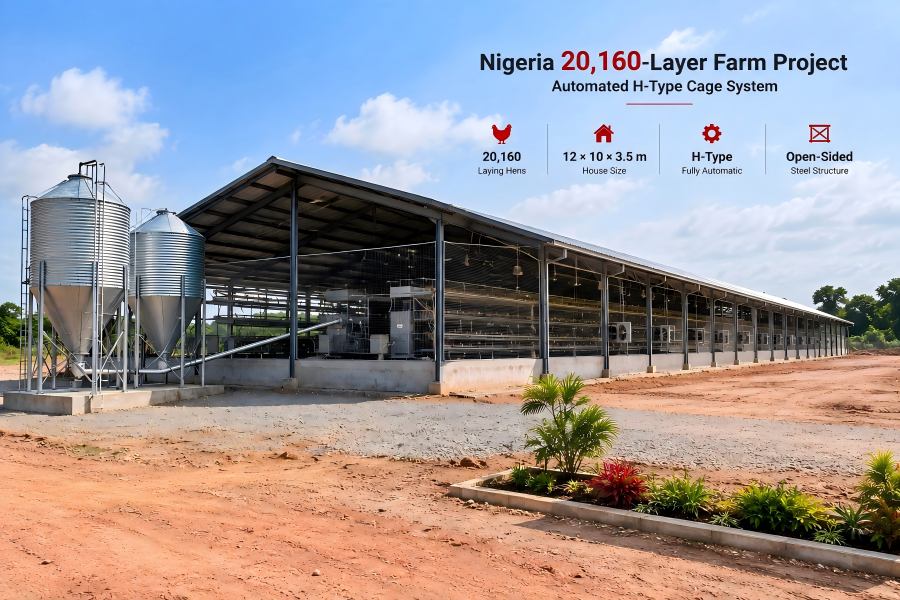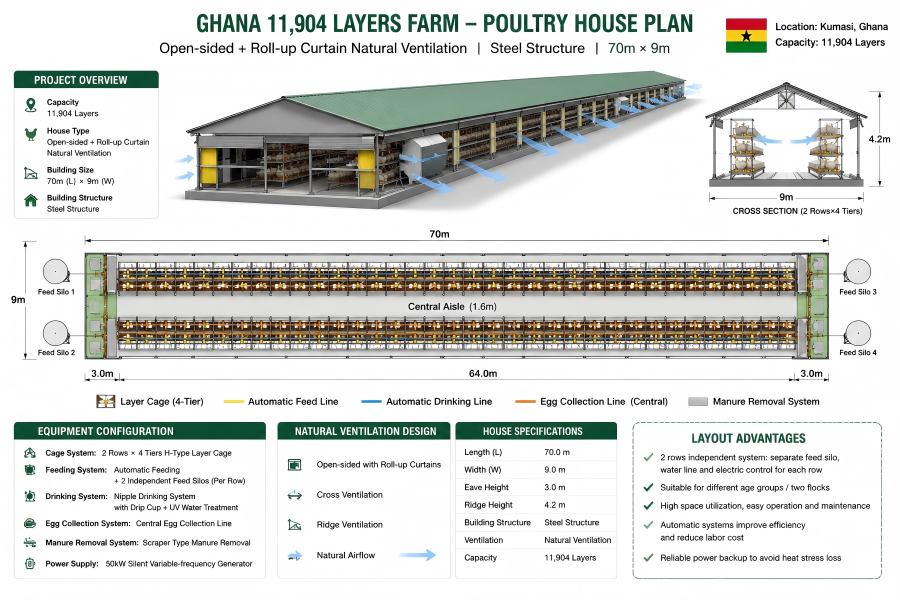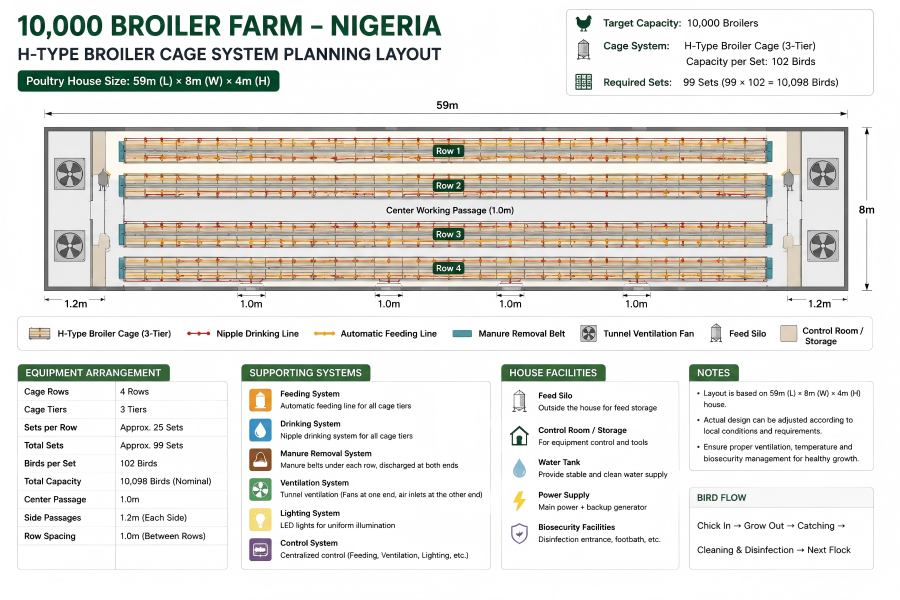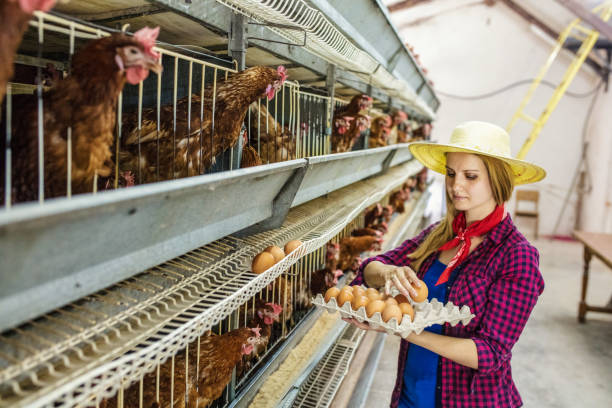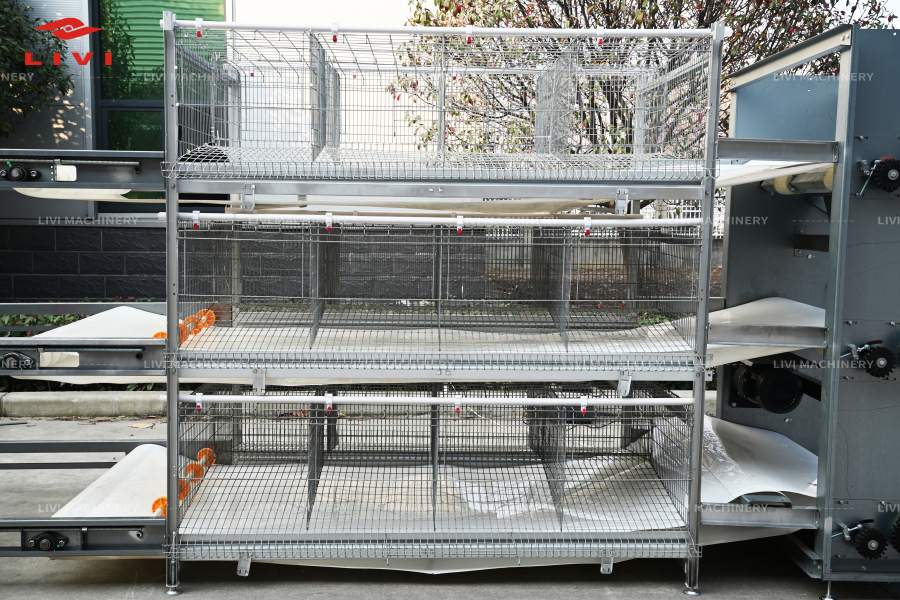




Many poultry investors begin by asking, “How much is a battery cage in Kenya?” But a low equipment price can become an expensive investment if the cage layout does not fit the building, automatic feeders cannot operate or essential delivery services are excluded from the quotation.
For commercial farms planning 10,000, 50,000 or more than 100,000 layers, cost control starts before equipment manufacturing. The first decisions concern the poultry-house layout, bird capacity, automation level and total project scope.
Where Do Commercial Layer Farms Lose Money Before Production Starts?
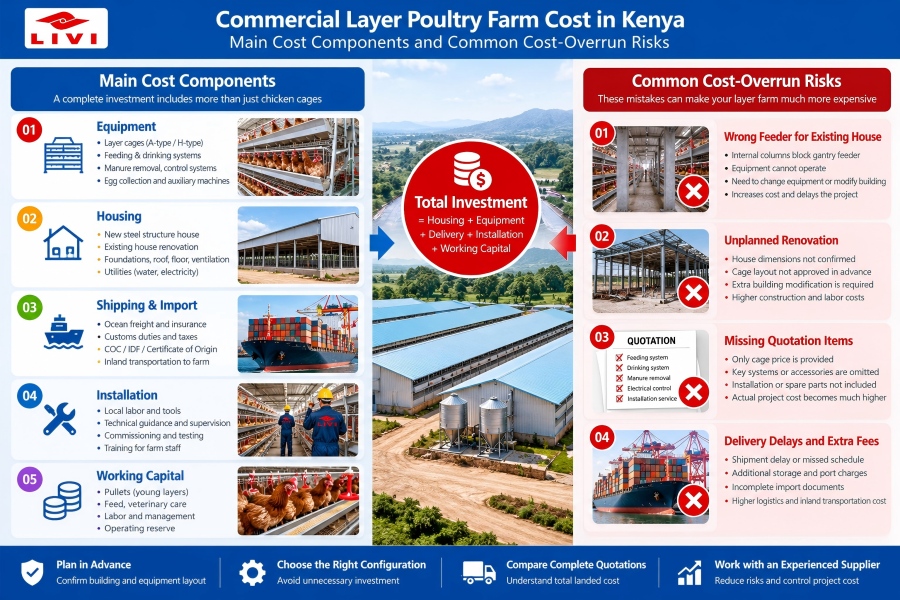
Four purchasing and design mistakes can increase a commercial layer farm’s capital expenditure:
- Buying equipment before checking the house: Internal columns, narrow aisles or insufficient clearance may prevent feeding machinery from operating.
- Comparing cage prices instead of complete systems: A quotation may exclude feeders, manure removal, water-pressure controls, spare parts or installation.
- Building without an approved equipment layout: Cage rows, manure-cleaning travel distances and service access may require expensive modifications later.
- Ignoring import and commissioning expenses: Freight, documentation, inland delivery and installation can create costs outside the factory invoice.
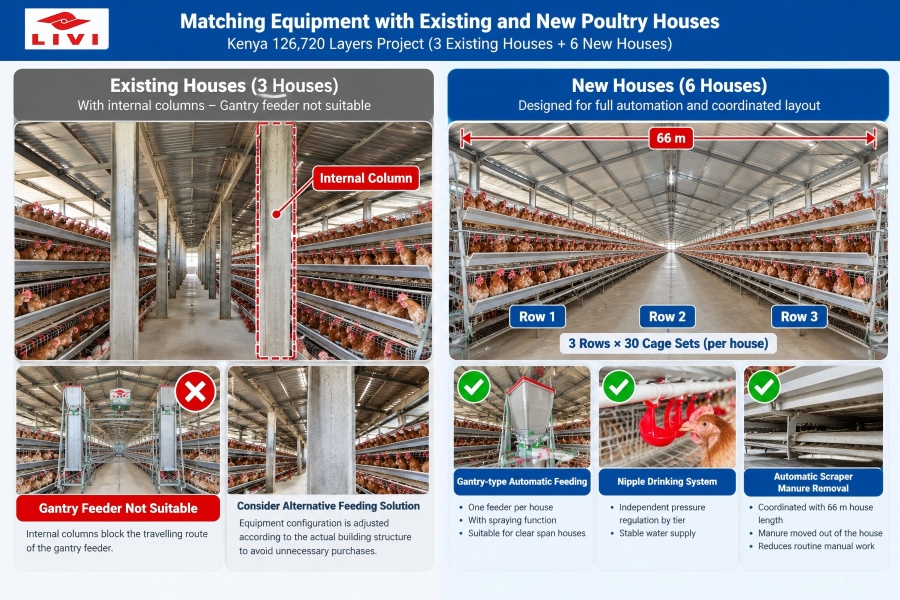
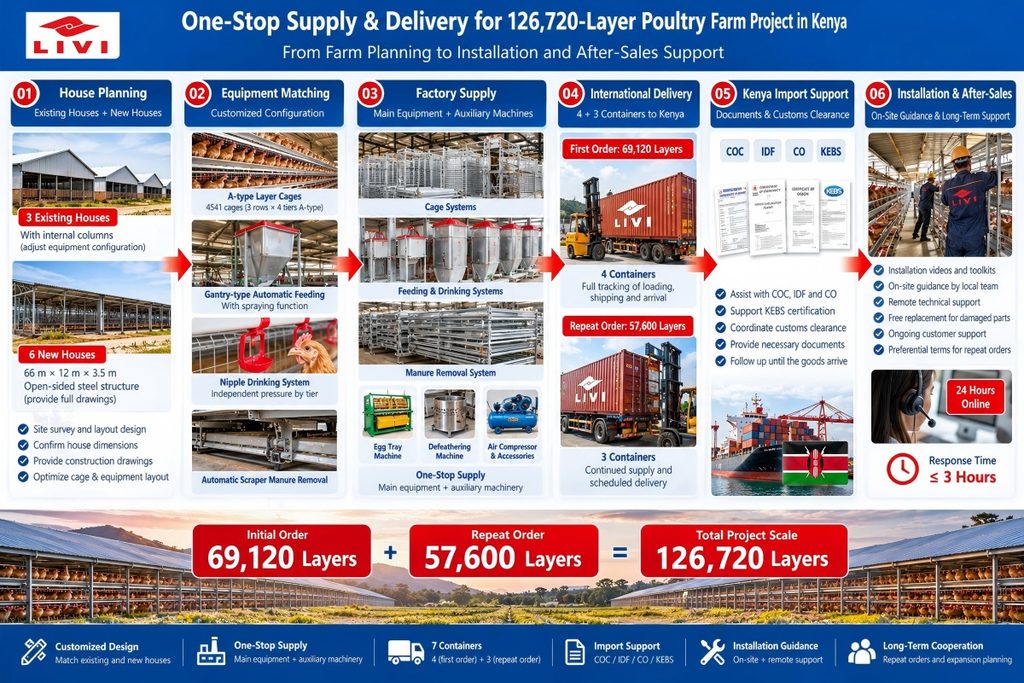
These risks were relevant to a real LIVI poultry equipment project in Narok, Kenya. The customer operated three existing poultry houses and planned six new houses. Internal columns in the old buildings made the proposed gantry-type feeding equipment unsuitable for those spaces.
By identifying that constraint before equipment selection, the project avoided specifying the wrong automatic feeder for the existing houses. The project records do not quantify the resulting savings.
How Much Does It Cost to Set Up a Commercial Layer Farm in Kenya?
There is no reliable single price for a 10,000-layer, 50,000-layer or 100,000-layer farm without a defined equipment specification and site plan.
For a new investor, the poultry farm setup cost in Kenya should be separated into three budgets: initial capital expenditure, costs to get the equipment operational and working capital for the first production cycle.
| Budget Category | Main Cost Items | What Changes the Price? |
|---|---|---|
| Poultry Housing | Steel structure, foundations, roof, floor, renovation | New build vs. existing house, site conditions, dimensions |
| Layer Cages | A-type or H-type cages, frames, troughs, drinkers | Bird capacity, cage model, tiers, materials |
| Automation | Feeding, water regulation, manure removal, optional systems | Labor strategy, cage type, building compatibility |
| Utilities & Site Systems | Water supply, electrical works, backup arrangements | Existing infrastructure and reliability requirements |
| International Delivery | Freight, insurance, customs and inland transport | Shipment size, delivery terms, destination |
| Installation | Labor, tools, technical supervision, commissioning | Local capability and agreed supplier responsibilities |
| Working Capital | Pullets, feed, labor, veterinary care, operating reserve | Feed prices, flock age, production plan |
Total project investment = housing and site works + equipment + landed delivery + installation + pre-production working capital.
To calculate equipment cost per bird, divide the complete equipment quotation by the verified design capacity. For total installed cost per bird, use the installed project budget instead. Do not compare these two figures as if they include the same scope.
The actual equipment contract value for the Narok project has not been disclosed. Any supplier offering a fixed price without checking house dimensions, cage configuration and delivery scope should be asked to provide the assumptions behind that figure.
Need a Budget Based on Your Farm Size?
Share your layer capacity, house dimensions and automation requirements for a configuration-based equipment estimate.
How Many Layers Can Fit in an Existing Poultry House?
Before buying chicken cages, measure the usable building space rather than calculating capacity from the total floor area alone.
The equipment designer needs the internal length and width, usable height, structural-column positions, door openings, service aisles and available routes for automatic feeding and manure removal.
For an existing poultry house, the practical design process is:
- Measure the building and identify fixed structural obstructions.
- Choose a cage model and tier arrangement suitable for the house.
- Reserve operating space for feeding equipment, inspection and maintenance.
- Check manure-removal travel distance and discharge location.
- Calculate bird capacity from the approved cage layout and applicable stocking requirements.
Example: The 126,720-Layer Expansion in Narok
The documented Kenya project involved an initial order for 69,120 layers and a repeat order for 57,600 layers, giving a cumulative scale of 126,720 birds.
| Design Parameter | Documented Project Reference |
|---|---|
| Project Location | Narok, Kenya |
| House Arrangement | 3 existing houses + 6 newly constructed houses |
| Reference House Dimensions | 66 m × 12 m × 3.5 m |
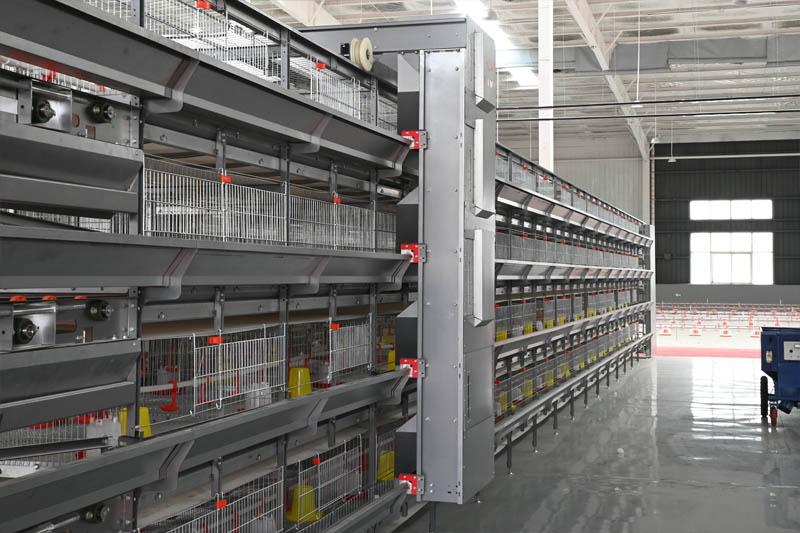
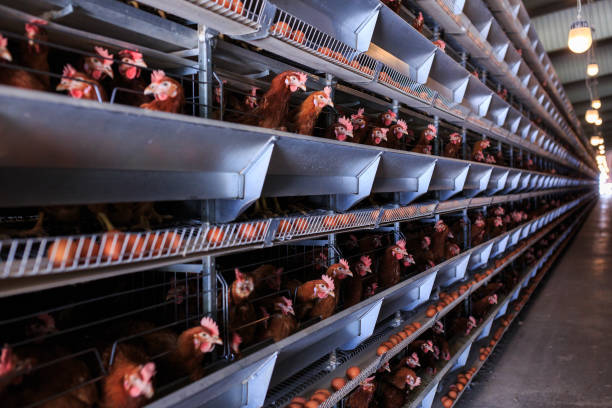
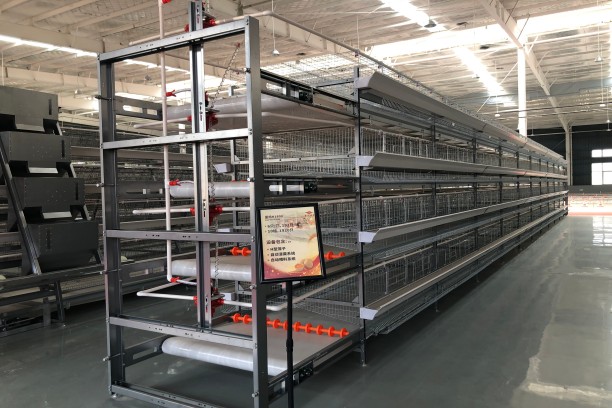
| Layer Cage System | 4541-model A-type layer cages, 4 tiers |
| New-House Reference Layout | 3 cage rows × 30 cage sets |
| Feeding Equipment | Gantry-type automatic feeder where building layout permits |
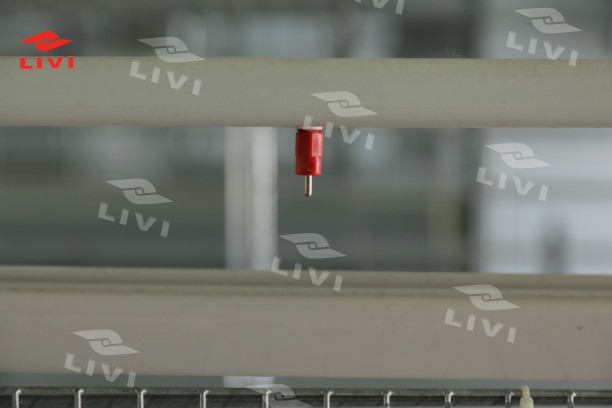
| Water Supply | Nipple drinkers with independent pressure regulation by tier |
| Manure Management | Automatic scraper manure removal |
The 66 m reference house length was coordinated with the effective operating distance of the scraper manure removal system. Construction drawings were provided for the six new houses.
For the three older houses, internal columns affected the movement of gantry feeding equipment. The solution was to exclude the unsuitable gantry-feeder configuration from those buildings rather than force the machinery into an incompatible layout.
This illustrates an important investment principle: the correct poultry equipment is not always the most automated option; it is the configuration that fits the building and operating plan.
See the A-Type Layer Cage System Guide for cage-layout and capacity-planning considerations.
A-Type vs. H-Type Layer Cages: Which Offers Better Cost Value?
For a commercial layer farm investment in Kenya, the choice between A-type and H-type cages should be based on available space, required automation, labor costs and expansion plans.
| Comparison | A-Type Layer Cages | H-Type Layer Cages |
|---|---|---|
| Initial Equipment Cost | Generally lower for comparable basic configurations | Generally higher for integrated automated configurations |
| Space Utilization | Stepped arrangement requires more horizontal space | Vertically stacked design can use floor area more intensively |
| Automation | Manual, semi-automatic or selected automatic systems | Often configured with integrated automatic systems |
| Building Requirements | Suitable for many open-sided houses, subject to layout checks | Requires careful checks of height, access and utilities |
| Maintenance | Depends on selected machinery and operating conditions | More integrated systems may require specialized maintenance |
| Recommended For | Budget-controlled projects and compatible existing buildings | High-capacity projects prioritizing density and automation |
Choose A-type cages when the project prioritizes controlled initial expenditure, practical access and compatibility with the available house layout.
Consider H-type cages when land use, large-scale automation and labor organization justify the additional system investment.
Neither system is automatically more profitable. A reliable comparison must include installed cost per bird, labor requirements, maintenance, utilities, available floor space and expected operating life.
When Is Automation Worth the Extra Investment?
Automatic feeding and manure removal can reduce repetitive manual tasks, but their financial value depends on actual labor rates, maintenance requirements and the farm’s daily operating schedule.
In the Narok project, the specified gantry-type feeding system could serve multiple compatible cage rows and included a spraying function. The project also upgraded manual manure clearing to automatic scraper removal in the relevant equipment arrangement.
For further system selection, read the Automatic Poultry Feeding Systems Guide and the Poultry Manure Removal System Guide.
Housing decisions should also protect bird welfare. The FAO guidance on poultry management and housing emphasizes suitable environmental conditions, access to feed and water, and disease-risk management.
Reverse Cost Analysis: How Can a Layer Farm Avoid Unnecessary Investment?
A reverse cost analysis starts with the expenses that could have been avoided, then identifies the design or purchasing decision needed to prevent them.
For a 10,000-layer automatic poultry farm in Kenya, or a larger 50,000–100,000+ bird project, this approach is more useful than selecting the cheapest cage quotation without checking the full system.
| Potential Cost Problem | Why It Happens | Preventive Solution |
|---|---|---|
| Unsuitable automatic feeder | Existing columns obstruct the machine’s travel route | Survey the building and select compatible feeding equipment |
| Extra building modifications | House dimensions are finalized before cage layout approval | Coordinate structural drawings and equipment design |
| Incomplete equipment budget | Feeding, drinking, manure removal or accessories are omitted | Request an itemized system-level quotation |
| Unexpected landed cost | Freight, customs, inland transport or installation are excluded | Confirm Incoterms and delivery responsibilities |
| Higher recurring labor cost | Manual processes remain in high-workload areas | Evaluate automation against actual labor and maintenance costs |
| Expansion-related replacement cost | Later buildings and equipment are planned independently | Prepare a phased master layout before the first purchase |
How Should Investors Evaluate Automation Payback?
For each proposed automatic system, estimate the annual labor hours it could replace, then deduct its additional power, maintenance and repair expenses.
Estimated annual net operating benefit = labor and operating expenses avoided − additional automation operating expenses.
Simple payback period = additional automation investment ÷ estimated annual net operating benefit.
These calculations are planning tools, not guaranteed project returns. They should use local labor rates, measured operating requirements and supplier-confirmed equipment costs.
How Can a Farm Expand Without Replacing Its First Equipment Purchase?
Phased development works best when the farm prepares a master plan for future buildings, access roads, utilities and equipment delivery routes.
In the Narok project, the customer’s initial equipment order supported 69,120 layers. A later purchase covered another 57,600 layers, bringing the cumulative project scale to 126,720 birds.
This repeat-order arrangement illustrates how an equipment supplier can continue supporting expansion after the first purchase. It does not establish a measured return on investment or confirm that all equipment was interchangeable between the two phases.
What Is the Landed Cost of Imported Poultry Equipment in Kenya?
The landed cost of imported poultry equipment in Kenya is the amount required to bring the equipment to the agreed destination, including the costs allocated to the buyer under the purchase and shipping terms.
When comparing a Chinese poultry equipment manufacturer with local or international suppliers, buyers should check the following items separately:
- Factory equipment price and included accessories.
- Export packing and loading arrangements.
- Ocean freight and cargo insurance, where applicable.
- Applicable conformity-assessment and import documentation.
- Customs duties, taxes, port charges and clearing services, as applicable.
- Inland transportation to the poultry farm.
- Installation, testing, spare parts and technical support.
For the Kenya project, the initial order was shipped in four containers and the repeat order in three containers. The documented service scope included shipment tracking and assistance with CoC, IDF, Certificate of Origin and applicable KEBS procedures.
Kenya’s KEBS Pre-Export Verification of Conformity Manual explains the conformity-assessment procedures relevant to covered imports. Requirements should be checked against the current product classification and shipment details.
The project records also describe replacement of transportation-damaged components, including a motor and feed trough, and an air-compressor upgrade. These actions demonstrate the importance of defining damage-claim and after-sales responsibilities before shipment.
Compare Your Equipment and Landed Costs
Request a quotation covering the agreed equipment, delivery terms and technical support for your Kenya project.
What Should a Complete Poultry Farm Equipment Quotation Include?
A reliable poultry equipment quotation should allow the buyer to understand exactly what will be delivered, what remains the buyer’s responsibility and how the equipment will fit the farm.
Before choosing a poultry equipment supplier or factory, request the following information:
- Design basis: Bird capacity, house dimensions, cage model, tier number and approved layout.
- Equipment scope: Cage systems, feeding, drinking, manure removal, controls and agreed accessories.
- Technical drawings: Cage arrangement, operating clearances and equipment interfaces.
- Commercial terms: Itemized prices, delivery terms, payment milestones and quotation validity.
- Delivery scope: Packing, freight arrangements, import documentation and inland transport responsibilities.
- Installation: Technical guidance, local labor responsibilities, commissioning and acceptance checks.
- After-sales: Warranty coverage, spare-parts arrangements and technical response commitments.
What Does One-Stop Supply Mean in Practice?
One-stop supply should mean coordinated project responsibilities, not merely purchasing several machines from the same company.
For the Narok expansion, LIVI Machinery’s documented service scope included poultry-house drawings, equipment matching, core cage systems, supplementary machinery, international shipping coordination, import-document assistance, installation guidance and after-sales support.
The project also involved coordination with an installation team from Ghana for on-site assistance. Installation videos and toolkits were provided as part of the support arrangements.
LIVI’s project records describe 24-hour English-language support and a response target within three hours. Buyers should confirm the applicable warranty, service availability and response commitments in their individual agreements.
Farm owners and EPC contractors should also account for biosecurity during construction, installation and daily operation. The World Organisation for Animal Health (WOAH) poultry biosecurity guidance provides an authoritative reference for infection-prevention procedures.
Which Cost-Control Strategy Fits Your Layer Farm Project?
| Buyer Situation | Recommended Starting Point | Main Cost Risk to Check |
|---|---|---|
| New commercial layer farm | Complete house and equipment master plan | Construction and equipment designed separately |
| Existing-house upgrade | Structural survey and machinery compatibility check | Equipment cannot operate within the available space |
| 10,000–50,000 layers | Compare A-type and H-type system quotations | Paying for automation without an operating-cost justification |
| 100,000+ layer expansion | Phased development and integrated procurement plan | Incompatible future equipment and infrastructure |
| Importer or EPC contractor | Itemized landed-cost and responsibility schedule | Missing shipping, installation or service items |
The most suitable solution depends on the existing site, target capacity, financing plan and operational resources. The lowest initial cage price is not necessarily the lowest long-term farm cost.
A practical LIVI layer farm solution starts with the buyer’s building conditions and operating requirements, then develops an equipment configuration and quotation around those constraints.
Frequently Asked Questions About Layer Farm Costs in Kenya
1. How much does a 10,000-layer automatic poultry farm cost in Kenya?
The cost depends on whether the project includes new construction, A-type or H-type cages, automatic feeding, manure removal, water systems, freight and installation. A reliable estimate requires an itemized quotation and a confirmed house layout. Equipment-only prices should not be compared directly with complete farm construction budgets.
2. How many laying hens can fit in my existing poultry house?
Capacity depends on the cage model, tier number, usable building dimensions, aisle widths, structural obstructions and applicable stocking requirements. The house should be measured before calculating the final bird capacity or ordering cages.
3. Are A-type or H-type layer cages more cost-effective in Kenya?
A-type cages generally offer a lower initial equipment cost for comparable basic configurations. H-type systems may provide better floor-space utilization and greater automation. The better investment depends on building constraints, labor costs, maintenance and the planned scale of production.
4. What is included in the landed cost of poultry equipment imported into Kenya?
Depending on the agreed Incoterm, landed cost can include the equipment price, international freight, insurance, applicable import charges, customs clearance and inland delivery. Installation and commissioning should be priced separately unless expressly included.
5. How can I reduce the cost of upgrading an existing layer farm?
Start with a building survey and identify which existing structures and utilities can be retained. Select machinery compatible with the house, prioritize automation that addresses measurable operating costs and avoid purchasing equipment before the layout is approved.
6. Does a Chinese poultry equipment manufacturer provide installation support in Kenya?
Support depends on the supplier and contract. The documented LIVI Kenya project included construction drawings, remote guidance, installation videos, toolkits and coordination of on-site installation assistance. Buyers should confirm engineer availability, labor responsibilities and commissioning terms before ordering.
7. What information is needed for a commercial layer farm equipment quotation?
Provide the country and farm location, target bird capacity, new or existing house dimensions, preferred cage type, required automation, available utilities, expansion plans and delivery destination. These details help the supplier prepare a more accurate equipment configuration and quotation.
Plan Your Kenya Layer Farm Before You Invest
Send your farm capacity, house dimensions and equipment requirements to receive a tailored layout and quotation.